Introduction
Understanding self-care skills is so important for helping autistic children gain independence and confidence. However, many kids face real challenges in mastering these essential abilities. In this article, we’ll explore effective strategies for teaching self-care skills, giving caregivers practical tools and insights to support their child's growth.
How can caregivers balance the demands of teaching these skills while ensuring their child feels empowered and motivated? Let’s dive into this together!
Imagine a parent trying to teach their child to brush their teeth. It can be a struggle, right? But with the right approach, it can also be a fun bonding experience! By using simple techniques and a bit of patience, caregivers can turn these moments into opportunities for growth.
We’re here to help you every step of the way! Let’s explore some strategies that can make a real difference in your child’s journey toward independence.
Define Self-Care Skills and Their Importance for Autistic Children
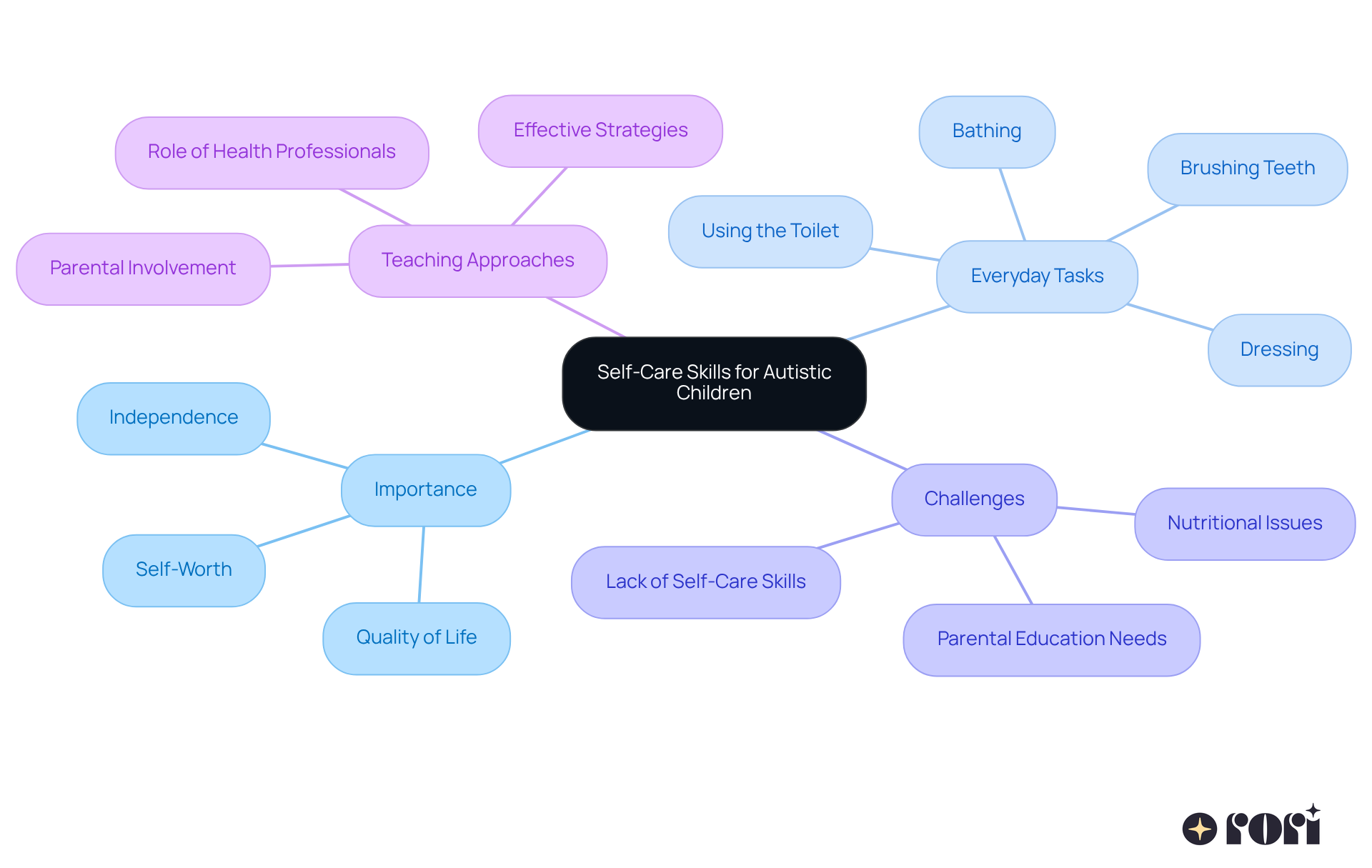
Self-care abilities are essential for keeping our kids healthy and happy, particularly for those on the autism spectrum, which calls for effective approaches for teaching . Think about the everyday tasks like brushing teeth, bathing, dressing, and even using the toilet. These are all part of , along with daily routines like mealtime and grooming. When kids master these skills, it really , self-worth, and overall .
Did you know that around 82.9% of youngsters with autism struggle with , highlighting the need for in autism? That’s a big area where we can help them grow! At Rori Care, we’re all about equipping your child with the the world on their own. When kids learn to manage their , they often feel more confident and less dependent on caregivers, which is crucial for their development and integration into society.
By focusing on these abilities, we can help foster a sense of achievement and independence in our children. As Elif Bakır from Hacettepe University points out, effective approaches for teaching equip children with ASD with the tools for personal management, which not only boosts their potential but also enhances the for both them and their families.
Let’s explore this together! We’re here to help you every step of the way!
Implement Practical Strategies for Teaching Self-Care Skills
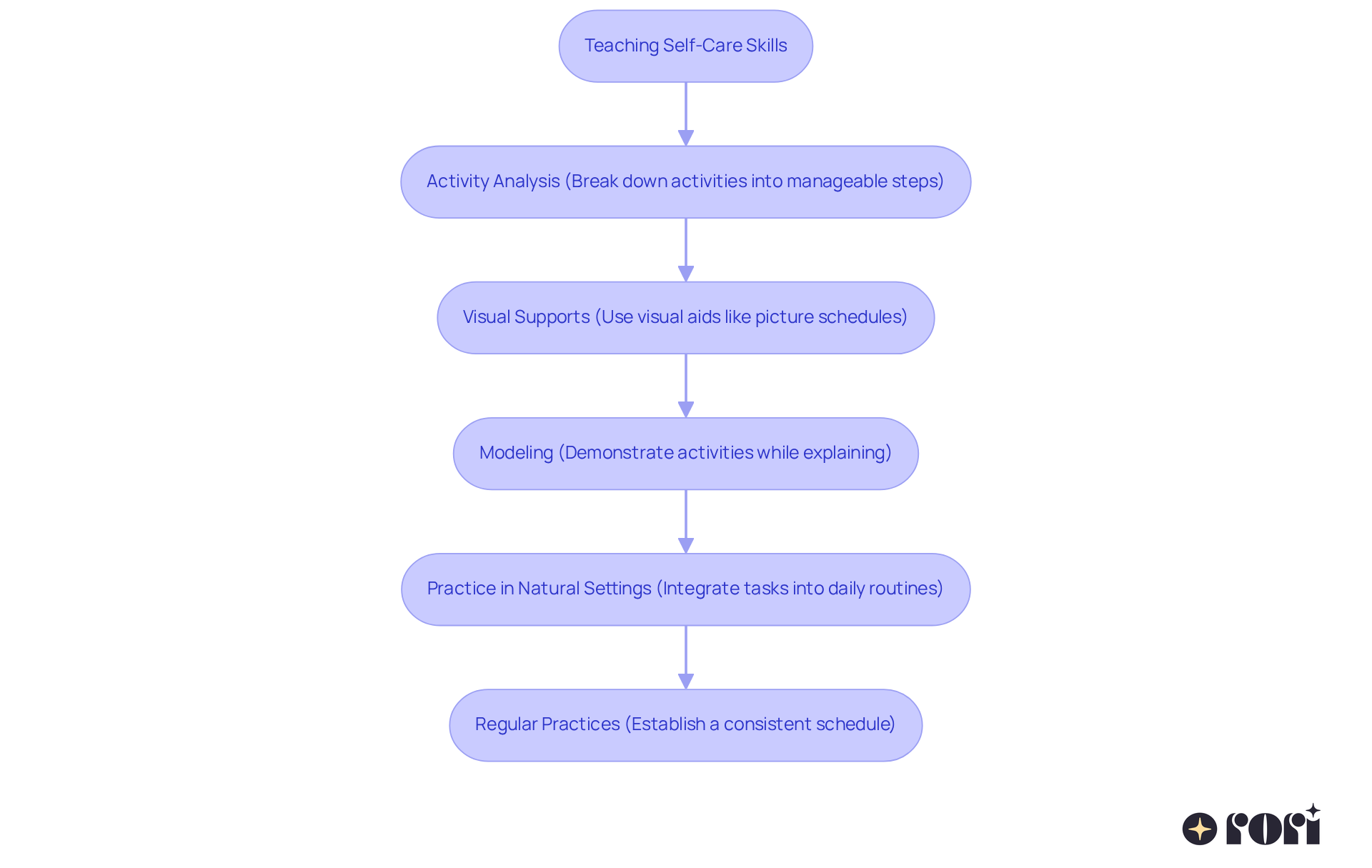
Teaching can feel like a big task for caregivers, but there are some practical strategies that can make it easier and more enjoyable for everyone involved. Let’s dive into a few ideas that not only enhance learning but also empower you in your role:
- Activity Analysis: Break down each into smaller, manageable steps. For example, when teaching handwashing, you might outline the steps: turning on the tap, wetting hands, applying soap, scrubbing, rinsing, and drying. This way, each step becomes a distinct ability, making it easier for kids to learn. Remember, clearly defining each step is key; if you lump them together, it can make learning tougher.
- : Think about using like picture schedules or step-by-step guides. These tools can really help kids grasp the order of activities. Research shows that can boost understanding by up to 65%! A case study even highlighted how these aids significantly improved students' performance in personal care tasks.
- Modeling: Show how to do the while talking through each step. Kids often learn best by watching, so demonstrating can really enhance their understanding. Plus, you can adjust your approach based on how they respond, making it a more interactive experience.
- Practice in Natural Settings: Try to weave self-care tasks into . For instance, getting kids involved in meal prep not only teaches them cooking skills but also builds their independence in a familiar environment. This hands-on approach is crucial for better , as it allows them to apply what they learn in meaningful ways.
- Regular Practices: Establish a consistent schedule for personal wellness activities. This routine can help kids feel more secure and engaged in the learning process, leading to better retention of what they’ve learned. Plus, having a structured approach can boost your confidence as a caregiver, reduce stress, and improve family dynamics.
By using in autism, you can really help foster in autistic youth, promoting greater independence and confidence in their daily lives. And don’t forget, combining with -like verbal praise or small rewards-can make the learning experience even better and encourage kids to engage with the tasks.
Let’s explore this together! We’re here to help you every step of the way!
Utilize Positive Reinforcement to Enhance Learning Outcomes
Positive reinforcement is an effective approach for teaching to our autistic kiddos. Let’s dive into some effective strategies that can make a real difference:
- Identify Reinforcers: First things first, find out what lights up your child’s face! Is it verbal praise, fun stickers, or maybe a little extra playtime? Tailoring these reinforcers to what your child loves can really amp up their effectiveness.
- : Timing is everything! When your child successfully completes a self-care task, give them that reinforcement right away. This helps them link their action to the reward, making the learning stick. Did you know that studies show prompt reinforcement can boost ability acquisition by up to 70% among autistic youth? Pretty amazing, right?
- : Instead of just saying 'good job,' let’s get specific! Acknowledge exactly what they did well, like saying, 'I love how you washed your hands all by yourself!' This kind of not only boosts their self-esteem but also encourages them to keep trying.
- : As your child gets better at a skill, start to slowly reduce how often you reinforce them. This helps them gain independence while still feeling supported on their learning journey.
- : No achievement is too small to celebrate! Recognizing milestones creates a positive atmosphere and keeps the motivation flowing. Research shows that , making your child more eager to engage in personal care activities.
By employing in autism, you can really help your child master essential skills, paving the way for greater independence and confidence. Plus, as you learn more about , you’ll feel empowered to make informed decisions that positively impact your child’s progress. This leads to better behavioral outcomes and strengthens family dynamics. And remember, your education as a caregiver enhances professional interventions, ensuring everyone is on the same page when it comes to supporting your child’s development.
Let’s explore this together! We’re here to help you every step of the way!

Collaborate with Professionals for Tailored Support
Working with specialists like , speech therapists, and behavior analysts is super important when implementing for teaching . Let’s dive into some strategies that can really boost this collaboration:
- Seek Assessments: Professionals can carry out to identify specific areas where support is needed. This targeted approach means interventions can be tailored to meet , making a real difference.
- Develop Individualized Plans: Team up with experts to create that fit the unique needs and learning styles of the individual. When strategies are tailored, teaching methods become more effective and relevant, leading to better engagement and understanding.
- Regular Communication: Keeping those lines of communication open with professionals is key! Discussing the student’s progress, challenges, and any necessary adjustments helps refine strategies and improve outcomes. Continuous feedback is vital.
- Participate in offered by professionals to learn for teaching . This not only empowers caregivers with the right tools but also benefits the child’s development in the long run.
- Utilize Resources: Don’t forget to leverage resources from professionals, like , activity schedules, and instructional materials. These tools can make learning more engaging and accessible for the child.
Let’s explore this together! Remember, you’re not alone in this journey, and there’s a whole !

Conclusion
Teaching self-care skills to autistic children is such an important journey that can truly enhance their independence and quality of life. By using effective strategies, caregivers can help these kids master essential daily tasks, which in turn boosts their confidence and self-worth. It’s not just about the skills themselves; understanding their importance benefits the children and supports families in nurturing a more independent and fulfilling lifestyle.
Let’s dive into some practical approaches for teaching these skills! Techniques like activity analysis, visual supports, modeling, and positive reinforcement each play a unique role in making self-care tasks more manageable and engaging for autistic children. Plus, collaborating with professionals like occupational and speech therapists can really tailor the support needed, ensuring that interventions are effective and aligned with each child’s individual needs.
Ultimately, fostering self-care skills in autistic children goes beyond just teaching tasks; it’s about nurturing their potential and paving the way for greater autonomy. Sure, this journey requires patience, creativity, and collaboration, but the rewards - like improved self-management, confidence, and a sense of achievement - are absolutely priceless. So, let’s embrace these strategies and seek out professional support together! It can make a significant difference in the lives of autistic children, helping them thrive in their daily lives. We’re here to help you every step of the way!
Frequently Asked Questions
What are self-care skills?
Self-care skills are essential abilities that help children manage personal hygiene and daily routines, such as brushing teeth, bathing, dressing, and using the toilet.
Why are self-care skills important for autistic children?
Self-care skills are crucial for autistic children as they promote independence, self-worth, and overall quality of life. Mastering these skills can enhance their confidence and reduce dependency on caregivers.
What percentage of autistic children struggle with personal management skills?
Approximately 82.9% of children with autism struggle with personal management skills, highlighting the need for effective teaching approaches.
How can teaching self-care skills benefit autistic children?
Teaching self-care skills can help autistic children feel more confident, independent, and better integrated into society, ultimately improving their quality of life and that of their families.
What is the role of Rori Care in teaching self-care skills?
Rori Care focuses on equipping children with the necessary skills to manage their personal care, helping them explore the world independently and fostering a sense of achievement and independence.
List of Sources
- Define Self-Care Skills and Their Importance for Autistic Children
- Best Autism Quotes to Raise Awareness and Understanding (https://yellowbusaba.com/post/autism-quotes)
- gratefulcareaba.com (https://gratefulcareaba.com/blog/inspirational-quotes-about-autism)
- Analysis of the Nutrition, Self-Care Skills, and Health Professional Support in Schools of Children with Autism Spectrum Disorder - PMC (https://pmc.ncbi.nlm.nih.gov/articles/PMC8245022)
- rori.care (https://rori.care/post/10-positive-proud-autism-quotes-to-inspire-and-empower-parents)
- Implement Practical Strategies for Teaching Self-Care Skills
- A meta-analysis of self-management interventions for students with ASD (https://sciencedirect.com/science/article/pii/S1750946723001940)
- 107 Favorite Quotes About Autism and Aspergers (https://the-art-of-autism.com/favorite-quotes-about-autism-and-aspergers)
- kidsclubaba.com (https://kidsclubaba.com/autism-quotes)
- Using Task Analysis to Teach Daily Living Skills (https://n2y.com/blog/teach-life-skills-with-task-analysis)
- 20 Inspiring Quotes About Autism Every Parent Must Read Today (https://circlecareservices.com/20-quotes-about-autism-and-parenting)
- Utilize Positive Reinforcement to Enhance Learning Outcomes
- Positive Reinforcement and ABA Therapy (https://goldenstepsaba.com/resources/positive-reinforcement-in-aba-therapy)
- rori.care (https://rori.care/post/10-positive-proud-autism-quotes-to-inspire-and-empower-parents)
- The Benefits of Positive Reinforcement for Kids with Autism (https://elevationautism.com/blog/the-effects-of-positive-reinforcement-on-toddlers-with-autism)
- gratefulcareaba.com (https://gratefulcareaba.com/blog/inspirational-quotes-about-autism)
- Collaborate with Professionals for Tailored Support
- Autism Therapy: Key Statistics (https://ambitionsaba.com/resources/autism-therapy-statistics)
- 10 Inspiring Autism Awareness Quotes to Foster Understanding – Rori Blog (https://rori.care/post/10-inspiring-autism-awareness-quotes-to-foster-understanding)
- 20 Inspiring Quotes About Autism Every Parent Must Read Today (https://circlecareservices.com/20-quotes-about-autism-and-parenting)
- 10 inspiring quotes from people with autism | Autism Speaks (https://autismspeaks.org/life-spectrum/autism-quotes)
- Celebrating Neurodiversity: Inspiring Words on Autism | Step Ahead ABA (https://stepaheadaba.com/blog/autism-quotes)