Introduction
Art therapy shines as a beacon of hope for children on the autism spectrum, offering a unique way for them to express themselves when words might not suffice. Through creative activities like drawing and painting, these kids can explore their emotions and experiences in a safe space. This not only nurtures emotional growth but also helps develop essential social skills.
But how can parents and therapists tap into the power of art therapy to cater to each child's unique needs? 🤔 Let’s explore this together! This article dives into effective techniques and collaborative strategies that can enhance the therapeutic journey for both children and their families. We’re here to help you every step of the way!
Define Art Therapy and Its Importance for Autism
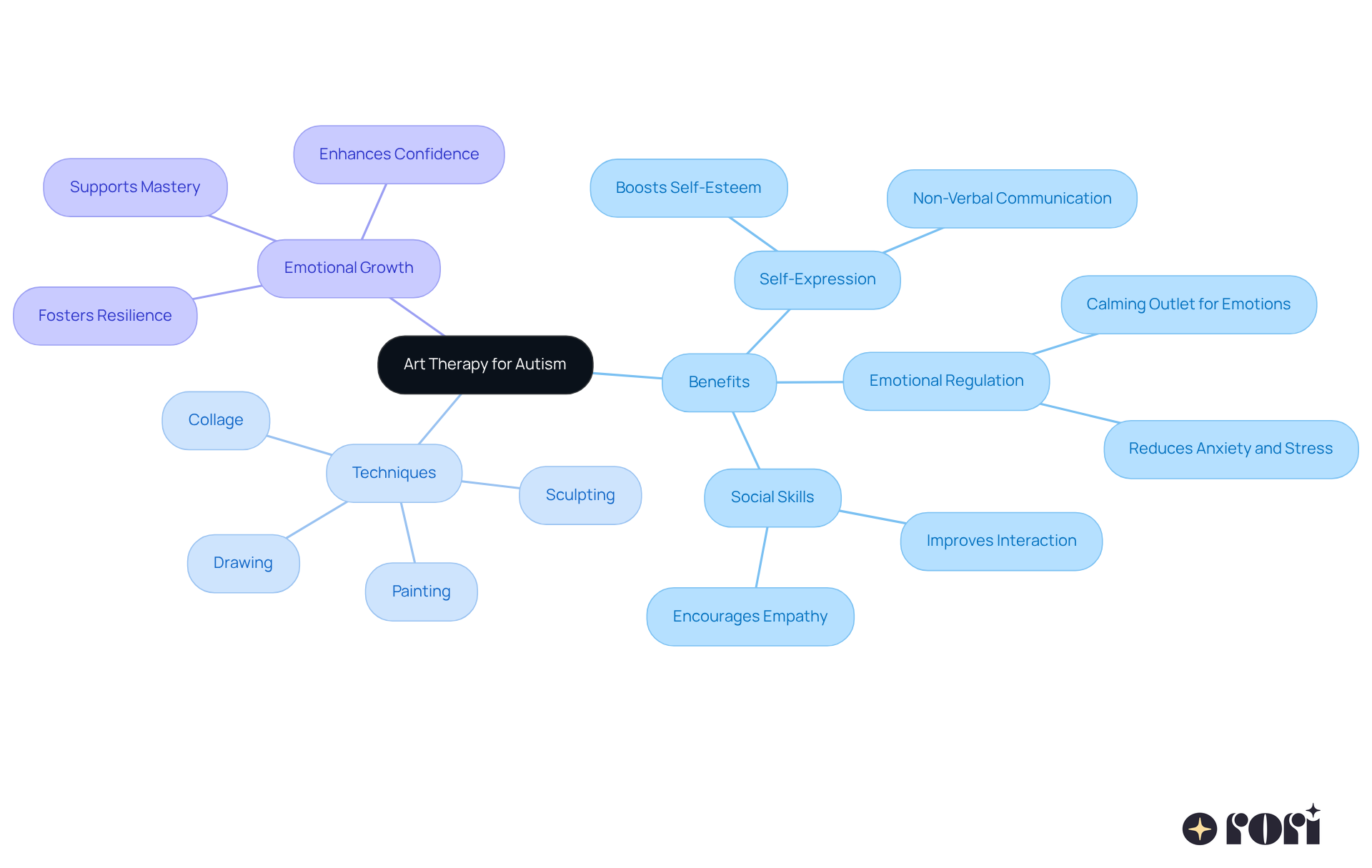
Art therapy is such a wonderful way to tap into creativity for ! For kids on the autism spectrum, are especially helpful because they provide a non-verbal way to communicate. Many children find it tough to express themselves verbally, and that’s where art comes in.
Imagine your child drawing or painting their feelings in a safe and structured environment. It’s a fantastic opportunity for them to . Research shows that can really boost . How amazing is that?
By participating in creative pursuits like drawing, painting, or sculpting, kids not only but also build essential skills that support their emotional and social growth. When they express their feelings through art, it can really and give them a sense of mastery.
So, let’s explore this together! If you’re considering , be aware that they can be a . We’re here to help you every step of the way!
Implement Effective Art Therapy Techniques for Autistic Children
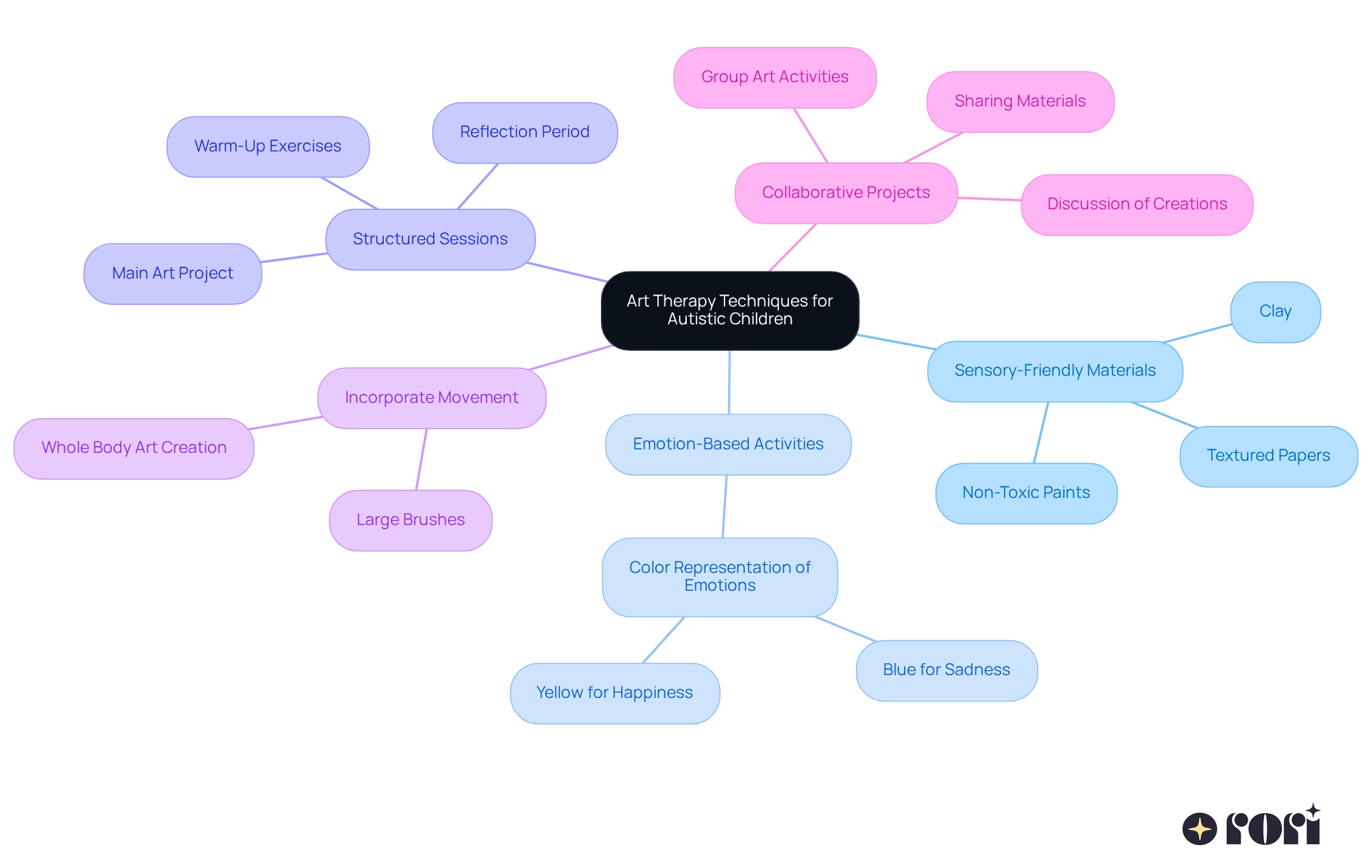
To effectively implement , let’s explore some friendly strategies inspired by Rori Care's commitment to neurodiversity and child success:
- : Think about using a variety of art supplies that cater to different sensory preferences. Textured papers, non-toxic paints, and clay can be comforting and inspiring for young artists. This approach aligns beautifully with Rori Care's empathetic method to .
- : Encourage kids to create art that reflects their feelings. For instance, they might use blue to show sadness or yellow for happiness. This not only helps them express themselves visually but also deepens their understanding of their emotions.
- : It’s helpful to design sessions with clear objectives. Start with a warm-up exercise, dive into the main art project, and wrap up with a reflection period where kids can share their work and feelings. This structure can really assist them in navigating their creative processes through .
- : Why not integrate some physical movement into art activities? Using , such as painting with large brushes or using their whole body to create art, can enhance engagement and provide a sensory outlet that is essential for individuals with autism.
- : Encourage group art projects as part of to promote . When kids work together, share materials, and discuss their creations, they build -key components of .
Let’s embrace these strategies together and create a nurturing environment for our young artists!
Foster Collaboration Between Parents and Therapists in Art Therapy
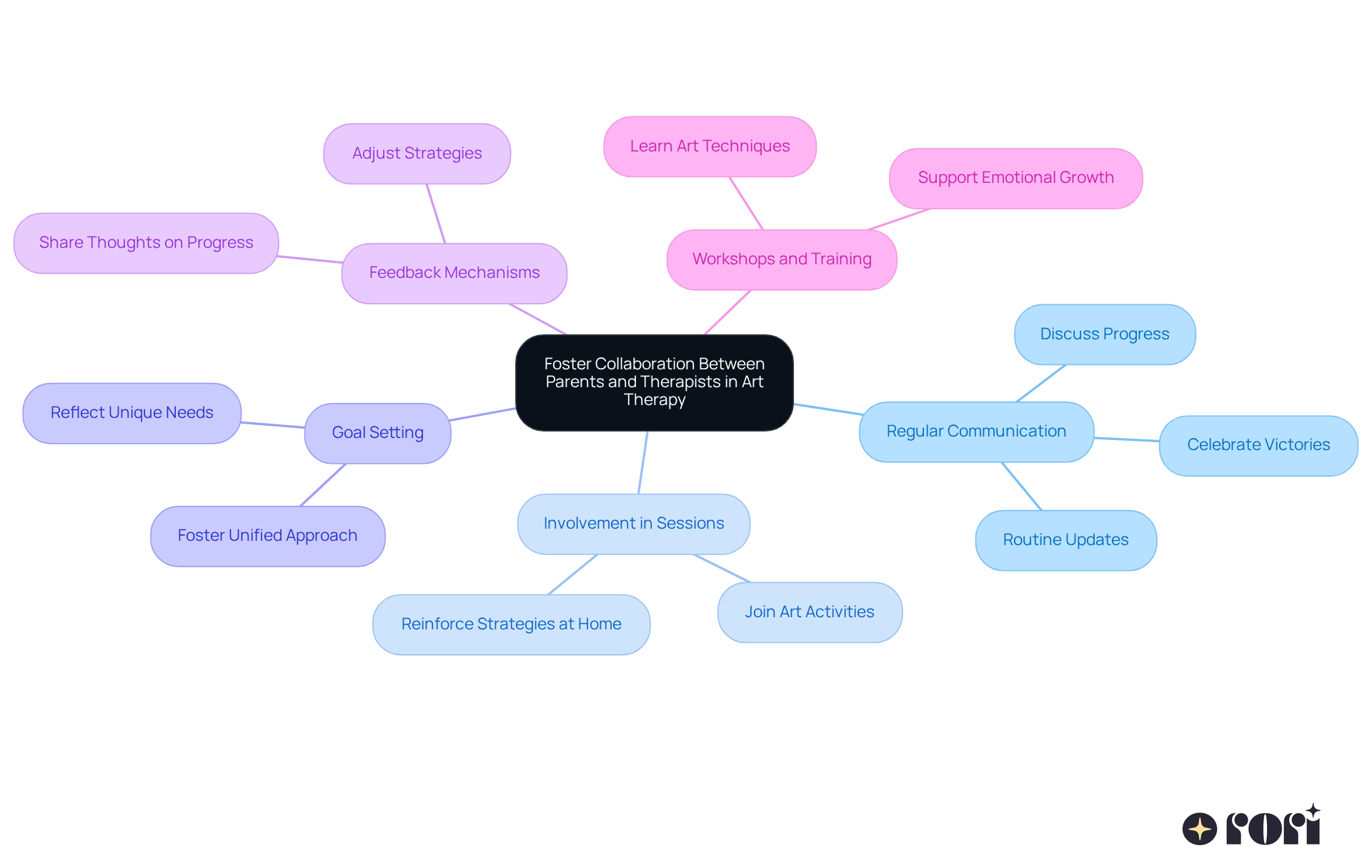
Cooperation between parents and therapists is essential for ensuring the effectiveness of . Let’s dive into some friendly strategies to strengthen this partnership:
- : It’s super helpful to set up a routine for keeping in touch. Think about sharing progress reports, discussing any bumps in the road, and celebrating those little victories together. This way, everyone stays in the loop and can make informed decisions.
- : When it’s appropriate, encourage parents to join in on the art activities. This not only helps them understand the that are being used but also allows them to reinforce these strategies at home. It’s all about creating a supportive environment for the child!
- : Let’s work together to set goals that reflect the unique needs of the child and the family’s values. When parents and therapists are on the same page, it fosters a unified approach that can really enhance behavioral outcomes.
- Feedback Mechanisms: It’s essential to have and the effectiveness of . This feedback is gold for therapists, helping them adjust their strategies to better meet the child’s evolving needs. Plus, it empowers parents to take an active role in their child’s development.
- Workshops and Training: Offering can be a game-changer! They can learn about and how to at home. When parents are equipped with knowledge, they can , complementing the compassionate support provided by Rori Care.
Let’s explore this together! We’re here to help you every step of the way!
Adapt Art Therapy Activities to Individual Needs
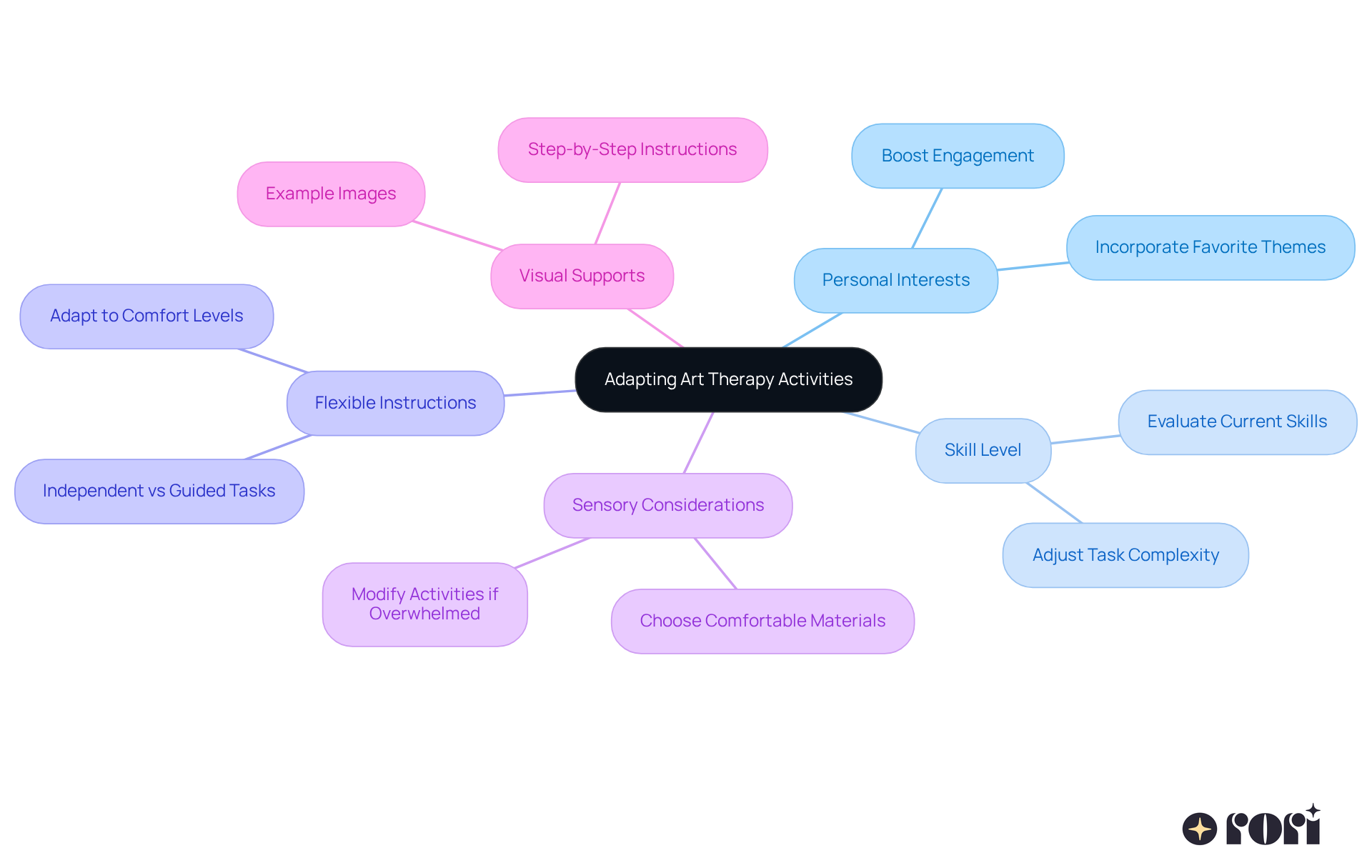
To effectively adapt , let’s explore some friendly approaches together:
- Personal Interests: Tailor . For instance, if they’re passionate about animals, can really boost their involvement and excitement!
- Skill Level: It’s important to and adjust tasks accordingly. Offering simpler tasks for younger kids or those with limited fine motor skills ensures they can participate successfully, while more intricate projects can challenge those who are ready for it.
- : Allow for some . Some kids shine in independent tasks, while others thrive with a bit more guidance. Adjusting your approach based on their comfort level can really enhance their experience.
- Sensory Considerations: Be mindful of . Choosing materials and settings that feel comfortable for your child is key. And if they start to feel overwhelmed, be ready to modify activities to keep things supportive and fun.
- : Using visual aids, like step-by-step instructions or example images, can help kids grasp the tasks better. This is especially helpful for those who might struggle with verbal instructions, making it easier for them to understand and participate.
Let’s keep this conversation going regarding ! What experiences have you had with ? We’re here to help you every step of the way!
Conclusion
Art therapy is such a wonderful way for children on the autism spectrum to express themselves and grow emotionally. By tapping into their creativity, these techniques offer a non-verbal way for kids to share their feelings, explore their experiences, and build essential skills that support their emotional and social development. It’s amazing how the journey through art can boost self-esteem and foster a sense of independence, making it a truly powerful tool in their growth.
In this article, we’ve highlighted some effective strategies to help maximize the benefits of art therapy for autistic children. Think about using:
- Sensory-friendly materials
- Encouraging activities that focus on emotions
- Promoting collaboration between parents and therapists
These approaches create a nurturing environment for our young artists. Plus, personalizing art projects to match individual interests and adapting activities to suit different skill levels ensures that each child’s unique needs are met, enhancing their engagement and success.
But the magic of art therapy goes beyond just individual sessions; it thrives on the partnership between parents and therapists. By keeping communication open, setting shared goals, and involving parents in the therapeutic process, we can really amplify the effectiveness of art therapy. This holistic approach not only supports the child’s development but also empowers families to take an active role in their child’s journey. Embracing these techniques and fostering collaboration can lead to truly transformative experiences, paving the way for a brighter future for children on the autism spectrum. Let’s explore this together!
Frequently Asked Questions
What is art therapy?
Art therapy is a creative approach that allows individuals to express themselves through artistic activities, promoting self-expression and overall well-being.
Why is art therapy important for children on the autism spectrum?
Art therapy is important for children on the autism spectrum because it provides a non-verbal way to communicate, helping them express feelings and emotions that they may find difficult to articulate verbally.
How can art therapy benefit children with autism?
Engaging in art therapy can boost self-regulation, emotional expression, and social skills. It also helps children develop autonomy, creativity, and enhances their self-esteem.
What types of activities are involved in art therapy for children on the autism spectrum?
Activities involved in art therapy can include drawing, painting, and sculpting, which allow children to explore their emotions and experiences in a safe and structured environment.
How does art therapy contribute to a child's emotional and social growth?
By expressing their feelings through art, children can improve their emotional and social skills, leading to greater self-esteem and a sense of mastery over their experiences.
What should parents consider when exploring art therapy for their child?
Parents should recognize that art therapy techniques can be a powerful tool in their child's developmental journey and seek guidance and support throughout the process.
List of Sources
- Define Art Therapy and Its Importance for Autism
- crowncounseling.com (https://crowncounseling.com/statistics/art-therapy-statistics)
- How Art Therapy Benefits Children with Autism Spectrum Disorder (https://buildingblockstherapy.org/blog/how-art-therapy-benefits-children-with-autism-spectrum-disorder)
- Implement Effective Art Therapy Techniques for Autistic Children
- Art Therapy And Autism: Benefits of Art for Individuals with Autism (https://totalcareaba.com/autism/art-therapy-and-autism)
- (PDF) The Application of Sensory Teaching Aids in Art Therapy for Children with Autism Spectrum Disorder (ASD) (https://researchgate.net/publication/395618104_The_Application_of_Sensory_Teaching_Aids_in_Art_Therapy_for_Children_with_Autism_Spectrum_Disorder_ASD)
- Analysing the impact of sensory processing differences on color and texture preferences in individuals with autism spectrum disorder - Humanities and Social Sciences Communications (https://nature.com/articles/s41599-025-05753-4)
- The Effectiveness of Art Therapy on Children and Adolescents with ASD: A Systematic Review of RCTs - PMC (https://pmc.ncbi.nlm.nih.gov/articles/PMC12652869)
- Foster Collaboration Between Parents and Therapists in Art Therapy
- crowncounseling.com (https://crowncounseling.com/statistics/art-therapy-statistics)
- The Role of Parent Training in Supporting ABA Therapy Success | Discovery ABA (https://discoveryaba.com/aba-therapy/the-role-of-parent-training-in-supporting-aba-therapy-success)
- trueuaba.com (https://trueuaba.com/why-parent-collaboration-creates-positive-aba-therapy-results)
- The Role of Parent Involvement in Autism Therapy Success | Advanced Autism Services (https://advancedautism.com/post/the-role-of-parent-involvement-in-autism-therapy-success)
- Adapt Art Therapy Activities to Individual Needs
- The Effectiveness of Art Therapy on Children and Adolescents with ASD: A Systematic Review of RCTs - PMC (https://pmc.ncbi.nlm.nih.gov/articles/PMC12652869)
- Autism Therapy: Key Statistics (https://ambitionsaba.com/resources/autism-therapy-statistics)
- Art Interventions for Children With Autism Spectrum Disorder: A Scoping Review - PMC (https://pmc.ncbi.nlm.nih.gov/articles/PMC9575654)
- Quotes on the healing power of Art Therapy (https://kimberlyhetherington.com/2020/07/09/quotes-on-art-and-healing)
- (PDF) A Review of the Effectiveness of Art Therapy for Children with Autism Spectrum Disorder (https://researchgate.net/publication/394938976_A_Review_of_the_Effectiveness_of_Art_Therapy_for_Children_with_Autism_Spectrum_Disorder)