Understanding the complexities of challenging behaviors in children with autism is so important for families and caregivers who want to create a nurturing environment. By diving into effective behavioral strategies, this article shares insights on managing issues like aggression and self-injury. Ultimately, it aims to enhance the quality of life for individuals on the spectrum.
But what happens when traditional methods just don’t cut it? 🤔 Exploring innovative approaches and collaborative efforts might just hold the key to finding more effective support systems for those affected by autism. Let’s explore this together!
Families often face significant challenges when navigating difficult behaviors in kids with autism, such as aggression, self-injury, and defiance, which can be addressed through behavioral strategies for managing challenging behaviors in autism. These actions often arise from a mix of biological, sensory, and social factors. For instance, a child might act out when they’re overwhelmed in a crowded place or struggling to communicate. Understanding these triggers is key for support providers and professionals to develop .
Research shows that challenging behaviors can generally be grouped into three types:
By pinpointing the specific characteristics of a child’s actions, caregivers can implement behavioral strategies for managing challenging behaviors in autism that address the root causes rather than just alleviating symptoms. This approach utilizes behavioral strategies for managing challenging behaviors in autism, leading to better behavioral outcomes and enhancing the overall quality of life for individuals on the autism spectrum and their families.
Rori Care’s conduct care engine is a fantastic resource in this journey. It performs functional conduct analysis for target behaviors and skills, generating automatic progress reports for clinicians to review. This feature helps evaluate actions and equips guardians with ABA principles and strategies to support their children’s developmental goals through active involvement and data collection. Tools like the Contextual Assessment Inventory (CAI) and Functional Behavior Analysis (FBA) allow caregivers to assess behaviors and create tailored interventions. Plus, identifying antecedents and consequences is crucial in the development of behavioral strategies for managing challenging behaviors in autism, as these factors can greatly influence actions. Ultimately, fostering empathy and understanding within the family and community is vital for creating a supportive environment for individuals on the autism spectrum.
Let’s explore this together! We’re here to help you every step of the way!

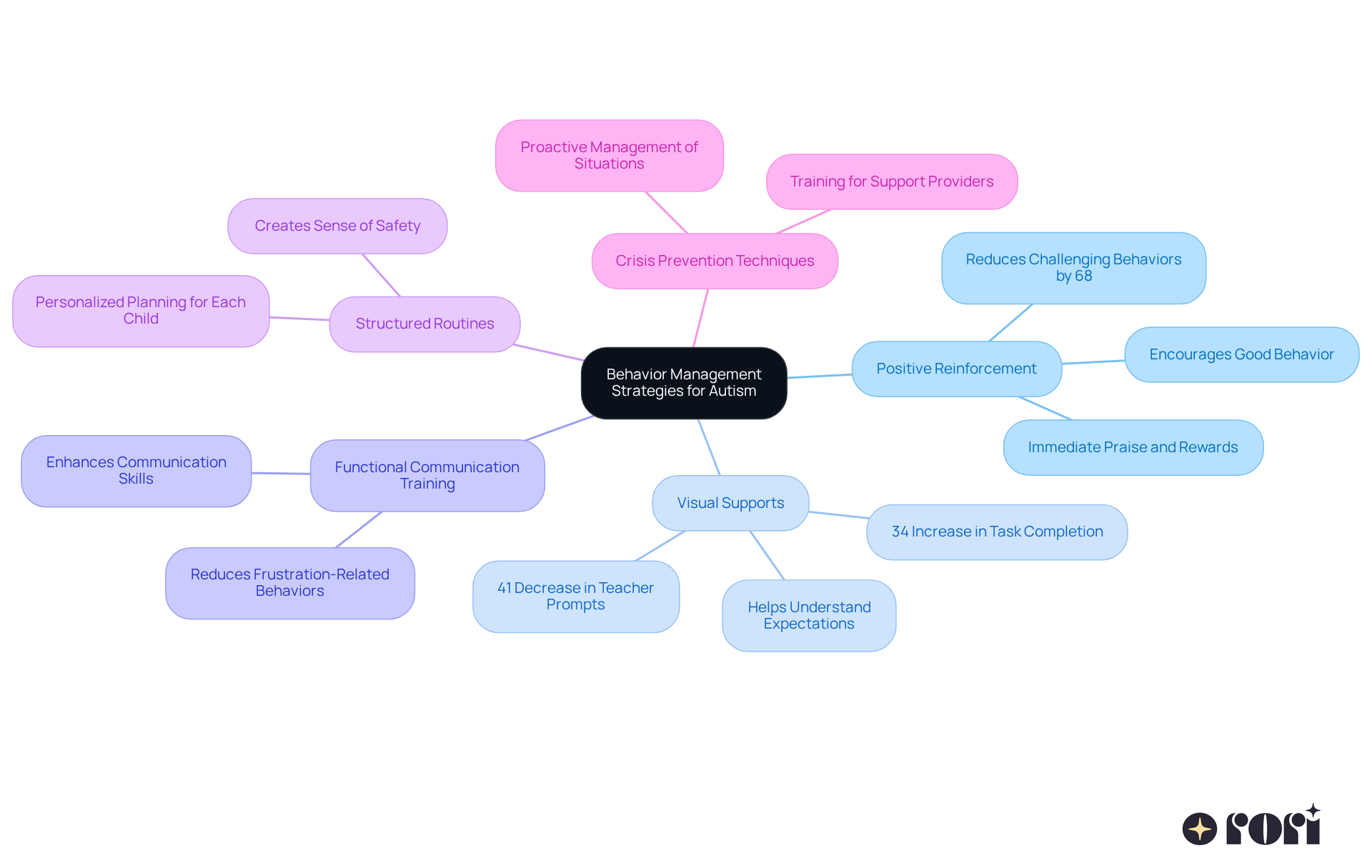
Although managing challenging behaviors in children with autism can feel overwhelming, employing behavioral strategies for managing challenging behaviors in autism can really make a difference. Let’s explore these together!
By consistently applying behavioral strategies for managing challenging behaviors in autism, caregivers can create a nurturing atmosphere that encourages positive changes and enhances the overall well-being of children with autism. Rori Care’s adaptive treatment plans, based on ongoing progress assessments, ensure that interventions remain effective and tailored to each child’s development. We’re here to help you every step of the way!
Creating a supportive environment is key to applying behavioral strategies for managing challenging behaviors in autism. Let’s explore some effective strategies to foster this kind of space:
By focusing on these environmental aspects, you can create a supportive atmosphere that nurtures positive behavior and emotional well-being. Together, we can improve the quality of life for individuals with autism!

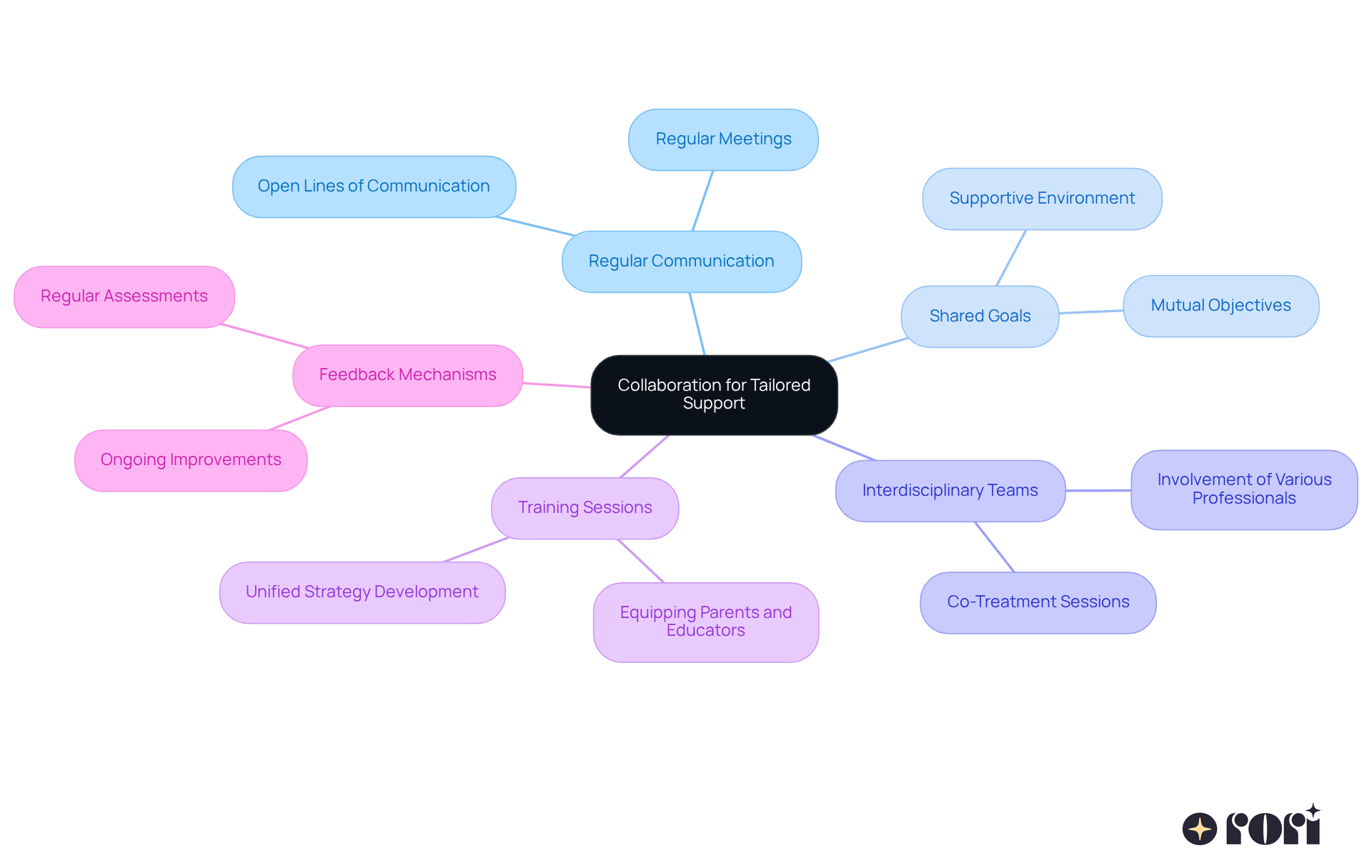
Collaboration among caregivers, educators, and healthcare professionals is crucial for the effective use of behavioral strategies for managing challenging behaviors in autism. Let’s explore some strategies to enhance this collaboration:
By fostering collaboration, caregivers can ensure that children receive the tailored support they need to thrive, ultimately enhancing their overall well-being and development. Rori Care offers free consultations to help families navigate these strategies effectively. We’re here to help you every step of the way!
Understanding and managing challenging behaviors in children with autism can feel overwhelming, right? It’s a journey that requires a thoughtful approach. By recognizing what drives these behaviors - like communication hurdles, environmental stress, or the need for self-regulation - caregivers and professionals can craft strategies that not only tackle the symptoms but also nurture overall well-being.
Key strategies, such as:
are vital in creating a supportive environment. And let’s not forget the power of teamwork! When caregivers, educators, and healthcare professionals collaborate, they can tailor interventions to fit each child’s unique needs. This teamwork enhances communication, aligns goals, and leads to better outcomes in behavior management.
Creating a nurturing atmosphere is so important! By focusing on sensory-friendly spaces, predictable routines, and clear expectations, families and support providers can foster an environment that promotes positive behavior and emotional regulation. Embracing these strategies not only enhances the quality of life for individuals on the autism spectrum but also strengthens family bonds and community support.
And remember, engaging with resources like Rori Care can empower you on this journey. With the right tools and collaboration, meaningful progress is absolutely within reach! Let’s explore this together!
What are some common challenging behaviors in children with autism?
Common challenging behaviors include aggression, self-injury, and defiance.
What factors contribute to challenging behaviors in children with autism?
Challenging behaviors can arise from a mix of biological, sensory, and social factors, such as being overwhelmed in crowded places or struggling to communicate.
How can understanding triggers help in managing challenging behaviors?
Understanding the triggers of challenging behaviors is key for support providers and professionals, as it helps in developing effective behavioral strategies that address root causes rather than just symptoms.
What are the three types of challenging behaviors identified in the article?
The three types of challenging behaviors are: those that serve a communicative purpose, those that respond to environmental stressors, and those that are self-regulatory.
How can caregivers implement effective behavioral strategies for managing challenging behaviors?
Caregivers can implement strategies by pinpointing the specific characteristics of a child's actions, allowing them to address the root causes of the behaviors.
What resources does Rori Care provide for managing challenging behaviors?
Rori Care offers a conduct care engine that performs functional conduct analysis for target behaviors, generates automatic progress reports, and equips guardians with ABA principles and strategies.
What tools can caregivers use to assess behaviors and create interventions?
Caregivers can use tools like the Contextual Assessment Inventory (CAI) and Functional Behavior Analysis (FBA) to assess behaviors and develop tailored interventions.
Why is identifying antecedents and consequences important in behavior management?
Identifying antecedents and consequences is crucial because these factors can greatly influence behaviors, aiding in the development of effective behavioral strategies.
What is the importance of fostering empathy and understanding in the community?
Fostering empathy and understanding within the family and community is vital for creating a supportive environment for individuals on the autism spectrum.