Introduction
Effective communication is a lifeline for all children, but it holds a special significance for those with autism who are nonverbal. These kids often face huge challenges when it comes to expressing their thoughts and feelings, which can lead to frustration and feelings of isolation.
Let’s dive into some transformative communication techniques that can empower nonverbal children on the autism spectrum! Caregivers play a crucial role in creating an environment that not only boosts expression but also nurtures independence and social connections.
So, what innovative strategies can caregivers implement to bridge the communication gap? Together, we can unlock the potential of these remarkable children! We’re here to help you every step of the way!
Understand the Importance of Communication Techniques for Nonverbal Children
Effective interaction is essential for all young people, but it is especially crucial for those with autism who may need to express themselves. These kids often face real challenges in sharing their needs, feelings, and ideas, which can lead to frustration and behavioral issues. That’s why it’s essential for caregivers and educators to understand and apply , creating a space where these young individuals can truly thrive.
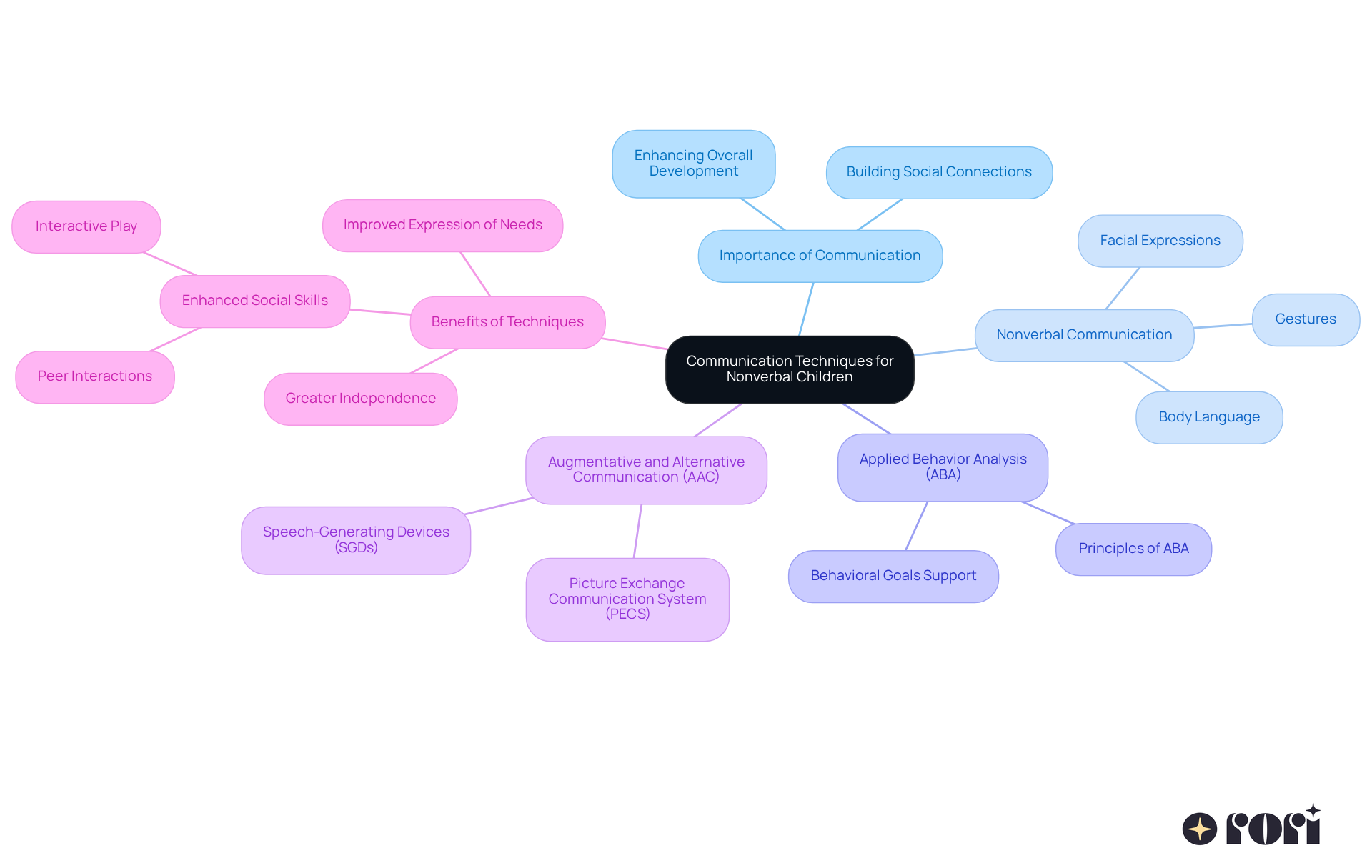
When caregivers are equipped with , they can better support their children’s behavioral goals. Did you know that nonverbal communication - like gestures, facial expressions, and body language - plays a huge role in social interactions? By focusing on these elements, caregivers can that encourages participation and engagement. For example, kids using tools, such as the Picture Exchange Communication System (PECS), often see . In fact, studies show that 85% of have made strides in expressing themselves!
Moreover, the use of can significantly impact a young person’s ability to form relationships, express their needs, and navigate social situations. Engaging in - like singing and dancing - has been shown to boost vocalization and interaction, further enhancing their expressive skills. Ultimately, lead to greater independence and a better quality of life, empowering these children to connect more meaningfully with the world around them.
Let’s explore this together! By understanding these strategies, we can all help create a brighter future for our children.
Implement Effective Strategies to Encourage Communication
To foster on the autism spectrum, caregivers can try out some effective strategies rooted in . Let’s explore this together!
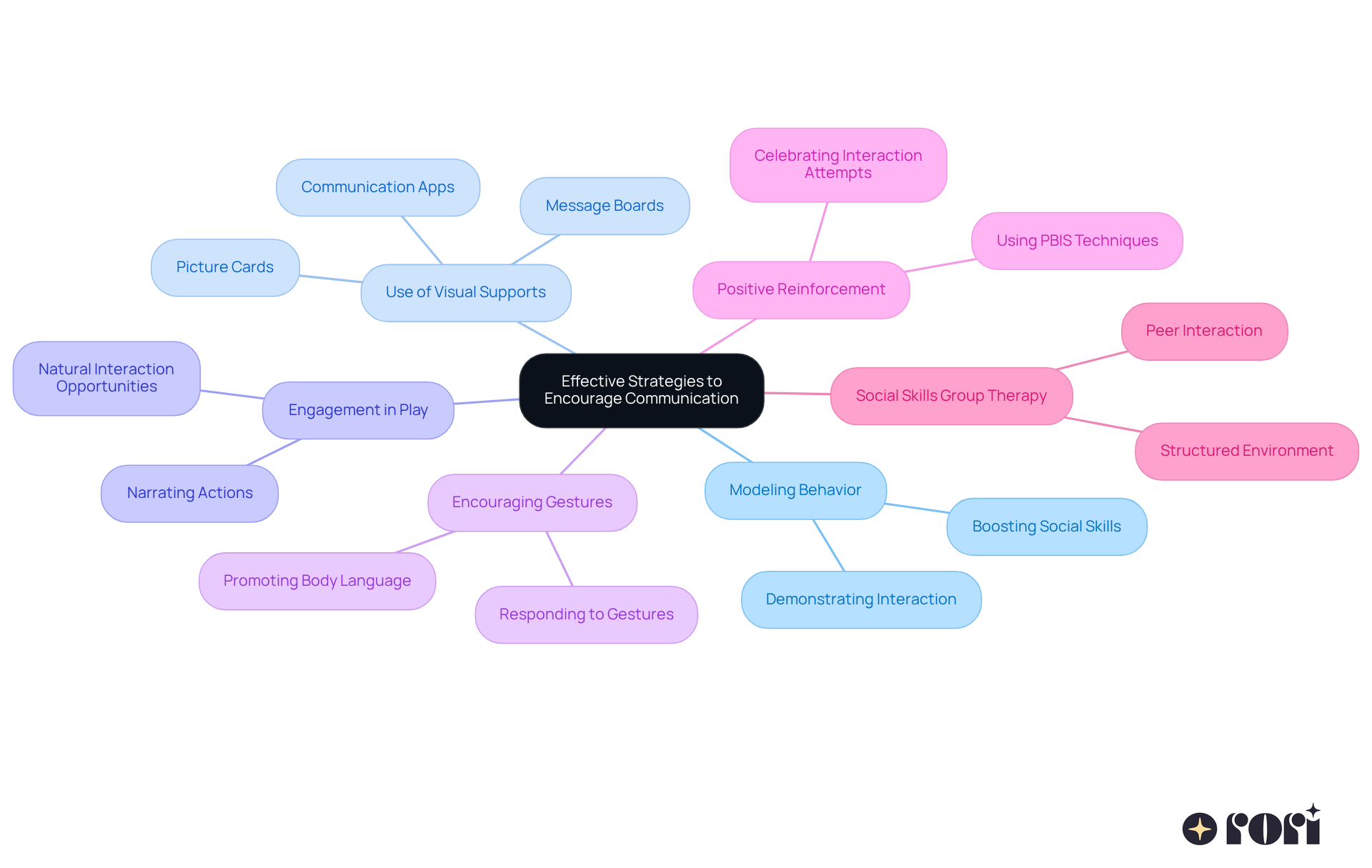
- Modeling Behavior: Demonstrating desired interaction behaviors through clear language, gestures, and expressions is key. This method helps kids understand how to convey their messages effectively. Research shows that , allowing young ones to observe and imitate suitable exchanges.
- Use of Visual Supports: Incorporating , message boards, or apps can help children express their needs and feelings visually. These tools bridge the gap between nonverbal interaction and understanding, making it easier for them to share their thoughts and desires.
- : Using play as a way to express themselves creates natural opportunities for interaction. When kids engage in activities they love, it not only makes communication fun but also in a relaxed setting. Following their interests while narrating their actions can help them pick up related vocabulary, enhancing their expressive abilities.
- Encouraging Gestures: Promoting gestures and body language is super important. Simple actions like pointing or nodding can be effective ways for kids to share their thoughts and feelings without relying solely on spoken language. Responding to their gestures boosts their confidence and strengthens their communication efforts.
- : Celebrating any attempts at interaction, whether spoken or unspoken, with praise or rewards motivates kids to keep trying. Techniques like can inspire them to recognize their achievements and engage socially. This positive feedback loop builds confidence and encourages further attempts at interaction.
- : Joining , led by a qualified therapist, can enhance kids' social interactions and exchanges in a group setting. This structured environment fosters better relationships and skills among peers.
By integrating on the autism spectrum, caregivers can create a supportive environment that empowers kids to express themselves more freely and effectively. It’s also important to be aware of potential pitfalls, like relying too much on visual aids or not responding to gestures, to avoid common mistakes and ensure a more effective communication strategy. The patient-focused, flexible nature of ABA therapy, combined with engaged caregiver participation, has been shown to lead to significant improvements in on the autism spectrum. We’re here to help you every step of the way!
Utilize Visual Aids and Technology to Enhance Communication Skills
can greatly improve on the autism spectrum, facilitating their ability to connect and communicate. Let’s explore some effective strategies to use these tools:
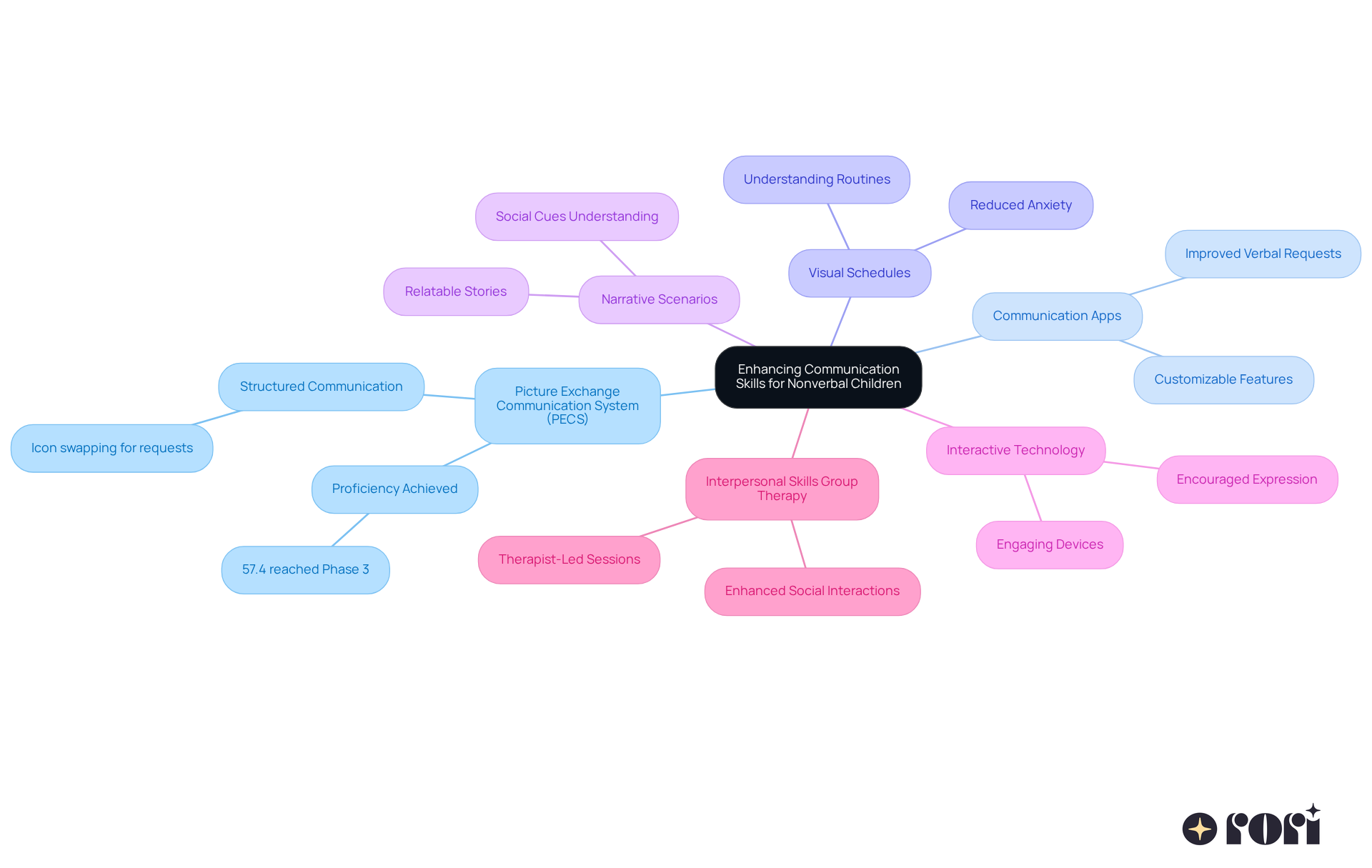
- : PECS is a fantastic way for young individuals to express themselves by swapping pictures for things they want or actions they’d like to take. This organized approach has shown great results, with research indicating that 57.4% of participants reached proficiency in PECS phase 3 or higher after just a year of training.
- : There are so many apps out there designed to help nonverbal kids share their thoughts and feelings. These apps often come with customizable features, allowing young users to pick images or symbols that best express their needs. Studies have found that using these apps can lead to better verbal requests and improved communication skills in children with autism.
- : can be a game-changer for young learners, helping them understand daily routines and what’s expected of them. This clarity can ease anxiety and boost their ability to express their needs throughout the day. Plus, it’s been linked to better engagement and cooperation during activities.
- : Creating that depict specific social situations and appropriate responses can really help kids grasp social cues. These relatable stories enhance interaction by providing examples that children can refer to in various situations.
- : Using interactive devices or robots that promote play can spark engaging exchanges among youngsters. These technologies provide consistent signals for interaction, creating an environment where kids feel encouraged to express themselves.
- : Participating in group therapy focused on interpersonal skills, led by a qualified therapist, can further enhance communication abilities. This supportive setting fosters better social interactions and relationships, equipping caregivers with ABA principles and strategies that complement the use of .
By integrating these approaches, we can see significant improvements in on the autism spectrum. This empowers them to express their needs and engage more fully with the world around them. Let’s take this journey together!
Engage Caregivers and Family in the Communication Process
Engaging caregivers and family members in the interaction process is essential for the success of nonverbal individuals with autism, utilizing . Let’s explore some :
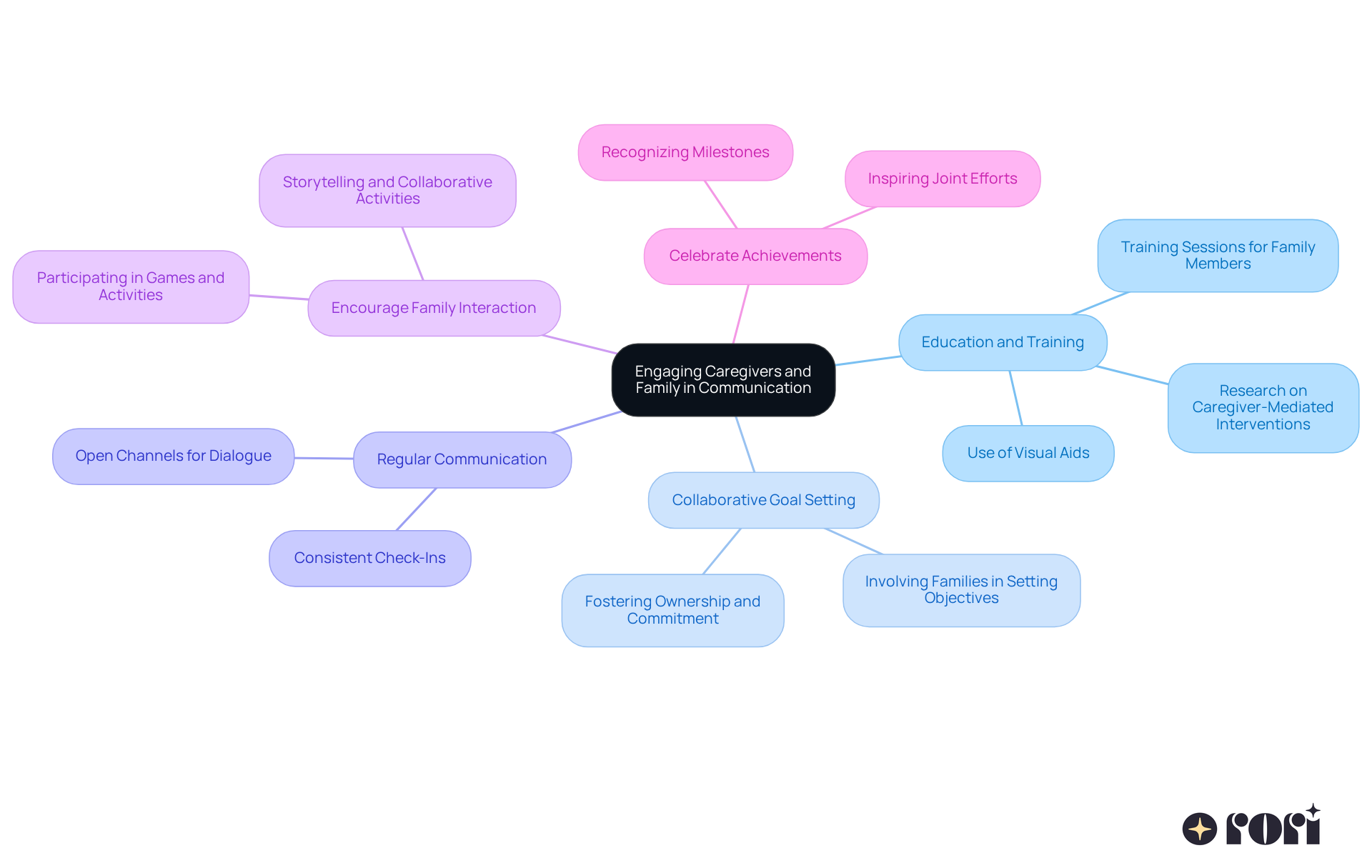
- Education and Training: How about conducting training sessions for family members on effective interaction strategies? Including the use of visual aids can make a big difference! Research shows that , leading to better social interaction and behavior in children.
- : for interaction is key. This collaborative approach fosters a sense of ownership and commitment, which is crucial for .
- : Establishing consistent check-ins with families to discuss progress and challenges can really help. Open channels for dialogue ensure that everyone is on the same page and can adapt strategies as needed, enhancing the overall effectiveness of the intervention.
- Encourage Family Interaction: between family members and the young one is a great idea! Participating in games, storytelling, or collaborative activities can significantly improve interaction abilities and strengthen emotional connections.
- Celebrate Achievements: Let’s not forget to in expressing themselves, no matter how small. Acknowledging these advancements inspires both the young one and the family, strengthening their joint efforts in the dialogue journey.
By actively involving families in these strategies, the communication techniques for nonverbal children on the autism spectrum become more effective, resulting in better outcomes. We’re here to help you every step of the way!
Conclusion
Effective communication techniques are so important for nonverbal children with autism. They help these kids express their needs, emotions, and ideas more clearly. By using these strategies, caregivers and educators can create a welcoming environment that encourages growth and independence, allowing these children to truly thrive in their interactions with the world around them.
Let’s talk about some key techniques!
- Modeling behavior
- Using visual aids
- Encouraging play
These approaches not only improve how children communicate but also strengthen relationships, promote social interaction, and boost self-confidence. Plus, integrating technology-like communication apps and visual schedules-can really empower nonverbal children to navigate their daily lives more easily.
Ultimately, the journey toward effective communication is a team effort. Caregivers, family members, and educators all play a role. By actively involving families in the communication process and celebrating each child's progress, we can build a supportive network that leads to meaningful connections and a better quality of life. Embracing these strategies can truly pave the way for a brighter future, where every child feels equipped to express themselves and engage with their community. Let’s explore this together!
Frequently Asked Questions
Why are communication techniques important for nonverbal children on the autism spectrum?
Communication techniques are crucial for nonverbal children on the autism spectrum as they help these kids express their needs, feelings, and ideas, reducing frustration and behavioral issues.
How can caregivers support nonverbal children effectively?
Caregivers can support nonverbal children by understanding and applying communication techniques, including the principles of Applied Behavior Analysis (ABA), which help in achieving behavioral goals.
What role does nonverbal communication play in social interactions for these children?
Nonverbal communication, such as gestures, facial expressions, and body language, plays a significant role in social interactions, allowing children to engage and participate more fully.
What are Augmentative and Alternative Communication (AAC) tools, and how do they help?
AAC tools, like the Picture Exchange Communication System (PECS), assist nonverbal children in communicating their needs. Studies show that 85% of nonverbal individuals using PECS have made significant improvements in their communication.
How do communication techniques affect relationships and social navigation for nonverbal children?
Effective communication techniques enhance a child's ability to form relationships, express their needs, and navigate social situations, leading to greater independence and a better quality of life.
What activities can help boost vocalization and interaction in nonverbal children?
Engaging in interactive play, such as singing and dancing, has been shown to boost vocalization and enhance interaction, further improving expressive skills in nonverbal children.
List of Sources
- Understand the Importance of Communication Techniques for Nonverbal Children
- Minimally Verbal School-Aged Children with Autism Spectrum Disorder: The Neglected End of the Spectrum - PMC (https://pmc.ncbi.nlm.nih.gov/articles/PMC3869868)
- Understanding Nonverbal Autism (https://kidsclubaba.com/understanding-nonverbal-autism)
- The Importance of Building a Communication System for Nonverbal Children with Autism (https://mastermindbehavior.com/post/the-importance-of-building-a-communication-system-for-nonverbal-children-with-autism)
- Brain Imaging Shows How Minimally Verbal and Nonverbal Children with Autism Have Slower Response to Sounds (https://chop.edu/news/brain-imaging-shows-how-minimally-verbal-and-nonverbal-children-autism-have-slower-response)
- Nonverbal Autism | Discovery ABA (https://discoveryaba.com/aba-therapy/non-verbal-autism)
- Implement Effective Strategies to Encourage Communication
- Teaching nonverbal autistic children to talk | Autism Speaks (https://autismspeaks.org/expert-opinion/seven-ways-help-your-child-nonverbal-autism-speak)
- 10 Inspiring Non Verbal Child Quotes to Celebrate Unique Communication – Rori Blog (https://rori.care/post/10-inspiring-non-verbal-child-quotes-to-celebrate-unique-communication)
- Tips for Communicating with Nonverbal Autism (https://magnetaba.com/blog/how-to-communicate-with-nonverbal-autism)
- The effects of an educational program based on modeling and social stories on improvements in the social skills of students with autism - PMC (https://pmc.ncbi.nlm.nih.gov/articles/PMC9065906)
- sciencedirect.com (https://sciencedirect.com/science/article/pii/S1877042812020241)
- Utilize Visual Aids and Technology to Enhance Communication Skills
- Predictors of successful Picture Exchange Communication System training in children with communication impairments: insights from a real-world intervention in a resource-limited setting - PMC (https://pmc.ncbi.nlm.nih.gov/articles/PMC11907048)
- A Systematic Review of Picture Exchange Communication System Interventions for Children and Adolescents on the Autism Spectrum in Mainland China (https://apps.asha.org/EvidenceMaps/Articles/ArticleSummary/e05a2b46-97f3-ee11-8151-005056834e2b)
- Effectiveness of the Picture Exchange Communication System in Teaching English Vocabulary in Children with Autism Spectrum Disorders: A single-subject study (https://tandfonline.com/doi/full/10.1080/2331186X.2021.1892995)
- pmc.ncbi.nlm.nih.gov (https://pmc.ncbi.nlm.nih.gov/articles/PMC8620483)
- Frontiers | Effectiveness of picture exchange communication system in developing requesting skills for children with multiple disabilities (https://frontiersin.org/journals/psychology/articles/10.3389/fpsyg.2024.1434478/full)
- Engage Caregivers and Family in the Communication Process
- Association between caregiver-child interaction and autistic-like behaviors at around three years of age (https://sciencedirect.com/science/article/abs/pii/S0165032724005019)
- heartwisesupport.org (https://heartwisesupport.org/post/the-impact-of-family-involvement-on-autism-therapy-outcomes)
- Inspiring Autism Quotes for Understanding and Acceptance - Kids First (https://kidsfirstservices.com/first-insights/autism-quotes)
- The Role of Caregivers in Autism (https://supportivecareaba.com/statistics/the-role-of-caregivers-in-autism)
- Best Autism Quotes to Raise Awareness and Understanding (https://yellowbusaba.com/post/autism-quotes)