Empowering Parents in Public Settings with Autism: 4 Key Strategies

Empowering parents in public settings with autism through effective strategies for better experiences.

Introduction

Navigating public spaces can be quite the adventure for children with autism and their families. 🌟 From sensory overload to social communication hurdles, these challenges often leave parents feeling a bit overwhelmed, unsure of how to best support their little ones. But don’t worry! This article dives into four key strategies that can help empower you to enhance your child's experience in public settings, fostering their confidence and independence.

So, how can caregivers turn potential anxiety into successful outings? Let’s explore this together! Every trip can become a positive opportunity for growth and connection, and we’re here to help you every step of the way!

Understand Autism Challenges in Public Settings

Helping your child navigate communal spaces can feel like a daunting task, right? Understanding the unique challenges they might face is a great first step. For many kids with autism, sensory sensitivities can turn places like malls, parks, or restaurants into overwhelming experiences. Let’s break down some common hurdles:

  • Sensory Overload: Bright lights, loud noises, and crowded areas can lead to anxiety and meltdowns. Did you know that research shows between 69% to 95% of kids with autism experience sensory processing challenges? Recognizing these triggers is key to managing them effectively.

  • Social Communication Difficulties: Many children with autism struggle to pick up on social cues, which can lead to misunderstandings or behaviors that might seem out of place in public. Experts emphasize the importance of fostering understanding and acceptance in these situations. By empowering parents in public settings with autism through ABA principles and strategies, you can assist your child in improving their social communication skills.

  • Behavioral Challenges: Unexpected changes or disruptions in routine can spark anxiety, leading to behaviors that might be seen as disruptive. Techniques like role-playing and preparing your child for new situations can really boost their adaptability. Plus, being actively involved in your child’s therapy - the only scientifically validated treatment for autism covered by insurance - can lead to better behavioral outcomes as you learn to apply effective strategies at home and in the community.

By recognizing these challenges and utilizing the insights gained through caregiver education, you can better prepare yourself and your child for outings, which is vital for empowering parents in public settings with autism. Celebrating those small victories along the way can really help build a sense of accomplishment and resilience in navigating public spaces. Let’s explore this together!

The central node represents the main topic, while the branches show specific challenges. Each sub-branch provides additional details, helping you visualize the complexities of navigating public spaces with autism.

Implement Sensory-Friendly Strategies

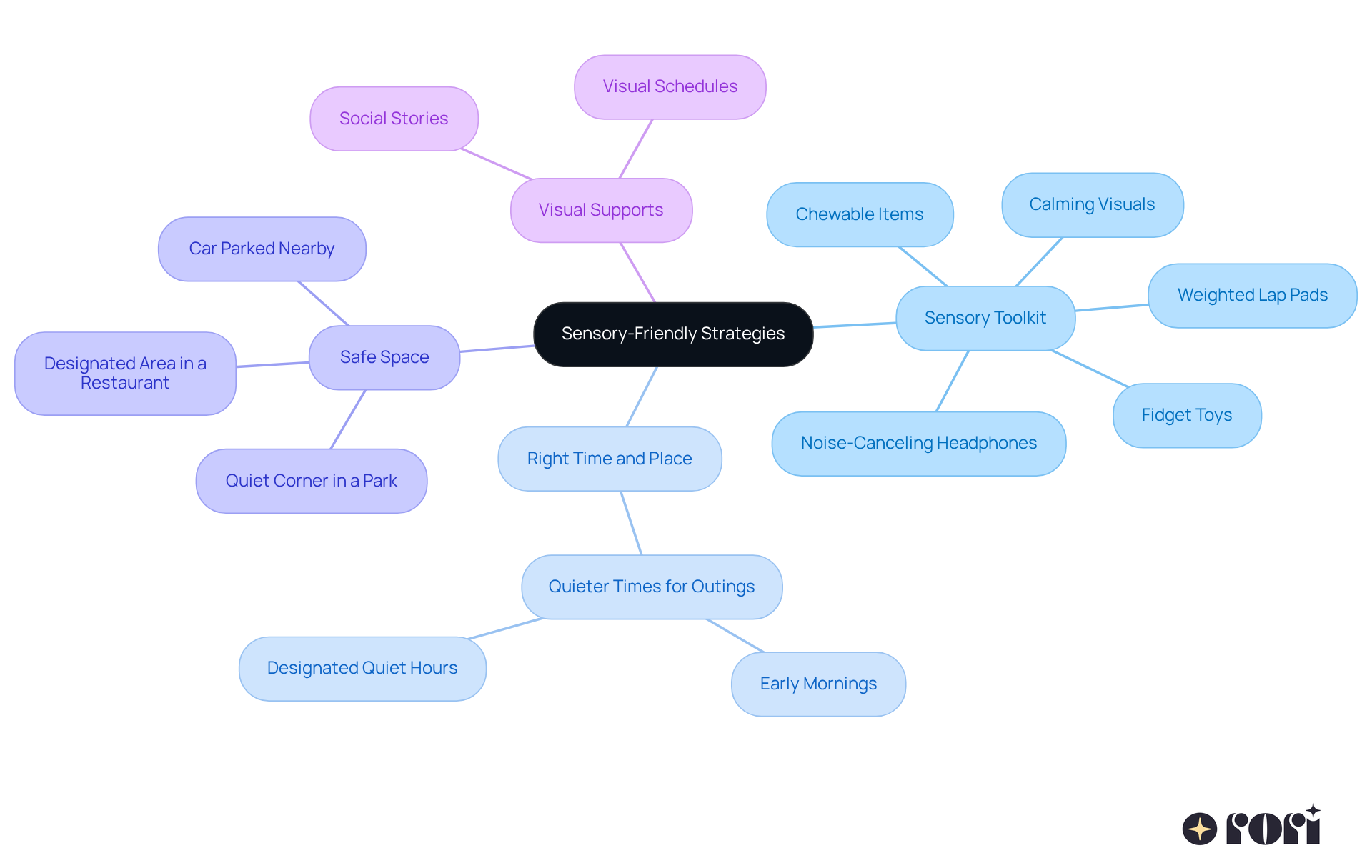
To help your child feel more at ease in public spaces, let’s explore some sensory-friendly strategies together:

  • Prepare a Sensory Toolkit: Equip your little one with some handy items to help manage overwhelming stimuli. Think noise-canceling headphones, fidget toys, chewable items, and calming visuals. For example, weighted lap pads can offer comfort, while chew toys can cater to oral sensory needs.

  • Choose the Right Time and Place: Timing can really make a difference! Planning outings during quieter times, like early mornings or designated quiet hours, can help minimize sensory overload. This way, empowering parents in public settings with autism helps make trips to stores or community events much more manageable.

Creating a safe space is crucial for empowering parents in public settings with autism, ensuring that their child has specific areas to retreat to if they start to feel overwhelmed. This could be a quiet corner in a park, a designated area in a restaurant, or even your car parked nearby. Having a safe spot allows them to regain their composure and feel secure.

  • Use Visual Supports: Visual schedules or social stories can be great tools to prepare your child for what to expect during outings. These resources help reduce anxiety by providing a clear outline of the day’s activities, boosting their sense of control and understanding.

By using these strategies, you can play a role in empowering parents in public settings with autism to help their child navigate public spaces with more comfort and confidence. We’re here to support you every step of the way!

The central node represents the main theme of sensory-friendly strategies, while the branches show specific strategies and their components. Each color-coded branch helps you quickly identify different areas of focus.

Enhance Communication and Social Skills

Supporting your child's communication and social skills in public settings can feel like a big task, but it doesn’t have to be! Here are some friendly techniques to help you along the way:

  • Model Appropriate Interactions: Show your little one how to greet others, ask for help, or express their feelings. You might even try role-playing at home! It’s a fun way to prepare them for real-life situations, letting them practice those important social cues and responses.
  • Encourage Non-Verbal Communication: Teach your child to use gestures, facial expressions, or even visual aids to share their needs and feelings. This can be super helpful in noisy places where talking might be tricky.
  • Practice Social Skills in Safe Settings: Organize playdates or small group activities where your child can practice social interactions in a comfy environment. This gradual exposure helps build their confidence before they step into larger social spaces. Did you know that 95.4% of participants showed improvement in social-communication symptoms over time? That’s the power of consistent practice!
  • Use Positive Reinforcement: Celebrate your child’s successful interactions, no matter how small! This encouragement boosts their confidence and inspires them to join in more actively. It’s amazing to see that 90% of kids make progress when caregivers are fully involved and follow the recommended hours.

By using these strategies, you can contribute to empowering parents in public settings with autism, enabling their child to navigate public spaces with more ease and confidence. The principles of Applied Behavior Analysis (ABA) therapy remind us how important it is to tailor strategies to meet each child’s unique needs. This ensures they get the support they need for their growth. Plus, as a caregiver, your education is key! It equips you with the knowledge and skills to make informed decisions that positively impact your child’s journey.

Let’s explore this together! We’re here to help you every step of the way!

The central node represents the main goal of enhancing skills, while each branch shows a technique. Sub-branches provide details on how to implement each technique and its benefits.

Prepare for Successful Outings

To ensure a successful outing with your child, let’s consider some essential preparation steps:

  • Create a Detailed Plan: Outline the day’s activities, including locations, times, and any necessary accommodations. Sharing this plan with your little one helps them know what to expect, easing any worries and creating a sense of security. Visual aids, like maps or schedules, can really help clarify the itinerary. This structured approach aligns with the principles of Applied Behavior Analysis (ABA), which focuses on adapting to each child’s unique needs.

  • Pack a Go-Bag: Don’t forget to include essential items like snacks, water, sensory tools, and comfort items such as a favorite toy or blanket. These goodies not only meet your child’s needs but also provide reassurance in new environments. A well-packed go-bag can make the trip so much more enjoyable, supporting the behavioral goals set through ABA therapy.

  • Establish Clear Expectations: Talk about the event with your kid ahead of time, outlining the rules and what behaviors you expect. This chat can include visual aids to boost understanding, which is especially helpful for kids with autism. Setting clear expectations helps them feel more confident and engaged during the outing. Your active involvement, as encouraged by ABA principles, plays a crucial role in achieving positive outcomes.

  • Have an Exit Strategy: It’s wise to prepare for the possibility of your child feeling overwhelmed. Identify a quiet spot to retreat to or have a plan for leaving if needed. This proactive approach ensures you can handle any tough situations smoothly, leading to a more pleasant experience overall.

By following these steps, parents can create an organized and nurturing atmosphere that is focused on empowering parents in public settings with autism, helping their kids enjoy public activities and ultimately leading to wonderful family moments. Empowering parents in public settings with autism by providing ABA strategies not only enhances the outing experience but also supports the overall development and well-being of your child. Plus, understanding insurance coverage for ABA therapy can help families access these vital services, ensuring they get the support needed for their child’s growth. Let’s explore this together!

Each box represents a step in preparing for an outing. Follow the arrows to see how each step leads to the next, helping you create a smooth and enjoyable experience for your child.

Conclusion

Empowering parents in public settings with children who have autism is so important for creating positive experiences and enhancing family interactions. By understanding the unique challenges these children face - like sensory overload, social communication difficulties, and behavioral challenges - parents can better prepare themselves and their little ones for outings. Using effective strategies, such as sensory-friendly tools, visual supports, and structured planning, can really make a difference in how children navigate public spaces, leading to more enjoyable family outings.

This article highlights some key strategies that can empower parents. For instance:

  1. Creating a sensory toolkit
  2. Implementing communication techniques
  3. Preparing for successful outings

Each of these strategies helps children feel more comfortable and secure in communal environments. By modeling appropriate social interactions, encouraging non-verbal communication, and setting clear expectations, parents can boost their child’s social skills and confidence in public settings.

Navigating public spaces with a child who has autism can be challenging, but it’s also filled with opportunities for growth and connection. By embracing these strategies and fostering an understanding environment, parents can empower their children to thrive in public settings. Remember, it’s vital to keep seeking support, sharing experiences, and advocating for sensory-friendly practices in the community. Together, we can ensure that all children enjoy the world around them with confidence and joy! Let’s explore this journey together!

Frequently Asked Questions

What are some common challenges children with autism face in public settings?

Children with autism often face challenges such as sensory overload from bright lights and loud noises, social communication difficulties in understanding social cues, and behavioral challenges due to unexpected changes in routine.

How does sensory overload affect children with autism?

Sensory overload can lead to anxiety and meltdowns in children with autism, as many experience sensory processing challenges that make environments like malls, parks, or restaurants overwhelming.

Why is understanding social communication important for children with autism in public?

Many children with autism struggle to pick up on social cues, which can lead to misunderstandings or behaviors that seem out of place. Fostering understanding and acceptance is crucial in these situations.

What strategies can help children with autism manage behavioral challenges in public?

Techniques such as role-playing and preparing the child for new situations can enhance adaptability. Active involvement in the child's therapy can also lead to better behavioral outcomes.

How can parents empower their children with autism in public settings?

By recognizing the challenges their children face and utilizing insights from caregiver education, parents can better prepare for outings and celebrate small victories to build resilience.

What is the significance of therapy for children with autism?

Therapy, particularly Applied Behavior Analysis (ABA), is the only scientifically validated treatment for autism and is often covered by insurance. It helps parents learn effective strategies to apply at home and in the community.