Introduction
Have you ever wondered how role-playing can change the way children with autism connect with others? This engaging technique gives kids a fun way to practice social skills in a safe space. It not only helps them build essential social skills but also boosts their emotional awareness and confidence, paving the way for meaningful connections.
So, how can we make role-playing work best for our kids? Exploring tailored approaches to role-playing can unlock significant benefits, empowering children with autism to thrive in their social landscapes. By diving into these strategies, we can help children with autism build the social skills they need to thrive.
Understand the Role of Role-Playing in ABA Therapy
Have you ever wondered how role-playing can make a difference in your child's social skills? Role-playing is all about pretending to be in real-life situations, helping kids practice their social skills in a safe space. By engaging in pretend play, children can learn how to greet friends, share toys, and manage conversations-all essential for their growth.
You might be surprised to learn that kids with autism can boost their social skills by as much as 40% using role-playing to enhance social skills in autism! By stepping into different roles, they learn to pick up on social cues, develop empathy, and improve their communication skills. This fun method not only builds their social abilities but also helps them feel more confident, allowing them to explore different reactions without the pressure of real-life consequences.
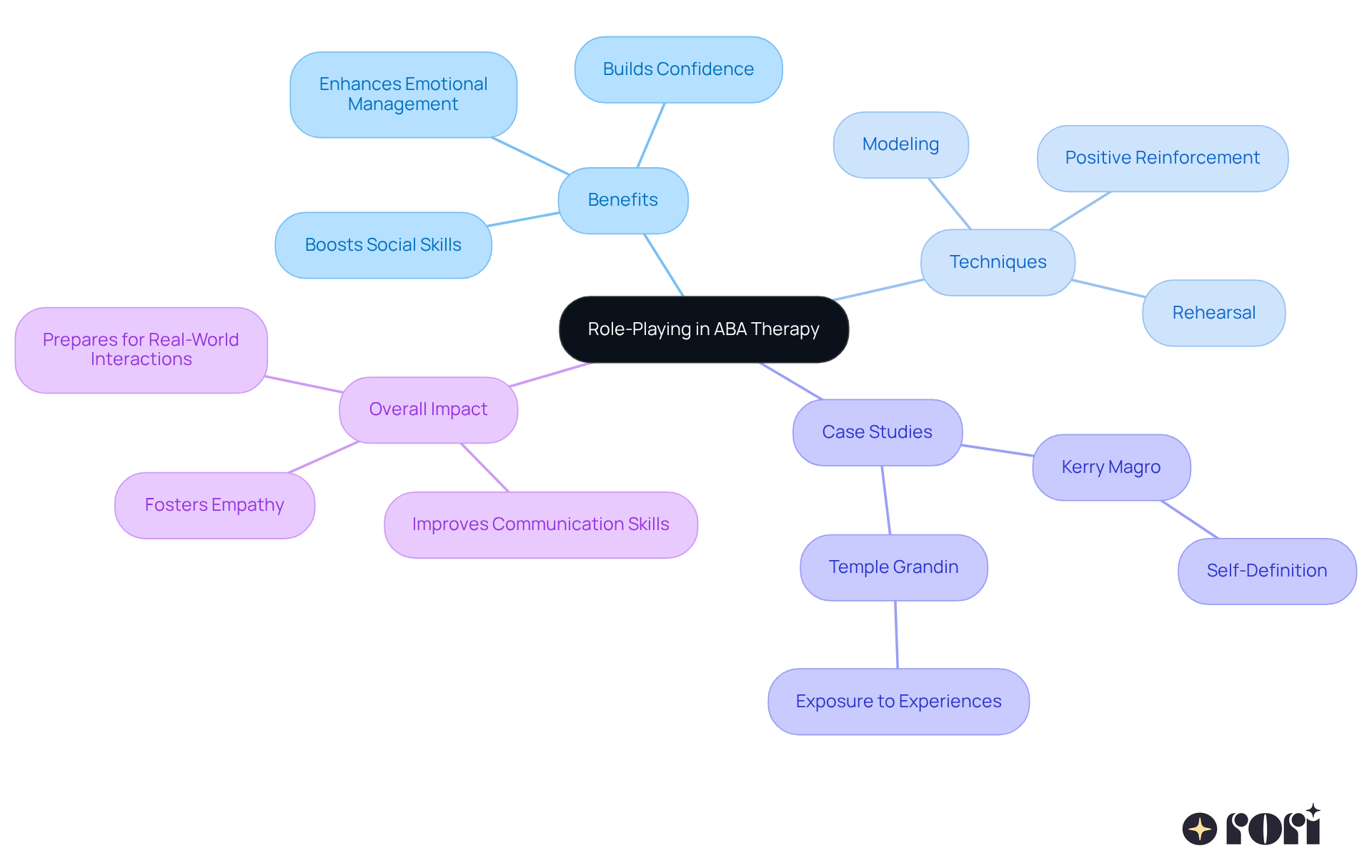
Integrating role-playing into therapy sessions fits perfectly with ABA principles, which emphasize practice and reinforcement. Techniques like modeling, rehearsal, and positive reinforcement can significantly enhance social skills and emotional development in children with autism. When therapists and parents understand how important using role-playing to enhance social skills in autism is, they can significantly help kids develop their social skills.
Case studies show just how effective these simulated interactions can be. Kerry Magro points out that kids with autism can shape their own identities, showcasing the empowerment that comes from mastering social interactions through role-play. Similarly, Temple Grandin encourages exposing children to diverse experiences, highlighting how imaginative play can help them discover their interests and develop vital life skills.
Overall, using role-playing to enhance social skills in autism not only helps in enhancing social skills but also promotes emotional management. It allows kids to express their feelings and reactions in a structured environment. By creating a supportive learning atmosphere, role-playing improves children's ability to navigate social situations, ultimately helping them thrive in their daily lives. By embracing role-playing, you’re not just helping your child learn; you’re empowering them to thrive in their everyday interactions.
Implement Effective Role-Playing Techniques for Skill Development
Let’s discuss some effective techniques using role-playing to enhance social skills in autism that can really help both therapists and parents!
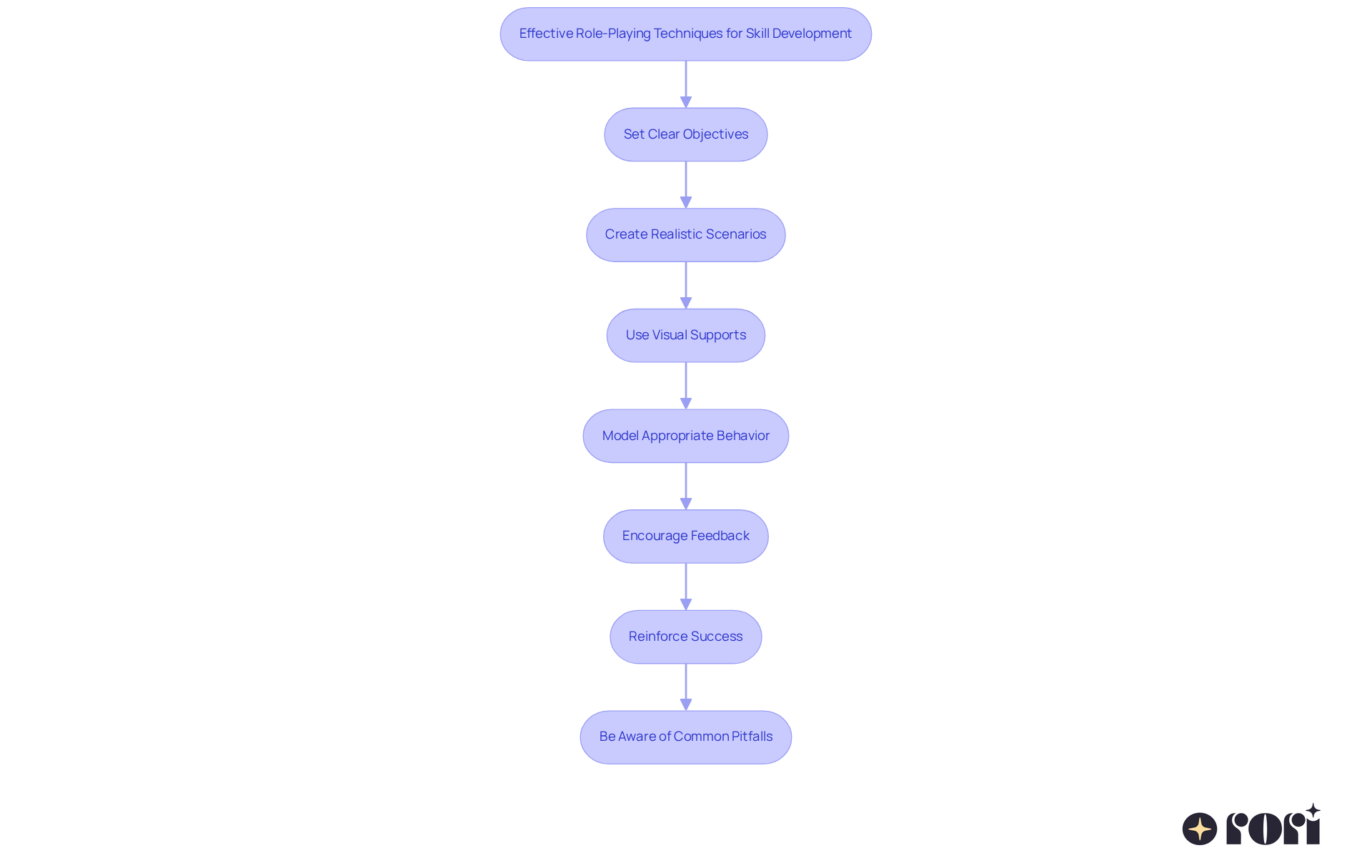
- Set Clear Objectives: Before jumping into a role-playing session, it’s super helpful to define what specific skills you want to work on, like starting conversations or sharing feelings. This focus not only guides the activity but also helps kids understand what they’re aiming for. You know, when kids participate in Social Skills Training, it can really boost their ability to connect with others, particularly when using role-playing to enhance social skills in autism and combined with early intensive behavioral intervention. Isn’t that amazing?
- Create Realistic Scenarios: Think about crafting scenarios that mirror everyday social situations kids might face, like making new friends or asking for help. Tailoring these scenarios to what your child loves - like their favorite toys or themes - can really spark their interest and motivation. For example, using Bionicle Legos can make the role-play even more engaging!
- Use Visual Supports: Visual aids, like picture cards or scripts, can be a game-changer for helping kids understand their roles in the role-play. Studies show that these tools can really boost their grasp of social cues, making it easier for them to navigate complex interactions.
- Model Appropriate Behavior: Before letting your child jump in, it’s great to show them how to handle the situation. Modeling gives them a clear picture of what to do, which is especially important for kids who might struggle with social norms. Jessica Pappagianopoulos found that when autistic teens engaged in simulation games, they were using role-playing to enhance social skills in autism, which led to significant improvements in working together, speaking up for themselves, and feeling less alone. How cool is that?
- Encourage Feedback: After each role-play, take a moment to chat about what went well and what could be better. This reflection helps kids internalize what they’ve learned and apply it in real life. Plus, when caregivers get involved, it often leads to more effective and lasting improvements!
- Reinforce Success: Celebrate those little wins during role-play! Acknowledging progress not only boosts confidence but also makes the learning process fun and rewarding. Empowering caregivers with ABA principles can really enhance their ability to support their child’s goals, leading to even better outcomes.
- Be Aware of Common Pitfalls: It’s key to avoid pushing imaginative play when either you or your child is feeling off. Taking breaks can help keep things positive, making everyone more willing to join in next time.
So, let’s put these strategies into action and create a warm, supportive space where our kids can thrive! Kids who dive into fun, organized activities often see big improvements in how they interact with others. It’s a game-changer for supporting their growth!
Explore the Benefits of Role-Playing for Emotional and Social Growth
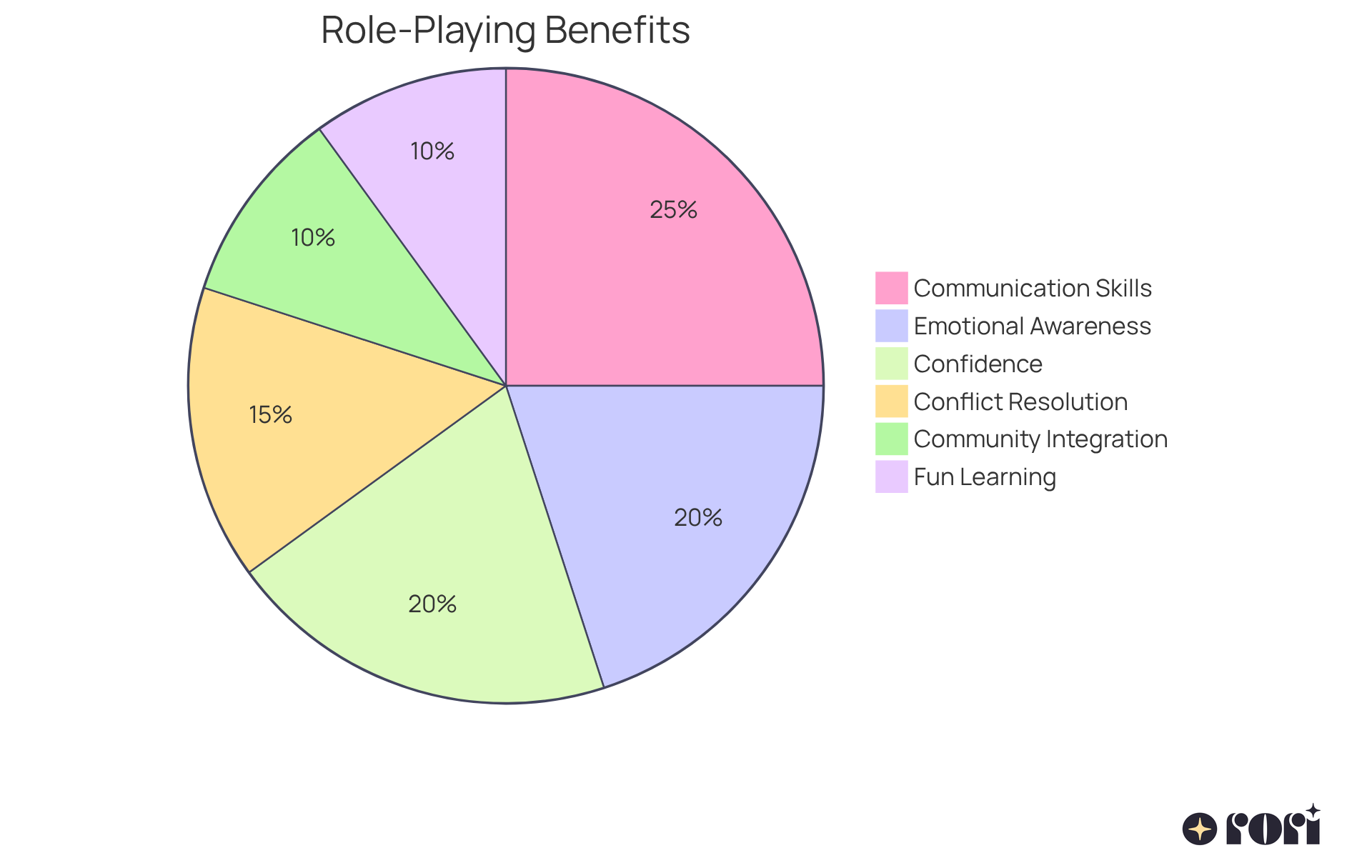
Have you ever wondered how using role-playing to enhance social skills in autism can help your child connect better with others? It’s amazing how this simple activity, which involves using role-playing to enhance social skills in autism, can lead to so many benefits for emotional and social growth! Here are some key advantages:
- Enhanced Emotional Awareness: Through role-playing, kids learn to identify and express their emotions. Acting out different scenarios helps them recognize feelings in themselves and others, which is so important for developing empathy.
- Enhanced Communication Skills: This technique creates a safe space for kids to practice both verbal and non-verbal communication. They get to initiate conversations, maintain eye contact, and use body language-skills that are crucial for effective interactions.
- Conflict Resolution Skills: Role-playing allows kids to navigate conflicts in a controlled environment. They can practice resolving disagreements, negotiating, and understanding different perspectives, which are vital for successful peer interactions.
- Enhanced Assurance: Regular role-playing helps kids build confidence in their social skills. As they practice and receive positive feedback, they become more willing to engage in real-life interactions.
- Community Integration: Role-playing makes it easier for kids to integrate into the community by equipping them with the skills needed to engage with peers. This preparation can reduce anxiety and enhance their overall social experiences.
- Fun and Engaging Learning: The playful nature of acting out scenarios makes learning enjoyable! Kids are more likely to engage in activities that are fun, which boosts their motivation to learn and practice new skills.
When we support our children through role-playing, we’re not just teaching them skills; we’re opening doors to new friendships and experiences. Let’s explore this together!
Tailor Role-Playing Scenarios to Individual Needs
Many parents find it challenging to connect with their children during play, particularly when using role-playing to enhance social skills in autism. Here are some friendly strategies to help you tailor these experiences effectively:
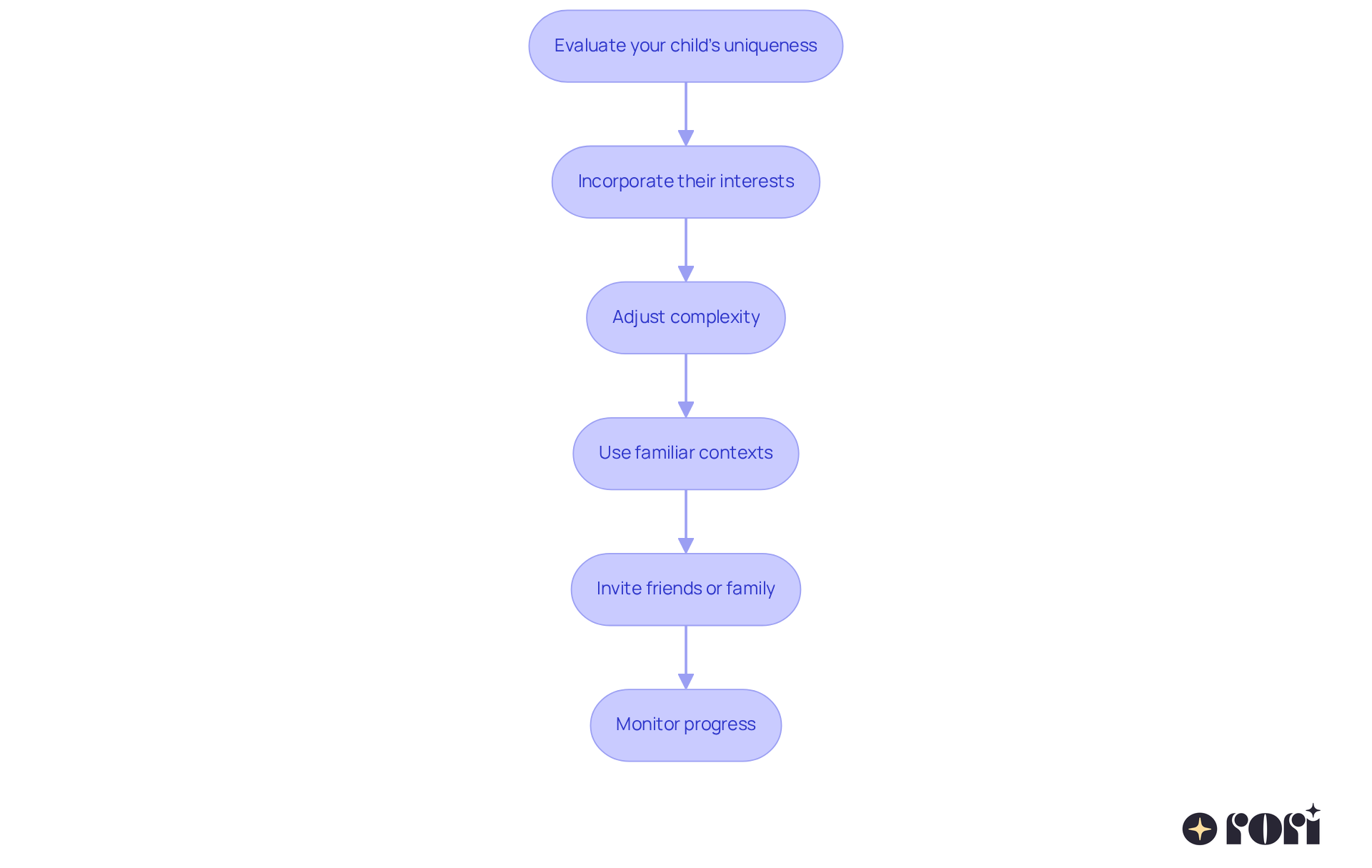
- Let’s start by looking at what makes your child unique: Begin by evaluating their social skills, interests, and areas of difficulty. This will guide you in creating scenarios that truly resonate with them.
- Incorporate their interests: Design role-playing scenarios that align with what your child loves. For example, if they’re into superheroes, create situations where they can practice social interactions as their favorite character. This connection boosts motivation and engagement!
- Adjust complexity: Start with simple interactions and gradually increase the complexity as your child becomes more comfortable and skilled. It’s all about building confidence!
- Use familiar contexts: Create scenarios based on places they know, like home or school. Familiarity can ease anxiety and help them feel more confident practicing their skills.
- Why not invite friends or family to join in the fun? This makes the play more relatable and supportive, providing extra encouragement.
- Keep an eye on how your child is doing: Continuously evaluate their progress during play sessions. Be ready to tweak things as they grow more comfortable, ensuring the activities remain relevant and beneficial.
By customizing these interactive scenarios to fit your child’s needs, you’re not just playing; you’re opening doors to meaningful connections and growth for your child. Research shows that about 70% of children involved in consistent role-playing activities see improvements in behavior and communication, which highlights the effectiveness of using role-playing to enhance social skills in autism. Let’s explore this together!
Conclusion
Navigating social interactions can be tough for kids with autism, but role-playing offers a fun way to practice and grow! This approach not only gives children a safe space to try out important interactions but also helps them build confidence for real-life situations. When parents and therapists weave role-playing into everyday life, it can really help kids connect with others.
We’ve shared some key strategies for making role-playing work, like:
- Setting clear goals
- Crafting fun scenarios
- Using visuals to help kids engage
These techniques encourage children to dive in and reflect on their experiences, leading to better communication skills and emotional awareness.
By embracing role-playing, you’re not just helping your child learn; you’re opening up a world of friendships and joyful experiences! With a supportive and engaging environment, you can help children with autism thrive socially and emotionally, paving the way for a brighter future filled with meaningful connections.
Frequently Asked Questions
What is the role of role-playing in ABA therapy?
Role-playing in ABA therapy helps children practice their social skills in a safe environment by pretending to be in real-life situations, allowing them to learn how to greet friends, share toys, and manage conversations.
How can role-playing benefit children with autism?
Role-playing can boost social skills in children with autism by as much as 40%, helping them pick up on social cues, develop empathy, and improve communication skills, while also building their confidence.
What ABA principles align with role-playing techniques?
Role-playing fits well with ABA principles that emphasize practice and reinforcement, utilizing techniques like modeling, rehearsal, and positive reinforcement to enhance social skills and emotional development.
How does role-playing impact emotional management in children?
Role-playing promotes emotional management by allowing children to express their feelings and reactions in a structured environment, which helps them navigate social situations effectively.
What do case studies reveal about the effectiveness of role-playing?
Case studies, such as those mentioned by Kerry Magro and Temple Grandin, demonstrate that role-playing empowers children with autism to shape their identities, discover interests, and develop vital life skills through simulated interactions.
How does role-playing create a supportive learning atmosphere?
By providing a safe space for practice, role-playing fosters a supportive learning atmosphere that improves children's ability to navigate social situations and thrive in their daily lives.
List of Sources
- Understand the Role of Role-Playing in ABA Therapy
- 10 Powerful Autism ABA Quotes That Inspire Change – Rori Blog (https://rori.care/post/10-powerful-autism-aba-quotes-that-inspire-change)
- 10 inspiring quotes from people with autism | Autism Speaks (https://autismspeaks.org/life-spectrum/autism-quotes)
- The Role of Role-Playing in Developing Social Skills in ABA Therapy for Autism (https://buildingblockstherapy.org/blog/the-role-of-role-playing-in-developing-social-skills-in-aba-therapy-for-autism)
- Unlocking Social and Communication Skills through Role-Playing in ABA Therapy | Step Ahead ABA (https://stepaheadaba.com/blog/the-benefits-of-role-playing-scenarios-in-aba-therapy-sessions)
- Implement Effective Role-Playing Techniques for Skill Development
- Using Role-playing to help your Autistic child’s development - Smarter Parenting (https://smarterparenting.com/using-role-playing-to-help-your-autistic-childs-development)
- Role-Playing to Boost Social Skills for Kids with Autism | Achieve Better ABA (https://achievebetteraba.com/blog/role-playing-activities-for-autism-social-skills-training)
- The Role of Role-Playing in Developing Social Skills in ABA Therapy for Autism (https://buildingblockstherapy.org/blog/the-role-of-role-playing-in-developing-social-skills-in-aba-therapy-for-autism)
- The Role of Role-Playing Exercises in ABA Therapy (https://crossrivertherapy.com/articles/the-role-of-role-playing-exercises-in-aba-therapy)
- Explore the Benefits of Role-Playing for Emotional and Social Growth
- The Role of Role-Playing in Developing Social Skills in ABA Therapy for Autism (https://buildingblockstherapy.org/blog/the-role-of-role-playing-in-developing-social-skills-in-aba-therapy-for-autism)
- The Role of Role-Playing Exercises in ABA Therapy (https://crossrivertherapy.com/articles/the-role-of-role-playing-exercises-in-aba-therapy)
- Unlocking Social and Communication Skills through Role-Playing in ABA Therapy | Step Ahead ABA (https://stepaheadaba.com/blog/the-benefits-of-role-playing-scenarios-in-aba-therapy-sessions)
- Role-Playing to Boost Social Skills for Kids with Autism | Achieve Better ABA (https://achievebetteraba.com/blog/role-playing-activities-for-autism-social-skills-training)
- Tailor Role-Playing Scenarios to Individual Needs
- Autism Quotes (https://kidsclubaba.com/autism-quotes)
- The Role of Role-Playing in Developing Social Skills in ABA Therapy for Autism (https://buildingblockstherapy.org/blog/the-role-of-role-playing-in-developing-social-skills-in-aba-therapy-for-autism)
- The Role of Role-Playing Exercises in ABA Therapy (https://crossrivertherapy.com/articles/the-role-of-role-playing-exercises-in-aba-therapy)