Introduction
Enhancing skill generalization in autism care is so important for effective therapy! It helps children take what they’ve learned in structured settings and apply it to their everyday lives. In this article, we’ll explore some vital strategies that can empower caregivers and educators to nurture this essential skill, ultimately boosting children’s confidence and independence.
But let’s be real - implementing these techniques consistently can be a challenge. Many parents and educators face hurdles along the way. So, what are the best ways to overcome these obstacles and ensure that our children can truly thrive in various contexts? Let’s explore this together!
Understand the Importance of Skill Generalization in ABA Therapy
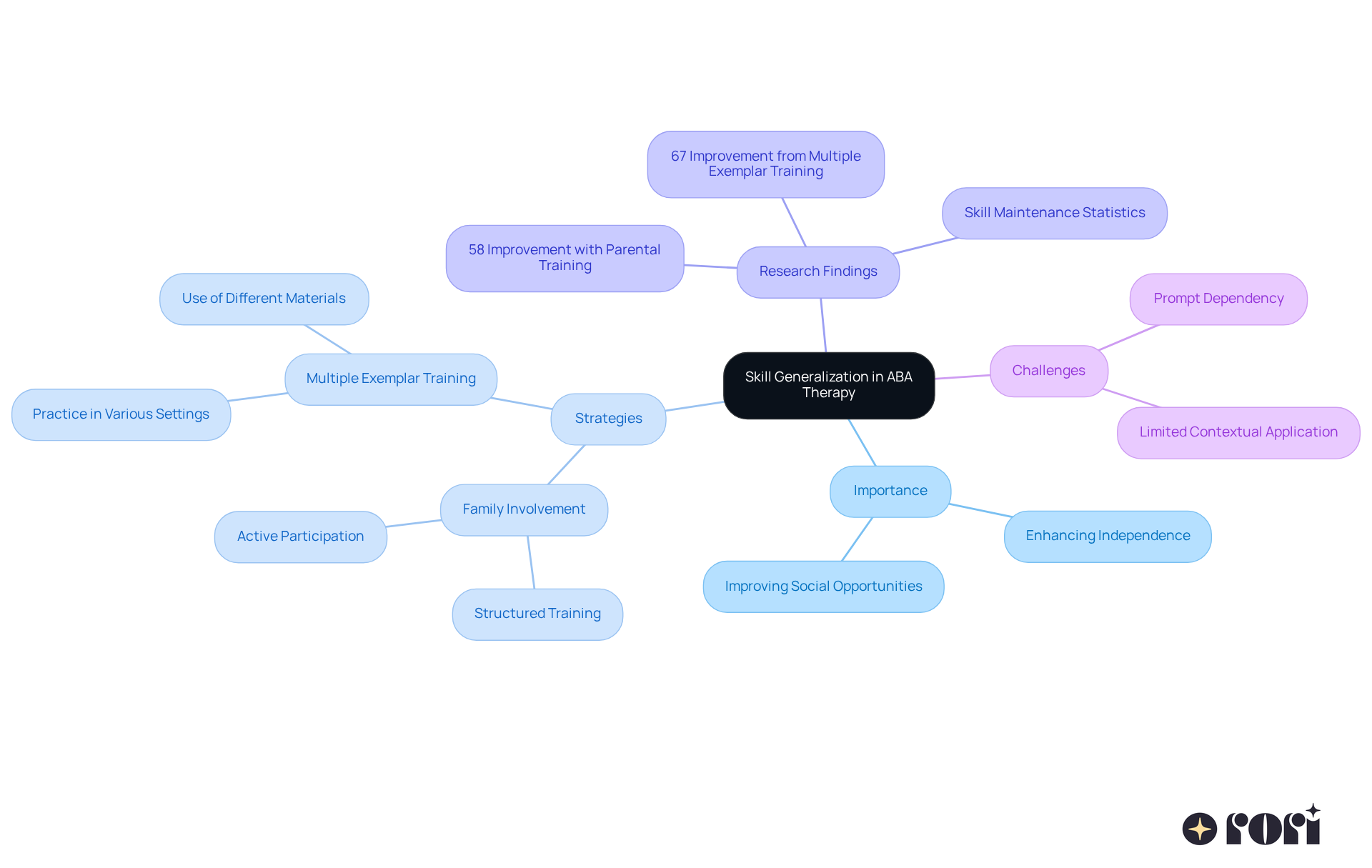
Enhancing involves helping young individuals take what they’ve learned and apply it in different situations outside of therapy. This is super important in ! Imagine a child who learns to greet others during their sessions; we want them to use that same skill at school or home. If they struggle to generalize these skills, it can really hold them back in everyday interactions, affecting their independence and social opportunities.
Research shows that enhancing can significantly boost kids' self-confidence and social skills. For example, compared to those without that support. This really highlights how crucial is in the therapy process. When caregivers are empowered, they can offer better support and make informed decisions that lead to improved outcomes.
And here’s something interesting: kids who go through multiple exemplar training - where they - show a 67% improvement in transferring those skills compared to those who only practice in one context. This just goes to show how effective it is to mix things up and practice in different environments!
in autism care, as it not only helps kids use their skills in daily life but also sets them up for . By weaving these techniques into everyday interactions, young individuals can build the confidence they need to tackle social situations, ultimately improving their quality of life. But it’s important to be aware of , like prompt dependency, which can make it tough for kids to generalize their skills. That’s why it’s so important for caregivers to be actively involved in the therapy process, ensuring consistency and support for their child’s growth.
Let’s explore this together! Your involvement can make a world of difference!
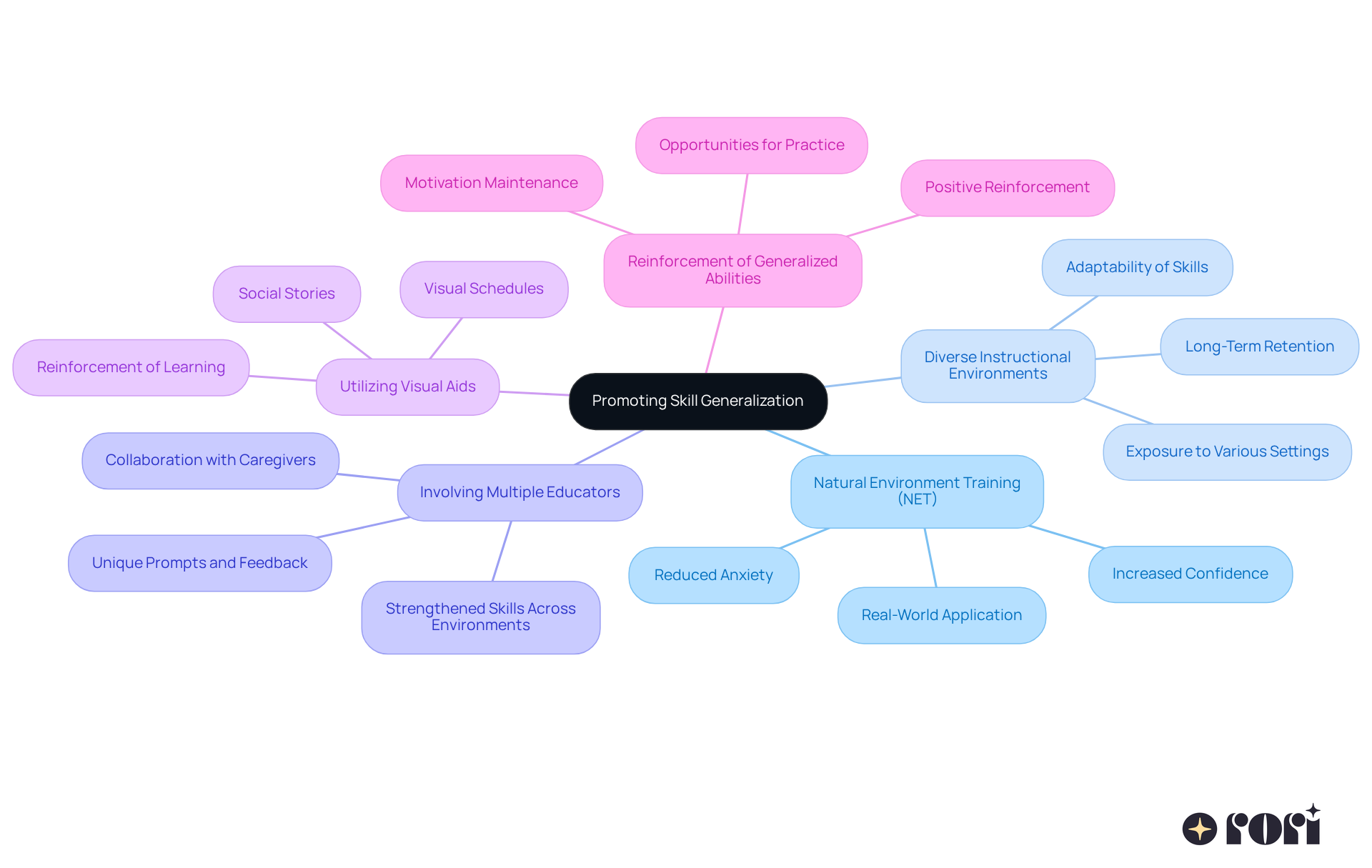
To effectively promote skill generalization in children with autism, let’s explore some key strategies that can really make a difference:
- : This approach is all about . Imagine practicing social greetings at a park instead of a therapy room! It makes the learning feel real and relevant, helping kids feel more confident and less anxious.
- : Exposing kids to different settings - like home, school, and the community - helps them adapt their skills to various situations. This flexibility is super important for enhancing to ensure that what they learn sticks around for the long haul.
- Involving Multiple Educators: Bringing in different caregivers and teachers can really strengthen skills across various environments. Each person can provide unique prompts and feedback, which plays a role in enhancing for a child. This aligns perfectly with Rori Care’s mission to empower caregivers with , ensuring they’re ready to support their child’s goals.
- : Tools like visual schedules and social stories can be game-changers in reinforcing learned skills. They make it easier for kids to remember and apply what they’ve learned in different situations, . Plus, keeping natural reinforcement in the environment is key to maintaining those behaviors!
- : When a child successfully uses a skill in a new context, offering positive reinforcement encourages them to keep applying what they’ve learned. This is crucial for keeping their motivation high and ensuring they retain knowledge over time. It’s also important to create opportunities for practice outside of therapy sessions to reinforce skill transfer.
By incorporating these strategies, parents and educators can that focuses on enhancing . This ultimately leads to greater independence and a better quality of life for children with autism. Remember, the active involvement of support providers, grounded in ABA principles and data collection, is essential for maximizing the effectiveness of these interventions. We’re here to help you every step of the way!
Foster Collaboration Among Caregivers and Educators for Better Outcomes
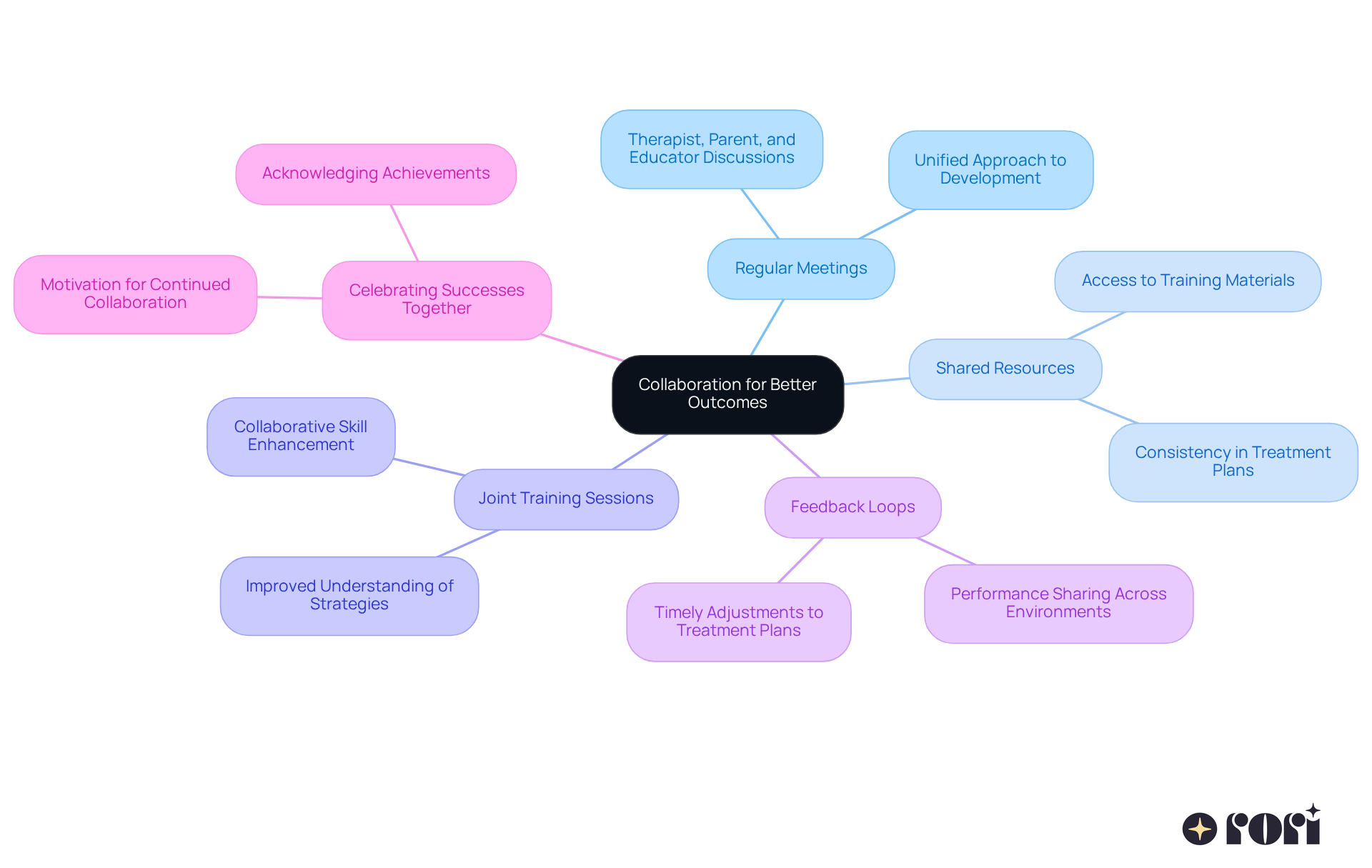
Cooperation between caregivers and educators is essential for enhancing to help individuals with autism generalize their abilities. When everyone involved in a young person's care communicates effectively and shares common goals, it leads to . Let’s explore some key strategies to enhance this collaboration:
- Regular Meetings: among therapists, parents, and educators can make a big difference. These discussions about the individual’s progress and strategies for reinforcing skills across different settings create a .
- : It’s crucial that everyone - providers and educators - has access to the same resources and training materials. This way, everyone stays informed about the young one’s treatment plan, promoting consistency in how it’s implemented.
- : How about conducting training sessions that bring together both caregivers and educators? Focusing on strategies for enhancing during these sessions can improve understanding and ensure a cohesive approach to caring for the young one.
- Feedback Loops: Establishing a system for sharing in various environments is key. This allows for , ensuring that strategies remain effective and relevant.
- Celebrating Successes Together: Don’t forget to acknowledge and at home and school! Recognizing these milestones reinforces the importance of collaboration and motivates everyone involved to keep up the great work.
By working together, we can create a supportive environment that truly benefits the young ones in our care. Let’s keep the conversation going!
Overcome Challenges in Skill Generalization for Lasting Impact
Navigating the world of autism care can be quite a journey, with enhancing playing a crucial role in that process. However, there are some common hurdles that can make progress feel a bit daunting. Let’s take a closer look at these challenges and explore some friendly strategies to overcome them together!
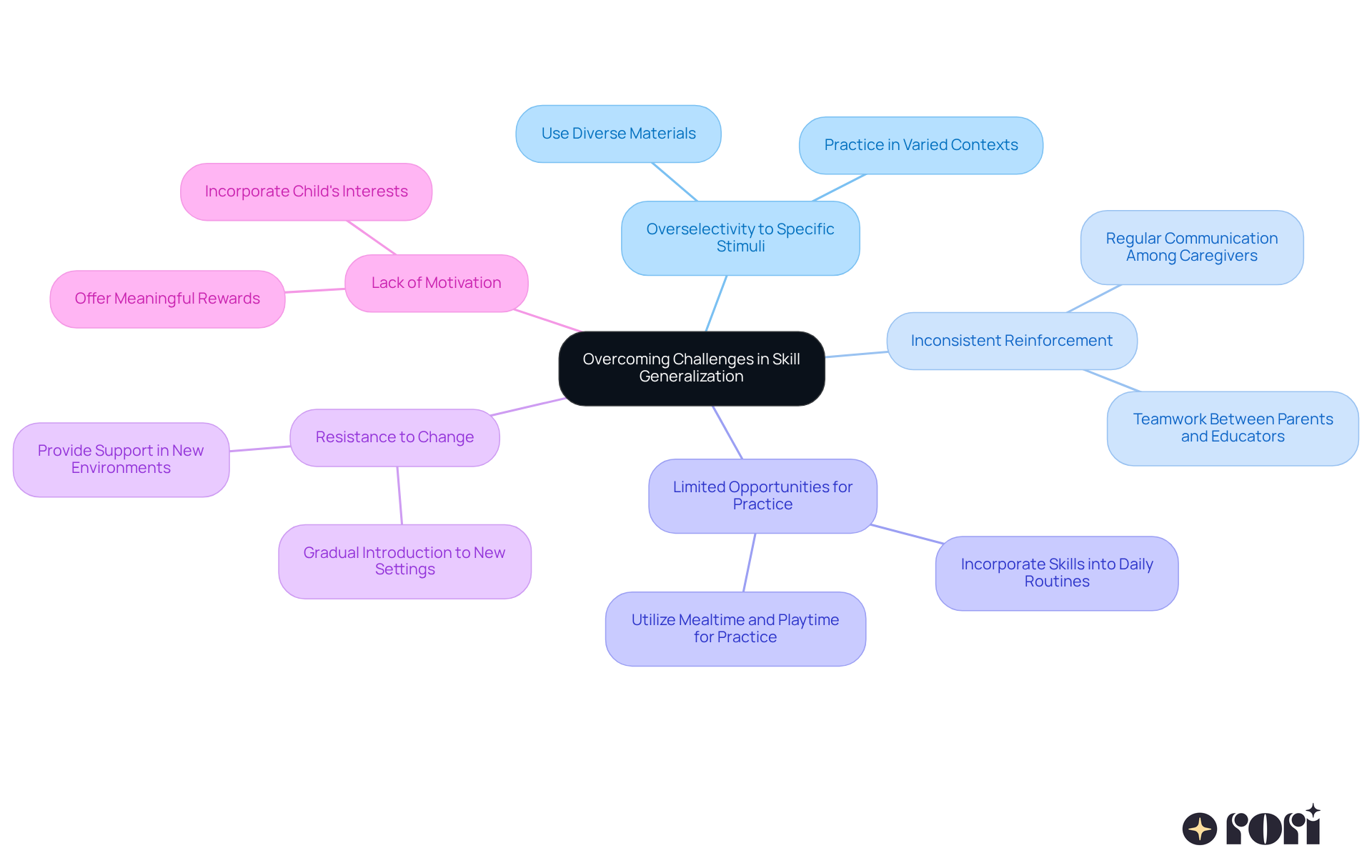
- : Sometimes, kids might focus too much on specific cues they’ve learned in therapy, which can make it tough for them to generalize their skills. To help with this, try mixing things up during practice! Use different materials and contexts to show them that their abilities can shine in various situations. This way, they’ll start to see that what they’ve learned is useful everywhere.
- : It’s important for kids to receive . When reinforcement isn’t reliable, they might struggle to use their skills in different settings. So, let’s make sure everyone is on the same page! Regular communication and teamwork among caregivers, therapists, and educators can really boost the consistency of reinforcement, making it easier for kids to transfer their skills.
- Limited : Kids need plenty of chances to practice their skills in different environments. Incorporating practice into daily routines like mealtime or playtime can help them apply what they’ve learned in real-life situations. This not only strengthens their understanding but also makes learning feel more natural and fun!
- : It’s totally normal for some kids to feel uneasy about using their skills in new places. Gradually introducing them to new settings and providing support can ease this transition. Familiarizing them with different environments and the people they’ll meet can boost their confidence and readiness to show off their abilities.
- : Keeping kids motivated is key for successful ability generalization. Try weaving their interests into practice sessions and offering meaningful rewards for their efforts. This not only makes learning enjoyable but also highlights the importance of applying their skills in various contexts.
By tackling these challenges head-on, we can create a that focuses on enhancing . Together, we can make a on our children’s development. Let’s explore this journey together!
Conclusion
Enhancing skill generalization in autism care is such an important part of effective ABA therapy! It helps children apply what they’ve learned in different settings and situations. The ultimate goal? To empower these young individuals to take their therapeutic successes and use them in real-world interactions, which fosters independence and enriches their social experiences. By focusing on this key aspect, caregivers and educators can truly improve the overall quality of life for children with autism.
Some key strategies to consider include:
- Natural Environment Training
- Using diverse instructional settings
- Involving multiple educators
These approaches really encourage kids to apply their skills in everyday scenarios, making learning feel more relevant and impactful. Plus, when caregivers and educators collaborate, it creates a strong support system that reinforces skill generalization. This way, children receive consistent guidance and encouragement no matter where they are.
Ultimately, enhancing skill generalization in autism care is a journey that requires teamwork. By actively engaging in these strategies and keeping communication open, caregivers and educators can create a supportive atmosphere that nurtures growth and development. Embracing these practices not only enriches the lives of children with autism but also empowers everyone around them to contribute meaningfully to their progress. Let’s explore this together!
Frequently Asked Questions
What is skill generalization in ABA therapy?
Skill generalization in ABA therapy involves helping individuals apply what they have learned in therapy to different situations outside of therapy, such as at home or school.
Why is skill generalization important for children with autism?
It is important because if children struggle to generalize skills, it can hinder their everyday interactions, independence, and social opportunities.
How does family involvement influence skill generalization in autism care?
Family involvement is crucial as research shows that kids whose parents received training in ABA techniques had a 58% improvement in maintaining their skills compared to those without parental support.
What is multiple exemplar training, and how does it benefit children?
Multiple exemplar training is a method where children practice skills in various settings. It has been shown to result in a 67% improvement in transferring those skills compared to practicing in just one context.
What are some strategies to enhance skill generalization in therapy?
Integrating generalization strategies into therapy is essential, as it helps children use their skills in daily life and prepares them for long-term success.
What challenges might affect skill generalization in children?
One potential challenge is prompt dependency, which can make it difficult for children to generalize their skills effectively.
How can caregivers support their child's skill generalization?
Caregivers can support their child's growth by being actively involved in the therapy process, ensuring consistency, and using generalization techniques in everyday interactions.
List of Sources
- Understand the Importance of Skill Generalization in ABA Therapy
- linksaba.com (https://linksaba.com/generalization-in-aba-why-it-matters)
- How to foster generalization of learned skills (https://mastermindbehavior.com/post/the-importance-of-generalization-in-aba-therapy-success)
- Autism Quotes | Intellistars - ABA Therapy (https://intellistarsaba.com/blog/autism-quotes)
- 10 inspiring quotes from people with autism | Autism Speaks (https://autismspeaks.org/life-spectrum/autism-quotes)
- Implement Effective Strategies for Promoting Skill Generalization
- What is Natural Environment Teaching? A Guide to NET | National University (https://nu.edu/blog/what-is-natural-environment-teaching)
- The Benefits of Natural Environment Teaching in ABA Therapy | Discovery ABA (https://discoveryaba.com/aba-therapy/the-benefits-of-natural-environment-teaching-in-aba-therapy-7fa60)
- The Role of Generalization in ABA Therapy Outcomes (https://goldenstepsaba.com/resources/the-role-of-generalization-in-aba-therapy-outcomes-8a9c8)
- Improving the Generalization of Skills in Learners with Autism (https://autismspectrumnews.org/improving-the-generalization-of-skills-in-learners-with-autism)
- Foster Collaboration Among Caregivers and Educators for Better Outcomes
- Research on Parent-Teacher Collaboration for Autism - Guiding Growth (https://guidinggrowth.app/research-on-parent-teacher-collaboration-for-autism)
- 10 Inspiring Autism Awareness Quotes to Foster Understanding – Rori Blog (https://rori.care/post/10-inspiring-autism-awareness-quotes-to-foster-understanding)
- 20 Inspiring Quotes About Autism Every Parent Must Read Today (https://circlecareservices.com/20-quotes-about-autism-and-parenting)
- The Importance of Collaboration Between ABA Therapists and Educators (https://magnetaba.com/blog/the-importance-of-collaboration-between-aba-therapists-and-educators)
- Checking your browser - reCAPTCHA (https://pmc.ncbi.nlm.nih.gov/articles/PMC5152684)
- Overcome Challenges in Skill Generalization for Lasting Impact
- mastermindbehavior.com (https://mastermindbehavior.com/post/how-to-promote-generalization-of-skills-across-settings-with-aba-therapy)
- What is stimulus overselectivity and how does ABA address it? (https://crossrivertherapy.com/articles/what-is-stimulus-overselectivity-and-how-does-aba-address-it)
- goldstarrehab.com (https://goldstarrehab.com/parent-resources/autism-therapy-statistics)