Understanding how to enhance skill generalization in children with autism is so important for their growth and independence. When kids can apply what they've learned in different settings, they can tackle everyday challenges with more confidence. But let’s be real - many face tough obstacles when it comes to transferring their skills from structured environments to real-life situations.
So, what can caregivers and therapists do to help bridge this gap? How can we ensure that the skills learned in therapy truly lead to meaningful interactions and greater independence? Let’s explore this together!
By sharing strategies and insights, we can create a supportive community where everyone feels empowered to take the next step. After all, we’re here to help you every step of the way!
In the world of Applied Behavior Analysis (ABA), we often emphasize enhancing skill generalization in children with autism: best practices and strategies for young people to apply the skills they've learned in various settings and with different individuals. Imagine this: the skills they pick up in a structured therapy session should easily carry over into their everyday lives-whether at home, in school, or while hanging out with friends.
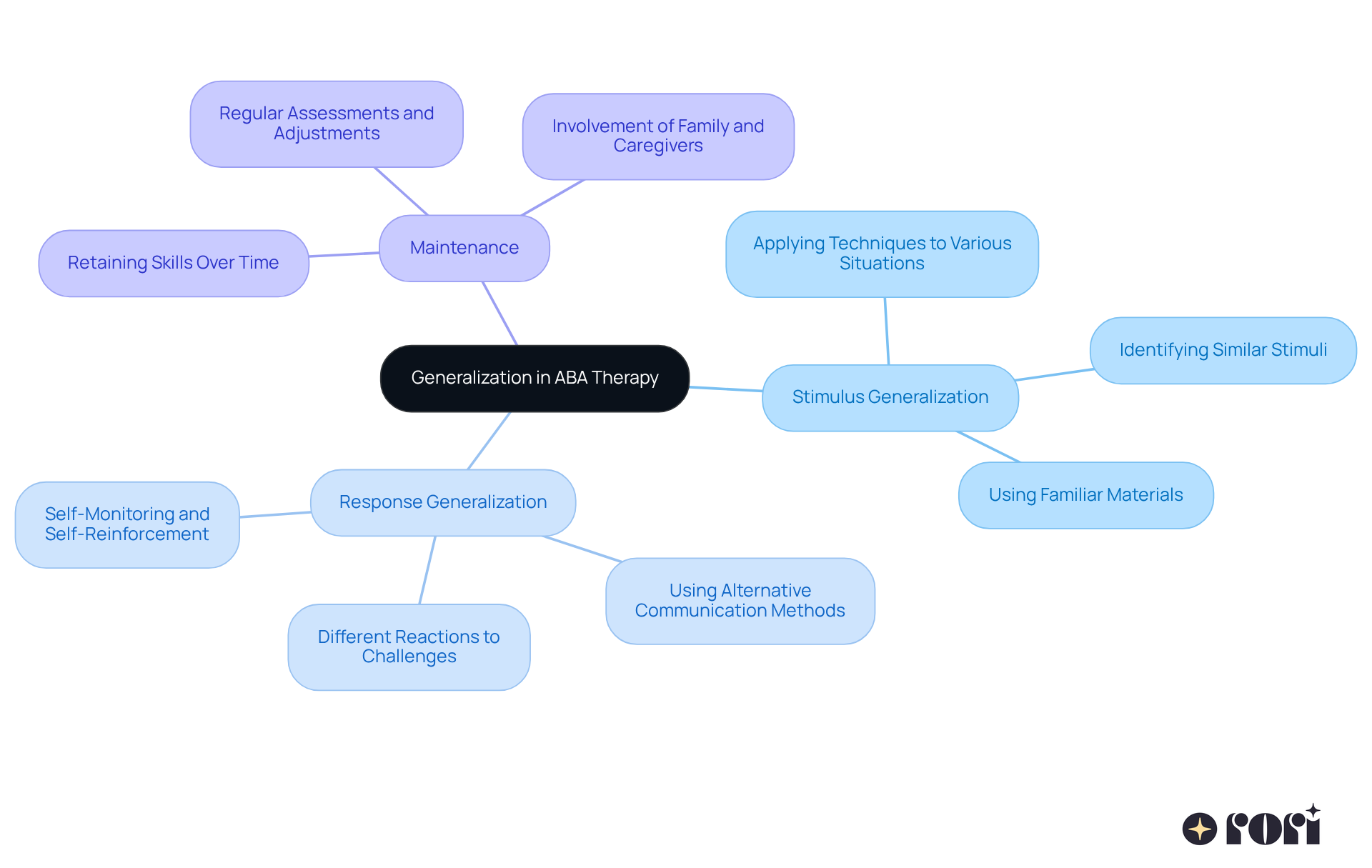
Generalization breaks down into three main parts:
Understanding these categories is crucial for enhancing skill generalization in children with autism: that facilitate independence and adaptability.
Research shows that kids whose parents received structured training in ABA techniques saw a whopping 58% improvement in skill maintenance compared to those without that support. This really highlights how vital it is to weave strategies into the intervention process for enhancing skill generalization in children with autism: best practices and strategies, from the very first evaluations to planning for discharge. By doing this, we can help young individuals navigate the real-world challenges they face.
Let’s explore this together! We’re here to help you every step of the way!
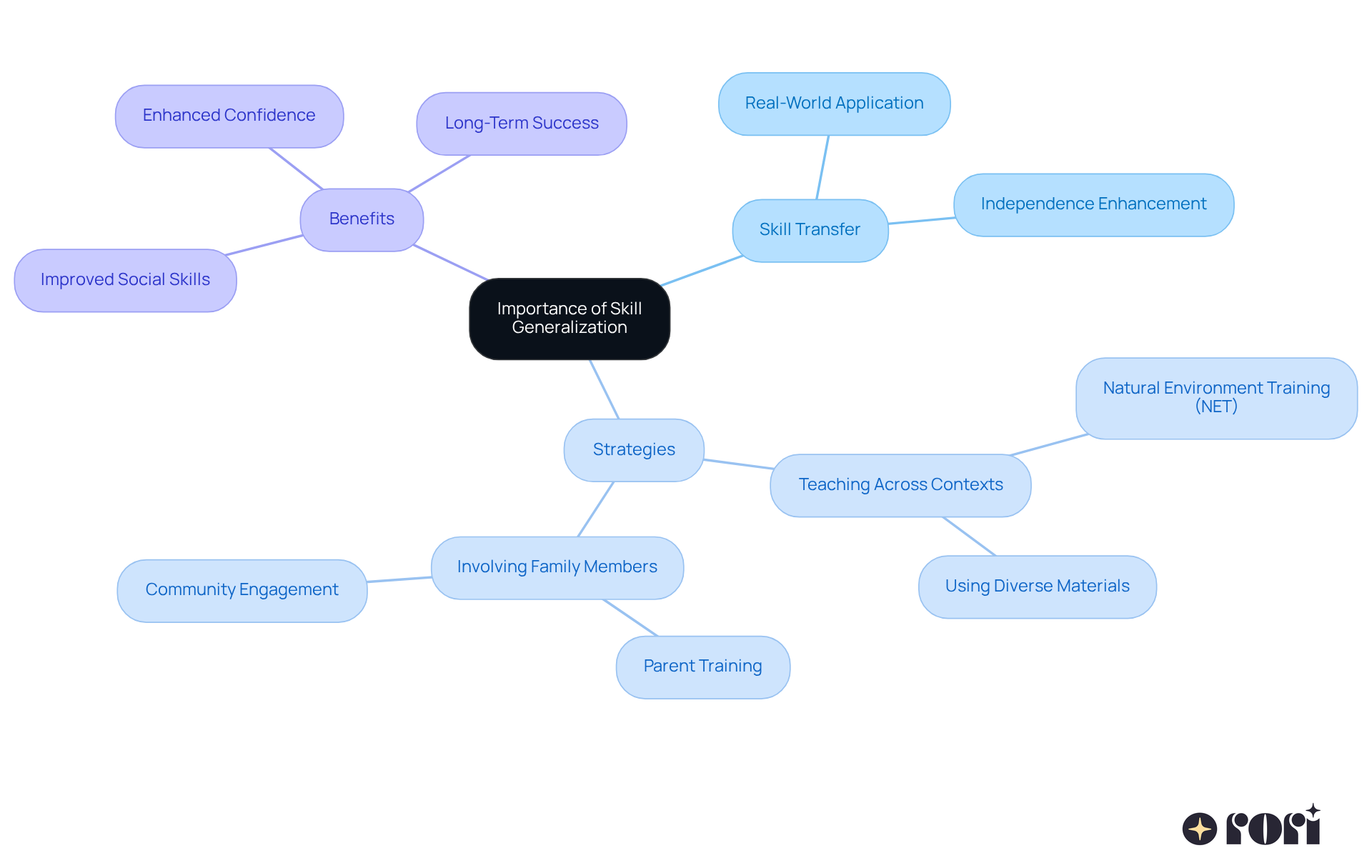
Skill transfer is such an important part of ABA practice! It really connects what kids learn in therapy to how they can use those skills in everyday life. Without this connection, many young people might shine in structured settings but struggle to . This can make social interactions, school performance, and even their independence a bit tougher. Did you know that about 32% of kids with autism find it hard to use skills learned in therapy in different contexts? That’s why it’s crucial for therapists to have effective transfer strategies in place, especially for enhancing skill generalization in children with autism: best practices and strategies. For instance, if a child learns to recognize a red ball, they might also pick up on identifying a red apple. This kind of stimulus transfer really helps them adapt to various environments!
When we encourage a broader understanding, it helps kids feel more confident navigating different settings. This boosts their ability to connect with peers and participate in community activities. Effective strategies for enhancing skill generalization in children with autism: best practices and strategies include:
This way, kids get consistent reinforcement and practice opportunities. Imagine a child who learns to ask for help in therapy; they can then use that skill at school or during playdates. It’s amazing to see how transfer impacts their social skills and interactions!
Plus, abstraction is key to fostering independence. Kids who can generalize their skills are more likely to handle daily tasks on their own, which really enhances their quality of life. Experts agree that focusing on broad principles not only improves social interactions but also sets the stage for long-term success, reducing the need for ongoing support services. By weaving these broadening techniques into treatment, we can focus on enhancing skill generalization in children with autism: best practices and strategies, helping them thrive in their everyday lives. Let’s explore this together!
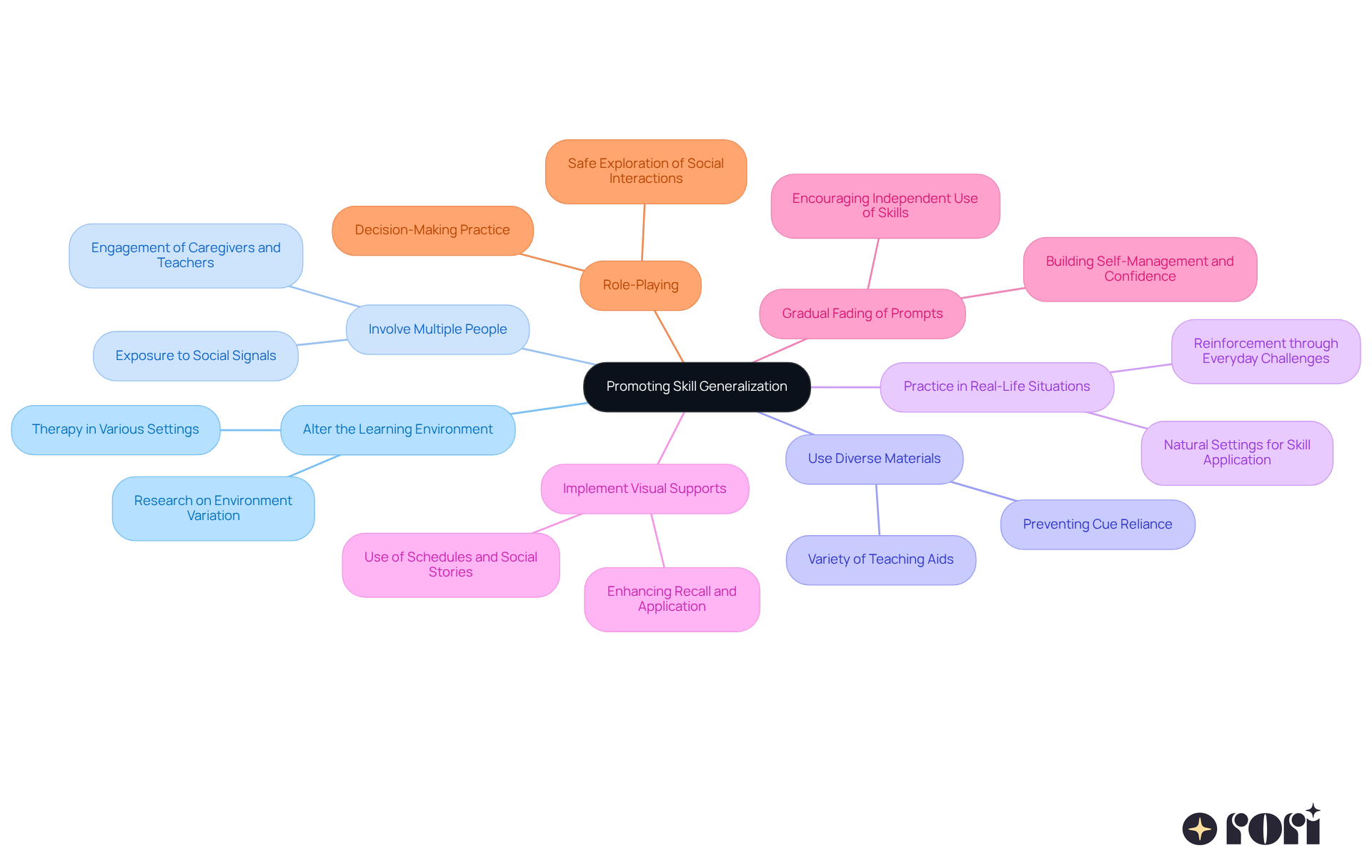
To effectively promote skill generalization in children with autism, there are several friendly strategies we can explore together:
By systematically implementing these strategies, caregivers and therapists can significantly increase the chances of enhancing skill generalization in children with autism: best practices and strategies. This leads to greater independence and an improved quality of life. Let’s explore this together!
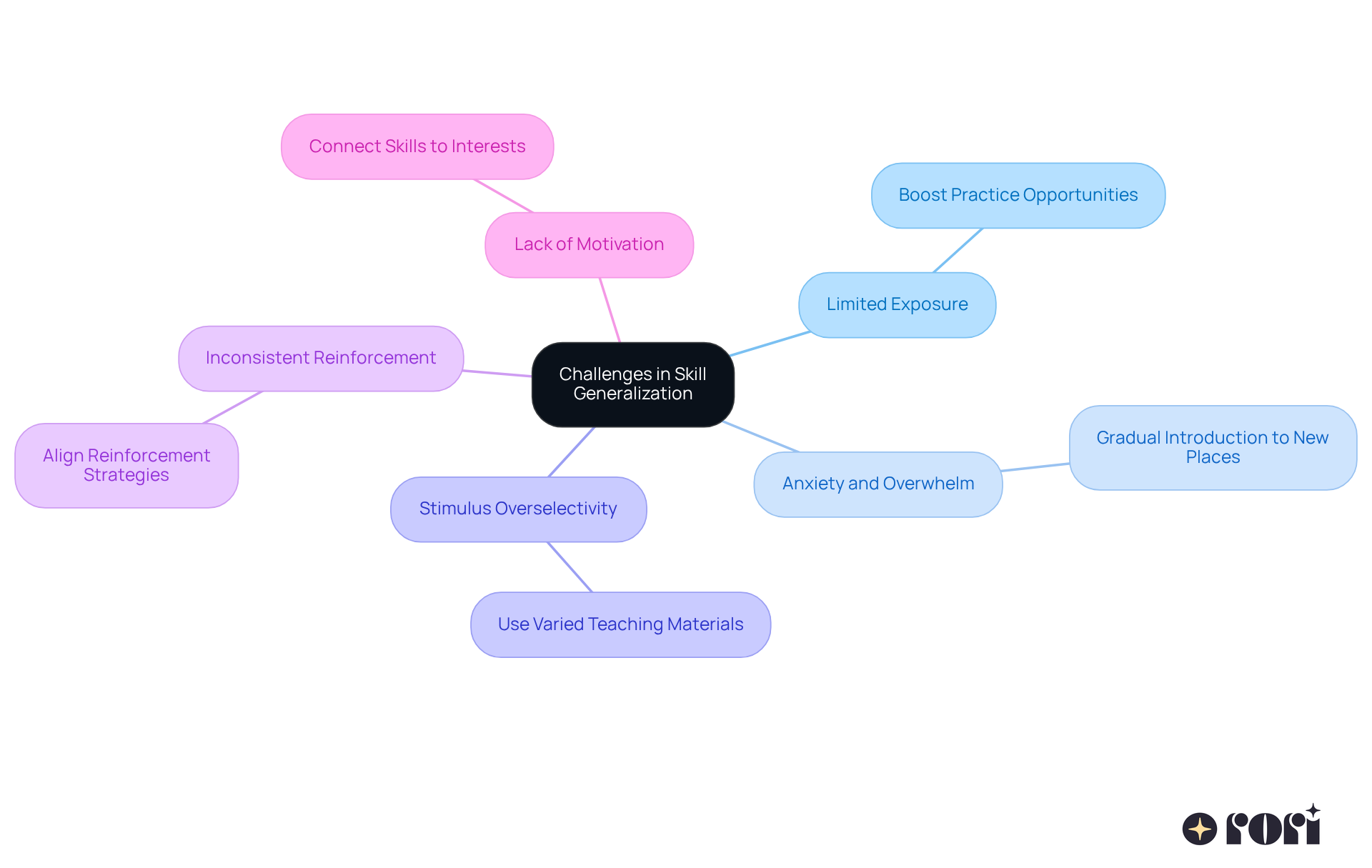
Skill generalization is super important for kids with autism, but there are a few bumps in the road that can make it tricky:
Limited Exposure: Sometimes, kids don’t get enough chances to practice their skills in different settings, which can make it hard for them to transfer what they’ve learned.
Anxiety and Overwhelm: New situations can feel overwhelming, and kids might fall back on old habits.
Stimulus Overselectivity: Sometimes, kids focus too much on specific cues, making it tough to generalize their skills.
Inconsistent Reinforcement: If caregivers aren’t on the same page with reinforcement, it can be hard for kids to apply what they’ve learned.
Lack of Motivation: Kids might not see why it’s important to use their skills outside of therapy.
By identifying these challenges and implementing targeted solutions, caregivers and therapists can contribute to enhancing skill generalization in children with autism: best practices and strategies. Together, we can support our kids in their growth and independence! Let’s explore this journey together!
Enhancing skill generalization in children with autism isn’t just a therapeutic goal; it’s a pathway to independence and success in everyday life. By focusing on how learned skills can transfer across different settings and with various people, caregivers and therapists can truly make a difference in these children’s lives. Imagine the joy of seeing a child apply what they’ve learned in real-life situations! 🌟
Key insights from the article highlight the essential components of skill generalization, like stimulus and response generalization, along with maintaining those skills over time. It’s not always easy, though. Challenges like limited exposure and inconsistent reinforcement can pop up. But don’t worry! Targeted solutions, such as gradual exposure and teamwork among caregivers, can help tackle these hurdles. By embracing these strategies, children with autism can navigate social interactions and daily tasks more confidently, paving the way for their independence.
Ultimately, enhancing skill generalization is a collaborative journey that calls for commitment and creativity from everyone involved. By adopting these strategies, caregivers and therapists can empower children with autism to thrive in their everyday lives, turning therapy into a meaningful experience. Let’s prioritize skill generalization in autism treatment, ensuring that children not only learn but also apply their skills effectively in the world around them. We’re here to help you every step of the way!
What is generalization in ABA therapy?
Generalization in ABA therapy refers to the ability of children with autism to apply the skills they have learned in therapy to various settings and with different individuals in their everyday lives.
What are the three main parts of generalization?
The three main parts of generalization are stimulus generalization, which involves applying a technique to various situations; response generalization, where different reactions are used to tackle the same challenge; and maintenance, which focuses on keeping skills sharp over time.
Why is understanding generalization important for children with autism?
Understanding generalization is crucial for enhancing skill generalization in children with autism, as it facilitates their independence and adaptability in real-world situations.
How does parental training in ABA techniques impact skill maintenance?
Research shows that children whose parents received structured training in ABA techniques experienced a 58% improvement in skill maintenance compared to those without that support.
What role do strategies play in the intervention process for children with autism?
Strategies woven into the intervention process are vital for enhancing skill generalization from the initial evaluations to planning for discharge, helping young individuals navigate real-world challenges.