

The power of music and art in autism therapy is really starting to shine! 🌟 These creative outlets are becoming essential tools for helping children with autism connect socially. They not only offer unique ways for kids to express themselves but also help build important interpersonal skills, ease anxiety, and boost emotional well-being.
But here’s the big question: how can caregivers and practitioners make the most of these artistic tools to truly enhance social development? 🤔 Exploring this question opens up a world of possibilities for growth and connection in the lives of children with autism. Let’s dive into this together and see how we can support our little ones on their journey!
Interventions in music and art are essential in autism treatment, particularly in , as they provide . Research shows that these artistic methods can contribute to , as they boost interpersonal skills, ease anxiety, and enhance emotional well-being in children with autism. For example, , nurturing their creativity and self-expression.
At the same time, , which are crucial for , areas that can be tough for those with autism spectrum disorder (ASD). A recent review of studies found that kids involved in music programs showed , highlighting just how important these interventions can be.
through music and art in autism, led by trained professionals, help individuals connect better with others, thereby improving their social skills and relationships. Plus, ; it equips families with the tools they need to support their child's development effectively.
By recognizing the incredible potential of music and art, while also understanding their limitations, clinicians and families can weave these therapies into . This approach fosters a more for children with autism. Let’s explore this together!

To encourage interaction, it’s essential to focus on by offering . For example, not only promote teamwork and communication but also play a role in . And how about , like creating a mural? They allow children to express themselves while learning to cooperate and share with their peers.
Integrating familiar songs into these activities can contribute to , while making therapy both fun and effective! Research shows that can lead to . In fact, studies have found that 14 out of 16 outcome measures related to interaction capabilities showed strong reliability and construct validity.
These create in a nurturing environment, ultimately supporting their overall growth and well-being. Let’s explore this together and see how we can make a difference!

Promoting cooperative experiences is so important for helping kids with autism improve their . Consider activities that involve teamwork, such as:
These activities focus on . They can really boost social interaction! For instance, imagine setting up a 'music jam' where kids take turns playing instruments. It’s a fun way to encourage turn-taking and attentive listening.
And let’s not forget about ! Making a allows young people to express themselves and share ideas. These experiences contribute to , not only improving interpersonal skills but also creating a sense of community and belonging, which is vital for emotional growth.
Plus, led by qualified therapists can take these interactions to the next level. It provides in a nurturing environment. This approach is especially beneficial for those with Autism Spectrum Disorders, ADHD, and Communication Disorders, .
Don’t overlook the role of in this journey! Equipping parents with strategies to support their children's social development at home is crucial. Let’s explore this together! We’re here to help you every step of the way!

Understanding how music and art influence our interactions is so important, especially when it comes to therapy for our kids. 🎶 Practitioners have some great tools at their disposal, like and interpersonal skills assessments, to see how engagement and communication improve over time. For instance, noticing changes in or how often kids interact during music sessions can really shed light on .
And let’s not forget about the invaluable ! Your insights are key to to fit your child's evolving needs. By regularly , practitioners can and support for children with autism, particularly by enhancing in autism, helping them thrive socially. So, let’s explore this together and see how we can make a difference!
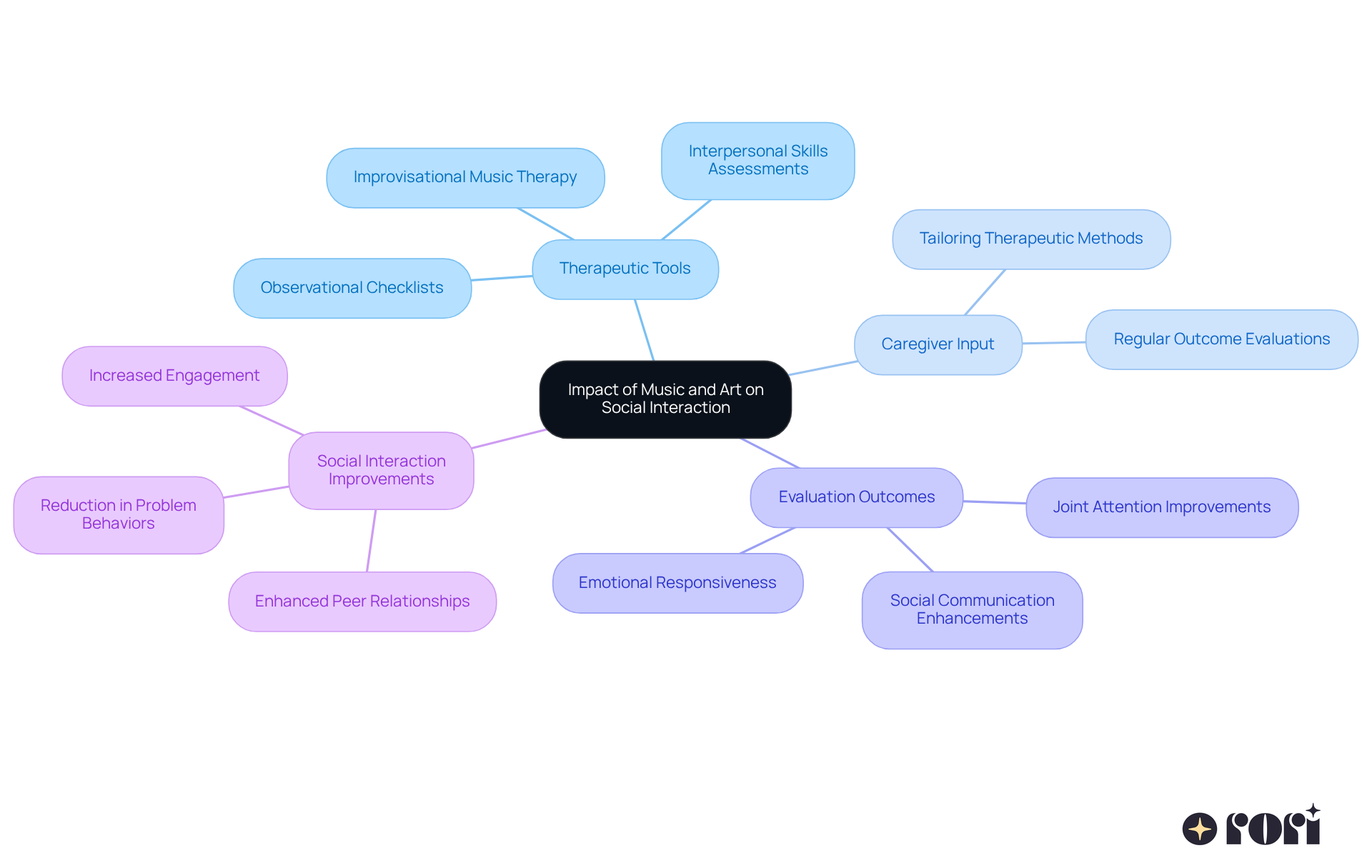
Enhancing social interaction through music and art in autism therapy is such a heartwarming approach! It opens up new ways for children with autism to communicate and express their emotions. By weaving these creative therapies into treatment plans, caregivers and clinicians can really make a difference - boosting interpersonal skills, easing anxiety, and nurturing emotional well-being. It’s all about enriching the lives of children on the autism spectrum.
This article shines a light on the wonderful benefits of music and art therapy. Think about it: group activities like collaborative art projects and music-making sessions can really promote teamwork, communication, and that all-important sense of belonging. These engaging experiences not only give children a chance to express themselves but also help them build essential social skills in a supportive environment. Plus, let’s not forget about the importance of educating caregivers! When parents are equipped with effective strategies, they can reinforce these skills at home, making a world of difference.
As we continue to learn about how music and art impact social interaction, it’s clear that embracing these therapeutic methods in autism treatment is crucial. By fostering collaborative experiences and actively involving caregivers, we open the door to incredible positive outcomes. This holistic approach nurtures the growth of children with autism and paves the way for a more inclusive and understanding society.
The journey toward enhancing social interaction through music and art is truly worth pursuing. Every step we take can lead to remarkable transformations in the lives of those affected by autism. So, let’s explore this together! We’re here to help you every step of the way!
What is the role of music and art in autism therapy?
Music and art interventions are essential in autism treatment as they enhance social interaction and provide creative avenues for children to communicate and express their feelings.
How do music and art therapies benefit children with autism?
These therapies boost interpersonal skills, ease anxiety, and enhance emotional well-being, allowing children to express their emotions creatively.
What specific improvements have been observed in children with autism through these therapies?
Research shows that music therapy improves joint attention, eye contact, and mutual interaction, while art therapy nurtures creativity and self-expression.
What evidence supports the effectiveness of music programs for children with autism?
A recent review of studies found that children involved in music programs showed notable improvements in communication and language skills.
How do group sessions contribute to social skills development in children with autism?
Group sessions led by trained professionals help individuals connect better with others, improving their social skills and relationships.
Why is educating caregivers important in autism therapy?
Educating caregivers equips families with the tools they need to support their child's development effectively.
How can clinicians and families integrate music and art therapies into treatment plans?
By recognizing the potential and limitations of these therapies, clinicians and families can incorporate them into comprehensive treatment plans for a holistic approach to care.


