Introduction
Creating an inclusive environment for children with autism is all about understanding their unique sensory needs. These can vary widely, from hypersensitivity to hyposensitivity. In this article, we’ll explore some essential sensory-friendly activities that not only accommodate these differences but also make public settings more enjoyable for our kids.
But here’s the big question: how can caregivers and communities effectively implement these strategies? It’s crucial to ensure that every child feels comfortable and engaged. Let’s dive into some insights and practical tips that can help transform public spaces into welcoming havens for children with autism. Together, we can make a difference!
Understand Sensory Needs in Children with Autism
Children with autism often experience unique processing differences, which can show up as either hypersensitivity or hyposensitivity to various stimuli. Recognizing these needs is crucial for understanding how young ones respond to sounds, lights, textures, and smells. For example, one child might feel overwhelmed in a noisy environment, while another may actively seek out sensory experiences, like squeezing playdough. Did you know that studies reveal up to 96% of individuals on the autism spectrum deal with processing differences that significantly impact their daily lives? Plus, research shows that 50% of kids with autism face visual processing challenges, adding another layer to their perceptual experiences.
To effectively support these children, caregivers can take a few simple steps:
- Observe Reactions: Keep an eye on how your child reacts in different settings. This can help you pinpoint specific triggers that might cause discomfort or distress.
- Create Stimulus-Friendly Environments: Think about implementing strategies like quiet zones in busy areas or using noise-canceling headphones to help ease overwhelming stimuli. This approach aligns with the principles of Applied Behavior Analysis (ABA) therapy, which focuses on tailoring interventions to meet each child's unique needs.
- Engage with Experts: Don’t hesitate to seek insights from pediatric psychologists, like Dr. Fakhri Shafai. He highlights that perceptual processing challenges are a key feature of Autism Spectrum Disorder and can greatly affect daily functioning.
By raising awareness of these perceptual needs, caregivers can create sensory-friendly activities for children with autism in public settings that align with each child's individual preferences and requirements. This can really enhance their experiences in public spaces! For instance, creating quiet zones or providing tools like noise-canceling headphones can help reduce overwhelming stimuli and foster a more inclusive environment.
And here’s something exciting! Parents might find it beneficial to attend a free webinar on April 15, 2026, at 1:00 p.m. Eastern time. This session will delve deeper into understanding sensory processing in individuals on the spectrum. At Rori Care, we’re all about empowering caregivers with ABA principles and strategies to support their children’s behavioral goals. We’re here to help you every step of the way!

Create Inclusive Sensory-Friendly Environments
Creating sensory-friendly activities for children with autism in public settings involves thoughtful strategies that cater to the unique needs of individuals with autism. Let’s dive into some essential practices that can make a real difference:
- Lighting: Opt for natural light or soft, warm-toned bulbs. Fluorescent lighting can be pretty harsh and overwhelming for many kids, so keeping it cozy is key.
- Noise Control: Think about using sound-absorbing materials and setting up quiet zones. These little retreats can be a lifesaver when kids feel overstimulated, giving them a calming space to regroup.
- Visual Clarity: Keeping spaces organized and uncluttered helps reduce visual distractions. Clear signage with symbols can really assist kids in navigating their environment more easily.
- Flexible Spaces: Designate areas for different activities, allowing kids to choose spaces that fit their sensory preferences. This flexibility can really foster a .
By implementing these changes and actively involving caregivers in the process, who can gain valuable insights from Rori Care, public spaces can become more inclusive and welcoming by incorporating sensory-friendly activities for children with autism in public settings. Plus, using data gathering techniques can help caregivers assess how well these strategies are working, maximizing the impact of interventions and supporting the behavioral goals of our young ones.
Let’s explore this together and make our environments more supportive for every child!

Implement Engaging Sensory-Friendly Activities
Incorporating sensory-friendly activities for children with autism in public settings can significantly enhance the experiences of young individuals with autism. Let’s explore some effective options together:
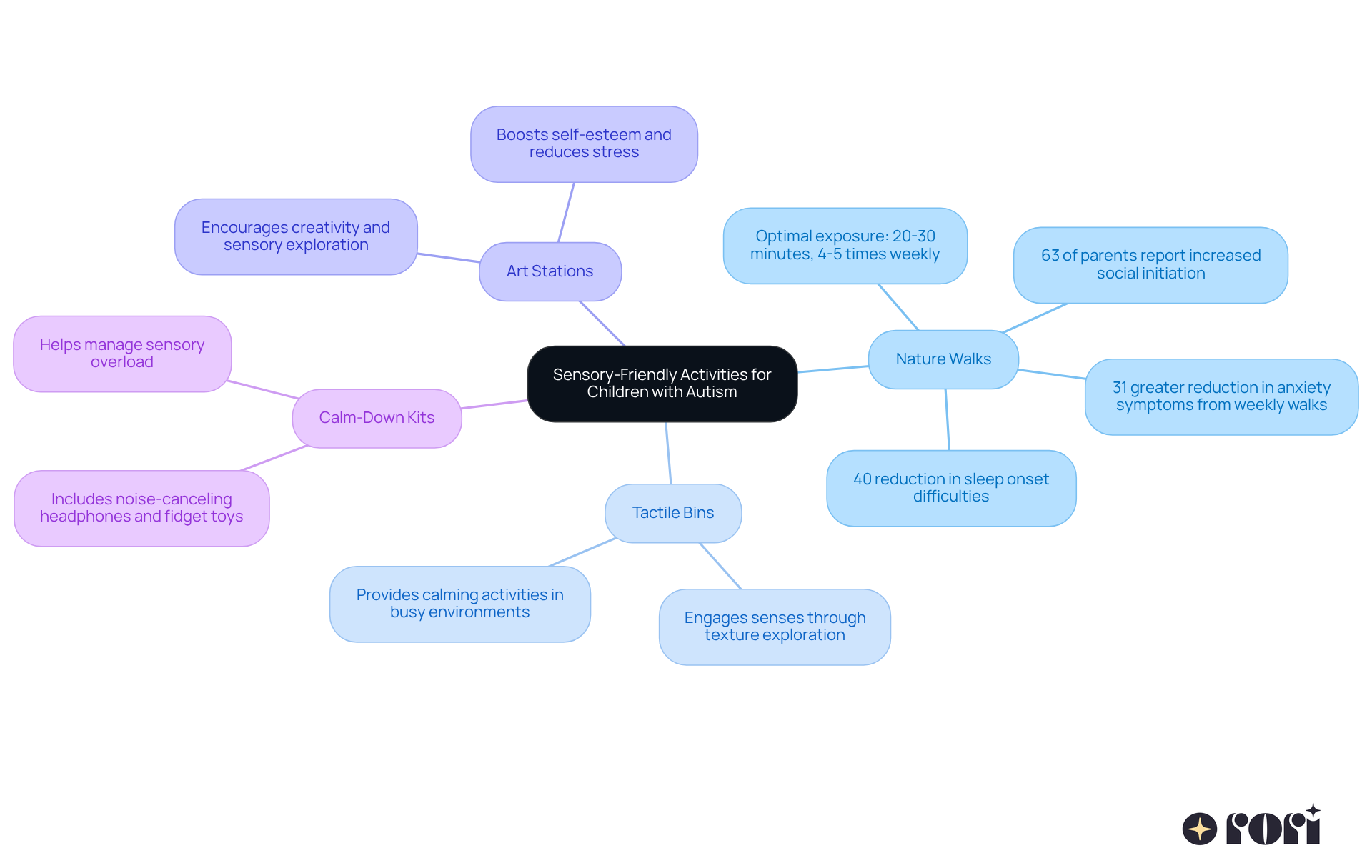
- Nature Walks: Nature walks are a fantastic way for kids to connect with the world around them. Imagine your child feeling the rustling leaves or hearing the gentle flow of water. Research shows that regular nature exposure can lead to a 40% reduction in sleep onset difficulties for autistic individuals who take daily morning walks in natural light. Plus, 63% of parents notice their kids initiating social interactions more during family nature walks. A 2022 study even found that weekly 60-minute nature walks resulted in a 31% greater reduction in anxiety symptoms among autistic adolescents. And a 2023 meta-analysis highlighted that consistent brief nature exposure (20-30 minutes, 4-5 times weekly) produced greater anxiety reduction than less frequent, longer sessions.
- Tactile Bins: Portable tactile bins filled with materials like rice, beans, or sand can be a great way for kids to explore different textures while out and about. These bins help engage their senses and provide calming activities in busy environments.
- Art Stations: Setting up tactile art stations where kids can finger paint or use textured materials encourages creativity and sensory exploration. Engaging in art has been shown to boost self-esteem and reduce stress, making it a wonderful activity for youth with autism.
- Calm-Down Kits: Offering kits that include noise-canceling headphones, fidget toys, and soothing visuals can help young individuals self-regulate in crowded spaces. These tools are essential for managing sensory overload and promoting a sense of security.
These for children with autism in public settings not only meet sensory needs but also foster creativity and social engagement among peers, making public outings more enjoyable for young individuals. As occupational therapists often emphasize, integrating nature walks into a child's routine can lead to significant improvements in their overall well-being and social skills.
Let’s keep the conversation going! What sensory-friendly activities have you found helpful?
Recognize Benefits of Sensory-Friendly Practices
Implementing sensory-friendly activities for children with autism in public settings can truly make a difference for families! Here’s how:
- Decreased Anxiety: Imagine your child feeling less overwhelmed in public spaces. By reducing those intense stimuli, we can help prevent meltdowns and create a more comfortable environment that supports sensory-friendly activities for children with autism in public settings. Did you know that over 90% of individuals with autism spectrum disorder experience sensory alterations? That’s why incorporating sensory-friendly activities for children with autism in public settings is so important for their well-being.
- Enhanced Engagement: Think about how tailored activities can spark participation and interaction. For instance, relaxation rooms filled with calming elements like weighted blankets and swings can help overstimulated students engage better in school. It’s all about creating spaces where they feel safe and ready to learn!
- Enhanced Learning Opportunities: Sensory-friendly settings can boost concentration and learning. When we lower environmental stress through , autistic individuals often show fewer challenging behaviors and better emotional control. This leads to a more positive learning experience, allowing our kids to shine academically!
- Empowerment for Families: Providing tools and strategies through caregiver education can really empower families. When parents feel equipped to navigate public spaces, it fosters a sense of community and support. Plus, caregiver-centered interventions have shown strong evidence of enhancing occupational performance for young individuals with sensory challenges.
Overall, these practices help create a more inclusive society where children with autism can thrive. Let’s explore this together and think about how thoughtful environmental design can respect sensory differences!

Conclusion
Creating sensory-friendly activities for children with autism in public spaces is so important for fostering inclusivity and enhancing their experiences. By understanding and addressing the unique sensory needs of these children, caregivers and communities can implement strategies that really make a difference in their daily interactions. When we emphasize tailored approaches, we can turn public areas into welcoming and supportive environments for individuals on the autism spectrum.
Let’s take a moment to highlight some key insights:
- Recognizing sensory processing differences
- Creating calming environments
- Engaging in enriching activities
These are all crucial. Think about nature walks that promote connection or tactile bins that spark exploration-each suggestion aims to reduce anxiety and encourage participation. Plus, incorporating flexible spaces and sensory-friendly practices can lead to better learning outcomes and emotional well-being for children with autism.
The call to action is clear: communities need to prioritize developing sensory-friendly public spaces to empower families and support children with autism. By fostering environments that respect sensory differences and promote engagement, we can create a more inclusive atmosphere where all children thrive. Embracing these practices not only benefits individuals on the spectrum but also enriches the community as a whole, paving the way for a brighter, more inclusive future. Let’s explore this together!
Frequently Asked Questions
What are sensory processing differences in children with autism?
Children with autism often experience unique sensory processing differences, which can manifest as hypersensitivity or hyposensitivity to stimuli such as sounds, lights, textures, and smells.
How common are sensory processing differences among individuals on the autism spectrum?
Studies indicate that up to 96% of individuals on the autism spectrum experience processing differences that significantly impact their daily lives.
What specific challenges do children with autism face regarding visual processing?
Research shows that 50% of kids with autism encounter visual processing challenges, adding complexity to their perceptual experiences.
What steps can caregivers take to support children with sensory processing needs?
Caregivers can observe their child's reactions in different settings, create stimulus-friendly environments, and engage with experts to better understand and address their sensory needs.
How can caregivers create stimulus-friendly environments for children with autism?
Strategies include implementing quiet zones in busy areas and using noise-canceling headphones to help reduce overwhelming stimuli.
Why is it important to engage with experts regarding sensory processing in autism?
Experts, such as pediatric psychologists, can provide valuable insights into perceptual processing challenges, which are significant features of Autism Spectrum Disorder and can greatly affect daily functioning.
What types of activities can caregivers create to support children with autism in public settings?
Caregivers can design sensory-friendly activities that align with each child's individual preferences and requirements, such as creating quiet zones or providing tools like noise-canceling headphones.
Is there an upcoming event for parents to learn more about sensory processing in autism?
Yes, there will be a free webinar on April 15, 2026, at 1:00 p.m. Eastern time, focusing on understanding sensory processing in individuals on the autism spectrum.
List of Sources
- Understand Sensory Needs in Children with Autism
- Part 1: Brain & Sensory Processing Differences Across the Lifespan (https://autism.org/brain-sensory-processing-differences)
- Sensory Issues and Their Impact Among Autistic Children: A Cross-Sectional Study in Northern Sri Lanka - PMC (https://pmc.ncbi.nlm.nih.gov/articles/PMC11580710)
- 107 Favorite Quotes About Autism and Aspergers (https://the-art-of-autism.com/favorite-quotes-about-autism-and-aspergers)
- 10 inspiring quotes from people with autism | Autism Speaks (https://autismspeaks.org/life-spectrum/autism-quotes)
- Fact 3: Up to 96% of individuals with ASD have sensory processing differences. (https://handsinautism.iu.edu/education/asd/asd-facts-and-misconceptions/asd-fact-3.html)
- Create Inclusive Sensory-Friendly Environments
- Implication of the Sensory Environment in Children with Autism Spectrum Disorder: Perspectives from School - PMC (https://pmc.ncbi.nlm.nih.gov/articles/PMC8306690)
- 107 Favorite Quotes About Autism and Aspergers (https://the-art-of-autism.com/favorite-quotes-about-autism-and-aspergers)
- Inspiring and Insightful Autism Quotes | Advanced Autism Services (https://advancedautism.com/post/autism-quotes)
- 10 inspiring quotes from people with autism | Autism Speaks (https://autismspeaks.org/life-spectrum/autism-quotes)
- Implement Engaging Sensory-Friendly Activities
- How Nature Walks Help Calm Anxiety in Autistic Individuals | Links (https://linksaba.com/how-nature-walks-help-calm-anxiety-in-autistic-individuals)
- Research Digest: Benefits of Nature for Special Needs | C&NN (https://childrenandnature.org/resources/research-digest-children-with-special-needs-2)
- Nature-Based Interventions for Autistic Children: A Systematic Review and Meta-Analysis - PMC (https://pmc.ncbi.nlm.nih.gov/articles/PMC10704280)
- Sensory-Friendly Activities for Children With Autism and Intellectual Disabilities - Barc Programs (https://barcprograms.org/sensory-friendly-activities-for-children-with-autism-and-intellectual-disabilities)
- 10 inspiring quotes from people with autism | Autism Speaks (https://autismspeaks.org/life-spectrum/autism-quotes)
- Recognize Benefits of Sensory-Friendly Practices
- 10 inspiring quotes from people with autism | Autism Speaks (https://autismspeaks.org/life-spectrum/autism-quotes)
- Effectiveness of Sensory Integration Interventions in Children With Autism Spectrum Disorders: A Pilot Study - PMC (https://pmc.ncbi.nlm.nih.gov/articles/PMC3708964)
- Autism, Sensory Challenges, and Mental Health: Lessons from Our Environments (https://acsh.org/news/2025/10/09/autism-sensory-challenges-and-mental-health-lessons-our-environments-49761)
- Systematic review of sensory-based interventions for children and youth (2015–2024) - PMC (https://pmc.ncbi.nlm.nih.gov/articles/PMC12658592)