Recognizing Autism Spectrum Disorder (ASD) in preschoolers is such an important step in making sure kids get the support they need early on. Did you know that about 1 in 31 children in the U.S. are affected by this complex neurodevelopmental condition? Understanding its characteristics and early signs can really shape a child's developmental journey.
But here’s the thing: many parents and caregivers find it tough to spot those subtle indicators. This can lead to delays in diagnosis and intervention, which no one wants. So, what are the essential steps to effectively recognize autism in young children? And how can caregivers navigate this critical process? Let’s explore this together!
Autism Spectrum Disorder (ASD) is a complex neurodevelopmental condition that brings its own set of challenges, especially when it comes to communication and interaction. Kids with ASD often find it tough to interpret social cues, keep conversations going, and engage in back-and-forth interactions. This can make forming friendships and understanding social norms quite tricky.
You might notice some , too. This could look like hand-flapping, sticking to routines, or having a deep interest in specific topics. For many kids, these behaviors provide comfort and a sense of predictability in their day-to-day lives.
are another common trait. Many individuals on the spectrum respond differently to sensory stimuli, often being more sensitive to sounds, lights, or textures. This heightened sensitivity can lead to sensory overload, making everyday environments feel overwhelming.
and providing . It can really make a difference in a young person's developmental journey and overall quality of life. At Rori Care, we offer tailored for individuals of all ages facing these challenges, including those with Autism Spectrum Disorders, ADHD, and learning disabilities. With developmental disorders now affecting about , identifying autism in preschoolers is more crucial than ever for parents and caregivers.
Let’s explore this together! If you’re noticing any of these signs, don’t hesitate to reach out for support. We’re here to help you every step of the way!
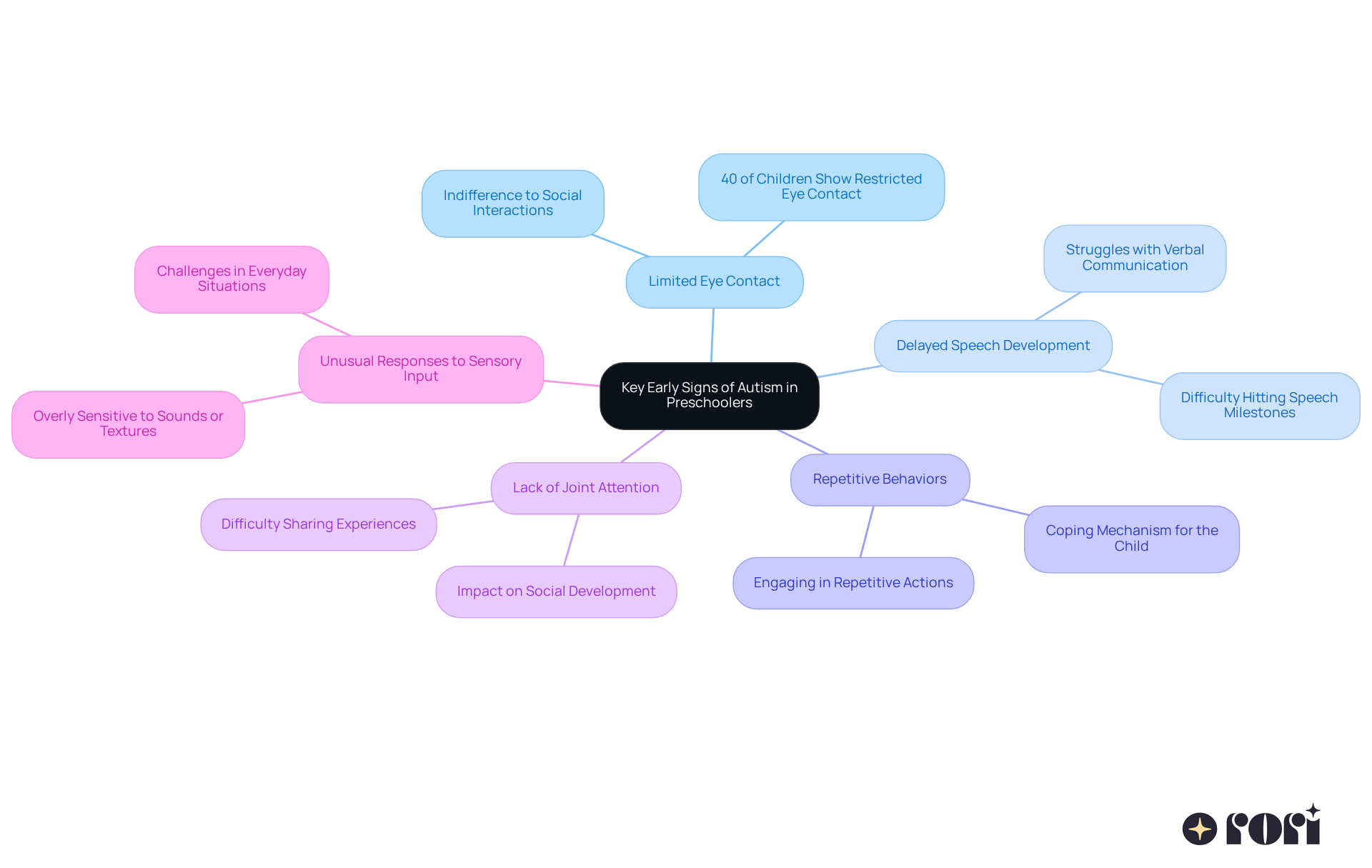
is crucial for obtaining timely evaluations and interventions. Here are some key indicators to keep an eye on:
If you notice any of these behaviors, it’s a good idea to keep a close watch and about identifying autism in preschoolers if concerns persist. Connecting with qualified behavior analysts can provide you with tailored strategies and support, helping you . By applying ABA principles and keeping track of data, you can really boost the effectiveness of these strategies. Remember, can make a world of difference for individuals with autism. Let’s explore this journey together!
When concerns about a young person's development pop up, it’s really important to seek a without delay. Here are some essential steps to consider:
At Rori Care, our dedicated and passionate clinicians are here to support your family’s journey through comprehensive and compassionate . Remember, prompt evaluation is key! that significantly boost a young person's development. Our clinical leadership team is committed to neurodiversity and youth success, ensuring that caregivers like you are equipped with the knowledge and strategies needed to align with your child’s behavioral goals. Let’s explore this together!

Technology is really changing how we are , and it’s exciting! Here are some that are making a difference:
Embracing these tech advancements not only empowers families but also helps clinicians in identifying autism in preschoolers more effectively. Together, we can for children with autism. Let’s explore this journey together!

Identifying autism in preschoolers is such an important journey that can really shape a child's development. By understanding the nuances of Autism Spectrum Disorder (ASD) and recognizing its signs, we set the stage for early intervention. This can truly enhance a child's quality of life and developmental outcomes.
Throughout this article, we’ve highlighted key indicators like limited eye contact, delayed speech, and unusual responses to sensory input. These are essential signs to keep an eye on! Engaging with healthcare professionals for timely evaluations and using innovative technology can really help streamline the identification process. This way, children can get the support they need as early as possible.
But remember, identifying autism isn’t just about spotting signs; it’s about empowering families and children with knowledge and resources. By embracing advancements in technology and seeking professional guidance, caregivers can take proactive steps to create a nurturing environment that encourages growth and development. Prioritizing early detection and intervention is crucial - it truly paves the way for a brighter future for children on the autism spectrum.
Let’s explore this together! We’re here to help you every step of the way!
What is Autism Spectrum Disorder (ASD)?
Autism Spectrum Disorder (ASD) is a complex neurodevelopmental condition characterized by challenges in communication and interaction, as well as repetitive behaviors and sensory sensitivities.
What are some common characteristics of children with ASD?
Children with ASD often struggle to interpret social cues, maintain conversations, and engage in back-and-forth interactions. They may also exhibit repetitive behaviors, such as hand-flapping, sticking to routines, or having intense interests in specific topics.
How do sensory sensitivities affect individuals with ASD?
Many individuals with ASD have heightened sensitivities to sensory stimuli, such as sounds, lights, or textures. This can lead to sensory overload, making everyday environments feel overwhelming.
Why is early detection of autism important?
Early detection of autism in preschoolers is crucial as it allows for timely support and intervention, which can significantly improve a young person's developmental journey and overall quality of life.
What services does Rori Care offer for individuals with ASD?
Rori Care provides behavioral assistance services tailored for individuals of all ages facing challenges, including those with Autism Spectrum Disorders, ADHD, and learning disabilities.
How prevalent are developmental disorders like ASD in the U.S.?
Developmental disorders, including Autism Spectrum Disorder, currently affect about 1 in 31 children in the U.S., highlighting the importance of identifying autism early.