Introduction
Understanding how to effectively implement Applied Behavior Analysis (ABA) can truly transform the daily lives of parents and their children. This powerful method not only encourages positive behavior changes but also gives caregivers practical strategies to support their child's development.
But let’s be real - navigating the multitude of techniques and tools available can feel overwhelming. How can parents make the most impactful choices? 🤔 This article dives into actionable steps for integrating ABA into everyday routines, empowering you to create a nurturing environment that promotes learning and growth. Let’s explore this together!
Understand the Basics of Applied Behavior Analysis (ABA)
To understand how to apply ABA in daily life effectively, it’s important for parents to grasp its core principles. ABA, or Applied Behavior Analysis, is a scientific method that focuses on understanding and changing behaviors through reinforcement strategies. This approach can really benefit individuals of all ages, especially those facing challenges like Autism Spectrum Disorders and ADHD. Let’s break down some key concepts:
- Reinforcement: Think of this as a way to encourage good behavior. When you for doing something positive, like completing a task, it makes them more likely to do it again. For instance, a simple praise after finishing homework can go a long way!
- Prompting: This is all about giving hints to help kids perform desired behaviors. If your little one is having trouble remembering to say 'thank you,' you might gently prompt them by asking, 'What do you say?' after they receive something.
- Task Analysis: Sometimes, tasks can feel overwhelming. Breaking them down into smaller, manageable steps can really help. For example, teaching a child to brush their teeth can be simplified into steps like picking up the toothbrush, applying toothpaste, and brushing for two minutes.
By getting familiar with these concepts, caregivers can create a nurturing environment that promotes learning and positive behavior changes. Plus, understanding the benefits of caregiver education-like making informed decisions and seeing better behavioral outcomes-empowers you to align your strategies with therapeutic goals. This not only enhances your ability to support your child’s development but also improves family dynamics.
So, let’s explore this together! Remember, you’re not alone in this journey, and we’re here to help you every step of the way!

Implement ABA Techniques in Daily Routines
To effectively implement ABA techniques in daily routines, parents can follow these simple steps:
- Identify Key Routines: Start by mapping out daily activities like morning routines, mealtimes, and bedtime. Consider specific moments that illustrate how to apply ABA in daily life to significantly impact learning and behavior.
- Use Visual Supports: Create visual schedules that clearly outline the steps of each routine. For example, a morning routine chart could include images for brushing teeth, getting dressed, and eating breakfast. Visual supports can for many autistic learners, making them a must-have in ABA therapy.
- Incorporate Reinforcement: Use positive reinforcement to encourage desired actions. If your child successfully follows their morning routine, reward them with praise or a small treat. Research shows that positive reinforcement can significantly enhance learning outcomes, making it a key part of effective behavior management.
- Practice Consistency: Consistency is key in ABA. Make sure routines are followed consistently, and responses to actions are uniform to reinforce learning. This helps kids generalize their skills across different settings, leading to lasting behavioral improvements.
- Model Desired Actions: Show your child the actions you want to see. If you want them to say 'please' and 'thank you,' model this language in your interactions. This not only teaches communication skills but also creates a supportive learning environment.
Caregivers can learn how to apply ABA in daily life by weaving these techniques into everyday routines, creating a structured atmosphere that promotes learning and positive behaviors, thus helping their children thrive. Plus, educating caregivers boosts support, informs decision-making, and enhances behavioral outcomes, reinforcing the effectiveness of these strategies. As Dr. Stephen Shore wisely says, 'If you’ve met one person with autism, you’ve met one person with autism.' This highlights the importance of personalized approaches, like the 'presumption of competence,' to improve outcomes in educational settings.
Let’s explore this together! We’re here to help you every step of the way!

Monitor Progress and Adjust Strategies
To effectively monitor progress and adjust strategies in ABA, parents can follow these steps:
- Set Clear Objectives: Start by establishing specific, measurable goals for your child’s behavior and skills. For example, a goal could be for your child to independently brush their teeth every morning. This gives you a clear target to aim for!
- Track Data: Keep a record of your child’s progress by noting instances of desired behaviors and any challenges that pop up. Using simple charts or specialized apps can make this process easier and help you visualize progress. Rori Care takes it a step further by using advanced AI technology to automate progress report generation. This means you can and free up 50% more time for treatment! Remember, data collection is key in monitoring your child’s progress in ABA therapy, allowing therapists to evaluate performance objectively.
- Review Regularly: Set aside some time each week or every other week to review the data you’ve collected. Look for patterns in behavior and assess how well your current strategies are working. Regular reviews are super important! Studies show that those who assess goals quarterly achieve 31% greater returns than those who do so less frequently.
- Adjust Strategies as Needed: If certain techniques aren’t giving you the results you hoped for, don’t hesitate to change things up. This might mean switching reinforcement methods or tweaking the prompts you use to guide your child.
- Communicate with Professionals: Make it a habit to share your observations and data with your child’s therapist or BCBA. Their expertise can offer valuable insights and recommendations for necessary adjustments, ensuring that the therapy stays effective and responsive to your child’s needs. Working together in data collection ensures that the information gathered is comprehensive and accurate, allowing for modifications to your child’s individualized plan if needed. Plus, Rori Care offers caregiver education programs with workshops and resources designed to empower caregivers with ABA principles and strategies, enhancing their ability to support their child’s behavioral goals through active involvement.
By actively monitoring progress and being open to adapting strategies, caregivers can help foster meaningful gains in their child’s development. It’s all about collaboration and flexibility in the ABA process, and we’re here to help you every step of the way!

Utilize Technology to Enhance ABA Applications
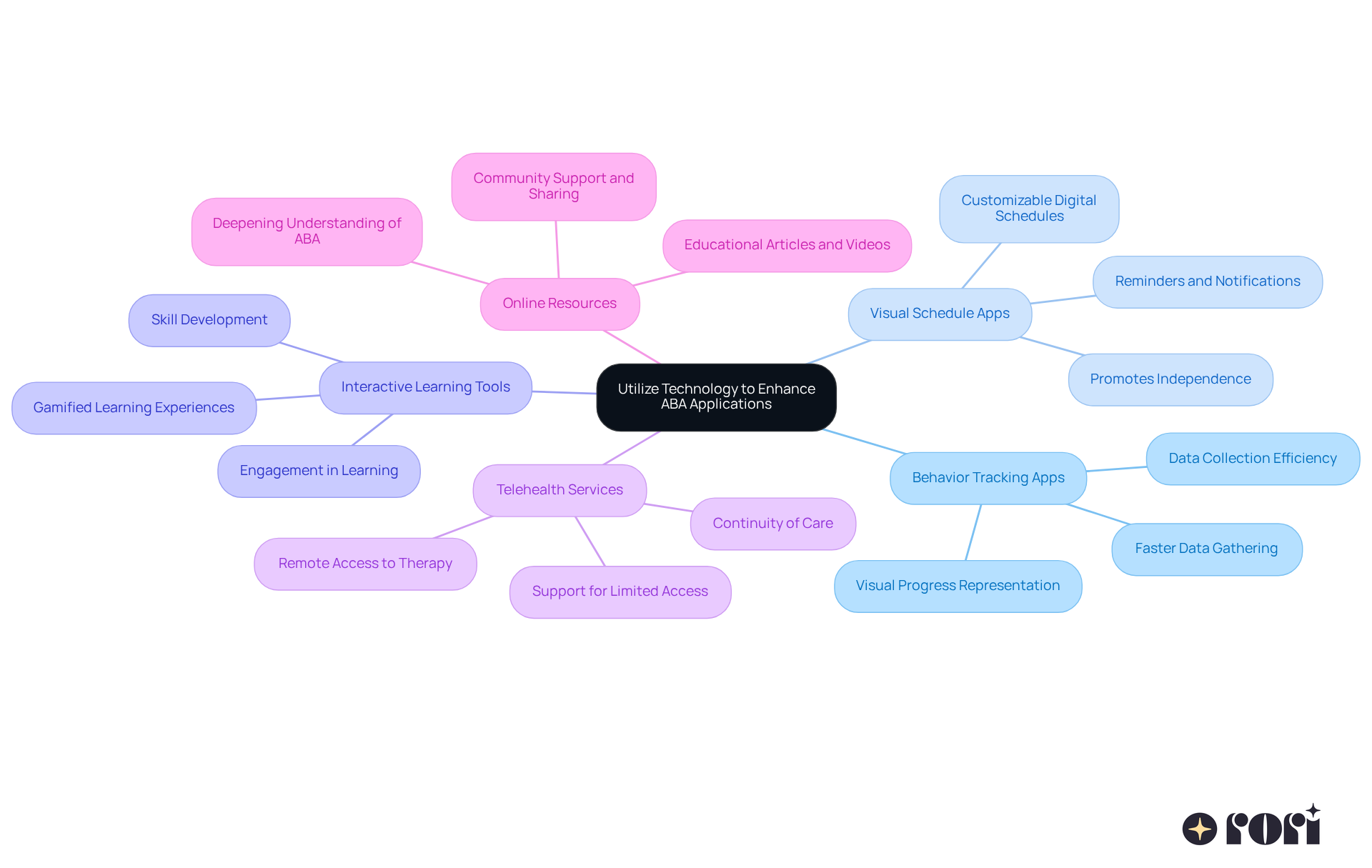
Incorporating technology into ABA practices can really boost learning and engagement for kids! Here are some effective ways you, as parents, can make the most of technology:
- Behavior Tracking Apps: Have you tried using specialized apps for tracking behavior and progress? These handy tools make data collection a breeze and provide visual representations of progress over time. This way, you can easily spot patterns and tweak strategies as needed. Research shows that therapists using the ABA Data Collection app by Rethink can gather data 50% faster than traditional methods, which really enhances efficiency in tracking behavioral changes. Plus, Rori Care uses advanced AI to automate progress report creation, freeing up 50% more time for treatment. This means more personalized support for your child and more time for you to focus on their needs!
- Visual Schedule Apps: Customizable can be a game-changer for your child’s daily routines. These apps often come with reminders and notifications, helping kids stay organized and focused. This is so important for promoting independence and easing anxiety during transitions. Organizations that use digital ABLLS-R assessments report 60% faster completion times compared to paper versions, showing just how efficient digital tools can be in ABA therapy.
- Interactive Learning Tools: Don’t forget to explore educational apps that apply ABA principles to teach essential skills! Gamified learning experiences can make the process fun and engaging, encouraging your little ones to actively participate in their educational journey. As one behavioral therapist wisely said, "Effective data collection ensures that interventions are tailored to meet the specific needs of each individual, maximizing the likelihood of meaningful improvements."
- Telehealth Services: If in-person therapy isn’t an option, consider telehealth services that allow for remote sessions with qualified professionals. This ensures continuity of care and provides the support you need, especially when access to in-person services might be limited.
- Online Resources: There’s a wealth of online platforms filled with articles, videos, and discussion boards for caregivers. These resources can deepen your understanding of ABA techniques and connect you with a community of families sharing experiences and strategies. Family involvement is key for effective therapy outcomes, enhancing the treatment plan's effectiveness and giving therapists valuable insights into your child’s needs and progress.
By embracing these tech tools, you can learn how to apply ABA in daily life, enhancing the learning process to be not just effective but also enjoyable for your child. Let’s explore this together!
Conclusion
Applying Applied Behavior Analysis (ABA) in daily life can truly change how parents support their children's growth. By grasping and using the core principles of ABA, caregivers can craft an environment that nurtures positive behavior changes and boosts learning opportunities. This approach not only helps children facing challenges like Autism Spectrum Disorders and ADHD but also strengthens family bonds through informed choices and effective strategies.
Let’s dive into some practical steps for parents! It’s all about reinforcement, prompting, and task analysis. Incorporating ABA techniques into daily routines is key - think visual supports and keeping things consistent. Plus, tracking progress with clear goals and data collection helps ensure that strategies are effective and tailored to each child's unique needs. And don’t forget about technology! Behavior tracking apps and digital learning tools can make applying ABA even more engaging and efficient.
Ultimately, embracing ABA in everyday life isn’t just about using strategies; it’s about creating a space for collaboration, flexibility, and ongoing learning. By actively participating in this journey, parents can make a significant difference in their child's development, leading to meaningful improvements in behavior and skills. Your commitment to these principles and techniques can pave the way for a brighter future, empowering children to thrive in their learning and interactions.
So, let’s explore this together! Remember, you’re not alone in this journey, and we’re here to help you every step of the way!
Frequently Asked Questions
What is Applied Behavior Analysis (ABA)?
Applied Behavior Analysis (ABA) is a scientific method that focuses on understanding and changing behaviors through reinforcement strategies. It is particularly beneficial for individuals facing challenges like Autism Spectrum Disorders and ADHD.
What is reinforcement in the context of ABA?
Reinforcement in ABA refers to encouraging good behavior by rewarding individuals for positive actions. For example, praising a child after they complete a task can increase the likelihood of them repeating that behavior.
What is prompting in ABA?
Prompting involves giving hints or cues to help individuals perform desired behaviors. For instance, if a child forgets to say 'thank you,' a caregiver might prompt them by asking, 'What do you say?' after they receive something.
What is task analysis in ABA?
Task analysis is the process of breaking down complex tasks into smaller, manageable steps to make them less overwhelming. For example, teaching a child to brush their teeth can be simplified into steps like picking up the toothbrush, applying toothpaste, and brushing for two minutes.
How can understanding ABA principles benefit caregivers?
Familiarity with ABA concepts enables caregivers to create a nurturing environment that promotes learning and positive behavior changes. It also empowers them to make informed decisions and align their strategies with therapeutic goals, improving their child's development and family dynamics.