Explore Online Support Groups for Adults with Autism: Key Insights

Discover essential insights into online support groups for adults with autism and their benefits.

Introduction

Online support groups for adults with autism are truly transforming the way we connect and build community. These digital platforms are becoming a lifeline for many seeking understanding and companionship. 🌟 As they gain popularity, they not only offer emotional support but also provide valuable resources tailored to the unique challenges faced by adults on the spectrum.

However, it’s important to recognize that along with these benefits come a complex web of challenges. Choosing the right group can feel daunting, can’t it? 🤔 How can individuals navigate this evolving digital landscape to find the support that genuinely meets their needs? Let’s explore this together!

Overview of Online Support Groups for Adults with Autism

have become vital resources for , sharing experiences, and providing . These networks are found on various platforms like social media, specialized websites, and forums, catering to a wide range of needs—from to . By 2025, it's estimated that over 30% of adults with autism will actively engage in , indicating a growing trend toward digital community involvement.

Notable examples include:

  • Autism Self Advocacy Network (ASAN)
  • Wrong Planet
  • A variety of Facebook communities focusing on specific topics like employment, , and mental health

Each community has its unique approach to providing help, highlighting the importance of finding the right fit for individual needs. Experts point out that online support groups for adults with autism play a crucial role in and fostering a . Many participants share that their and improve through their involvement in these supportive environments.

As the landscape of autism assistance continues to evolve, online support groups for adults with autism remain an essential part of the journey, enabling individuals to connect, share, and thrive together. Let’s explore this together!
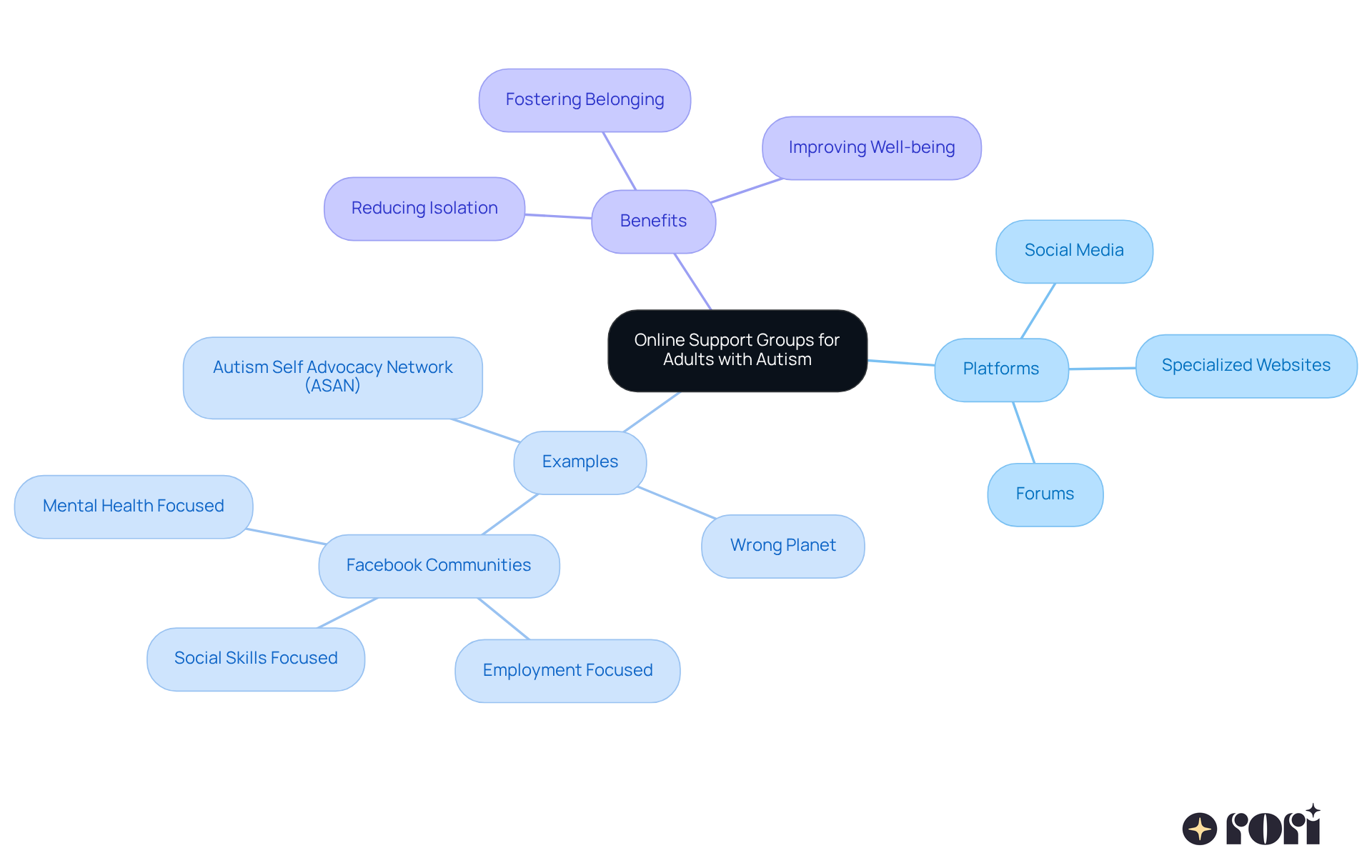
The central node represents the main topic of online support groups. Each branch indicates a related category, showing how various platforms, examples, and benefits connect to the main theme. Follow the branches to see how support is structured and what each community offers.

Key Features and Benefits of Leading Online Support Groups

Several essential features really enhance the effectiveness of leading .

  • Accessibility: Many groups are available 24/7, which is super helpful for those with busy schedules or different energy levels. You can join in whenever it suits you!
  • : These groups cover a wide range of topics, from coping techniques to advocacy. This means you can find discussions that resonate with your own experiences.
  • : Members share their personal stories and advice, creating a . This connection is so important, as it helps and builds social ties.
  • : Some groups include specialists who provide to help participants tackle challenges and find additional support.
  • Anonymity: Online platforms allow individuals to engage without revealing their identities, which encourages openness and honesty in discussions.

These features come together to help reduce isolation and boost social connections among adults with autism by utilizing . For instance, case studies show that people in virtual therapy sessions often feel empowered and connected, which greatly enhances their mental well-being and sense of community. As Dr. Tasha Oswald, a well-respected advocate in the field, notes, "Connecting with other neurodiverse individuals throughout the state, in a secure and nurturing virtual community, can be transformative." This highlights the significant impact that accessible digital support can have on the lives of autistic individuals.

Let’s explore this together! We’re here to !
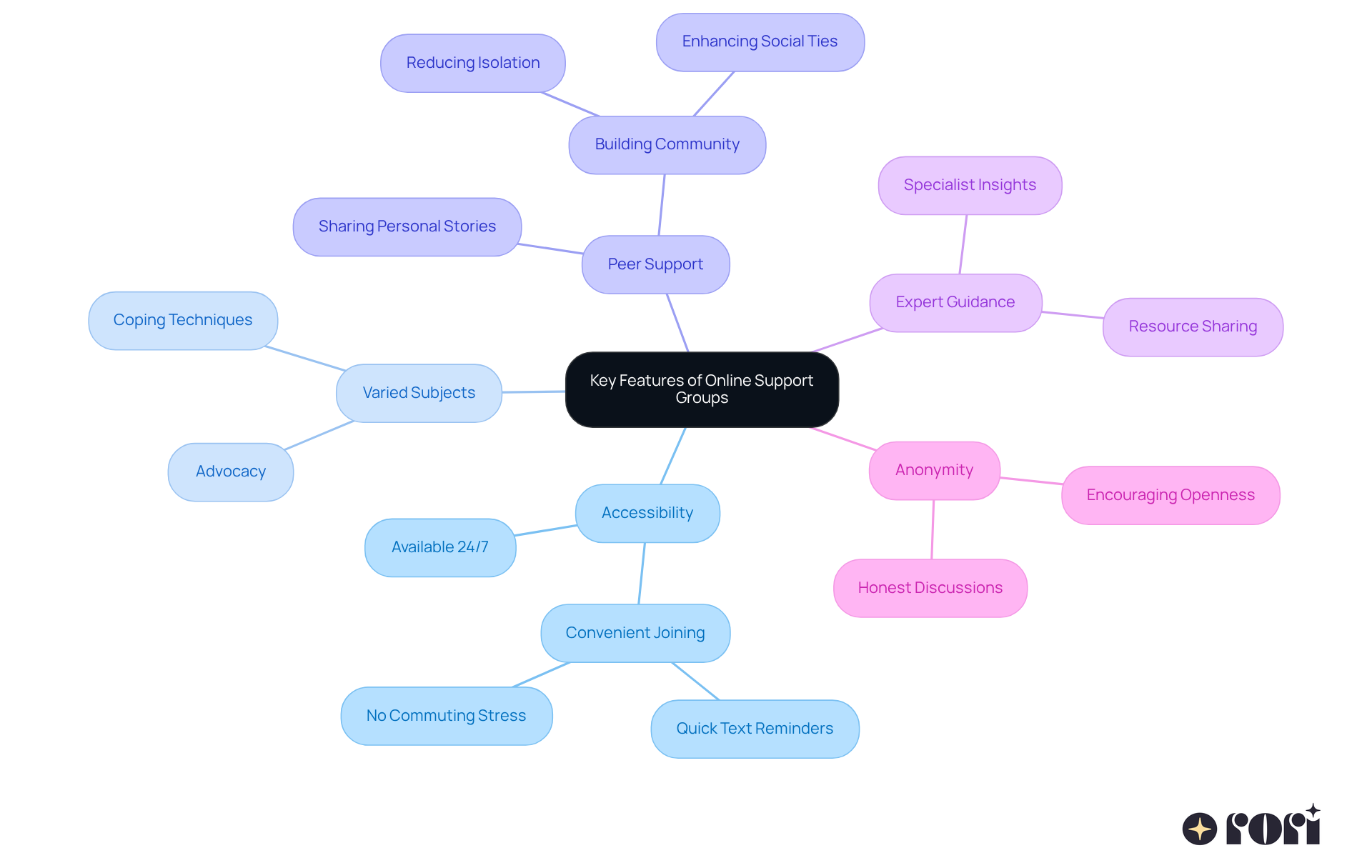
The central node represents the main topic, with branches showing the essential features. Each feature provides insights into how online support groups can help adults with autism, creating a visual map of their benefits.

Challenges and Limitations of Each Support Group

While online can be a great resource, they also present their own set of challenges. Let’s take a closer look at some of these hurdles together!

  • Quality Control: It’s important to note that many groups lack proper moderation. This can lead to . For instance, a study found that only 27% of the top autism-related TikTok videos shared accurate information, while a concerning 41% were classified as inaccurate. This really highlights the need to be cautious about the narratives we encounter online.
  • Lack of Personal Interaction: Online communication often misses the depth of face-to-face interactions, which can limit the we crave. Many participants have shared feelings of being overwhelmed by the aggressive tone in discussions. One person expressed, "I don’t find it easy to make friendships through a screen. To me that is not natural."
  • Overwhelming Information: , making it tough to find relevant advice. Several users have indicated confusion due to the mix of correct and incorrect information. One participant even mentioned that in some communities, !
  • : Sharing personal stories online brings up important concerns about confidentiality and data security. Participants have voiced their worries about discussing sensitive topics in environments where they feel vulnerable to judgment or harassment. This really emphasizes the need for caution in these spaces.

These challenges remind us how crucial it is to choose , including , and maintain . By doing so, we can create a . Let’s explore this together and ensure we’re all looking out for one another!
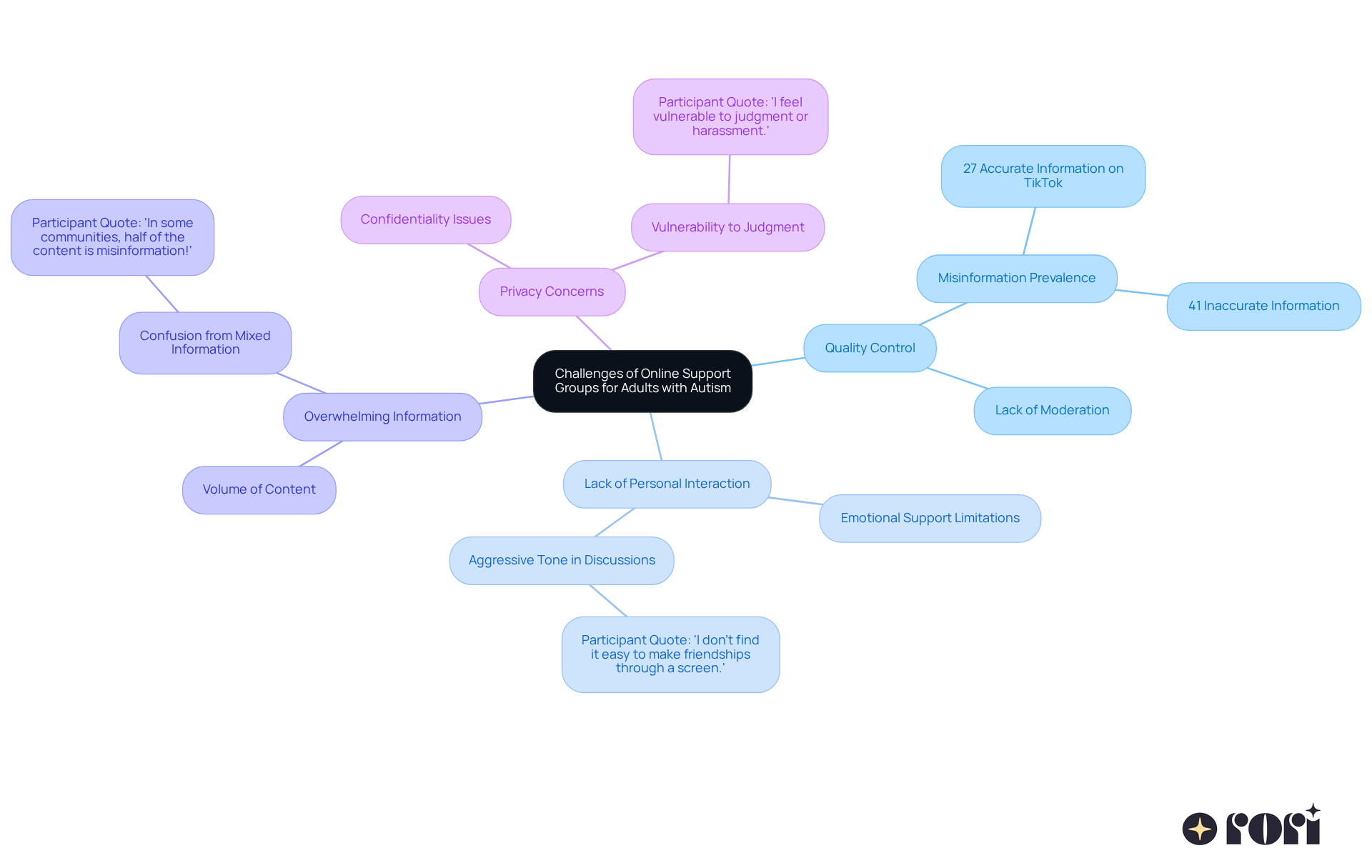
This mindmap breaks down the main challenges faced in online support groups for adults with autism. Each branch represents a different challenge, and you can follow the branches to see specific points or quotes that elaborate on those challenges.

Choosing the Right Online Support Group for Your Needs

When selecting , there are several key factors to consider to ensure a beneficial experience.

  • Focus Area: First, think about what you’re most interested in. Whether it’s , mental health, or parenting strategies, finding a group that aligns with your specific needs will help you connect with others facing similar challenges.
  • Team Size: Smaller teams often allow for more , fostering deeper connections and support. However, larger teams can offer a broader array of viewpoints and experiences, enriching discussions.
  • Moderation and Safety: It’s important to choose communities with . This helps maintain a respectful and safe environment, preventing negativity and ensuring that conversations stay constructive.
  • Engagement Level: Pay attention to how often members post and interact. tend to provide quicker assistance and create a sense of community among participants. These can significantly help individuals feel less isolated and more connected.
  • Resource Availability: Look for groups that offer access to tailored to your needs. This can enhance your understanding and assist with strategies. At Rori Care, our clinicians empower caregivers with , ensuring families have the knowledge and tools they need to support their children's behavioral goals.
  • Feedback and Reviews: Finally, seek out testimonials or reviews from current or former members. These insights can provide valuable information about the effectiveness of the team and the overall engagement of its members. Rori Care's clinical leadership team is dedicated to , as reflected in the experiences shared by families involved in our programs.

By thoughtfully evaluating these criteria, you can discover a network that not only meets your needs but also fosters a positive and nurturing atmosphere. Regular participation in [online support groups for adults with autism](https://autismparentingmagazine.com/autism-support-groups-for-parents-families-children) is crucial for maintaining emotional support and building connections within the community, much like the comprehensive and compassionate support offered by Rori Care. Let’s explore this together!
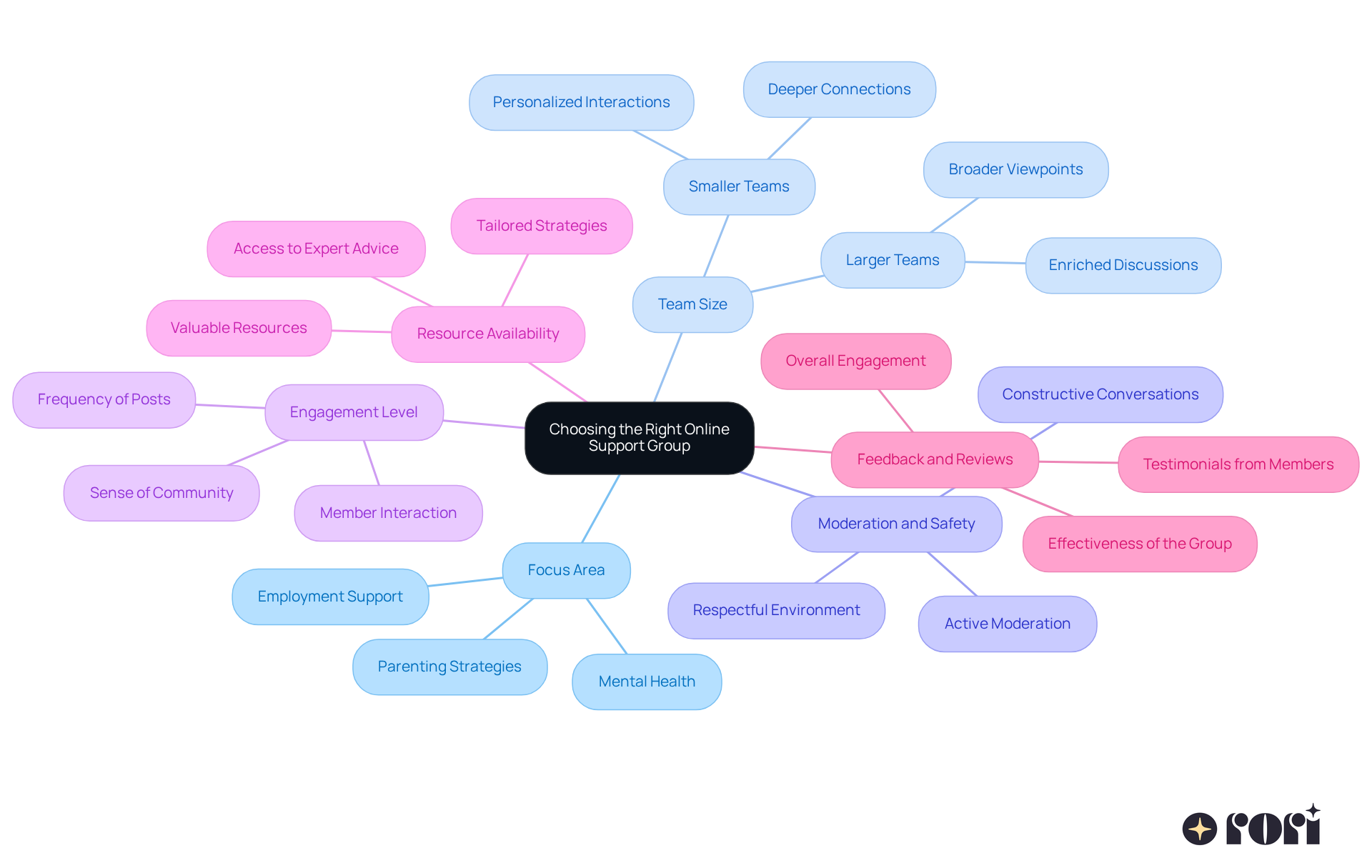
Start with the central theme and explore each factor. The branches show different aspects to consider, helping you find a group that best fits your needs.

Conclusion

Online support groups for adults with autism are truly essential lifelines, offering a welcoming community, understanding, and shared experiences. These digital platforms not only foster connections but also create a space for emotional support and personal growth. As more adults with autism join these groups, it becomes increasingly clear how important it is to find the right community that meets individual needs.

As we explore online support groups, we see key features like accessibility, peer support, and expert guidance shining as significant benefits. However, it’s important to be aware of challenges such as misinformation, lack of personal interaction, and privacy concerns. This reminds us to approach these platforms with a bit of caution. When choosing the right group, consider:

  1. Focus areas
  2. Team size
  3. Level of moderation

to ensure a safe and supportive environment.

Ultimately, the power of online support groups lies in their ability to connect individuals facing similar challenges, fostering a sense of belonging and empowerment. Engaging in these communities can lead to improved emotional well-being and social skills. It’s vital for adults with autism to seek out and participate in the right support networks. By doing so, they can enhance their own lives and contribute to a more inclusive and understanding society. Let’s explore this together!

Frequently Asked Questions

What are online support groups for adults with autism?

Online support groups for adults with autism are digital communities that provide a platform for individuals to share experiences, seek emotional support, and connect with others who have similar challenges and interests.

Where can these online support groups be found?

These support groups can be found on various platforms, including social media, specialized websites, and forums.

What types of needs do online support groups cater to?

Online support groups cater to a wide range of needs, including peer support, professional advice, and discussions on specific topics like employment, social skills, and mental health.

What is the projected trend for adults with autism engaging in online support groups by 2025?

By 2025, it is estimated that over 30% of adults with autism will actively engage in online support groups, indicating a growing trend towards digital community involvement.

Can you provide examples of notable online support groups for adults with autism?

Notable examples include the Autism Self Advocacy Network (ASAN), Wrong Planet, and various Facebook communities focused on specific topics related to autism.

How do online support groups benefit adults with autism?

Online support groups help reduce feelings of isolation, foster a sense of belonging, and improve participants' emotional well-being and social skills through shared experiences and support.

Why is it important to find the right online support group?

Each community has its unique approach to providing help, making it essential for individuals to find a group that fits their specific needs and preferences for effective support.


List of Sources

  1. Overview of Online Support Groups for Adults with Autism
  • 43 Inspiring Autism Quotes to Uplift and Motivate (https://goldencaretherapy.com/43-inspiring-autism-quotes)
  • 10 inspiring quotes from people with autism | Autism Speaks (https://autismspeaks.org/life-spectrum/autism-quotes)
  • Best Autism Quotes to Raise Awareness and Understanding (https://yellowbusaba.com/post/autism-quotes)
  • Celebrating Neurodiversity: Inspiring Words on Autism | Step Ahead ABA (https://stepaheadaba.com/blog/autism-quotes)
  1. Key Features and Benefits of Leading Online Support Groups
  • journals.sagepub.com (https://journals.sagepub.com/doi/full/10.1177/13623613251374971?mi=ehikzz)
  • opendoorstherapy.com (https://opendoorstherapy.com/online-group-therapy-neurodiverse-adults-teens-autism)
  • pmc.ncbi.nlm.nih.gov (https://pmc.ncbi.nlm.nih.gov/articles/PMC8729877)
  • pmc.ncbi.nlm.nih.gov (https://pmc.ncbi.nlm.nih.gov/articles/PMC8992882)
  • 2022 Report to Congress - Research on Supportive Services that are Beneficial to Improved Outcomes for People with Autism | IACC (https://iacc.hhs.gov/publications/report-to-congress/2022/research.shtml)
  1. Challenges and Limitations of Each Support Group
  • autismsociety.org (https://autismsociety.org/statement-on-robert-f-kennedy-jr-s-comments-regarding-the-cause-of-autism-and-misleading-deadline)
  • asiam.ie (https://asiam.ie/news/misinformation-leads-to-real-harm-within-the-global-community---adam-harris)
  • disabilitybelongs.org (https://disabilitybelongs.org/2025/03/combatting-misinformation-autism)
  • pmc.ncbi.nlm.nih.gov (https://pmc.ncbi.nlm.nih.gov/articles/PMC11487866)
  • ncsautism.org (https://ncsautism.org/blog/the-tiktok-effect-how-the-social-media-app-helps-spread-autism-misinformationnbsp)
  1. Choosing the Right Online Support Group for Your Needs
  • moveupaba.com (https://moveupaba.com/blog/autism-parents-support-group)
  • levelaheadaba.com (https://levelaheadaba.com/autism-parents-support-group)
  • joonapp.io (https://joonapp.io/post/finding-strength-and-support-the-importance-of-autism-parent-support-groups)
  • autismparentingmagazine.com (https://autismparentingmagazine.com/autism-support-groups-for-parents-families-children)
  • maangaarglobal.org (https://maangaarglobal.org/community-social-integration/best-online-autism-support-groups-finding-your-community)