Understanding mild Autism Spectrum Disorder (ASD) is crucial for recognizing its presence and providing support to those who live with it. Unlike more severe forms, mild ASD presents with subtler symptoms, primarily affecting social interaction, communication, and behavior. Recent studies have highlighted the importance of early detection and tailored interventions, emphasizing the potential for personalized approaches to make a real difference in the lives of those with ASD.
Autism's prevalence is on the rise, and advanced tools like the AutMedAI model demonstrate the power of combining technology and research to aid in early diagnosis. It's important to note that autism is a spectrum disorder, manifesting diverse characteristics and impacting individuals to varying degrees. The insights from experts and the latest research are reshaping our understanding of autism, underlining that while challenges exist, many individuals with ASD lead productive, fulfilling lives.
By recognizing the signs and supporting early intervention, there is hope and opportunity for individuals with mild ASD to thrive in society.
Understanding the nuances of mild Autism Spectrum Disorder (ASD), often referred to as high-functioning autism, is crucial for recognizing its presence and supporting those who live with it. Unlike more severe forms, presents with subtler symptoms, primarily affecting social interaction, communication, and behavior. These individuals may function well in many aspects of life but still face distinct challenges that can be overlooked precisely because they are less apparent.
Recent studies have emphasized the importance of early detection and tailored interventions. For example, a significant case study in the Journal of Personalized Medicine detailed the treatment of 4-year-old dizygotic twins with "level 3 severity" autism. Their individualized, non-pharmacological treatment plan led to a marked reduction in ASD symptoms, highlighting the potential for personalized approaches to make a real difference in the lives of those with ASD.
Autism's prevalence is on the rise, and with it, the urgency to understand this condition more deeply. Advanced tools like the AutMedAI model, which boasts an 80% accuracy rate in identifying children with autism before the age of two, demonstrate the power of combining technology and research to aid in early diagnosis. These models assess a variety of parameters easily observed in young children, such as the age of the first smile or the presence of eating difficulties, to predict autism with greater precision.
It's important to note that autism, a spectrum disorder, manifests diverse characteristics, impacting individuals to varying degrees. The American Psychiatric Association's DSM-5 outlines criteria for diagnosis, emphasizing persistent differences in communication and restrictive, repetitive behaviors. Each person's experience with ASD is unique, and the condition is an integral part of their identity, not a disease to be cured. Insights from experts and the latest research are reshaping our understanding of autism, underlining that while challenges exist, many people with ASD lead productive, fulfilling lives.
As researchers continue to explore the genetic and environmental factors contributing to autism, it's clear that there is no single cause. Misconceptions, such as the debunked link between vaccines and autism, are being replaced with evidence-based understanding. By recognizing the signs and supporting early intervention, there is hope and opportunity for individuals with mild ASD to thrive in society.
Individuals with mild Autism Spectrum Disorder (ASD) exhibit a spectrum of characteristics that can subtly or significantly impact their day-to-day life. These individuals often encounter challenges with social interactions, such as misinterpreting social cues or having difficulty maintaining conversations, which can lead to a sense of isolation. Communication hurdles may also be present, where nuanced language or abstract concepts can be perplexing. Additionally, they might exhibit repetitive behaviors or have a strong preference for routines, which can be comforting for them, but also limiting.
Mild ASD does not imply a lack of complexity; rather, it highlights the need for tailored support and understanding. As the spectrum of autism is broad, with conditions like profound autism requiring substantial care, mild ASD can often be overlooked. Yet, the nuances of mild ASD can still significantly affect one's . Studies indicate that these individuals are at an elevated risk for co-occurring physical and mental health issues, and may have a reduced life expectancy due to various health disparities.
The evolving landscape of ASD diagnosis, which now includes categories and specifiers in the DSM-5 and ICD-11, reflects the heterogeneity of autism. However, the practical application of these classifications is inconsistent, underscoring the need for more empirical validation and standardized use in clinical settings. The stigma associated with autism, historically amplified by theories such as the 'refrigerator mother' concept, continues to affect individuals with ASD and their families. It is essential to recognize the diversity within the autism community and provide support that acknowledges their unique experiences and challenges.

Understanding the social nuances of autism spectrum disorder (ASD), particularly mild forms, is essential in recognizing its impact on daily interactions. Individuals with mild ASD might find social cues—such as gestures, facial expressions, or the inflections in someone's voice—confusing. This can make initiating and sustaining conversations or making eye contact challenging. An individual's efforts to blend into social settings often involve strategies likened to 'social camouflaging.' They might mimic the behavior, attire, or even personality traits of those around them to mask their difficulties in social situations.
For example, consider the case of Damien, a 27-year-old medical trainee. Despite his high academic performance, social engagements caused him significant anxiety, manifesting in physical symptoms such as sweaty palms and a racing heart. To cope, he opted to contribute behind the scenes, such as by preparing presentations rather than speaking publicly. This illustrates a common scenario where individuals with mild ASD find to participate in group settings without drawing attention to their social challenges.
Research also sheds light on the deeper implications of social difficulties in autism. Studies have linked challenges in social communication with depression in autistic adolescents, suggesting that these social struggles can have serious emotional repercussions. Furthermore, recent findings highlight that autistic individuals face a greater risk of co-occurring health conditions and a reduced life expectancy, underscoring the importance of understanding and supporting the social aspects of ASD.
Despite these challenges, many autistic individuals show remarkable adaptability. They employ 'compensation' strategies that allow them to navigate a world that often does not cater to their unique way of being. By recognizing the complexity of social symptoms in autism and the resilience of those who live with them, we gain a deeper understanding of the condition and the diverse experiences of those affected by it.

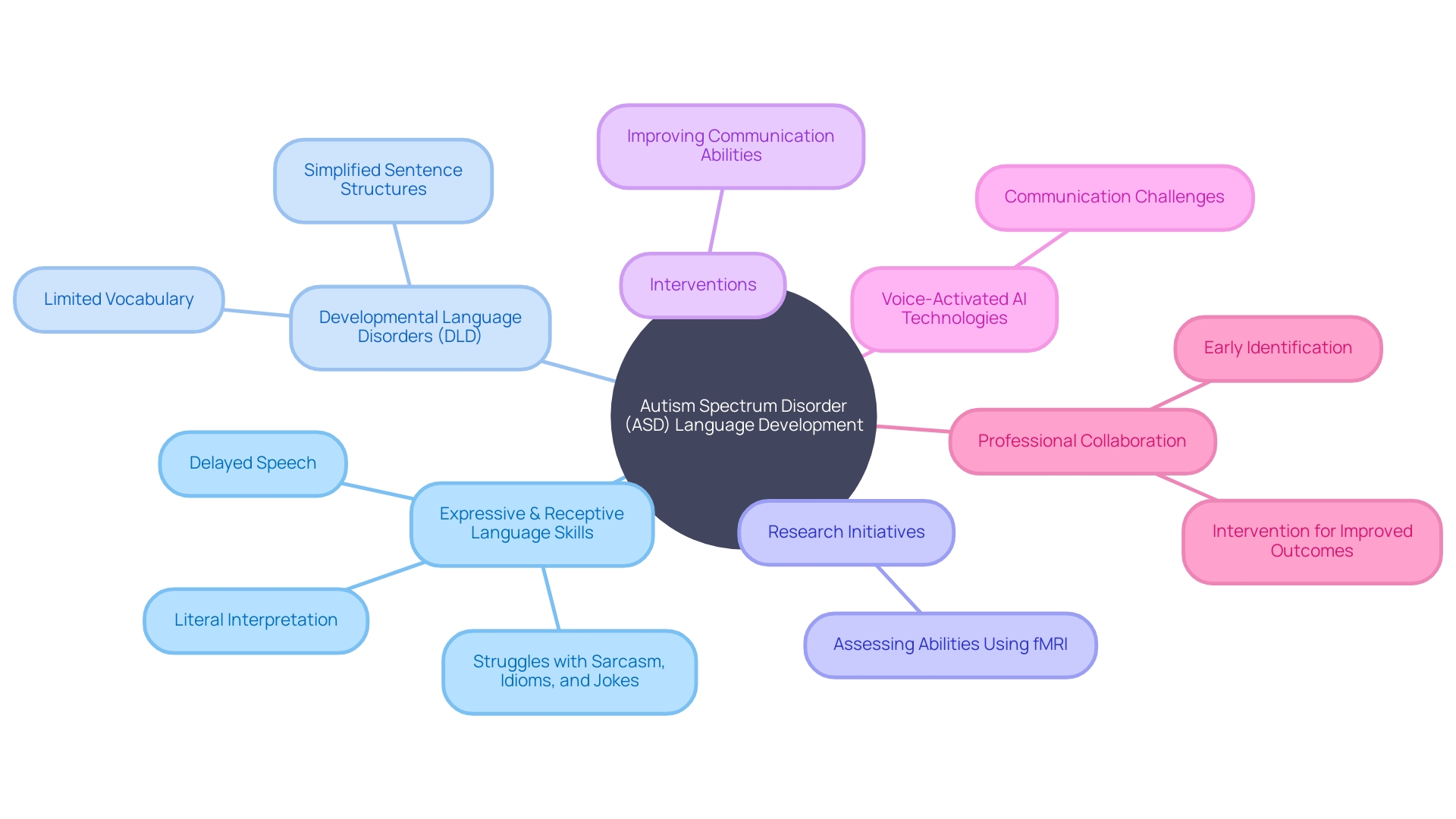
Understanding the nuances of language can be particularly challenging for those with mild Autism Spectrum Disorder (ASD). For some, language development may lag behind their peers', manifesting in delayed speech or difficulties with both expressive and receptive language skills. This can include a range of communication hurdles, such as taking words literally and having trouble with non-literal aspects of language like sarcasm, idioms, or jokes.
Research underscores the importance of tailored interventions to support these individuals. For instance, developmental language disorders (DLD) can result in the use of simpler sentence structures and limited vocabulary, leading to misunderstandings in everyday interactions. This can be observed as inattentiveness, difficulty following instructions, or a quick fading of recently heard information. To address these challenges, the term DLD was coined through consensus among professionals and those with personal experience to emphasize the significant impact on daily life.
In light of this, innovative research initiatives are underway to explore and improve communication abilities in children with language development concerns. For example, a project led by Avantika Mathur is seeking to recruit young children with limited vocabularies for a study to assess speech, language, and cognitive abilities. This includes familiarizing participants with an fMRI environment through engaging activities.
Moreover, the rise of voice-activated AI technologies in various settings—homes, offices, cars—highlights the growing intersection between digital advancements and communication. As these tools become more ubiquitous, they also present new opportunities and challenges for those with speech and language impairments.
The complexity of neurodevelopmental disorders, such as Language Disorder and Specific Learning Disorder, is being increasingly recognized, and their classification within mental health systems like DSM-5 and ICD-11 reflects a growing understanding of their nature and origins.
It's essential to not only identify these conditions accurately but also to foster collaborative efforts among speech-language pathologists, educators, and psychologists to enhance support for children with these conditions. With the emphasizing the need for effective preventive measures in speech and language delays, the focus is on early identification and intervention for children showing signs of communication challenges to improve long-term outcomes.
Individuals with mild autism spectrum disorder (ASD) often demonstrate unique behavioral patterns, including a tendency toward repetitive behaviors and intense focus on specific interests. This can involve repeated motions, , or a deep fascination with particular subjects or objects. Sensory sensitivities are also common, with some individuals experiencing heightened sensitivity to sensory input, while others may be less responsive.
These behaviors and sensitivities are not only distinct to the individual but also present a challenge in understanding and providing the right support. It is vital to recognize that behind these patterns lie complex neurological differences that affect how information is processed. Studies have shown that the brain structure of individuals with autism differs from neurotypical development, underlining the importance of tailored interventions.
Recent advances in research underscore the necessity of high-quality intervention studies to assess the effectiveness and potential risks of non pharmacological treatments. The UC Davis MIND Institute emphasizes the value of developing personalized, scientifically proven support systems for individuals with ASD. Key findings in the field suggest that changes in restrictive and repetitive behaviors might influence the emergence of mental health challenges in autistic children, highlighting the interconnected nature of development in autism.
Moreover, breakthroughs in machine learning and artificial intelligence offer promising avenues for preempting significant behavioral episodes in individuals with ASD. A study conducted by The Center for Discovery, for instance, utilized extensive data to predict behavioral manifestations, aiming to mitigate their impact on the individual and their environment.
In light of these insights, it becomes clear that understanding and addressing the needs of individuals with mild ASD requires a multifaceted approach that respects their neurodiversity and harnesses the latest scientific knowledge to enhance their well-being.
Individuals with mild Autism Spectrum Disorder (ASD) often encounter unique sensory challenges. They may exhibit heightened sensitivity (hypersensitivity) to stimuli like lights, sounds, or textures, or conversely, exhibit reduced sensitivity (hyposensitivity), which affects their interaction with their environment. These sensory processing difficulties can lead to an overwhelming experience in everyday settings such as bustling shopping centers or public transit, where filtering out excess noise and sensory information becomes a strenuous task.
Repetitive behaviors are also a hallmark of ASD, manifesting in actions such as hand flapping, rocking back and forth, or arranging objects in specific patterns. These behaviors, known as repetitive and restricted behaviors (RRBs), are not only characteristic of autism but also serve a purpose. They are believed to help manage anxiety and may provide a sense of comfort, helping to regulate the nervous system.
The complexity of sensory issues in autism is well-recognized, with individuals experiencing a spectrum of sensitivities that can vary greatly from one person to another. For some, these issues are profound and can significantly influence their behavior, development, and learning. Understanding these nuances is critical for supporting those with ASD in both personal and professional environments.
Current research continues to investigate the underlying connections between sensory sensitivities in autism, particularly looking into the neural circuits that may contribute to these experiences. This research is vital in improving the quality of life for those with ASD, as it paves the way for better understanding and more effective interventions tailored to individual sensory profiles.
The prevalence of autism is notable, with estimates suggesting it affects as many as 1 in 36 individuals. Early recognition and diagnosis are essential, allowing for timely access to resources that support living a fulfilled life. While the exact cause of autism remains under investigation, it is broadly understood to involve , and it is not linked to vaccines, parenting styles, or nutrition.
Identifying the indicators of mild Autism Spectrum Disorder (ASD) at an early stage is essential for providing the necessary interventions that could greatly benefit the child's development. These signs can manifest in various ways, such as in communication, where some children might experience a delay in speech and language skills. Socially, children might engage less with others and show limited interest in social interactions. They may also exhibit challenges in adapting to changes in their routine or environment, and on certain interests.
According to the CDC, as many as 1 in 36 individuals may be on the autism spectrum, highlighting the importance of awareness and understanding of these early signs. It's crucial for parents to monitor developmental milestones and consult healthcare professionals if they have any concerns. Early diagnosis can lead to early intervention, which is shown to improve outcomes.
As we embrace the diversity of autism, recognizing that it is inherently a part of a person's identity, it's important to acknowledge the wide range of abilities and talents present within the autism community. For instance, individuals with autism often excel in areas requiring attention to detail, problem-solving, and analytical thinking, making fields like technology a conducive environment for their skills. Downloading resources and guides can be an invaluable tool for parents to better understand autism and support their children effectively.

The process of diagnosing mild Autism Spectrum Disorder (ASD) is an intricate one that involves detailed evaluations by healthcare professionals specializing in autism. A clinician will meticulously review the individual's developmental history, which includes a look at milestones and the emergence of certain behaviors. Observations of the individual's social interactions and behavior are critical components of the assessment. Clinicians may also utilize standardized diagnostic tools that draw upon the latest criteria from authoritative sources such as the American Psychiatric Association's Diagnostic and Statistical Manual, Fifth Edition (DSM-5). These tools consider a spectrum of behaviors, such as challenges with social communication, repetitive patterns of behavior, and restricted interests.
The diagnosis process not only relies on the keen observations of healthcare professionals but also on input from parents or caregivers who provide insights into the child's development. In instances where more specialized expertise is needed, primary care providers may refer the child to a pediatric specialist skilled in neurodevelopmental disorders.
Recent advancements in research offer promising developments in the field of ASD diagnosis. Innovations like machine-learning models, such as 'AutMedAI,' have shown potential in identifying children with autism with an accuracy of about 80% prior to 24 months of age. This significant breakthrough could revolutionize early identification and intervention, allowing children to access support services more swiftly.
The ultimate goal of a thorough and precise diagnosis is to connect individuals with the appropriate that can aid in navigating the complexities of ASD. With the understanding that ASD presents uniquely in each individual, the expertise of professionals, combined with the support of technology and research, shapes the future of early and accurate diagnosis, paving the way for better outcomes.

Autism Spectrum Disorder (ASD) is a multifaceted condition, marked by a variety of behaviors and affecting individuals to differing extents. For those with mild ASD, navigating social scenarios and communication can pose challenges, as can adapting to changes in routine. Yet, it's crucial to acknowledge the distinctive strengths they possess, such as exceptional attention to detail, robust memory capabilities, and deep interests in specific subjects. These attributes can be advantageous in many settings, including the .
Take Haley Moss, for example, once diagnosed with autism at the University of Miami at age three, she later pivoted from aspiring to be a doctor to embracing her passion for reading and writing, leading to a successful career in law. Her story exemplifies how individuals with mild ASD can harness their unique skills, as seen in her proficiency with writing and editing, which she attributes to being on the spectrum.
In the workplace, the value of neurodiversity is increasingly recognized. The National Geospatial-Intelligence Agency's pilot program aimed at hiring autistic individuals is a testament to this shift in perspective. By welcoming and integrating the diverse talents of the neurodivergent community, organizations like the VA can foster a more inclusive environment that enhances their mission and services.
This inclusive approach isn't just limited to the professional sector. Emirates Airlines and Dubai International Airport's initiative to provide rehearsal flying experiences for neurodivergent passengers, like the 11-year-old superfan Humza, demonstrates a commitment to creating accommodating experiences. These efforts ensure that individuals with ASD can engage with their passions and navigate new experiences confidently.
Autism, estimated to affect 1 in 36 individuals, is not confined by stereotypes or age. Its presence in daily life is more common than many might realize, potentially in a friend, colleague, or even a boss. By understanding ASD as a spectrum, with each person experiencing the world in their unique way, society can better support those with the condition, allowing them to live fully and contribute meaningfully. This perspective is reinforced by the CDC's emphasis on early diagnosis and access to resources, which are paramount for individuals with ASD to thrive.
Tailored interventions and support are essential for individuals with mild Autism Spectrum Disorder (ASD) to thrive. A spectrum of therapeutic options, including speech and language therapy, social skills training, and occupational therapy, are instrumental in fostering developmental progress. Furthermore, behavior-based strategies, such as applied behavior analysis (ABA), are often recommended to cultivate adaptive behaviors and social competencies.
The importance of equitable support for individuals with disabilities, highlighted by Dr. David (Dan) R. Offord, underscores the need for a fair and nurturing environment that acknowledges each child's unique contributions and challenges. Reducing stress and ensuring resource availability for caregivers are pivotal steps towards fostering a supportive atmosphere for children with ASD.
Moreover, societal initiatives, such as the collaborative efforts by Emirates and Dubai International Airport to enhance the travel experience for neurodivergent passengers, illustrate the growing recognition of the need to create inclusive environments. Such programs provide valuable rehearsal experiences, allowing children to acclimate to the processes of travel in a controlled and familiar setting.
As these individuals approach adulthood, it's vital to understand their specific therapeutic needs, which often align with those of the neurotypical population for conditions like anxiety and depression. Unfortunately, many to receiving adequate care, as reported by practitioners. Encouragingly, with modest training, healthcare providers can offer more inclusive care, accommodating autistic adults in their practices.
Autism, affecting as many as 1 in 36 individuals according to the CDC, is marked by distinct behavioral patterns. Early diagnosis and intervention are critical, allowing individuals to access resources that support a fulfilling life. The development of machine-learning models, such as the Media, which can identify autism in children with considerable accuracy before the age of two, represents a promising advancement in early detection.
Embracing the neurodiversity movement, which has gained traction alongside other social movements advocating for liberty and justice, is a step towards embracing the full spectrum of human diversity. This perspective fosters an environment where the unique strengths and needs of individuals with autism are recognized and valued.

Understanding mild Autism Spectrum Disorder (ASD) is crucial for recognizing its presence and providing support. Early detection and tailored interventions are key to making a real difference in the lives of those with ASD. Advanced tools like the AutMedAI model demonstrate the power of technology and research in aiding early diagnosis.
Autism is a diverse spectrum disorder, impacting individuals to varying degrees. Despite challenges, many individuals with mild ASD lead fulfilling lives. By recognizing the signs and supporting early intervention, there is hope for them to thrive in society.
Individuals with mild ASD face challenges in social interactions, communication, and adapting to changes. However, they possess unique strengths like attention to detail and deep interests, which can be advantageous in various settings.
Understanding the social nuances of ASD is crucial. Supporting individuals who struggle with social cues and employing strategies like "social camouflaging" is important to address emotional repercussions.
Language development can be challenging for individuals with mild ASD. Tailored interventions and research initiatives are necessary to improve their communication abilities.
Repetitive behaviors and sensory sensitivities are common in individuals with mild ASD. Addressing these behaviors and supporting their unique sensory challenges is essential.
Early recognition and diagnosis are crucial for providing necessary interventions. Embracing the diversity of autism and providing support that acknowledges their abilities and talents is important.
The diagnostic process involves detailed evaluations by healthcare professionals. Recent advancements in research, like machine-learning models, offer promising developments in early identification and intervention.
Tailored interventions and support systems are crucial for individuals with mild ASD to thrive. Recognizing their strengths, providing equitable support, and creating inclusive environments are essential.
In conclusion, understanding and providing early intervention and tailored support can make a significant difference in the lives of individuals with mild ASD. Recognizing their strengths, addressing social and communication challenges, and embracing their unique abilities contribute to their well-being and success in society.
Take action now and support early detection and tailored interventions for individuals with ASD!
What is mild Autism Spectrum Disorder (ASD)?
Mild Autism Spectrum Disorder, often referred to as high-functioning autism, presents with subtler symptoms that primarily affect social interaction, communication, and behavior. Individuals with mild ASD may function well in many life aspects but still face challenges that can be overlooked due to their less apparent nature.
How does mild ASD differ from more severe forms?
Mild ASD, unlike more severe forms, might not significantly impair daily functioning but still poses unique challenges in socialization, communication, and routine behaviors. These subtler symptoms can result in misunderstandings and social isolation.
Why is early detection and intervention important for ASD?
Early detection and intervention are important as they can lead to a marked reduction in ASD symptoms and support the individual's development and well-being. Tailored interventions, such as those highlighted in the Journal of Personalized Medicine, have demonstrated the potential for personalized approaches to make a real difference.
What are the core symptoms of mild ASD?
Core symptoms include difficulties with social interactions, misinterpreting social cues, communication hurdles in understanding nuanced language, and repetitive behaviors or strong preferences for routines.
Can individuals with mild ASD lead productive lives?
Yes, many people with mild ASD lead productive, fulfilling lives. The condition is an integral part of their identity, and with the proper support and understanding, individuals with mild ASD can thrive in various environments.
What are some social symptoms of mild ASD?
Social symptoms include challenges in interpreting gestures, facial expressions, and voice inflections. Individuals may use 'social camouflaging' to mask their difficulties, which can include mimicking behaviors or personality traits of others.
How do speech and language symptoms present in mild ASD?
Individuals with mild ASD may experience delayed speech or difficulties with expressive and receptive language skills. They might take words literally and struggle with non-literal aspects of language like sarcasm or idioms.
What are restricted and repetitive behavioral symptoms of mild ASD?
These symptoms include repetitive motions, strict adherence to routines, intense focus on specific interests, and sensory sensitivities such as heightened or reduced responsiveness to sensory stimuli.
What are sensory sensitivities in mild ASD?
Sensory sensitivities can manifest as hypersensitivity or hyposensitivity to stimuli like lights, sounds, or textures. These sensitivities can significantly influence behavior and the individual's interaction with their environment.
What are the early signs and red flags of mild ASD?
Early signs may include a delay in speech and language skills, reduced social engagement, challenges adapting to changes in routine, and repetitive behaviors or fixations on certain interests.
How is mild ASD diagnosed?
The diagnosis involves evaluations by healthcare professionals, including reviewing developmental history, observing social interactions and behavior, and possibly using standardized diagnostic tools. Input from parents or caregivers is also critical.
What are common challenges and strengths of individuals with mild ASD?
Challenges include difficulties with social scenarios and communication, while strengths can involve exceptional attention to detail, robust memory capabilities, and deep interests in specific subjects.
What support and interventions are available for individuals with mild ASD?
Therapeutic options include speech and language therapy, social skills training, occupational therapy, and behavior-based strategies like applied behavior analysis (ABA). These are essential in fostering developmental progress and navigating the complexities of ASD.
How can society support individuals with mild ASD?
Society can support individuals by creating inclusive environments, offering tailored interventions, and fostering understanding and recognition of the unique experiences and challenges faced by individuals with mild ASD.