The Diagnostic and Statistical Manual of Mental Disorders (DSM) is a critical resource for healthcare professionals diagnosing mental health conditions. In the realm of autism spectrum disorder (ASD), the DSM has undergone significant revisions to reflect deepening insights into ASD. From its early recognition as a distinct syndrome in the 1940s to the consolidation of various autism-related diagnoses into one umbrella category of ASD in the DSM-5-TR, the understanding of ASD has evolved.
However, the development of DSM criteria has not been without controversy, with concerns raised about potential conflicts of interest. Recent innovations in early diagnostic tools and the increasing prevalence of autism diagnoses among adults have further shaped our understanding of ASD. The upcoming DSM-6 is expected to refine criteria and severity levels, reflecting the diverse nature of ASD.
These changes have implications for healthcare providers and individuals with autism, requiring adaptability and personalized approaches. As we prepare for the transition to DSM-6, it is crucial for professionals and stakeholders to evaluate existing systems, stay informed about proposed changes, engage in interdisciplinary collaboration, recognize the legitimacy of self-identification within the autistic community, and prioritize early and accurate diagnosis.
The Diagnostic and Statistical Manual of Mental Disorders (DSM) is an essential resource for health care professionals diagnosing mental health conditions. As our understanding of mental health evolves, so too does the DSM. This is particularly evident in the realm of , where criteria and classifications have historically been subject to significant revisions.
Historical revisions of the DSM reflect deepening insights into ASD. Initially, the term 'autism' was introduced by Swiss psychiatrist Eugen Bleuler in 1911 to describe a self-absorbed thinking pattern seen in schizophrenia patients. The identification of a separate syndrome became evident in the 1940s due to the contributions of Leo Kanner and Hans Asperger. Over time, the DSM has incorporated these changing perspectives, resulting in the combination of different autism-related classifications into a unified umbrella category of ASD in the DSM-5-TR.
The development of DSM criteria has not been without controversy. Studies have highlighted and the pharmaceutical industry, especially in areas where medication is a primary treatment, raising questions about potential conflicts of interest. The American Psychiatric Association has attempted to address these concerns with , although financial connections persisted as of the DSM-5's publication.
In the context of , recent innovations emphasize the significance of early and precise identification. Organizations like The Autism Community in Action and companies such as NeuroQure are leading the way in offering to families, potentially revolutionizing the lengthy and challenging process of identifying ASD.
While the debate continues on the most effective ways to define and identify ASD, statistics indicate an increasing prevalence of diagnoses for individuals with among adults in Medicaid populations, with . These discussions are advancing our understanding of ASD and the requirement for precise criteria that reflect the diverse experiences of those on the spectrum.

The DSM-5 outlines specific criteria for identifying , emphasizing persistent challenges in social communication and interaction, alongside patterns of restricted and repetitive behavior. Professionals acknowledge the spectrum's diversity by considering symptom severity and the functional impact on daily life. With the evolution of , the may refine these parameters further. The , recognizing the , often embraces self-diagnosis especially when yields inconclusive results. The decision to pursue is personal and can offer validation and support for certain individuals.
Recent studies, such as those published in BMC Psychiatry and JAMA Psychiatry, continue to shape our understanding of mental health, including ASD. The occurrence of the condition is now estimated to be as high as 1 in 36 individuals, according to the CDC. The ICD-11's new classification system has sparked discussions about the clinical utility and conceptualization of ASD, suggesting a shift towards recognizing a broader spectrum of neurodivergent identities. With the advancement of science, including groundbreaking research on brain organoid models, our grasp of neurodevelopmental conditions like ASD is expanding, providing a more nuanced perspective on diagnosis and support.
The DSM-5, the latest edition of the Diagnostic and Statistical Manual of Mental Disorders, marked a transformative moment in the way the condition of autism is diagnosed. By streamlining various autism-related diagnoses—including , Asperger's syndrome, and PDD-NOS—into a single category of , it sought to encapsulate the condition's diversity under a more inclusive and holistic framework. This was partly in response to the clinical and ethical concerns about the specificity and utility of the previous categorizations. The DSM-5 now characterizes ASD by a two-pronged approach, focusing on alongside .
The redefined criteria of ASD in DSM-5 have sparked a broader discussion on the . Critics suggest that the ICD-11's approach to defining ASD, which includes a wide array of potential but non-compulsory features, lacks the necessary specificity and may not be distinguishable from other mental health conditions or neurodevelopmental disorders. The discussion highlights the requirement for a framework that can be objectively measured and is clinically useful, avoiding subjective and vague constructs.
Recent advancements in methodologies for identifying ASD offer promise for early and precise identification. Groundbreaking studies are demonstrating the potential of machine-learning models, such as Auto Media, which can discern patterns in data obtained from children before the age of two, with a reported accuracy rate nearing 80 percent. These innovative tools are crucial as is consistently shown to lead to better outcomes for children with ASD.
The importance of precise and early identification is further emphasized by the efforts of organizations like The Autism Community in Action (TACA), which provide assistance to families impacted by ASD and promote timely interventions. The advancement of technologies that can significantly reduce the time to diagnosis from years to mere weeks after birth represents a monumental stride forward, particularly for families with a higher risk of ASD.
In the midst of the clinical and evolving nature, the neurodiversity movement has reshaped perceptions of ASD, championing the validity of different cognitive makeups. It acknowledges that conditions like ASD and ADHD are part of the natural variation in the human brain, rather than defects to be corrected, thus influencing scientific and social discourse on neurodevelopmental conditions.
The refinement of diagnostic criteria for autism spectrum disorder (ASD) in DSM-5 has had far-reaching implications for individuals previously diagnosed under older classifications. The merging of distinct conditions, such as Asperger's syndrome and pervasive developmental disorder not otherwise specified (PDD-NOS), into a unified identification of ASD necessitates a reassessment of educational and to better cater to the requirements of this diverse population. This shift emphasizes a , where the prioritization of issues and their potential solutions is crucial. Such a strategy is particularly relevant given the and the varied intensity of its symptoms across individuals.
In considering treatment, it's essential to align with the patient's, family's, and treatment team's priorities, assessing the likelihood of a meaningful response to interventions. This approach not only focuses on the immediate medical risks but also takes into account the risk tolerance of everyone involved. The objective is to create a nuanced and that is adaptable and responsive to the individual's evolving needs.
Furthermore, the latest developments in national guidelines, like those from Austroads and the National Transport Commission, acknowledge the unique challenges faced by individuals with ASD. These guidelines provide health professionals with a framework to better understand and support patients on the spectrum, including the development of specialized training modules for medical practitioners.
The discussion surrounding ASD continues to develop, demanding a more accurate and clinically beneficial assessment. The spectrum nature of the disorder means that a one-size-fits-all approach is not viable. Severity scales, while helpful, cannot capture the full range of experiences within ASD. It's a condition that shows itself differently in each person, reinforcing the need for a customized approach in both identification and treatment.
In light of new recommendations by the United States Preventive Services Task Force, there is a push for broader screening for anxiety disorders, which are prevalent yet often overlooked in the ASD population. Such initiatives underscore the importance of , which can lead to significant improvements in managing anxiety and enhancing the quality of life for those affected by ASD.
The (DSM) serves as a critical guide for clinicians in diagnosing . As we anticipate the unveiling of DSM-6, anticipated modifications aim to enhance the evaluation process with more accurate criteria and severity levels, along with supplementary specifiers. This evolution is crucial, considering ASD's spectrum nature, which presents a diverse array of behaviors and influences individuals differently. According to the , ASD may affect up to 1 in every 36 individuals, emphasizing the significance of precise assessment for .
The current criteria outlined in DSM-5 require persistent differences in communication and social interaction across multiple contexts, as well as restricted and repetitive behavior patterns. However, no single cause for ASD has been identified, although brain structure and function differences are noted among affected individuals. Misconceptions such as vaccines or parenting styles causing ASD have been debunked, with research pointing toward genetic factors.
As the scientific community continues to understand ASD, organizations like emphasize the treatability of autism, advocating for . Backing this cause, firms like NeuroQure strive to reduce the journey of diagnosis, acknowledging the heightened risk in families with a previous affected child.
The landscape of mental health diagnosis is also evolving with the International Classification of Diseases, 11th Edition (ICD-11), emphasizing scientific validity, cultural context, and global applicability. This includes moving away from arbitrary symptom cut-offs to a more nuanced description of essential features, resonating with clinical practice.
These progresses in criteria for diagnosis and technology are part of a wider discussion on mental health classification, with a history of diverse systems emphasizing phenomenology, etiology, and course. The DSM-5-TR, for instance, is a result of comprehensive literature reviews by over 200 experts, ensuring the manual remains current and relevant. This ongoing effort reflects a commitment to improving the standards of life for individuals with ASD and their families through .
The upcoming DSM-6 represents a significant advancement in the field of diagnosis for individuals with autism. Targeting the encapsulation of the complexities of the spectrum disorder, DSM-6 is poised to enhance by integrating cutting-edge research and understanding of the condition. Autism, a spectrum disorder characterized by diverse behaviors and impact levels, is believed to affect 1 in 36 individuals, according to the CDC. While the etiology of remains elusive, it is linked to atypical brain development. Misconceptions, such as its association with vaccines, parenting, or diet, have been debunked. is crucial, enabling individuals to access the necessary resources to lead fulfilling lives.
Autism's current framework for evaluation, as described in the DSM-5 by the American Psychiatric Association, assesses persistent differences in communication and social interaction as well as restrictive, repetitive patterns of behavior. Technological advancements, such as the , are being utilized to improve precision in analysis. This application captures and quantitatively analyzes a range of behaviors associated with a , thereby assisting in early detection.
Nonetheless, like the Modified Checklist for Autism in Toddlers-Revised with Follow-Up (M-CHAT-R/F) have shown limitations, particularly in primary care settings and among diverse populations. The emerging DSM-6 seeks to address these gaps by incorporating more nuanced and objective criteria, potentially mitigating delays and related comorbidities. This advancement in the approach to assessment holds the potential to enhance our understanding of autism and contribute to interventions tailored to each individual, echoing the views of experts such as Duke professors Geraldine Dawson and Guillermo Sapiro, who support accurate and AI-enhanced diagnostic techniques.
As the field of mental health diagnostics evolves, the introduction of DSM-6 promises to bring about transformative changes for both and . Clinicians will need to adjust to the new criteria for assessment and evaluation tools to guarantee the provision of and customized interventions. This transformation in diagnostic practices is set to reshape the landscape of support and services available to individuals with ASD, as adjustments in diagnosis could impact their access to crucial resources.
A compelling initiative that highlights the significance of to individuals with special needs comes from an inventive prototype for an AR application, designed to translate tactile sensations into visual and auditory stimuli. This innovation caters to the unique sensory tolerances of individuals with a specific condition, highlighting the necessity for to embrace adaptable strategies that address the distinct needs of this community.
The importance of such adjustments is further highlighted by research indicating that misunderstandings and the lack of understanding about individuals on the autism spectrum among healthcare professionals can significantly impact the well-being of adults with autism. The call for enhanced training programs, developed in collaboration with autistic individuals, is paramount to mitigate the challenges associated with overwhelming environments and inaccessible systems.
Current advancements in research, like the Media model which can identify children with a developmental disorder with an 80% success rate before 24 months of age, signal a future where early and accurate diagnosis could become the norm. This would allow for , aligning with the principle that the earlier the treatment begins, the more favorable the outcomes.
The DSM's primary objective is to offer a unified language for mental health professionals to discuss conditions, without defining the potential or identity of individuals. Recognizing each individual's unique experience, it is essential to embrace this principle and ensure a comprehensive and respectful understanding.
With these considerations in mind, healthcare providers must engage with the with a sense of readiness to embrace changes and uphold the nuanced and respectful treatment of individuals with autism. The intersection of innovative research, empathetic care, and informed practice stands as the cornerstone of a future where the neurodivergent community can thrive.

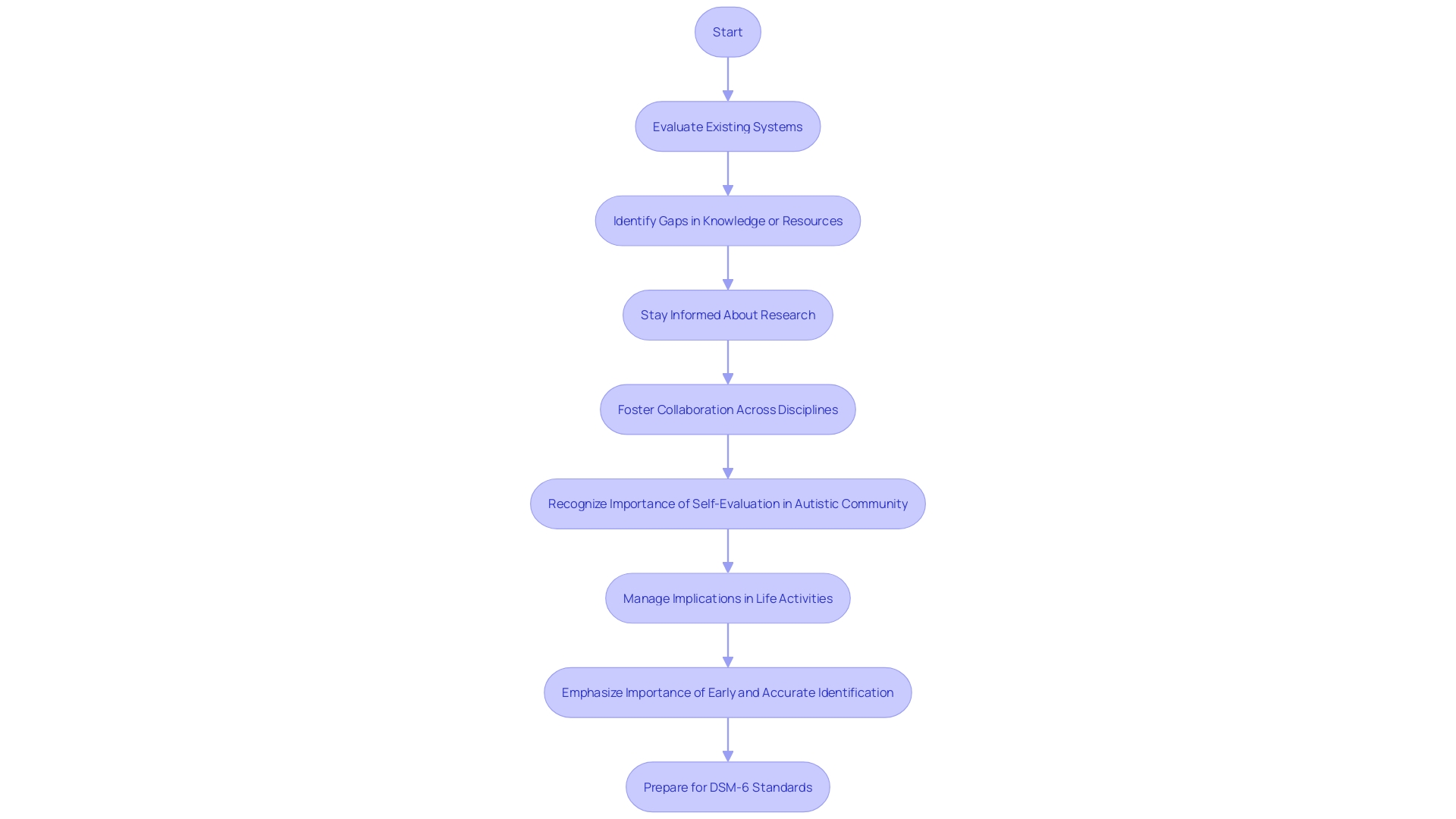
The development of standards for with the anticipated release of DSM-6 requires a multifaceted approach to ensure readiness among professionals and stakeholders. Healthcare providers, educators, and family members can start by evaluating their existing systems and processes to determine how they align with the forthcoming criteria. It's imperative to identify potential gaps in knowledge or resources that might hinder the integration of the new guidelines.
Equally important is staying abreast of the . For example, the discussion surrounding the ICD-11's definition of ASD, which focuses on a wider array of traits and the subjective aspect of specific symptoms, underscores the changing terrain of assessment methods. This ongoing dialogue underscores the importance of and the need for professionals to be flexible and informed.
Furthermore, a collaborative effort across various disciplines is vital. The exchange of insights and strategies from different experts will be a cornerstone for a seamless transition. As noted by a Learning and Development leader, the infusion of diverse professional backgrounds into the sector can bring valuable perspectives but also necessitates a solid understanding of the domain's core competencies.
Considering the evolving assessment landscape, continues to be a significant aspect. While medical testing may yield inconclusive results for many adults, recognizing the legitimacy of self-identification is part of a broader acceptance of diverse experiences within the neurodivergent community.
As the DSM-6 criteria continue to take shape, it's essential to recognize the potential . Health professionals play a crucial role in managing the implications of ASD in various life activities, as seen in the Austroads standards.
Finally, the importance of early and accurate identification cannot be overstated. Organizations like The Autism Community in Action (TACA) and initiatives like NeuroQure's rapid diagnostic tools exemplify the drive towards more effective interventions. As research consistently demonstrates the benefits of , the incorporation of DSM-6 criteria must support these early intervention efforts.
In summary, preparation for DSM-6 involves a proactive, informed, and collaborative approach, ensuring that individuals with autism receive the most accurate diagnosis and possible.
In conclusion, the Diagnostic and Statistical Manual of Mental Disorders (DSM) has undergone significant revisions in the realm of autism spectrum disorder (ASD), reflecting evolving insights into ASD. The upcoming DSM-6 is expected to refine criteria and severity levels, reflecting the diverse nature of ASD. However, concerns about potential conflicts of interest have been raised regarding the development of DSM criteria.
Recent innovations in early diagnostic tools and the increasing prevalence of autism diagnoses among adults have further shaped our understanding of ASD. As we prepare for the transition to DSM-6, it is crucial for professionals and stakeholders to evaluate existing systems, stay informed about proposed changes, engage in interdisciplinary collaboration, recognize the legitimacy of self-identification within the autistic community, and prioritize early and accurate diagnosis.
The anticipated changes in DSM-6 aim to bring more precise criteria and severity levels, catering to the diverse behaviors and experiences within the autism spectrum. Accurate diagnosis is essential for effective intervention, and advancements in diagnostic technology offer promise for early and precise identification.
The impact of DSM-5 changes on previous diagnoses necessitates a reevaluation of educational and therapeutic strategies to better serve the diverse population of individuals with ASD. A hierarchical treatment plan that prioritizes issues and solutions, along with tailored approaches, is crucial for addressing the complex and varied symptoms of ASD.
Looking ahead, healthcare providers and individuals with autism must be prepared for the changes and challenges that DSM-6 will bring. By evaluating existing systems, staying informed, collaborating across disciplines, recognizing self-identification, and prioritizing early diagnosis, healthcare providers can ensure precise evaluations and tailored interventions. Individuals with autism can access the vital resources and support they need for a thriving future.
In summary, the ongoing evolution of the DSM and the forthcoming DSM-6 underscore the importance of staying informed, adapting to changes, and prioritizing accurate diagnosis and personalized approaches in the field of autism spectrum disorder. This commitment will contribute to improved outcomes and a better quality of life for individuals with autism and their families.
What is the DSM?
The DSM, or Diagnostic and Statistical Manual of Mental Disorders, is a manual used by healthcare professionals to diagnose mental health conditions.
How has the DSM historically evolved regarding autism?
The DSM has undergone significant revisions, reflecting deeper insights into Autism Spectrum Disorder (ASD). It has moved from separate autism-related classifications to a unified category of ASD in the latest edition.
Who introduced the term 'autism,' and when?
Swiss psychiatrist Eugen Bleuler introduced the term 'autism' in 1911, initially to describe a self-absorbed thinking pattern in schizophrenia patients.
What have been some concerns regarding DSM criteria development?
Concerns include financial ties between DSM panel members and the pharmaceutical industry, leading to debates about potential conflicts of interest.
What is the significance of early and precise identification of autism?
Early and precise identification can help with the timely intervention and support for individuals with ASD, improving outcomes.
How does the DSM-5 define Autism Spectrum Disorder (ASD)?
The DSM-5 defines ASD by persistent challenges in social communication and interaction, as well as restricted and repetitive behavior patterns.
What changes did the DSM-5 introduce for autism diagnosis?
The DSM-5 combined various autism-related diagnoses into a single category of ASD and highlighted the spectrum's diversity by considering symptom severity and functional impact.
What are some implications of DSM-5 changes for previous diagnoses?
The changes required a reassessment of educational and therapeutic strategies for individuals previously diagnosed with conditions now unified under ASD.
What changes are anticipated in DSM-6 for autism diagnosis?
DSM-6 is expected to include more accurate criteria and severity levels for ASD, with additional specifiers to reflect the spectrum's diversity.
How might DSM-6 improve diagnostic accuracy for autism?
DSM-6 aims to integrate the latest research to provide more nuanced and objective criteria, which could improve early and accurate diagnosis.
What will be the implications of DSM-6 for healthcare providers and individuals with autism?
Healthcare providers will need to adjust to new criteria and tools, while individuals with autism may experience changes in access to resources and support.
How can professionals and stakeholders prepare for the transition to DSM-6?
They can start by evaluating existing systems and processes, staying informed on research and changes, and collaborating across disciplines to integrate new guidelines smoothly.
Why is the DSM's evolution important for understanding ASD?
The evolution of the DSM reflects advancements in science and our understanding of ASD, contributing to more precise diagnosis and tailored interventions for individuals on the spectrum.