Facilitating effective communication for children with autism is crucial for their development and integration into society. It allows them to express their desires, requirements, and ideas, and enables them to be included in daily social interactions. Studies have shown that when children with autism receive robust support, their engagement in various activities significantly improves.
Innovations in assistive technology, such as augmentative and alternative communication (AAC) systems, have been life-changing, empowering children with autism to communicate when traditional speech may not be viable. Understanding and supporting the unique communication methods of children with autism is not just about empowerment, but about creating a more equitable society that values the mental health and contributions of all its members. In this article, we will explore the importance of functional communication, the impact of communication deficits, the concept of Functional Communication Training (FCT), steps to implement FCT, choosing the right communication modality, reinforcement and extinction in FCT, generalization and maintenance of communication skills, strategies for successful FCT implementation, the role of Applied Behavior Analysis (ABA) in FCT, and additional resources and tools for FCT.
By providing valuable insights and expert advice, this article aims to empower parents and caregivers in supporting the communication development of children with autism.
Facilitating effective communication for children with autism is a pivotal aspect of their development and integration. It enables these children to articulate their desires, requirements, and ideas. A child who can communicate functionally is more likely to be included in daily social interactions, which is fundamental to their mental health and the establishment of equity within society.
This inclusion reduces stress and provides children with a sense of belonging and contribution to their community. Studies have shown that when children with disabilities, including autism, receive robust support, their engagement in school, home, and leisure activities significantly improves.
Innovations in assistive technology, such as augmentative and alternative communication (AAC) systems, have been life-changing. For instance, the use of picture boards and electronic tablets has empowered children with autism to express themselves when traditional speech might not be viable. Such technology not only enables communication but also opens doors to a more fulfilling educational experience.
Research indicates that with proper training and resources, educators and caregivers can dramatically enhance the communication outcomes for children with complex communication needs.
Moreover, the mental health of these children is intricately linked to their ability to participate meaningfully in their communities. It's crucial to recognize their unique contributions as well as their needs, thereby creating a fair 'race' for their development and well-being. Understanding and supporting the distinct interests and communication methods of children with autism is not just about empowerment—it's about that values the mental health and contributions of all its members.
Autistic children can face unique challenges in communication that affect their ability to engage with the world around them. These challenges can manifest in various ways, including difficulty in verbal and nonverbal communication, social interactions, and the usage and understanding of language. Insights from researchers and child psychiatrists, such as Dr. David (Dan) R. Offord, emphasize the importance of providing a fair and supportive environment for these children.
This includes fostering their participation in various life domains, such as school and leisure activities, which is critical for their mental health and a balanced societal equity.
The nuances of social communication, such as interpreting genuine versus posed smiles, can be especially challenging for autistic children. Research has demonstrated that genuine smiles involve involuntary muscle movements around the eyes, an understanding which can be intricate for those with communication difficulties. Additionally, the existence of intergroup bias, where individuals favor those similar to themselves, may further complicate social interactions for autistic individuals.
Recognizing the importance of communication interventions, research has been conducted to evaluate non pharmacological strategies tailored for autistic children. However, these studies often have design flaws that limit our ability to fully understand their effectiveness and potential harm. This calls for a critical evaluation of intervention research to ensure that it respects the unique needs of autistic individuals.
Moreover, the disparity in communication skills development, often referred to as the 'language gap,' affects children from different socioeconomic backgrounds. This gap is evident as early as 18 months of age and persists through development, highlighting the need for resources that support language and communication development in under-resourced families.
The process of diagnosing autism spectrum disorder (ASD) involves gathering information from both caregivers and professional observations. A variety of tools exist for assessing ASD in young children, but no single tool should be used exclusively for diagnosis. This underscores the importance of that consider multiple aspects of a child's behavior and development.
By acknowledging these challenges and the need for equitable support, researchers, caregivers, and educators can work together to create environments where autistic children can thrive and meaningfully participate in their communities.

Functional Communication Training (FCT) is an intervention rooted in applied behavior analysis (ABA) and is designed to enhance the communication capabilities of children with autism. By teaching alternative and more appropriate ways of expressing themselves, FCT addresses the challenge of replacing problematic behaviors with effective communication skills. It is a reflection of the research-driven, evidence-based approach that prioritizes interventions with proven effectiveness.
The emphasis of FCT is on fostering positive behaviors and bolstering social skills, which are crucial for the inclusive and equal participation of autistic children in educational, home, and recreational settings. This approach aligns with the vision articulated by Dr. David (Dan) R. Offord, who emphasized the importance of a 'fair race' for all children, particularly those with disabilities, in their journey through life. Understanding and addressing the unique needs while recognizing the strengths they bring to their communities are vital for their .
As research continues to evolve, with rigorous methods such as randomized controlled trials increasingly becoming the standard, the outcomes of interventions like FCT are continually assessed to ensure they meet the highest standards of care and provide the support that educators and family members need to nurture the development of children with autism.
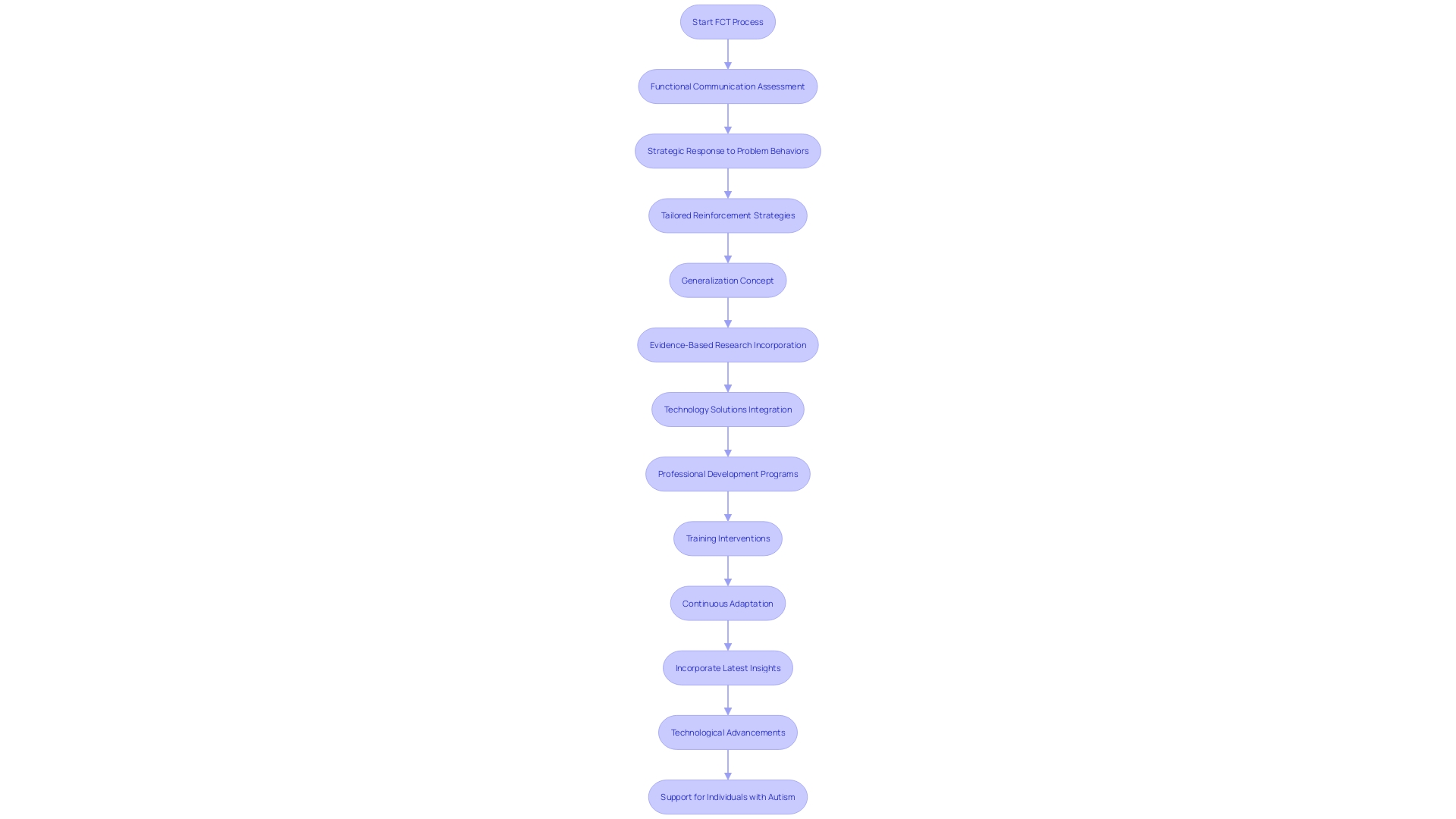
Functional Communication Training (FCT) is a transformative approach that enhances the communicative abilities of children, particularly those with unique developmental profiles such as autism. FCT takes a behavior-analytic approach, where the first step is to identify the specific behaviors that are proving to be an obstacle to effective communication. It's vital to understand the function these behaviors serve for the child—often, they may be an attempt to communicate a need or desire.
Once the behavior's function is recognized, a suitable replacement behavior is selected. This replacement should serve the same purpose but in a more socially appropriate manner. For example, instead of a child yelling to gain attention, a gentle tap on the shoulder could be taught as an alternative.
The teaching phase of FCT involves consistent practice and positive reinforcement to help the child learn the new behavior.
Maintaining this new behavior over time is crucial. Consistency from parents and educators in reinforcing the use of the new communication method is key to its long-term success. It's a process that not only empowers the child with better communication skills but also reduces the chronic stress associated with communication challenges, enhancing mental health and fostering inclusion in various life domains such as school and community activities.
This approach is underscored by the belief that all children deserve a fair chance to express themselves and be heard. It aligns with the sentiments of Dr. David (Dan) R. Offord, who advocated for equal opportunities for children, especially those with disabilities. By embracing both the needs and the assets that children with autism bring to their communities, and by providing caregivers with the necessary resources, FCT contributes to creating a balanced and supportive environment for the child's development.
In recent news, the importance of accessible communication options for children with autism has been highlighted. Organizations like Communication 4 ALL are championing the cause for nonspeaking individuals with autism, emphasizing the right to learn and communicate. With research continually revealing insights about , it's clear that strategies like FCT are not just beneficial but essential for fostering a fair and engaged society.
Individualizing communication approaches is paramount for children with autism, as their needs and preferences are as diverse as the spectrum itself. [Functional Communication Training](https://rori.care/ai-behavior-analysis) must be tailored to each child, considering their specific abilities and favored means of expression. Options range from traditional speech to sign language, from picture exchange systems to advanced augmentative and alternative communication (AAC) devices.
These modalities can be used singly or in combination to provide the most effective for the child. Embracing this personalized approach aligns with the ethos of equity and respect for the unique assets each child brings, as emphasized by Dr. David (Dan) R. Offord. It's also in line with recent research underscoring the importance of quality interventions that respect the individuality of children with autism.
As technology advances, including AI in early diagnosis and treatment, the focus remains on ensuring that communication methods evolve to meet each child's needs, fostering their inclusion and participation in all life domains.
Functional Communication Training (FCT) employs the strategic use of reinforcement and extinction to promote desirable communication behaviors and reduce problematic ones. Reinforcement in FCT is the process of providing positive outcomes when the child with autism uses the appropriate replacement behavior, thereby increasing the likelihood of its future repetition. This is akin to recognizing and reinforcing the child's attempts to communicate in a way that is constructive and effective.
On the other hand, extinction is the technique of deliberately withholding reinforcement when problem behaviors occur, effectively decreasing their frequency over time. Through consistent application of these principles, FCT becomes a powerful tool in enhancing communication outcomes for children with complex communication needs.
Recent research has underscored the importance of high-quality, nonpharmacological interventions like FCT for children on the autism spectrum. However, it has been noted that many intervention studies show design flaws, making it challenging to discern their true effectiveness and the breadth of change they can induce. This highlights the necessity for careful implementation and evaluation of interventions like FCT to ensure they meet the unique needs of each child and respect their individuality.
An example of the profound impact of tailored communication interventions can be seen in the development of the Interview Informed Synthesized Functional Analysis (IISCA) method by Hanley et al. in 2014. This approach diverges from traditional functional behavior assessments by incorporating individualized interviews to inform the analysis, leading to personalized interventions that are more effective and respectful of the individual's specific circumstances.
Moreover, advances in Functional Analytic Psychotherapy (FAP) provide insights into the nuanced understanding required for interventions. FAP suggests that behaviors are not symptoms of an underlying disease but rather are adaptations to a person's history and current environment. This perspective aligns with the , emphasizing the importance of context and history in shaping behavior and the need for non-judgmental, tailored approaches to therapy.
In keeping with these research findings and therapeutic principles, FCT can be optimized by ensuring that reinforcement and extinction are applied in a thoughtful, individualized manner that acknowledges the unique communication challenges faced by children with autism. The goal is not simply to modify behavior but to foster genuine and meaningful communication skills that can enhance the child's well-being and allow for more effective interaction with their environment.
Generalization and maintenance are pivotal in the effectiveness of Functional Communication Training (FCT). Generalization means applying new communication abilities in various environments, with different individuals, and during diverse activities. Maintenance is about persistent use and enhancement of these skills.
To foster generalization, it's crucial to integrate clear, unambiguous speech with supportive gestures, known as iconic gestures, which enhance understanding by representing concrete aspects like shape and motion. These gestures complement the semantic, syntactic, and pragmatic elements of communication and are beneficial for speakers in both clear and noisy environments.
For maintenance, enduring support is essential. Recent research emphasizes the role of communication partners, including family and educators, in sustaining the child's communication progress. Training programs for school-based professionals like Speech-Language Pathologists (SLPs) are being developed to bolster family involvement in for children using Augmentative and Alternative Communication (AAC) systems.
Engagement with these systems is fundamental to maintaining and advancing a child's communication skills.
Additionally, active listening and emotional competence are integral to maintaining productive communication. The former involves attentiveness and seriousness in listening to the child, which reciprocally enhances the child’s own communication efforts. Emotional competence, particularly empathy, plays a role in understanding and responding to the child’s emotional expressions, thereby reinforcing the use of communication skills.
Furthermore, it's imperative to recognize that children with developmental delays, including those on the autism spectrum, may have unique communication needs. These children often benefit from the use of communication aids such as eye contact, gestures, pictures, symbols, and other tools like Makaton or the Picture Exchange Communication System. Educators and caregivers can find valuable assistance through resources like 'Talking is teaching: Talk, read, sing' and 'Vroom,' which offer actionable tips for promoting early cognitive and vocabulary skills.
To ensure the generalization and maintenance of communication skills in children with complex communication needs, it is crucial to adapt the intervention plan to include these supportive strategies and resources, thereby providing a holistic approach to enhancing and sustaining their communicative abilities.

To enhance the effectiveness of Functional Communication Training (FCT), it is crucial to integrate strategies that are not only effective but also resonate with the child's unique needs. can serve as powerful tools, providing clarity and support for children as they navigate communication. A stable environment, with predictable patterns and routines, can significantly reduce anxiety and confusion, thus fostering more effective learning and interaction.
Opportunities for communication should be plentiful, allowing children to practice and refine their skills, while the involvement of family members and significant individuals provides a familiar and comforting backdrop for the child's development.
Consistent prompts and cues can guide children gently towards desired communication behaviors, ensuring that the learning process is both structured and supportive. The transformative power of these strategies is evident in real-life success stories, such as the initiatives by Emirates and Dubai International Airport to support neurodivergent passengers like 11-year-old Humza. By creating an environment that is tailored to his familiarity with the airline's details, Humza's travel experience was not only enjoyable but also empowering.
Such examples highlight the profound impact that well-implemented strategies can have on individuals with unique communication needs.
Functional Communication Training, grounded in Applied Behavior Analysis (ABA), stands as a pivotal intervention for enhancing communication abilities in children on the autism spectrum. This approach harnesses ABA's robust, data-oriented methods to assess and craft tailored interventions, aiming to replace challenging behaviors with functional communication skills. By comprehensively analyzing the purposes that these behaviors serve, ABA steers evidence-based strategies that foster positive behavioral transformations and bolster children's capacity to express themselves effectively.
Dr. David (Dan) R. Offord, a venerable child psychiatrist, encapsulated the importance of equitable support for all children, including those with disabilities, believing that each child should have a 'fair race' in life. This philosophy resonates profoundly with the , as it strives to provide children with autism equal opportunities for social participation and mental health support. The intervention's design acknowledges the unique hurdles and strengths that children with autism bring to their environments, seeking to alleviate persistent stress and empower caregivers with the necessary tools for nurturing development.
Amidst the complexities of autism spectrum disorder—a condition marked by early-onset, highly heritable neurodevelopmental traits including social communication challenges and repetitive behaviors—Functional Communication Training offers a beacon of support. It is particularly vital for the subset of autistic individuals grappling with intellectual disabilities, which studies suggest affect 31–55% of this group. By integrating cutting-edge technology solutions and ensuring high-quality, coordinated care, ABA professionals contribute to a more equitable, engaged, and well-supported upbringing for children and youth with autism, aligning with the vision of creating a fair race for every child.
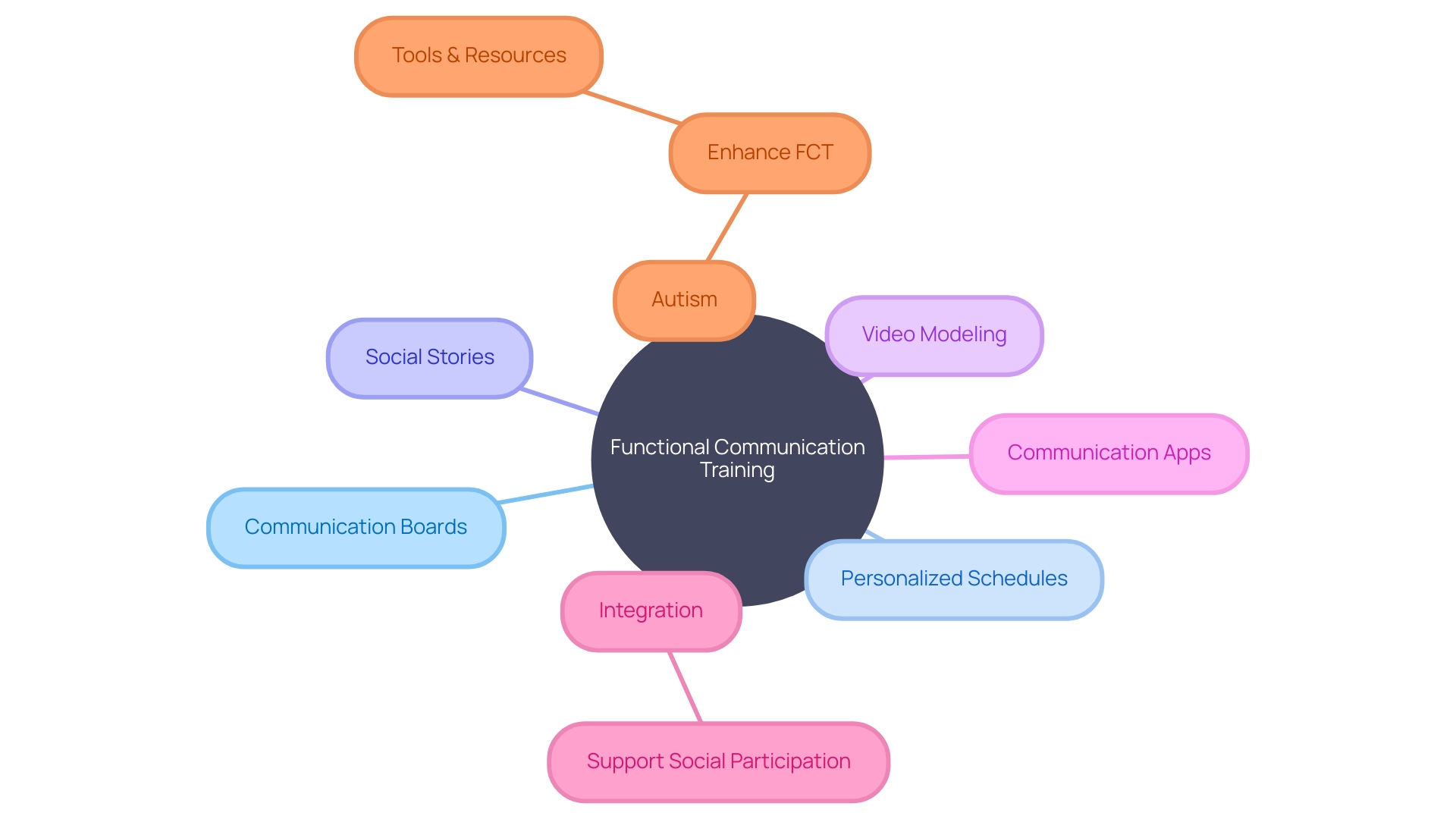
Harnessing a variety of resources and tools can significantly bolster the impact of Functional Communication Training (FCT) for children with autism. Communication boards and personalized schedules serve as visual aids that facilitate understanding and provide structure. Social stories help in navigating , while video modeling offers a dynamic and engaging way to demonstrate social interactions and communication strategies.
Furthermore, communication apps can provide a high-tech avenue for expression, catering to the diverse communication needs of children on the spectrum. Integrating these tools with FCT not only enriches the learning experience but also supports children in their pursuit of meaningful social participation in different aspects of life, from school to home to leisure activities.
In conclusion, effective communication is crucial for children with autism to express themselves and be included in social interactions. Innovations in assistive technology, like AAC systems, have empowered these children to communicate when traditional speech is challenging.
FCT, rooted in ABA, enhances communication capabilities by teaching alternative ways of expression. It focuses on fostering positive behaviors and social skills for inclusive participation.
Choosing the right communication modality is essential, considering diverse needs. Options range from speech to sign language, picture exchange systems, and AAC devices.
Reinforcement and extinction play a key role in FCT, enhancing communication outcomes by reinforcing appropriate behaviors and reducing problem behaviors.
Generalization and maintenance are pivotal, with support from communication partners being crucial for maintaining progress.
Successful FCT implementation involves using visual aids, creating a stable environment, providing communication opportunities, and involving family members.
ABA plays a crucial role in crafting tailored interventions that replace challenging behaviors with functional communication skills.
Additional resources and tools, like communication boards and apps, enhance the impact of FCT, supporting meaningful social participation.
Overall, this article aims to empower parents and caregivers with valuable insights. Understanding and supporting the unique communication methods of children with autism is vital for creating a more equitable society.
What is the importance of functional communication for children with autism?
Functional communication is crucial for children with autism as it allows them to express their desires, needs, and thoughts. It helps them participate in daily social interactions, which is key to their mental health and achieving equity in society.
How can assistive technology aid children with autism?
Assistive technology, such as augmentative and alternative communication (AAC) systems, picture boards, and electronic tablets, enable children with autism to communicate when traditional speech may not be possible. These tools facilitate a more fulfilling educational experience and social integration.
What is the impact of deficits in communication skills for autistic children?
Deficits in communication can hinder autistic children's ability to engage with their surroundings, affecting verbal and nonverbal communication, social interactions, and language understanding. This can impact their mental health and participation in various life domains.
What is Functional Communication Training (FCT)?
FCT is an intervention derived from applied behavior analysis (ABA) that aims to improve the communication skills of children with autism by teaching them alternative ways to express themselves, reducing problematic behaviors, and enhancing social inclusion.
What are the steps to implement Functional Communication Training?
The steps involve identifying the behaviors that hinder communication, understanding their function, selecting an appropriate replacement behavior, teaching this new behavior through practice and reinforcement, and maintaining it over time.
How is the right communication modality chosen for a child with autism?
The right communication modality is individualized based on the child's preferences and abilities, ranging from traditional speech to sign language, picture exchange systems, or advanced AAC devices.
What are reinforcement and extinction in the context of FCT?
In FCT, reinforcement is the process of encouraging appropriate communication behaviors by providing positive outcomes, while extinction involves withholding reinforcement for problematic behaviors to reduce their occurrence.
Why is generalization and maintenance of communication skills important?
Generalization ensures that children can apply new communication skills in different settings, while maintenance involves the continual use and improvement of these skills over time.
What strategies can enhance the effectiveness of FCT?
Strategies include using visual aids, creating a stable environment with predictable routines, offering ample communication opportunities, involving family members, and providing consistent prompts and cues.
What role does Applied Behavior Analysis (ABA) play in FCT?
ABA provides the framework for assessing and designing individualized interventions in FCT, focusing on replacing challenging behaviors with functional communication skills tailored to the child's needs.
Are there additional resources and tools that can aid FCT?
Yes, additional resources and tools include communication boards, personalized schedules, social stories, video modeling, and communication apps, all of which can enhance the learning experience and support meaningful social participation.