During the course of ABA therapy, caregivers might observe an intriguing occurrence known as an extinction burst. This phenomenon relates to a sudden and temporary spike in the behavior that the therapy aims to decrease. For instance, when a child's tantrum, previously met with attention, is no longer acknowledged, an escalation in the frequency, intensity, or duration of these tantrums may ensue.
While seemingly paradoxical, recognizing and preparing for extinction bursts is a critical component of the therapeutic journey.
Experts emphasize that such bursts are a natural response to change, signifying that the therapy is altering established patterns of behavior. Board-Certified Behavior Analysts, with extensive clinical experience, highlight that understanding these bursts is key to ensuring that care remains coordinated, of high quality, and in line with best practices. As the field of ABA therapy evolves, driven by innovation and research, the management of extinction bursts remains a focal point of professional discourse and technological advancement, ensuring that every step in ABA therapy is geared towards achieving the best possible outcomes for individuals undergoing treatment.
During the course of , caregivers might observe an intriguing occurrence known as an extinction burst. This phenomenon relates to a sudden and temporary spike in the behavior that the therapy aims to decrease. For instance, when a child's tantrum, previously met with attention, is no longer acknowledged, an escalation in the frequency, intensity, or duration of these tantrums may ensue.
While seemingly paradoxical, is a . Experts emphasize that such bursts are a , signifying that the therapy is altering established patterns of behavior. , with extensive clinical experience, highlight that understanding these bursts is key to ensuring that care remains coordinated, of high quality, and in line with .
As the field of evolves, driven by innovation and research, the management of remains a focal point of professional discourse and technological advancement, ensuring that every step in is geared towards achieving the best possible outcomes for individuals undergoing treatment.

An extinction burst is a phenomenon observed in the field of where an individual may intensify or increase a behavior when a previously reinforcing consequence is removed or reduced. As reinforcement ceases, the individual might escalate the behavior, with increased frequency or intensity, in an effort to obtain the reinforcement that was once consistent. This reaction represents an adaptive trial by the individual to navigate their environment and discover new means of obtaining reinforcement.
According to a New York state-licensed and Board-Certified Behavior Analyst with extensive clinical knowledge, the understanding and management of are crucial in ensuring high-quality, coordinated care. The burst is indicative of the individual's resilience and capacity to adapt to new contingencies. Properly that takes into account the individual's history, the specific behaviors in question, and the environmental context.
Recent studies emphasize the need for ongoing research and development of treatment strategies. For instance, findings from a comprehensive questionnaire on behavioral euthanasia in dogs highlight the complexity of problem behaviors and the necessity for tailored interventions. Such research underscores the importance of understanding and other to create effective, evidence-based approaches in ABA therapy.
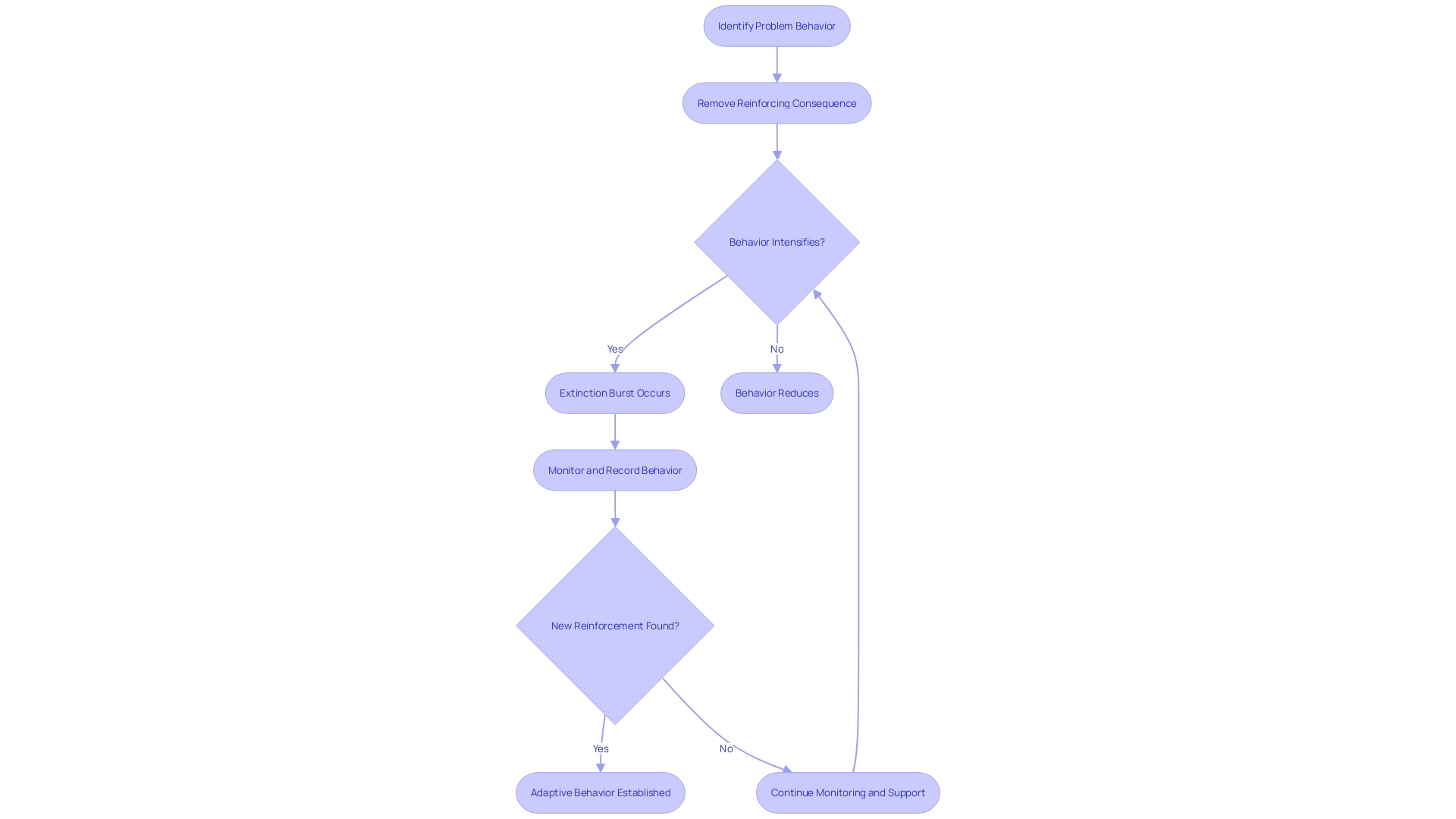
Understanding the dynamics of is pivotal in ABA therapy. These bursts may exhibit through more pronounced behaviors, such as increased volume in vocalizations, stronger physical movements, or a higher rate of the behavior being displayed. Such intensification is often a sign that the behavior is in a state of flux, as the individual adapts to the absence of previously given reinforcement.
It is essential to recognize that these increases in behavior are typically a transitory phase. The principle of (FAP), which views behaviors as logical responses to one's history and environment, aligns with this understanding. should be seen as a natural response within the therapeutic process, and with consistent support and the right strategies, individuals will learn that these behaviors are no longer effective strategies for obtaining their needs.
This aligns with recent advancements in behavior analysis, such as the (IISCA), emphasizing a customized and informed approach to each case. As we navigate these complex behaviors, especially in challenging times like during the pandemic where behaviors can worsen, it is the depth of understanding and application of these that can lead to successful outcomes. This knowledge is backed by experts with extensive experience in the field, who underscore the importance of coordinated, .

Successfully navigating in involves strategic and consistent actions. Key strategies include:
Through these approaches, professionals and caregivers can help individuals with neurodivergent diagnoses, such as those provided by , make significant progress. For instance, young Easton experienced notable success after two years of , and Amanda Rhoads observed a remarkable improvement in her children's within just five weeks of intervention.
In conclusion, extinction bursts are a natural response to change in ABA therapy. These bursts represent a temporary spike in behavior that therapy aims to decrease. Understanding and preparing for extinction bursts is crucial in ensuring coordinated, high-quality care.
Extinction bursts occur when individuals intensify or increase a behavior that was previously reinforced but is no longer consistently rewarded. Properly addressing these bursts requires a nuanced approach that considers the individual's history, specific behaviors, and environmental context. Ongoing research and development of treatment strategies are essential in creating effective, evidence-based approaches in ABA therapy.
Managing extinction bursts in ABA therapy requires strategic actions such as consistency, environmental adjustments, functional behavior assessment, teaching communication skills, progress monitoring, and creating a structured environment. By implementing these approaches, professionals and caregivers can help individuals with neurodivergent diagnoses make significant progress.
In summary, extinction bursts are a natural part of the therapeutic process in ABA therapy. By understanding and preparing for these bursts, professionals and caregivers can ensure coordinated, high-quality care and empower individuals with the tools they need to succeed. Ongoing research and evidence-based approaches are vital in addressing extinction bursts and other behavioral challenges in ABA therapy.
What is an extinction burst in ABA therapy?
An extinction burst is a sudden and temporary increase in the frequency, intensity, or duration of a behavior that ABA therapy aims to decrease. It occurs when a behavior that was previously reinforced is no longer acknowledged or rewarded, leading to an escalation of that behavior.
Why do extinction bursts occur?
Extinction bursts occur because the individual is attempting to regain the reinforcement that was once consistent. When the expected outcome of a behavior changes, the individual may intensify the behavior in an adaptive effort to achieve the desired result.
Are extinction bursts considered a normal part of ABA therapy?
Yes, extinction bursts are considered a normal and natural response within ABA therapy. They signify that the therapy is impacting established behavioral patterns and are seen as a sign of the individual's resilience and capacity to adapt to new contingencies.
How do professionals in the field view extinction bursts?
Board-Certified Behavior Analysts and experts with clinical experience view understanding and managing extinction bursts as essential for ensuring coordinated, high-quality care. They are seen as indicative of the individual's ability to adapt and are a crucial component of the therapeutic process.
What are some characteristics of extinction bursts?
Extinction bursts can be characterized by more pronounced behaviors, such as louder vocalizations, stronger physical movements, or a higher rate of the targeted behavior. These are typically a transitory phase as the individual adapts to the lack of reinforcement.
How should caregivers and professionals manage extinction bursts?
Managing extinction bursts involves strategies like maintaining consistency and patience, making environmental adjustments, conducting Functional Behavior Assessments (FBAs), teaching alternative communication skills, monitoring progress, and providing a structured environment. These strategies help in reducing the frequency and severity of extinction bursts.
Can extinction bursts be prevented?
While extinction bursts are a natural part of the behavior change process, equipping individuals with alternative communication methods and creating a predictable, structured environment can decrease the likelihood of them occurring.
What is Functional Analytic Psychotherapy (FAP) and how does it relate to extinction bursts?
Functional Analytic Psychotherapy (FAP) views behaviors as logical responses to one's history and environment. It aligns with the understanding of extinction bursts in ABA, suggesting that with consistent support and the right strategies, individuals will learn that the behaviors associated with extinction bursts are no longer effective.
What is the significance of research in managing extinction bursts?
Ongoing research and the development of treatment strategies such as the Interview Informed Synthesized Functional Analysis (IISCA) emphasize a customized approach to each case. This research is important in creating effective, evidence-based approaches to manage extinction bursts.
Have individuals shown improvement in ABA therapy despite experiencing extinction bursts?
Yes, there are examples of individuals who have made significant progress in ABA therapy even after experiencing extinction bursts. Success stories include young Easton, who showed notable success after two years of ABA therapy, and Amanda Rhoads' children, who improved their communication skills within just five weeks of intervention.