Understanding the unique challenges faced by individuals with autism is so important for fostering their emotional well-being. 😊 Relaxation techniques, like deep breathing and mindfulness practices, can be powerful tools that really help enhance emotional regulation and reduce anxiety. But here’s the thing: how can we effectively weave these techniques into our daily routines to create lasting benefits for both children and their caregivers?
Let’s explore this together! By integrating these practices into everyday life, we can make a real difference. Imagine a moment when your child feels overwhelmed, and you can guide them through a calming breathing exercise. It’s those little moments that can lead to big changes.
We’re here to help you every step of the way! Let’s dive into how these techniques can fit seamlessly into your family’s routine.
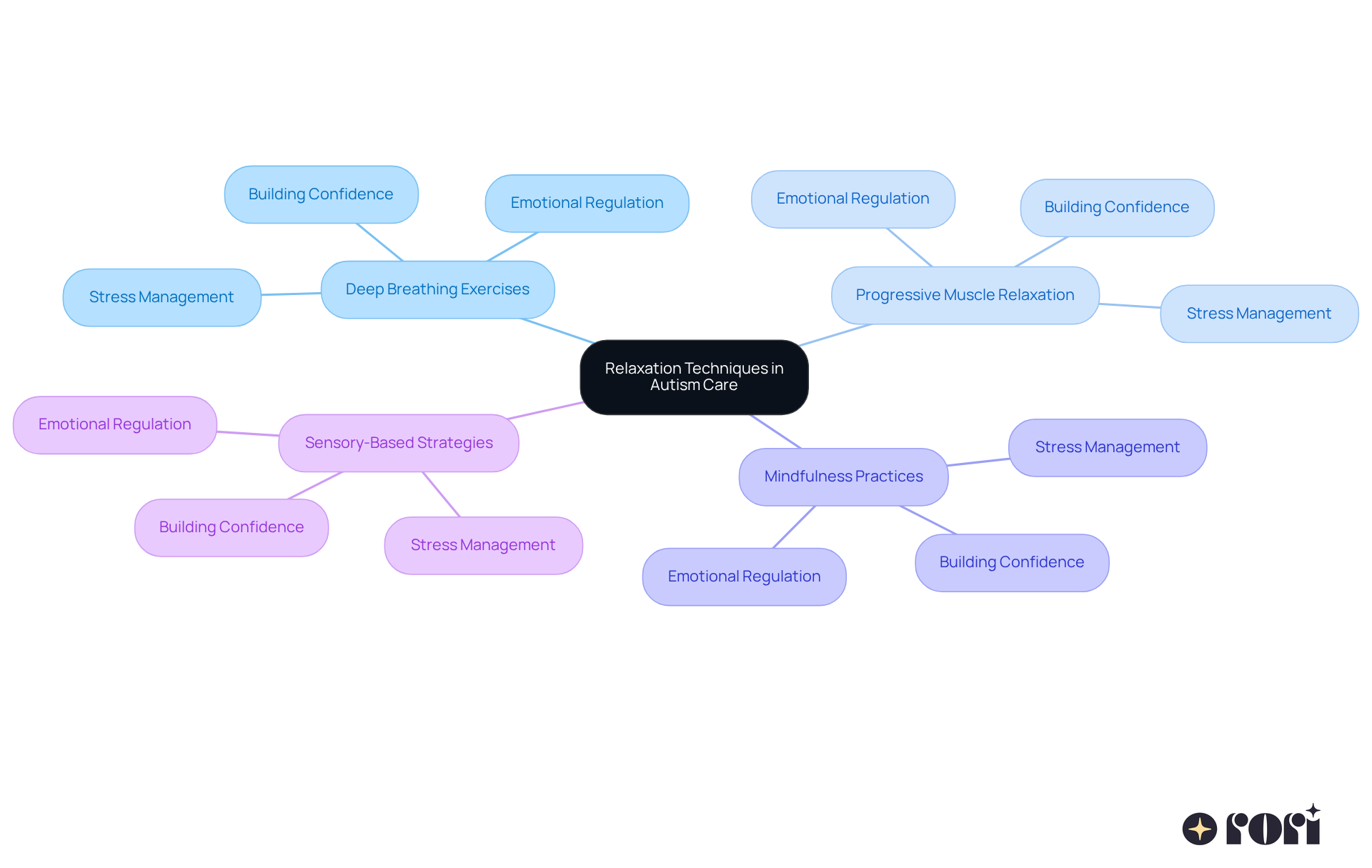
The guidelines for implementing relaxation techniques in autism care can be a game changer when it comes to supporting individuals with autism! These approaches provide guidelines for implementing relaxation techniques in autism care, helping to manage stress, anxiety, and emotional ups and downs. Think about:
The aim? To create a calming effect that boosts emotional regulation and overall well-being.
By incorporating guidelines for implementing relaxation techniques in autism care into daily routines, caregivers and therapists can equip young ones with tools to navigate overwhelming moments. This not only fosters a sense of safety and control but also builds confidence. Plus, when caregivers are equipped with knowledge and skills related to the guidelines for implementing relaxation techniques in autism care, they can better support their children's behavioral goals. It’s all about consistency in applying these therapeutic approaches!
This active involvement is so important. It leads to better behavioral outcomes and empowers caregivers, which ultimately benefits the whole family dynamic. So, let’s explore this together! We’re here to help you every step of the way!
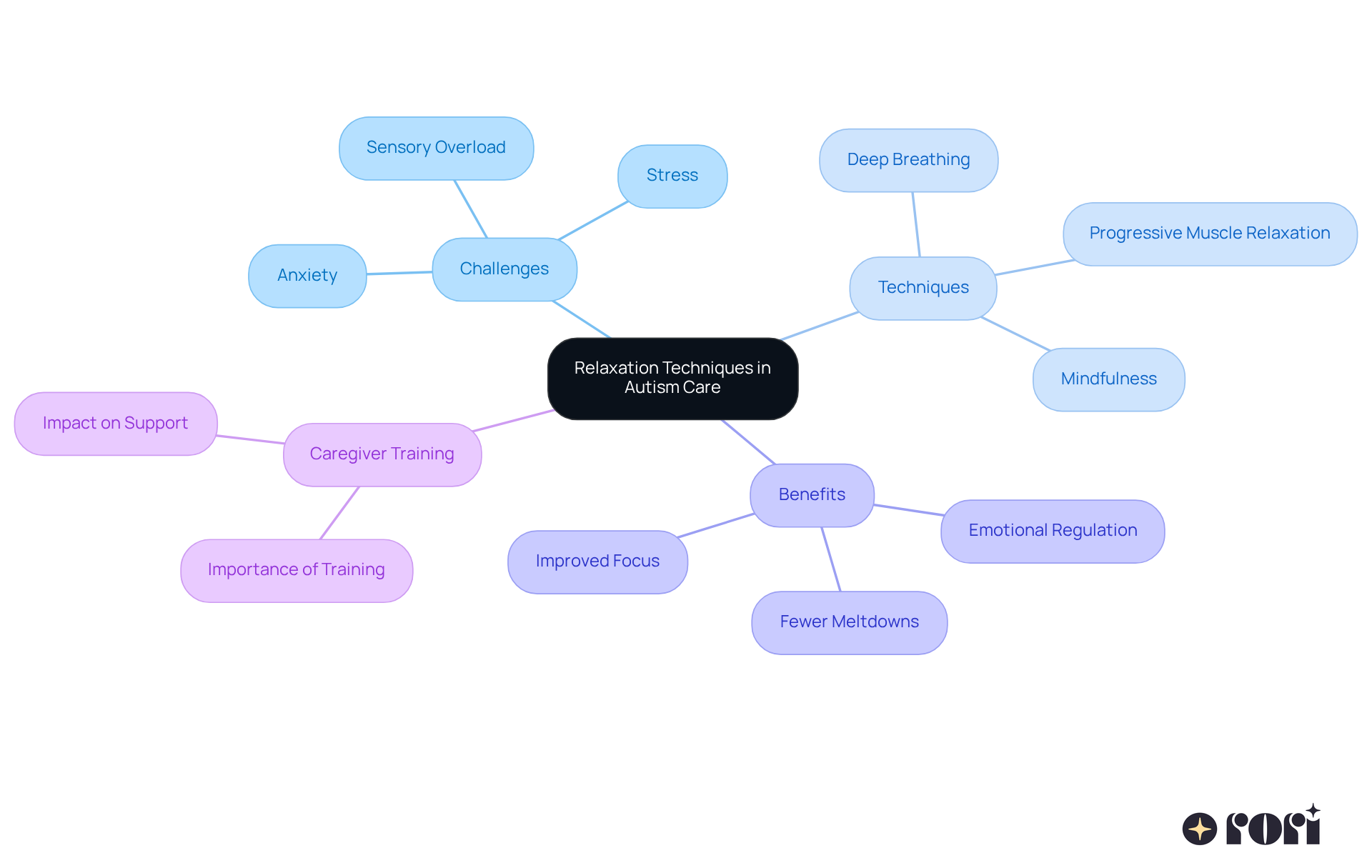
When discussing guidelines for implementing relaxation techniques in autism care, it's important to recognize that many individuals with autism often deal with heightened anxiety and stress. This can stem from sensory overload, social challenges, and communication hurdles. At Rori Care, our dedicated clinical leadership team is all about neurodiversity and ensuring every young person thrives. They empower caregivers with ABA principles and strategies that support youth behavioral goals through active involvement and data collection.
Applying relaxation methods is essential according to the guidelines for implementing relaxation techniques in autism care! These coping strategies serve as guidelines for implementing relaxation techniques in autism care, helping young people navigate their unique challenges. Research shows that the guidelines for implementing relaxation techniques in autism care can lead to better emotional regulation, fewer meltdowns, and improved focus. Plus, they give children the tools to manage their own emotional states, fostering independence and resilience.
And let’s not forget about caregiver training! When caregivers are trained in these methods, it enhances support, informs decision-making, and ultimately leads to better behavioral outcomes. So, let’s explore this together! We’re here to help you every step of the way!
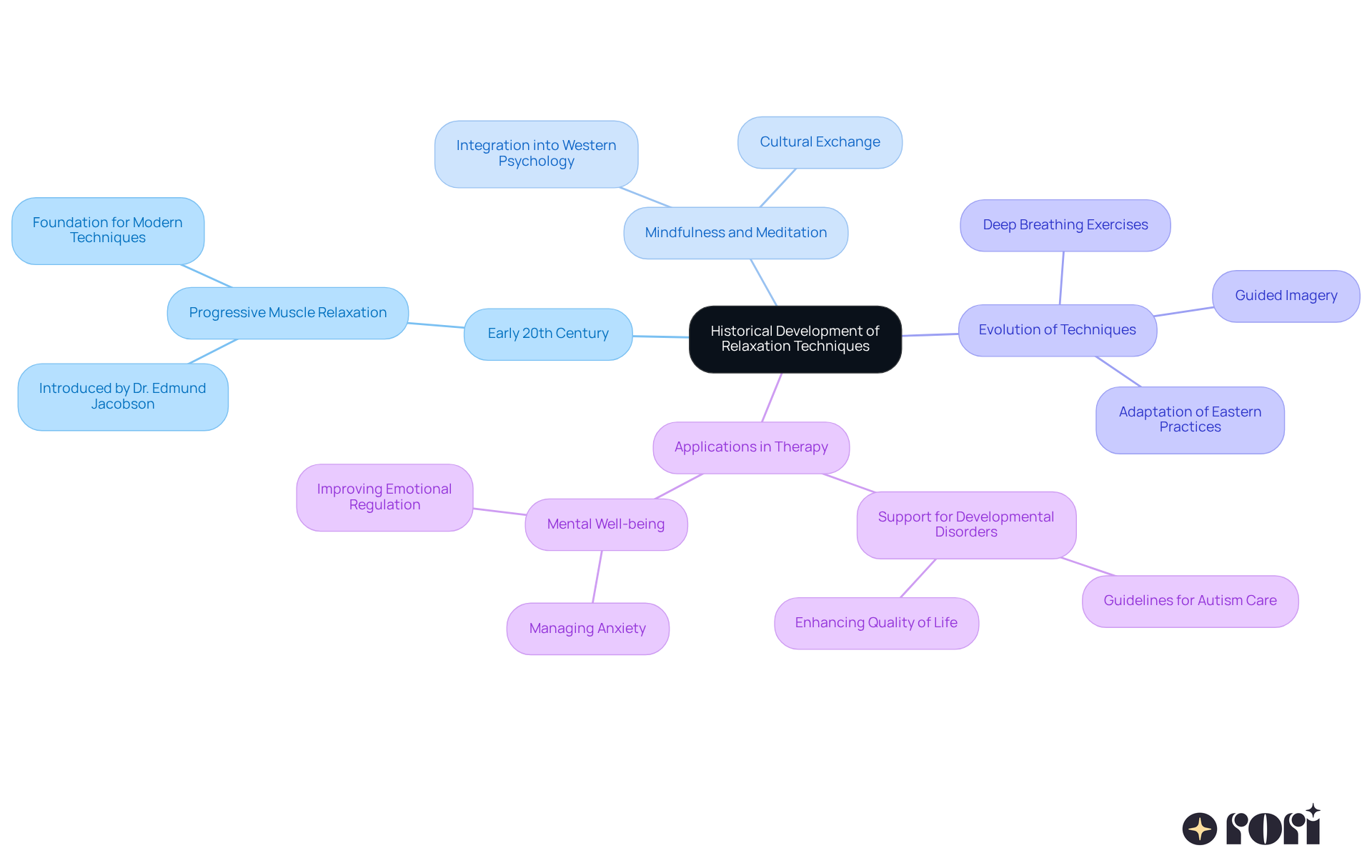
Relaxation methods have a rich history, coming from various therapeutic practices aimed at easing stress and boosting mental well-being. Back in the early 20th century, Dr. Edmund Jacobson introduced progressive muscle relaxation, laying the groundwork for many calming techniques we see today. As mindfulness and meditation from Eastern traditions gained traction in Western psychology, they began to reshape the therapeutic landscape, leading to their integration into clinical settings.
Research shows that mindfulness techniques, like progressive muscle relaxation, have evolved significantly. They’ve proven effective in managing anxiety and improving emotional regulation, particularly for individuals with developmental disorders, when using guidelines for implementing relaxation techniques in autism care. Today, these methods are not just recognized for their historical significance; they’re also embraced for their practical applications in supporting development. This reflects a deeper understanding of their role in fostering mental well-being.
At Rori Care, we truly believe that the patient is at the heart of everything we do. We’re dedicated to providing personalized support that helps families navigate their care journey with confidence. By weaving effective calming techniques, such as deep breathing exercises and guided imagery, into our ABA therapy in accordance with the guidelines for implementing relaxation techniques in autism care, we strive to enhance the quality of life for individuals on the spectrum, helping them reach their fullest potential. Let’s explore this together!
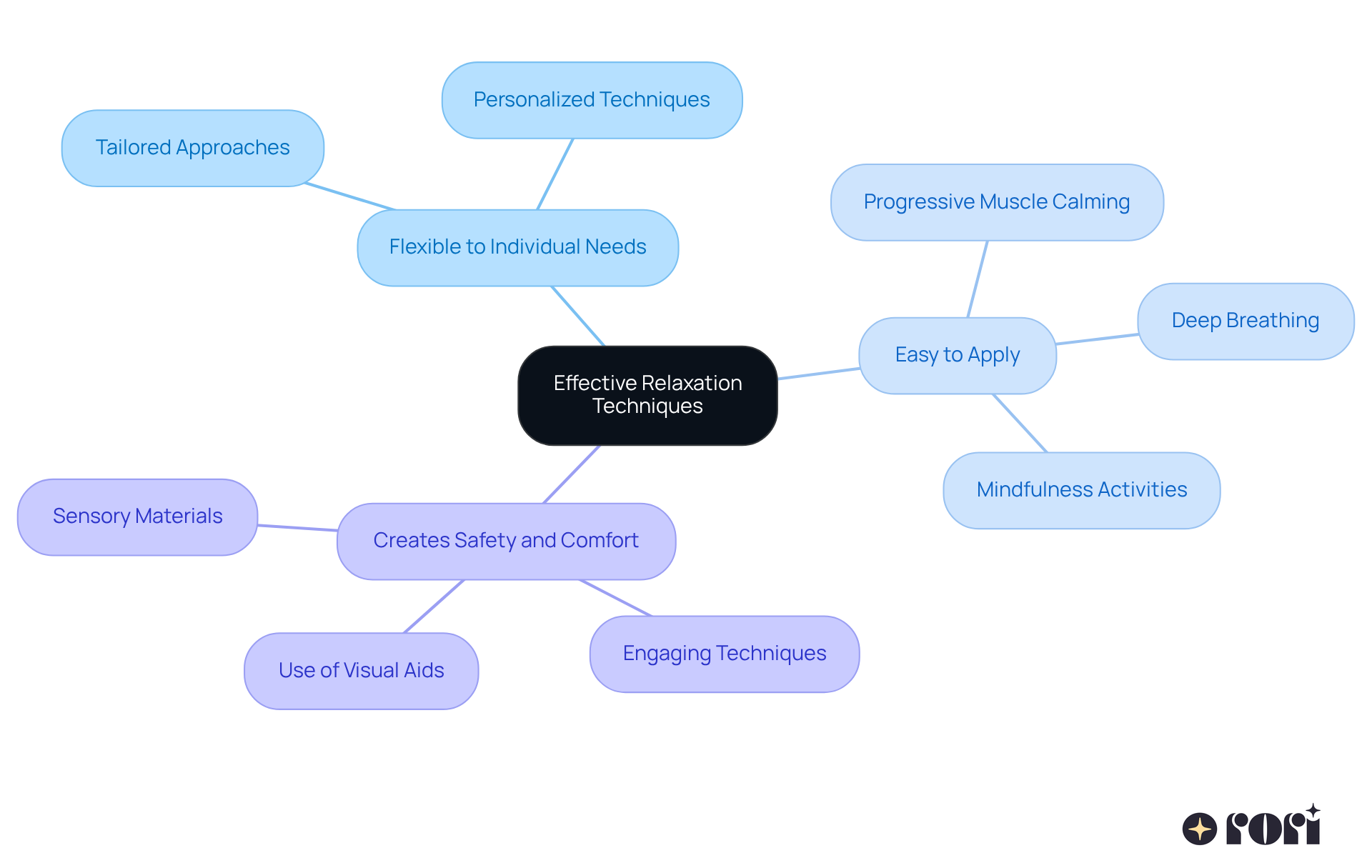
When it comes to autism care, effective methods really shine through a few key features: they’re flexible to individual needs, easy to apply, and they create a sense of safety and comfort. 🌈 Imagine techniques that are not just effective but also engaging and enjoyable for young ones! These methods often use visual aids or sensory materials to make participation fun and inviting.
Regular practice is super important, as it helps reinforce the calming effects of these techniques. Think about methods like:
They can be especially effective when tailored to a young person’s unique preferences and sensory sensitivities. This personalized approach not only boosts the effectiveness of soothing techniques but also supports emotional regulation and overall well-being.
Let’s explore this together! If you’re looking for ways to enhance your child’s experience, remember that you’re not alone on this journey. We’re here to help you every step of the way!
When it comes to caring for children with autism, adhering to guidelines for implementing relaxation techniques in autism care can make a world of difference. Let’s explore some friendly strategies that can help create a calm and soothing environment for your little ones:
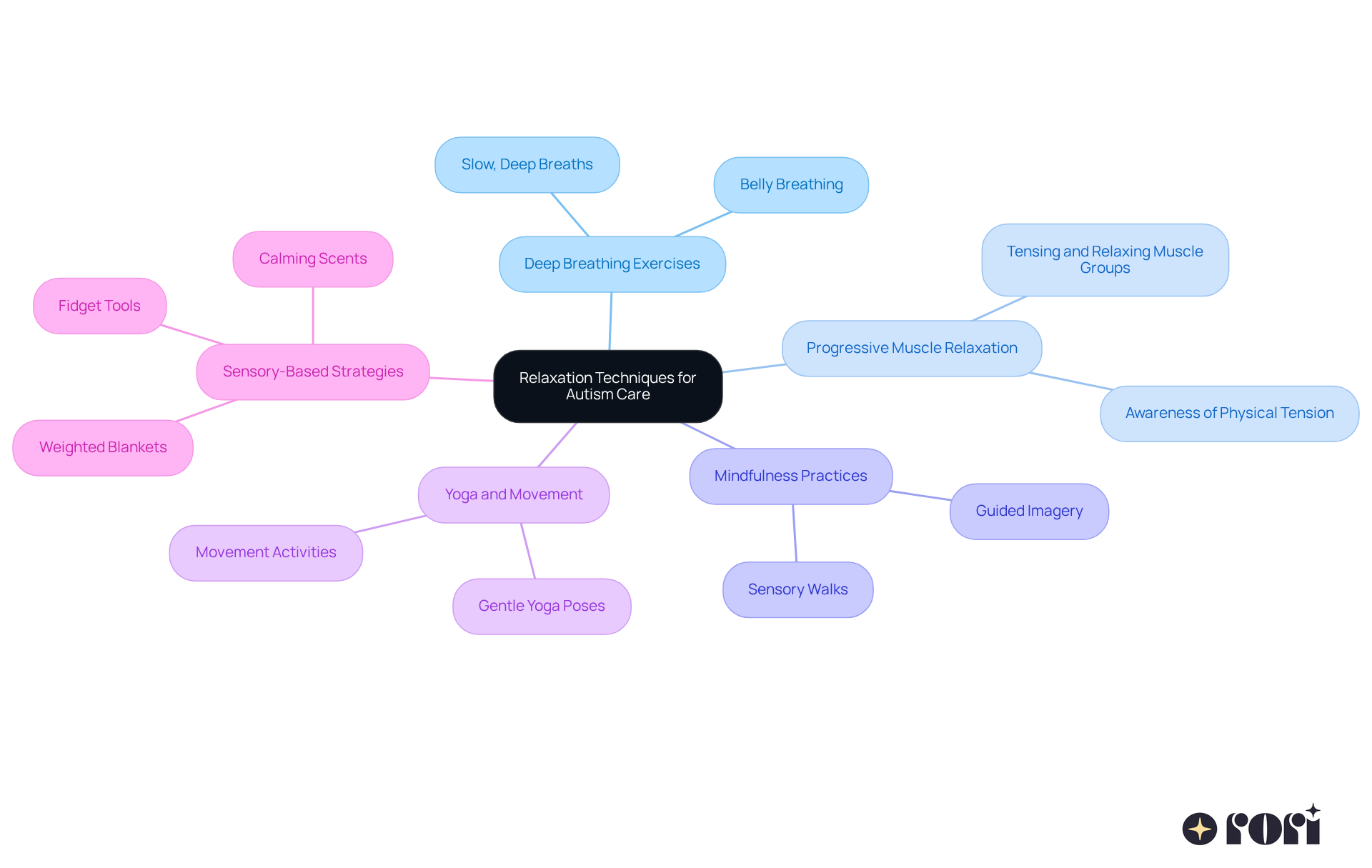
Deep Breathing Exercises: Teaching kids to take slow, deep breaths can really help calm their nervous system and ease anxiety. Have you tried 'belly breathing'? It’s a simple yet effective technique that many find comforting.
Progressive Muscle Relaxation (PMR): This technique follows the guidelines for implementing relaxation techniques in autism care, involving the tensing and then relaxing of different muscle groups. It’s a great way for kids to become aware of physical tension and learn how to let it go. Imagine how much lighter they might feel afterward!
Mindfulness Practices: Activities like guided imagery or sensory walks can motivate children to focus on the present moment. This not only fosters calmness but also helps reduce stress. It’s amazing how a little mindfulness can transform their day!
Yoga and Movement: Incorporating gentle yoga poses or movement activities can be a fun way for kids to release pent-up energy. Plus, it promotes a sense of calm that everyone can benefit from.
Sensory-Based Strategies: Using weighted blankets, fidget tools, or calming scents can create a soothing environment. The guidelines for implementing relaxation techniques in autism care can easily fit into daily routines, helping children manage stress effectively.
Remember, you’re not alone in this journey! Let’s explore these techniques together and see what works best for your child. We’re here to help you every step of the way!
Implementing relaxation techniques in autism care can truly enhance the emotional well-being and overall quality of life for individuals on the spectrum. These approaches not only help manage stress and anxiety but also empower both caregivers and children with essential tools for emotional regulation. Consistency in applying these methods is key, as it fosters a sense of safety and control, leading to better behavioral outcomes.
Throughout this article, we’ve explored various relaxation techniques like:
Each method brings its own unique benefits, from reducing anxiety to promoting independence and resilience. Plus, the importance of caregiver training in these techniques shows just how much of a team effort it takes to achieve the best outcomes for our children with autism.
But remember, the journey of implementing relaxation techniques isn’t just about finding immediate relief; it’s about building a solid foundation for long-term emotional health and resilience. By embracing these guidelines, caregivers can create a nurturing environment that helps their children navigate the complexities of their experiences. The positive impact of these techniques goes beyond individual benefits, enriching family dynamics and fostering a community of understanding and support.
So, let’s explore this together! By taking these steps, we can make a real difference in the lives of our children and families. We’re here to help you every step of the way!
What are relaxation techniques in autism care?
Relaxation techniques in autism care are approaches designed to help manage stress, anxiety, and emotional fluctuations in individuals with autism. These include deep breathing exercises, progressive muscle relaxation, mindfulness practices, and sensory-based strategies.
What is the aim of implementing relaxation techniques in autism care?
The aim is to create a calming effect that boosts emotional regulation and overall well-being, helping individuals navigate overwhelming moments and fostering a sense of safety and control.
How can caregivers and therapists use relaxation techniques?
Caregivers and therapists can incorporate these techniques into daily routines to equip individuals with autism with tools for managing stress and anxiety, which promotes confidence and emotional regulation.
Why is consistency important in applying relaxation techniques?
Consistency in applying these therapeutic approaches is crucial as it leads to better behavioral outcomes and empowers caregivers, ultimately benefiting the entire family dynamic.
What challenges do individuals with autism face that relaxation techniques can help address?
Individuals with autism often deal with heightened anxiety and stress due to sensory overload, social challenges, and communication hurdles. Relaxation techniques provide coping strategies to help them navigate these challenges.
How do relaxation techniques impact emotional regulation in individuals with autism?
Research shows that implementing relaxation techniques can lead to better emotional regulation, fewer meltdowns, and improved focus, while also fostering independence and resilience in children.
What role does caregiver training play in the effectiveness of relaxation techniques?
Caregiver training enhances support, informs decision-making, and leads to better behavioral outcomes, allowing caregivers to effectively implement relaxation techniques and support their children's needs.