Navigating the journey through autism treatment can feel like a winding road, filled with twists and turns. It’s a complex process that brings together insights, skills, and experiences from many different people. At the heart of this journey is collaboration - parents, therapists, educators, and medical professionals all working together to create personalized treatment plans that truly cater to each child's unique needs.
But let’s be honest: even with the clear benefits of teamwork, many families find it tough to collaborate effectively. It can be overwhelming! So, what can we do to bridge that gap between professionals and parents? How can we ensure that every child gets the comprehensive support they deserve? Let’s explore this together! 🤝
Teamwork in treating developmental disorders highlights how collaboration improves outcomes in autism treatment! It brings together parents, therapists, educators, and medical professionals to craft and implement treatment plans that fit each child’s unique needs. This approach is crucial as it utilizes the diverse skills of everyone involved, highlighting how collaboration improves outcomes in autism treatment while addressing all aspects of a young person’s growth.
Research shows how collaboration improves outcomes in autism treatment by enhancing the generalization of skills. This indicates that families feel more satisfied, and individuals with autism experience better outcomes, highlighting how collaboration improves outcomes in autism treatment. For instance, kids who participate in collaborative therapy programs often show big improvements in communication, social skills, and adaptive behaviors - especially when their parents are actively involved.
Take a look at a case study where interprofessional collaboration made a real difference. Youngsters who were having trouble communicating made amazing strides thanks to the of speech-language pathologists, occupational therapists, and their families. Plus, when caregivers learn about ABA principles and strategies, they can provide the right support at home, which complements professional help and keeps things consistent.
This informed approach leads to better behavioral outcomes. When caregivers are engaged, it aligns perfectly with therapeutic strategies, fostering development, reducing stress, and improving family dynamics. By nurturing a shared understanding and commitment to a child’s needs, teamwork demonstrates how collaboration improves outcomes in autism treatment, enhancing the effectiveness of interventions and supporting the child’s growth in various settings. Ultimately, this empowers families and boosts therapeutic results. Let’s explore this together!
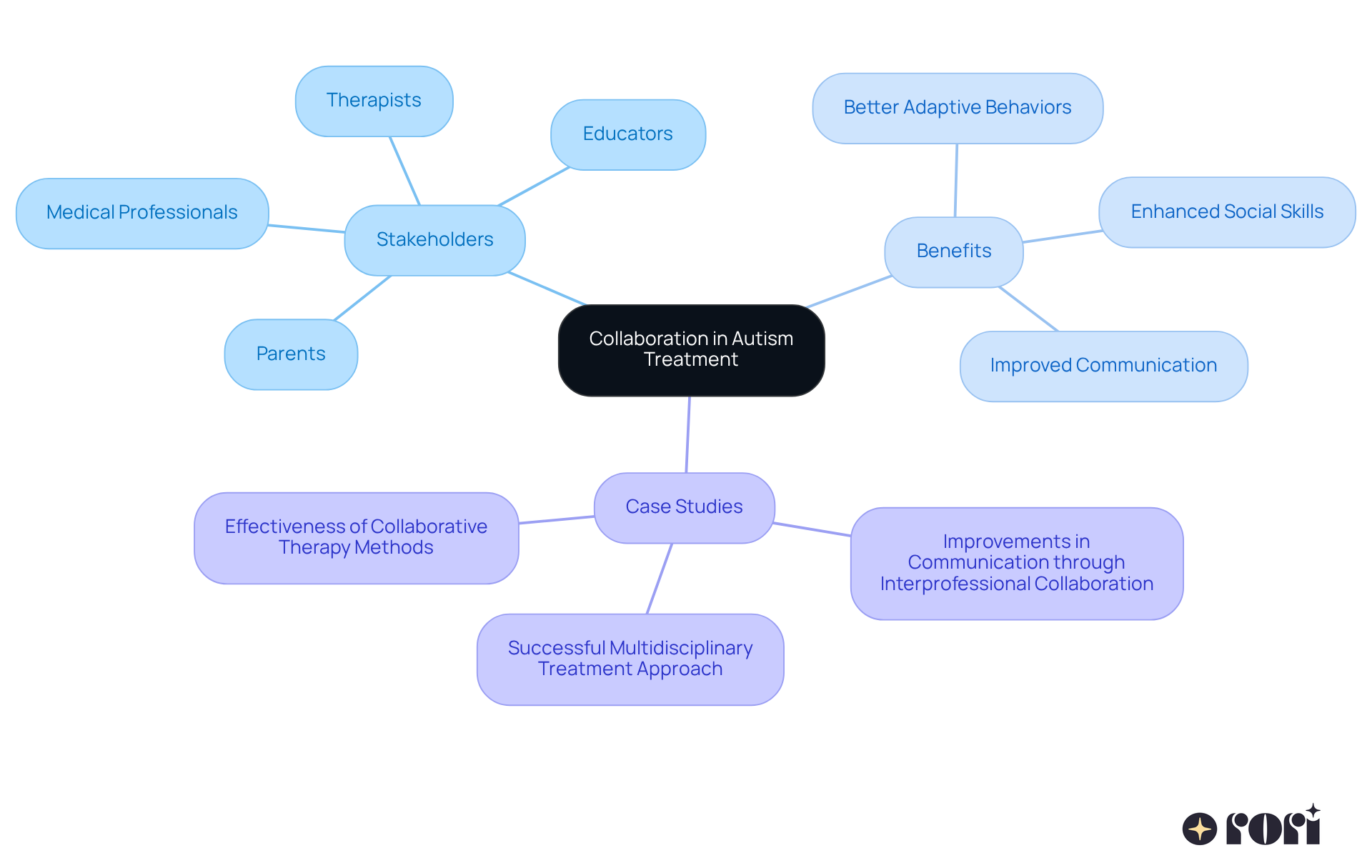
In collaborative autism care, professionals like behavior analysts, speech therapists, and educators illustrate how collaboration improves outcomes in autism treatment by playing crucial roles in supporting individuals with autism. Behavior analysts create and implement personalized treatment strategies based on data-driven evaluations, ensuring that interventions are tailored to each person's unique needs. Meanwhile, speech therapists work on enhancing communication skills, using techniques like visual supports and augmentative communication devices to help facilitate effective interaction. Educators bring learning strategies into the classroom, promoting academic success alongside therapeutic goals.
Parents are essential partners in this journey. They offer invaluable insights into their child's behavior and preferences, implement strategies at home, and advocate for their needs in various settings. Research shows how collaboration improves outcomes in autism treatment when families participate in therapy sessions. This involvement creates a supportive environment that reinforces the skills learned during therapy. By working together, parents and professionals illustrate how collaboration improves outcomes in autism treatment, ensuring that interventions are consistent and aligned with the child's daily experiences, which leads to better communication abilities, social interactions, and an overall improved quality of life.
The power of effective collaboration highlights how collaboration improves outcomes in autism treatment, as seen in case studies where families actively engage with therapists. For instance, children who receive early and intensive behavior treatment often show lasting improvements in cognition, social behaviors, and language development. Yet, statistics reveal that less than half of young individuals continue therapy for 24 months. This highlights the need for ongoing support and collaboration to maintain progress. By nurturing strong partnerships between parents and specialists, the care community for children with developmental disorders can come together to see how collaboration improves outcomes in autism treatment for kids facing these challenges.
Let’s explore this together! We’re here to !

To promote effective collaboration in autism care, let’s explore some strategies together! 😊
It’s also important to recognize the differences in access to care that many families face, which can affect their ability to get timely and effective assistance. Let’s work together to ensure that every child gets the support they need!

When it comes to autism care, it is essential to explore how , as it can make a world of difference! Let’s take a look at some of the amazing benefits:
So, let’s explore this together! If you’re looking for ways to enhance your child’s care, remember that you’re not alone. We’re here to help you every step of the way!

Collaboration is truly a cornerstone in autism treatment, playing a vital role in enhancing outcomes for both children and families. When parents, therapists, educators, and medical professionals come together, they create a supportive environment that meets each child's unique needs. This teamwork not only boosts the effectiveness of interventions but also empowers families, ensuring they’re actively involved in their child's development.
Throughout this journey, we see how collaboration can make a real difference. When parents engage in the therapeutic process, it leads to better communication skills, improved social interactions, and an overall boost in quality of life for children with autism. Professionals like behavior analysts and speech therapists bring their expertise to the table, while parents offer invaluable insights, creating a well-rounded support system. Strategies for effective collaboration - like clear communication, setting common goals, and celebrating progress - highlight just how important teamwork is in achieving positive results.
Ultimately, we can’t underestimate the significance of collaboration in autism care. It builds stronger relationships, increases family satisfaction, and promotes holistic development, ensuring children receive the support they need in various settings. As families look to enhance their child's care, embracing a collaborative approach is a powerful strategy for achieving lasting improvements in autism treatment outcomes. Together, the combined efforts of parents and professionals can pave the way for brighter futures for children facing these challenges. Let’s explore this journey together!
What is collaboration in autism treatment?
Collaboration in autism treatment refers to the teamwork among parents, therapists, educators, and medical professionals to create and implement tailored treatment plans that address each child's unique needs.
Why is collaboration important in autism treatment?
Collaboration is crucial as it utilizes the diverse skills of all involved, improving outcomes by addressing all aspects of a young person's growth and enhancing the generalization of skills.
How does collaboration improve outcomes for individuals with autism?
Research indicates that collaboration leads to increased family satisfaction and better outcomes for individuals with autism, including significant improvements in communication, social skills, and adaptive behaviors.
Can you provide an example of successful collaboration in autism treatment?
A case study demonstrated that children struggling with communication made significant progress through the coordinated efforts of speech-language pathologists, occupational therapists, and their families.
What role do caregivers play in collaborative autism treatment?
Caregivers who learn about ABA principles and strategies can provide effective support at home, complementing professional help and ensuring consistency in the child's treatment.
What are the benefits of caregiver engagement in autism treatment?
Engaged caregivers align with therapeutic strategies, leading to better behavioral outcomes, reduced stress, improved family dynamics, and enhanced effectiveness of interventions.
How does collaboration empower families in autism treatment?
Collaboration nurtures a shared understanding and commitment to a child's needs, ultimately empowering families and boosting therapeutic results.