Mindfulness is becoming a wonderful practice for children with autism, offering tools that can really help with emotional regulation, focus, and social interactions. By nurturing a sense of presence and awareness, mindfulness not only supports kids in navigating their unique challenges but also helps parents create a more harmonious home environment.
But how can families weave mindfulness techniques into their daily routines to enjoy these benefits and support their child's growth? Let’s explore this together!
Imagine a busy morning where your child feels overwhelmed. A few minutes of mindfulness could transform that chaos into calm. It’s all about finding those little moments to pause and breathe.
As we dive deeper into this topic, we’ll share relatable stories and practical tips that can make a real difference. We’re here to help you every step of the way!
Mindfulness is all about being fully present and engaged in the moment, without any judgment. For many individuals with autism, learning about how mindfulness can benefit children with autism can be a game-changer! It helps with emotional regulation, boosts focus, and improves social interactions. Research shows how mindfulness can benefit children with autism by significantly reducing anxiety and enhancing their overall well-being.
When young individuals practice mindfulness, they cultivate a sense of calm and awareness. This can help them manage their emotions and sensory experiences more effectively, leading to better behavior and improved social skills. Plus, studies indicate that longer mindfulness programs offer even more benefits, especially in emotional and behavioral areas. Regular practice can really enhance psychological resilience and social responsiveness in youths with autism.
And it’s not just the kids who benefit! Parents who engage in mindfulness practices often find they can manage their feelings better and develop effective coping techniques. This positively impacts family interactions and caregiving. Incorporating mindfulness into daily routines can show how mindfulness can benefit children with autism by providing them valuable tools for self-soothing and emotional regulation. Ultimately, it fosters their growth and independence.
Let’s explore this together! Mindfulness might just be the key to unlocking a more peaceful and connected family life.
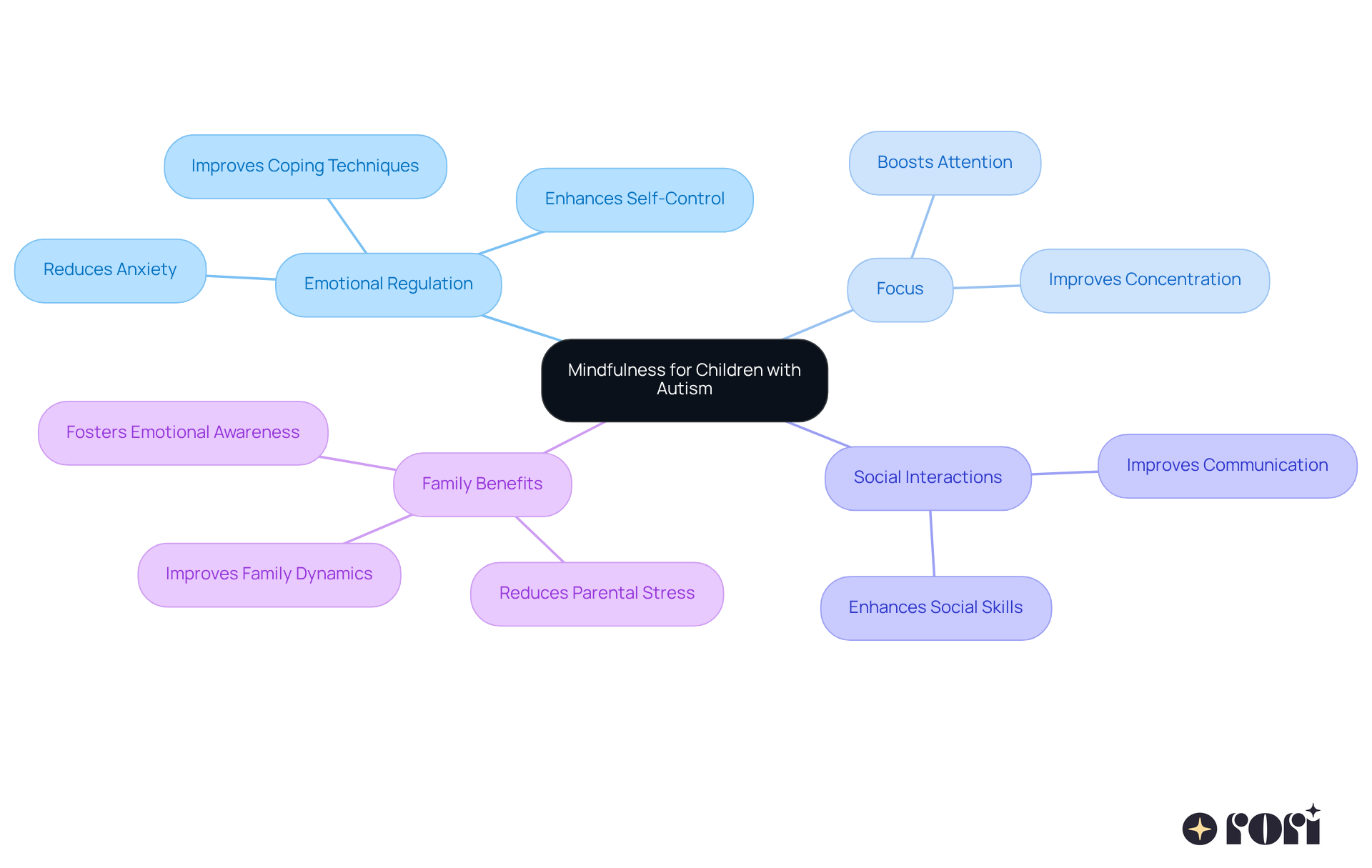
Mindful Breathing: Let’s introduce your little one to mindful breathing! Encourage them to focus on their breath. You can use fun visual aids like bubbles or feathers to show how their breath moves these objects. Guide them to take deep, slow breaths-inhale through the nose and exhale through the mouth. This not only helps your child feel calm and focused but also illustrates how mindfulness can benefit children with autism, empowering you as a caregiver and creating a more peaceful home environment.
Body Scans: How about trying a body scan exercise together? This is where your child can concentrate on different parts of their body, noticing any sensations without judgment. It’s a great way to enhance their awareness and promote relaxation, demonstrating how mindfulness can benefit children with autism. Plus, as a caregiver, knowing this technique can really help you support your loved one’s journey and strengthen your family bond.
Mindful Walking: Encourage your child to engage in mindful walking! They can move slowly and pay attention to the sensations in their feet and legs. Ask them to notice the ground beneath them and the rhythm of their steps. This practice can demonstrate how mindfulness can benefit children with autism by helping them ground themselves in the present moment and improve their focus. By joining in, you’re modeling mindfulness and reinforcing its benefits in everyday life.
Sound Meditation: Let’s explore sound meditation! Use a calming sound, like a chime or singing bowl, to help your little one focus. Have them close their eyes and concentrate on the sound. This can really help center their thoughts and minimize distractions, creating a peaceful mental space. Understanding how mindfulness can benefit children with autism can make you an even more effective caregiver, leading to better behavioral outcomes.
Mindful Eating: During snack time, let’s promote mindful eating! Encourage your child to eat slowly and focus on the taste, texture, and smell of their food. This practice enhances their sensory awareness and appreciation for meals, turning eating into a mindful experience that fosters gratitude. Your involvement not only supports their development but also helps you learn how mindfulness can benefit children with autism, enabling you to make informed decisions that positively impact their growth.
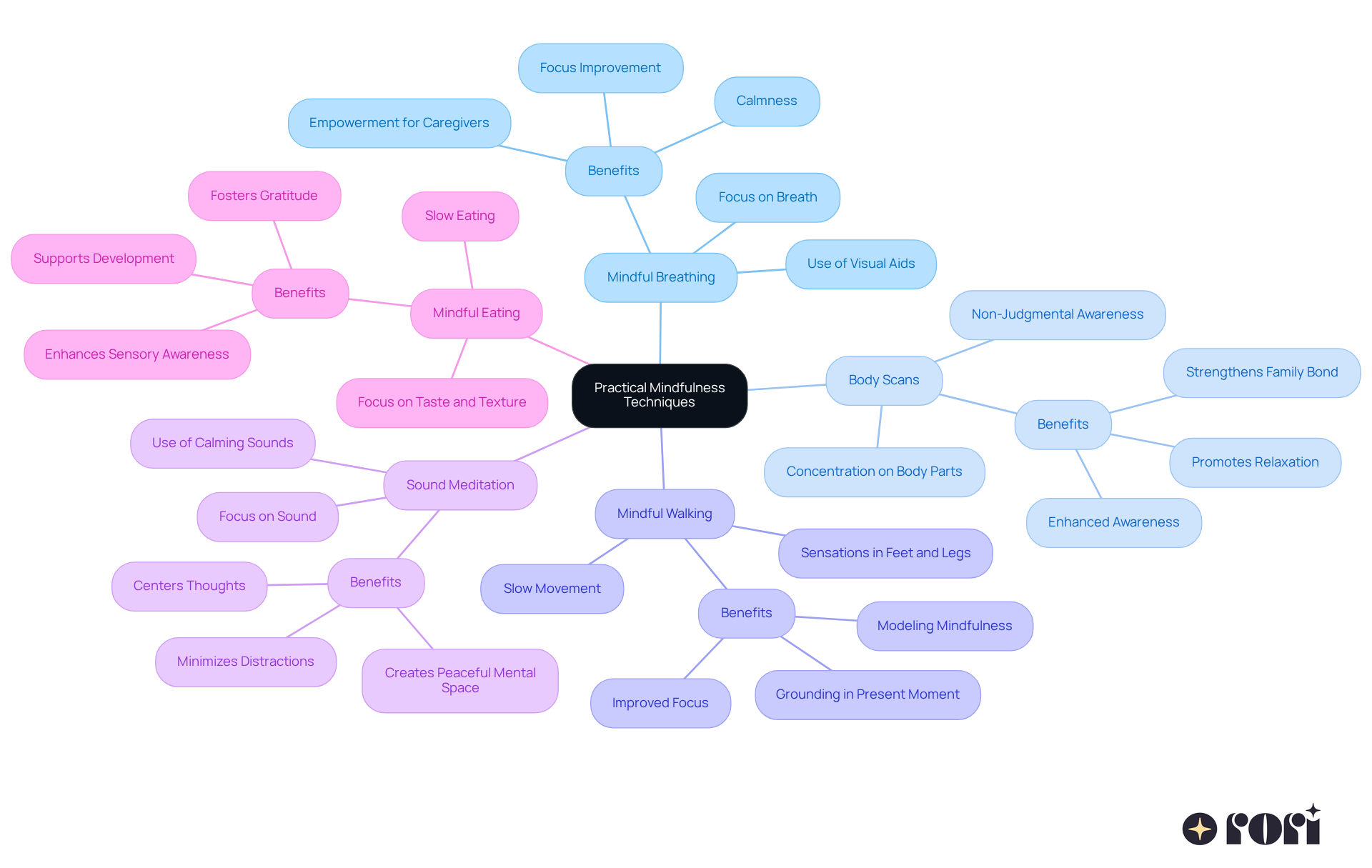
Mindfulness can benefit children with autism in a range of significant ways, and it’s truly heartwarming to see how it can make a difference. Let’s explore this together!
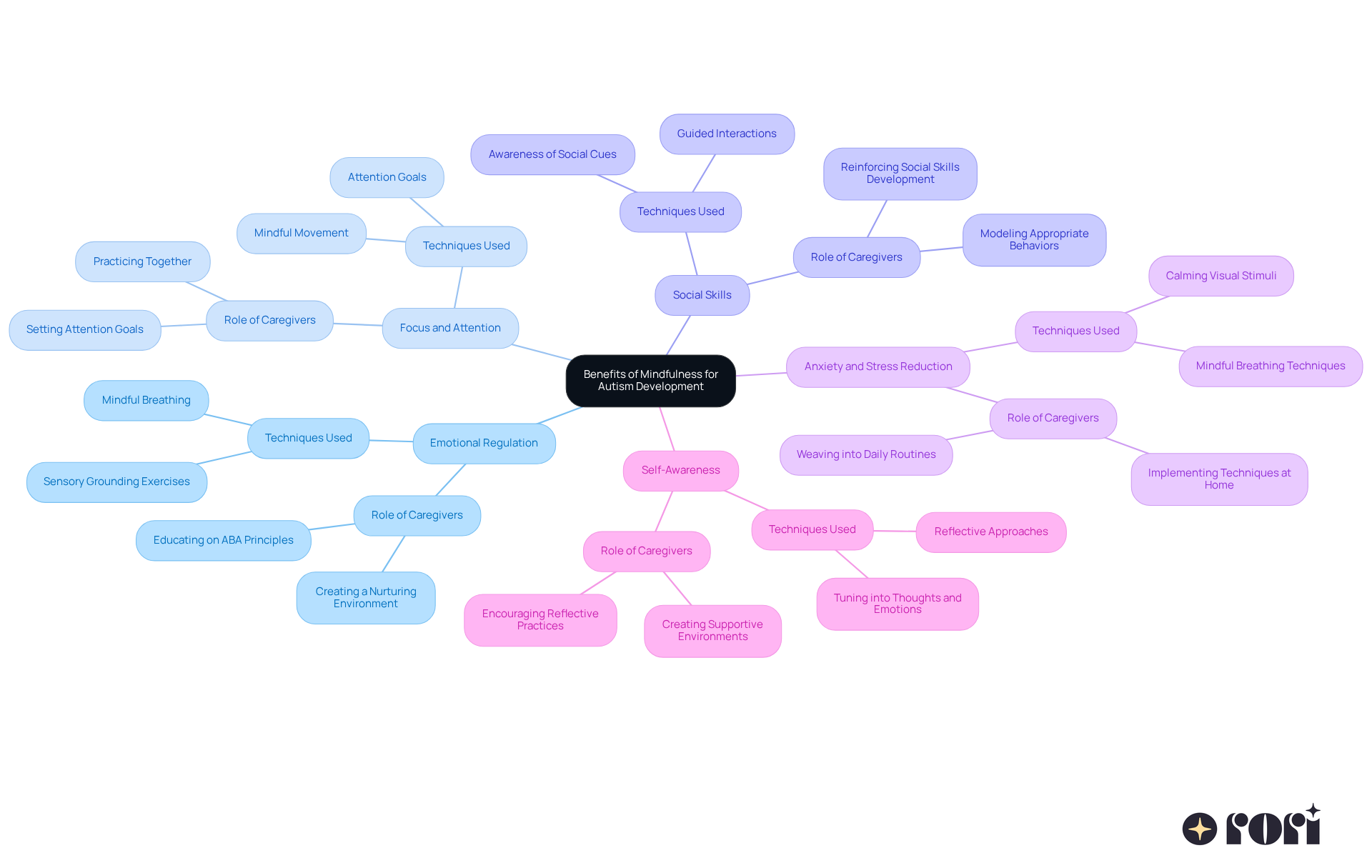
Enhanced Emotional Regulation: Mindfulness practices help kids identify and manage their emotions more effectively. This awareness can lead to fewer meltdowns and less anxiety, as children learn to navigate their feelings with greater ease. Plus, when caregivers are educated in ABA principles, like reinforcement strategies, they can support emotional regulation at home, creating a nurturing environment.
Enhanced Focus and Attention: Engaging in mindfulness exercises regularly can really boost concentration levels. This means kids can dive deeper into learning activities and social interactions, making their experiences richer and more fulfilling. Caregivers who understand these techniques can help their children focus better by setting specific attention goals and practicing together.
Improved Social Skills: Mindfulness helps kids become more aware of social cues, which can enhance their communication skills. This awareness fosters stronger relationships with peers, building a supportive social network. When caregivers get involved, they can reinforce social skills development through guided interactions, using ABA strategies like modeling appropriate behaviors.
Reduced Anxiety and Stress: Techniques like mindful breathing and sensory grounding exercises can significantly ease anxiety symptoms. These tools give kids strategies to handle overwhelming situations, promoting calmness and resilience. Educated caregivers can play a crucial role in consistently implementing these techniques at home, weaving them into daily routines for maximum effectiveness.
Enhanced Self-Awareness: Mindfulness encourages kids to tune into their thoughts and emotions, leading to a deeper understanding of themselves. This self-awareness not only helps with mood regulation but also improves their ability to respond thoughtfully to the world around them. When parents are educated in ABA principles, they can create a supportive environment that promotes this self-awareness and encourages reflective approaches.
Research shows how mindfulness can benefit children with autism, leading to lasting improvements in emotional regulation and social responsiveness through mindfulness-based interventions (MBIs). For instance, studies indicate that mindfulness practices can lower anxiety levels and enhance overall quality of life, highlighting how mindfulness can benefit children with autism as a valuable addition to autism therapy programs. Plus, parents who engage in mindfulness training often report better emotional regulation, positively impacting family dynamics and communication. By incorporating mindfulness into daily practices, families can create a supportive atmosphere that nurtures both children and parents, reinforcing the benefits of caregiver education in ABA therapy.
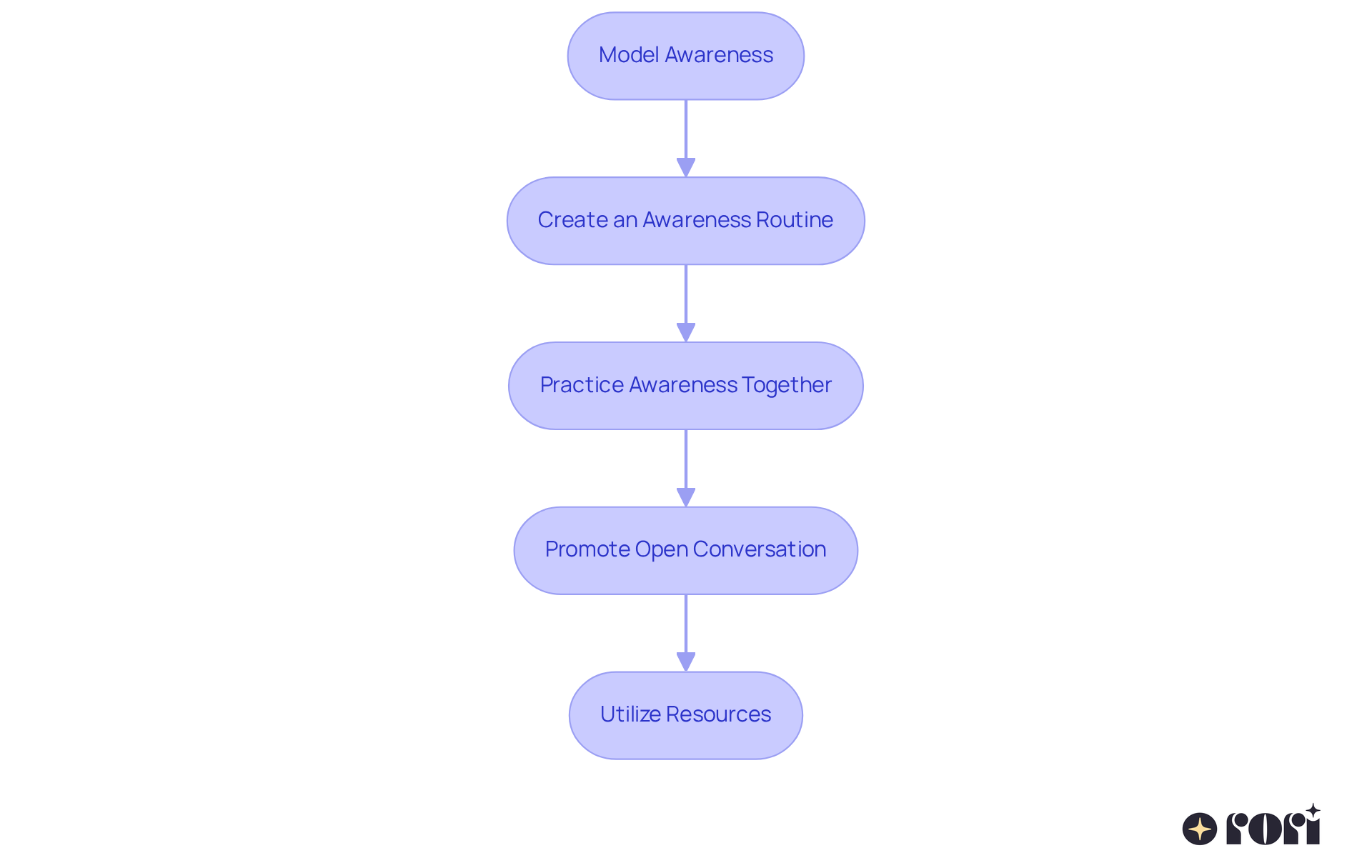
Model Awareness: Show your kids how you practice awareness in your daily life. Take a moment to breathe deeply or pause to appreciate your surroundings, and let them see you do it. It’s a great way to teach them how mindfulness can benefit children with autism by highlighting the importance of being present.
Create an Awareness Routine: Set aside a regular time for awareness activities. Whether it’s morning breathing exercises or evening body scans, having a routine helps everyone know what to expect and makes it easier to stick with it.
Practice Awareness Together: Join your kids in awareness exercises. Not only does this reinforce the practice, but it also strengthens your bond. Plus, it’s a fun way to connect and share experiences together!
Promote Open Conversation: Chat with your kids about awareness. Ask them how they feel before and after practicing these techniques. This fosters a deeper understanding of their experiences and encourages them to express their thoughts.
Utilize Resources: Don’t hesitate to use books, apps, or online materials focused on mindfulness for kids. These resources can offer extra guidance and inspiration for both you and your child, especially in learning how mindfulness can benefit children with autism. Let’s explore this together!
Mindfulness is such a powerful practice that can truly enhance the lives of children with autism and their families. By nurturing a sense of present-moment awareness, mindfulness gives kids essential tools for emotional regulation, focus, and better social interactions. And it doesn’t stop there - the benefits ripple out, positively impacting family dynamics and creating a warm environment for growth and independence.
In this article, we’ve explored various practical mindfulness techniques, like mindful breathing, body scans, and mindful walking. Each of these methods brings its own unique perks, such as easing anxiety, boosting self-awareness, and improving social skills. By weaving these practices into daily routines, caregivers can actively support their children’s mindfulness journey, reinforcing all the wonderful outcomes that come with these techniques.
Ultimately, embracing mindfulness isn’t just about personal growth; it’s a way to foster deeper connections within families and communities. The insights shared here highlight how important parental involvement is in this journey. We encourage caregivers to:
By taking these steps, families can cultivate a more peaceful, connected life while enjoying the many benefits that mindfulness offers for children with autism. Let’s explore this together!
What is mindfulness?
Mindfulness is the practice of being fully present and engaged in the moment without any judgment.
Why is mindfulness important for children with autism?
Mindfulness is important for children with autism as it helps with emotional regulation, boosts focus, and improves social interactions. It can significantly reduce anxiety and enhance overall well-being.
How does practicing mindfulness benefit children with autism?
Practicing mindfulness helps children with autism cultivate a sense of calm and awareness, allowing them to manage their emotions and sensory experiences more effectively, leading to better behavior and improved social skills.
What does research say about mindfulness programs for children with autism?
Research indicates that longer mindfulness programs offer more benefits, particularly in emotional and behavioral areas, enhancing psychological resilience and social responsiveness in youths with autism.
Do parents benefit from mindfulness practices as well?
Yes, parents who engage in mindfulness practices often find they can manage their feelings better and develop effective coping techniques, which positively impacts family interactions and caregiving.
How can mindfulness be incorporated into daily routines for children with autism?
Mindfulness can be incorporated into daily routines by providing children with valuable tools for self-soothing and emotional regulation, fostering their growth and independence.
What is the overall impact of mindfulness on family life?
Mindfulness can unlock a more peaceful and connected family life by enhancing emotional regulation and interactions among family members.