The journey to becoming a Board Certified Behavior Analyst (BCBA) is both challenging and rewarding, offering professionals the opportunity to make a profound impact on the lives of individuals with behavioral challenges, particularly those on the autism spectrum. As experts in Applied Behavior Analysis (ABA), BCBAs utilize data-driven strategies to craft personalized treatment plans that foster positive behavior change. This article delves into the essential components of the BCBA role, from understanding the intricacies of behavior analysis and ethical considerations to navigating educational pathways and certification processes.
By shedding light on these critical aspects, parents and aspiring BCBAs alike can gain valuable insights into how to effectively support and advocate for individuals with developmental disabilities, ensuring that they receive the best possible care and guidance.
A is a professional trained in behavioral analysis who addresses conduct challenges and promotes , especially in individuals with autism. One key concept in Applied Behavior Analysis (ABA) is , which can be instrumental in managing actions effectively.
BCBAs:
They also play a crucial role in:
This compliance involves:
These models help us analyze data while ensuring privacy. Comprehending the scope of a , including these ethical considerations and the significance of continuous professional development, is essential for aspiring practitioners to prepare for their responsibilities. By grasping the practical applications of response cost, parents can better appreciate how these strategies can support their children’s therapy.

Obtaining certification as a necessitates candidates to possess at least a master's degree in analysis, education, psychology, or a related field. A crucial element of this journey is completing a , which includes coursework in analysis principles, ethics, and research methodologies. Many universities now offer structured programs that fulfill these requirements, combining theoretical instruction with practical supervised fieldwork, as noted in an article published in Behav Anal Pract.
With over 300 available across the United States, educational pathways for BCBAs have evolved significantly, providing essential academic knowledge and preparing candidates for real-world application through comprehensive fieldwork experiences. As Mary Jane Weiss emphasizes, 'The purpose of this article is to describe a program for developing collaboration for preservice behavior analysts that has been utilized by Melmark for 2 years,' highlighting the significance of integrated educational approaches. This underscores the need for prospective BCBAs to diligently research accredited programs to ensure alignment with the , which have been updated to reflect current best practices in the field and offer robust preparation for certification.
Additionally, Rori Care provides guidance on , helping families cover up to 100% of . This financial support alleviates stress for parents, allowing them to focus on their child's developmental needs. The role of qualified supervision in enhancing the quality and ethics of ABA services is critical, ensuring practitioners receive necessary feedback and collaboration to promote effective therapy.
Furthermore, understanding the historical development of social validity in ABA is essential, as it emphasizes the necessity of subjective measurement in training programs. By choosing the right educational pathway and actively participating in their child's , parents can be well-equipped to meet the demands of their future roles as advocates and supporters for their children.

To seek certification as a , applicants must send an application via the Certification Board (BACB) site. This application requires:
It is essential to review the application requirements carefully to ensure that all documentation is accurate and complete, preventing any delays in processing.
For those aiming to become (RBTs), signing up for our extensive 40-hour online RBT course is an essential first step. This program offers practical lessons designed to prepare candidates for both the RBT Knowledge Test and the in-field competency test, which are key requirements for certification.
The program is led by experts such as Kristine, who possesses a Master of Science in Developmental Disabilities with a focus on , and Jesslyn, a Board Certified Behavior Analyst at the doctoral level. Their extensive knowledge and experience ensure that the training is grounded in best practices in the field, helping parents understand the importance of these certifications in providing effective support to individuals with developmental disabilities.

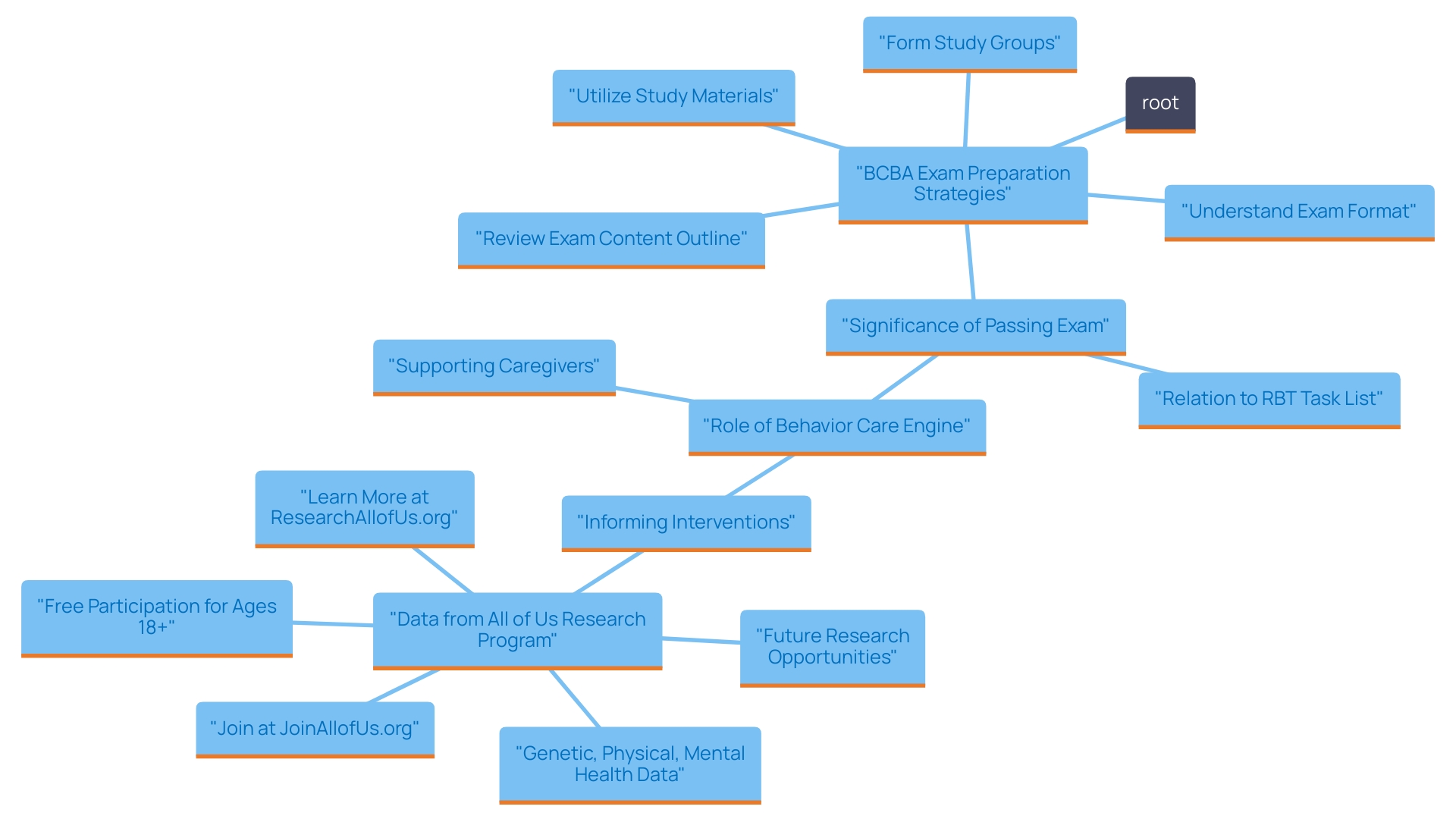
To effectively prepare for the , candidates should start by reviewing the exam content outline provided by the BACB. Utilizing , practice exams, and review courses can significantly enhance understanding of the material. Forming study groups with peers is also beneficial, as it encourages discussion and deeper learning. Additionally, candidates should familiarize themselves with the exam format and time constraints to improve their test-taking skills. Establishing a structured study schedule well in advance of the exam date will ensure thorough preparation and build confidence for exam day.
Passing the board exam is not only a requirement for certification but also assesses mastery of the RBT Task List, enabling candidates to serve effectively as .
In addition, our behavior care engine performs for target behaviors and skills, generating automatic progress reports for clinician review. This process empowers caregivers with the knowledge and skills necessary to support their child's . By emphasizing , strategy alignment, and data collection, caregivers can create a consistent and supportive environment, maximizing the impact of the intervention.
The journey to becoming a Board Certified Behavior Analyst (BCBA) is marked by a deep commitment to understanding and applying the principles of Applied Behavior Analysis (ABA). Aspiring BCBAs must navigate a comprehensive educational pathway, which includes obtaining a relevant master’s degree and completing a Verified Course Sequence, ensuring they are well-equipped with the necessary knowledge and practical experience. This rigorous preparation is crucial, as BCBAs play a pivotal role in supporting individuals with behavioral challenges, particularly those on the autism spectrum, through data-driven interventions and ethical practices.
Furthermore, the certification process demands meticulous attention to detail in the application and examination phases, underscoring the importance of thorough preparation and understanding of the BCBA's responsibilities. By engaging in structured training programs and forming collaborative support networks, candidates can enhance their readiness and confidence.
Ultimately, the impact of BCBAs extends far beyond certification; their expertise not only empowers families but also fosters positive behavior change in individuals with developmental disabilities. By advocating for high standards in education and practice, both aspiring BCBAs and parents can ensure that the individuals they support receive the highest level of care. The journey may be challenging, but the rewards of making a meaningful difference in the lives of others are immeasurable.
What is a Board Certified Behavior Analyst (BCBA)?
A BCBA is a professional trained in behavioral analysis who addresses conduct challenges and promotes positive change, particularly in individuals with autism.
What are the main responsibilities of a BCBA?
BCBAs assess behaviors, develop tailored treatment plans, implement data-driven interventions, train and supervise other professionals and caregivers, and ensure compliance with ethical standards, including HIPAA.
What is response cost in Applied Behavior Analysis (ABA)?
Response cost is a key concept in ABA that can be instrumental in managing behaviors effectively.
What are the educational requirements to become a BCBA?
Candidates must possess at least a master's degree in analysis, education, psychology, or a related field, and complete a Verified Course Sequence (VCS) that includes coursework in analysis principles, ethics, and research methodologies.
How many accredited programs are available for BCBAs in the United States?
There are over 300 accredited programs available across the United States for individuals pursuing BCBA certification.
What is the significance of the Verified Course Sequence (VCS)?
The VCS ensures that educational programs align with current best practices in the field and adequately prepare candidates for certification.
How can families cover the costs of ABA therapy?
Organizations like Rori Care provide guidance on insurance-covered payment options, which can help families cover up to 100% of ABA therapy costs.
What is required for certification as a BCBA?
Applicants must submit an application via the Certification Board (BACB) site, providing proof of education, fieldwork experience, passing the BCBA exam, and details of supervised experience, including at least 2,000 hours of direct service under a qualified BCBA.
What is the first step to becoming a Registered Behavior Technician (RBT)?
The first step is to sign up for a 40-hour online RBT course designed to prepare candidates for the RBT Knowledge Test and the in-field competency test.
How should candidates prepare for the BCBA certification examination?
Candidates should review the exam content outline, utilize study guides and practice exams, form study groups, familiarize themselves with the exam format, and establish a structured study schedule in advance of the exam date.