How to Incorporate Mindfulness in Autism Care: 4 Essential Steps

Discover essential steps for incorporating mindfulness into autism care for improved well-being.

Introduction

Mindfulness has become a wonderful approach in autism care, bringing some real benefits for emotional regulation and social interactions. By nurturing self-awareness and easing anxiety, mindfulness practices can truly enhance the quality of life for individuals on the spectrum. But let’s be honest - implementing these techniques can be a bit tricky for caregivers.

So, how can you weave mindfulness into daily routines while tackling those challenges? This guide is here to explore essential steps to seamlessly integrate mindfulness into autism care. Together, we can empower both children and their caregivers on this journey of growth and connection. Let’s explore this together!

Define Mindfulness and Its Importance in Autism Care

Mindfulness is all about being fully present and engaged in the moment, right? It’s about observing your thoughts and feelings without judgment. For kids with autism, this awareness can really make a difference. It can enhance self-regulation, reduce anxiety, and improve social interactions.

Studies show that mindfulness practices help young individuals identify their feelings and sensory experiences. This can lead to better coping strategies during tough times. Caregivers can improve the individual’s quality of life by understanding how to incorporate mindfulness in autism care, which helps create a supportive environment that boosts self-awareness and emotional resilience.

And here’s something exciting: Rori Care offers social skills group therapy led by trained therapists! This program enhances social interactions and communication in a group setting. It’s not just about building relationships; it also empowers caregivers with ABA principles and strategies to support their children’s behavioral goals through active involvement and data collection.

Rori Care’s clinical leadership team is dedicated to neurodiversity and the success of youth. They ensure that caregivers are well-prepared to apply these strategies effectively. So, let’s explore this together! We’re here to help you every step of the way!

Implement Mindfulness Techniques in Daily Routines

Learning how to incorporate mindfulness in autism care can be a game-changer when integrating it into daily routines for children. Here are some friendly techniques to consider:

  1. Mindful Breathing: Encourage your little one to take deep breaths, focusing on how the air feels as it enters and leaves their body. This can be especially helpful during transitions or stressful moments, easing anxiety and boosting emotional regulation. Research shows that mindfulness-based interventions (MBIs) can enhance social responsiveness in kids with autism spectrum disorder (ASD), providing insights on how to incorporate mindfulness in autism care and highlighting the importance of these practices.

  2. Conscious Eating: Make mealtime a mindful experience! Invite your child to savor each bite, paying attention to the flavors and textures of their food. This not only promotes awareness but also helps them appreciate their meals more, contributing to their overall well-being.

  3. Mindful Movement: Activities like yoga or tai chi are fantastic ways to blend physical movement with mindfulness. These practices help kids connect with their bodies, improve focus, and foster a sense of calm. Plus, engaging in mindful movement can ease parental anxiety, which is linked to better academic performance in kids with ADHD. It’s a win-win for the whole family!

  4. Nature Walks: Taking walks in nature is a wonderful opportunity for kids to observe their surroundings mindfully. Encourage them to notice the colors, sounds, and smells around them. This practice deepens their connection with the environment and enhances sensory awareness. It can also help reduce stress and strengthen emotional bonds between parents and children, as studies on MBIs suggest.

  5. Mindful Play: Bring awareness into playtime by using sensory toys or activities that require focus, like building blocks or puzzles. This not only boosts concentration but also helps reduce anxiety, making playtime more enjoyable. A meta-analysis on MBIs found that these interventions significantly lowered parental stress and improved awareness, demonstrating how to incorporate mindfulness in autism care through play to benefit both kids and their caregivers.

Let’s explore this together! Remember, you’re not alone on this journey.
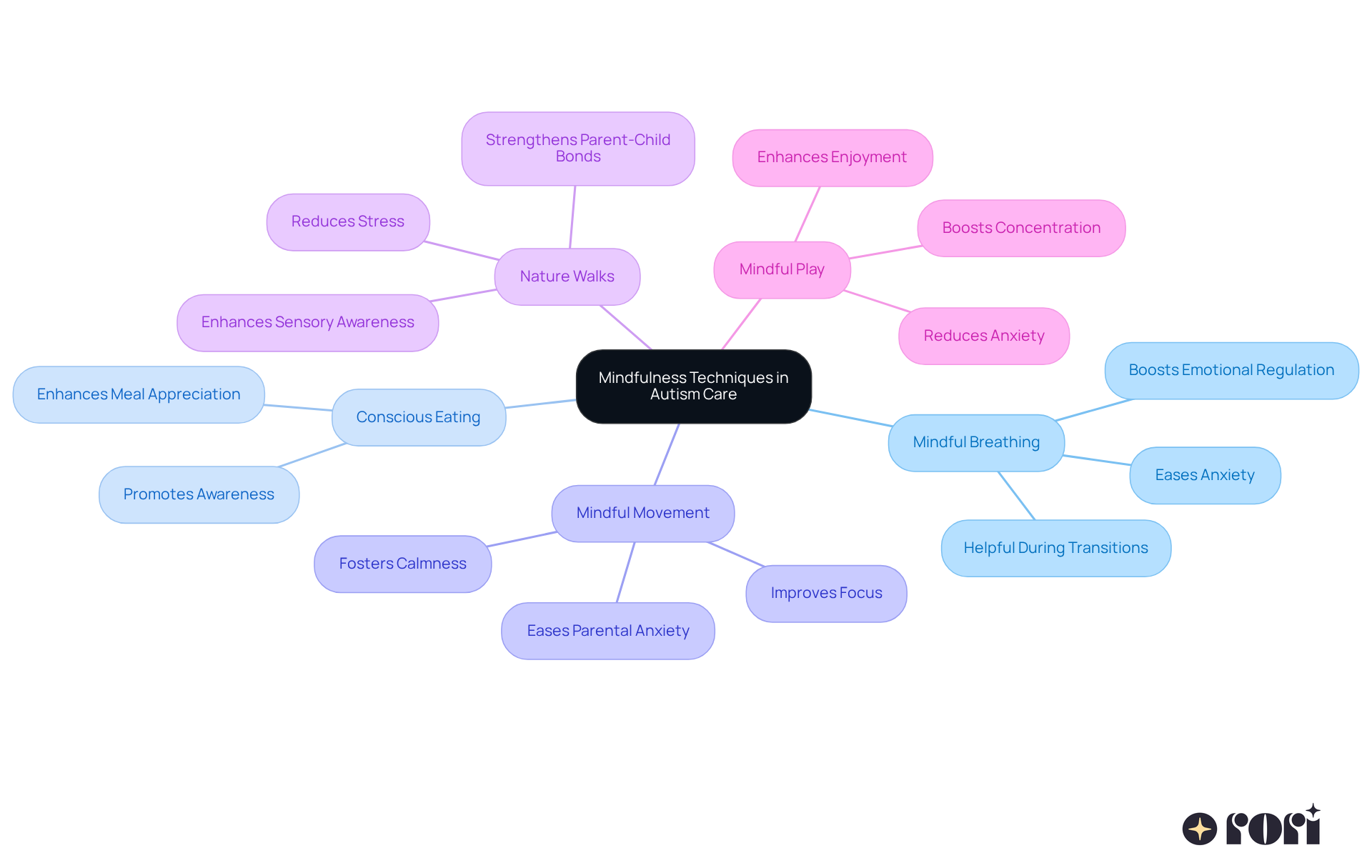
The central node represents the main theme of mindfulness in autism care, while each branch shows a specific technique. Follow the branches to see how each technique can help children and their families.

Overcome Challenges in Mindfulness Implementation

Adopting techniques on how to incorporate mindfulness in autism care can be a bit tricky, can’t it? Let’s take a look at some common hurdles parents might face and explore effective strategies to overcome them together:

  1. Attention difficulties highlight the importance of understanding how to incorporate mindfulness in autism care, as many children with autism struggle to maintain focus during mindfulness exercises. To help, start with short sessions lasting just 2-5 minutes. As their attention span improves, you can gradually extend the duration. This step-by-step approach not only builds a sense of achievement but also encourages longer engagement, which aligns beautifully with ABA principles that focus on gradual skill development.

  2. Sensory sensitivities: Mindfulness techniques can sometimes feel overwhelming for kids due to sensory sensitivities. To make it easier, try creating calming environments. Think quiet spaces and soothing elements like weighted blankets during relaxation activities. Tailoring the sensory experience can really enhance comfort and engagement, helping caregivers create a consistent and supportive atmosphere.

  3. Resistance to new activities: It’s not uncommon for children to resist new awareness practices at first. To ease this transition, introduce techniques gradually and weave in how to incorporate mindfulness in autism care into familiar routines. Using visual aids or social stories can help explain what to expect, making the experience feel more relatable and less intimidating. This approach empowers caregivers to actively engage in their child’s development, reinforcing those important behavioral goals.

  4. Inconsistent practice: Consistency is key for awareness to be effective. Consider creating a timetable that includes awareness activities at specific times each day, blending them into your child’s daily routine. Visual schedules or reminders can really help strengthen this habit, assisting children in understanding the importance of consistent repetition. By actively participating in this process, caregivers can boost the effectiveness of awareness interventions. Plus, it might be helpful to think about tracking progress through data collection techniques to evaluate how well these awareness strategies are working.

Let’s explore this together! Remember, you’re not alone in this journey, and we’re here to help you every step of the way!

Each box represents a challenge parents might face, and the arrows lead to strategies that can help overcome those challenges. Follow the flow to see how to tackle each hurdle step by step!

Evaluate and Adjust Mindfulness Practices for Effectiveness

To make sure awareness techniques really work, it’s super important to regularly check in on how they’re affecting your child’s behavior and feelings. Here are some friendly steps to help you along the way:

  1. Set Clear Goals: Start by defining what you want to achieve with these awareness practices. Maybe it’s about helping your child manage their feelings better or easing their anxiety. Having clear goals makes it easier to see how things are going.

  2. Keep Track of Progress: Consider keeping a journal or log to jot down your child’s reactions to the awareness activities. Note any changes in their behavior, emotional responses, or how they interact with others. These little insights can be really valuable!

  3. Ask for Their Thoughts: Get your child involved in conversations about their experiences with awareness techniques. Ask them what they enjoy or find challenging. Their feedback can guide you in making helpful adjustments.

  4. Make Adjustments: Based on what you observe and what your child shares, feel free to tweak the awareness exercises. This might mean changing how long you do them, trying different activities, or even switching up the environment to better fit your child’s needs.

  5. Celebrate the Wins: Don’t forget to recognize and celebrate any improvements, no matter how small! This positive reinforcement can really motivate your child to stay engaged with mindfulness practices, which is an example of how to incorporate mindfulness in autism care, creating a nurturing space for their growth.

Let’s explore this together! Your journey in supporting your child’s emotional development is so important, and we’re here to help you every step of the way!

Each box represents a step in the process of enhancing mindfulness practices for your child. Follow the arrows to see how each step leads to the next, helping you support your child's emotional development.

Conclusion

Incorporating mindfulness into autism care offers a wonderful way to enhance emotional regulation, ease anxiety, and improve social interactions for children with autism. By embracing mindfulness, caregivers can create a nurturing space that fosters self-awareness and emotional resilience, ultimately boosting the quality of life for these amazing kids.

Throughout this guide, we’ve highlighted essential techniques like:

  1. Mindful breathing
  2. Conscious eating
  3. Mindful movement
  4. Nature walks
  5. Mindful play

These tools can easily fit into daily routines. Plus, it’s important to tackle common challenges such as attention difficulties, sensory sensitivities, and resistance to new activities. By setting clear goals, tracking progress, and adjusting practices based on feedback, caregivers can make sure that mindfulness techniques are effective and tailored to their child's unique needs.

The journey of incorporating mindfulness in autism care isn’t just about individual practices; it’s about creating a holistic approach that benefits both children and caregivers. Embracing these techniques can lead to significant improvements in emotional development and overall well-being. As caregivers actively engage in this process, they not only support their child's growth but also deepen their connection, enhancing family dynamics.

So, let’s take action together! Explore these mindfulness practices and see the positive impact they can have on your child's life. We’re here to help you every step of the way!

Frequently Asked Questions

What is mindfulness?

Mindfulness is the practice of being fully present and engaged in the moment, observing thoughts and feelings without judgment.

Why is mindfulness important in autism care?

Mindfulness can enhance self-regulation, reduce anxiety, and improve social interactions for kids with autism, leading to better coping strategies and an overall improved quality of life.

How can mindfulness practices benefit children with autism?

Mindfulness practices help young individuals identify their feelings and sensory experiences, which can lead to better coping strategies during challenging times.

What role do caregivers play in incorporating mindfulness in autism care?

Caregivers can improve the individual’s quality of life by understanding and applying mindfulness techniques, creating a supportive environment that boosts self-awareness and emotional resilience.

What services does Rori Care offer related to autism care?

Rori Care offers social skills group therapy led by trained therapists, which enhances social interactions and communication in a group setting.

How does Rori Care empower caregivers?

Rori Care empowers caregivers by providing them with ABA principles and strategies to support their children’s behavioral goals through active involvement and data collection.

What is the focus of Rori Care’s clinical leadership team?

Rori Care’s clinical leadership team is dedicated to neurodiversity and the success of youth, ensuring that caregivers are well-prepared to apply strategies effectively.