Mastering the art of intraverbals, or responding to verbal prompts with meaningful communication, is more than mere repetition; it's about grasping the context and conveying pertinent information. This ability reflects a deeper cognitive process akin to 'inner speech', a multi-functional cognitive tool integral to working memory models, cognitive development, and speech production. Recent studies have highlighted the transformative potential of communication tools for individuals with autism, emphasizing the importance of developing robust intraverbal abilities.
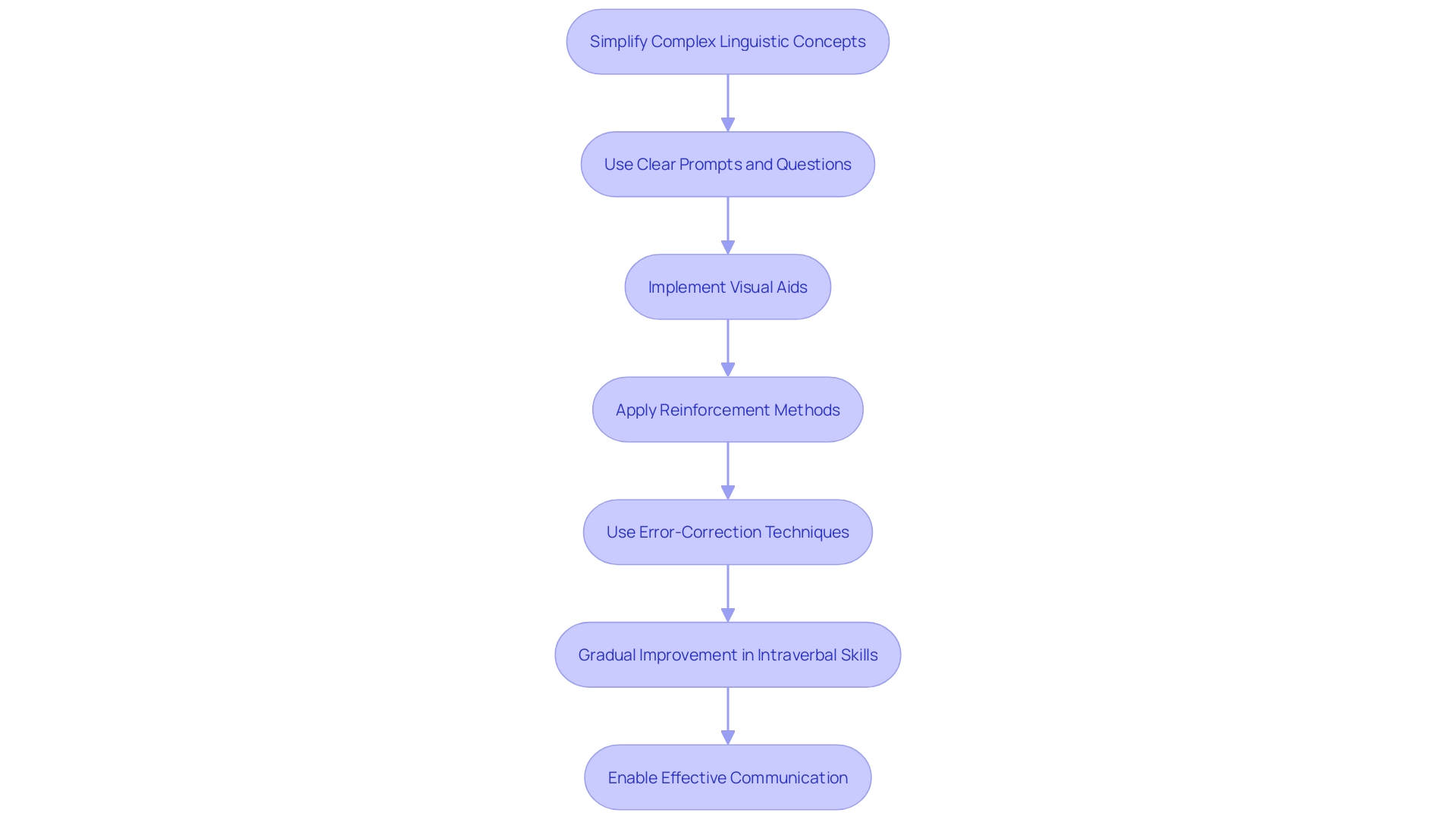
Enhancing the ability to communicate via intraverbals is a critical skill for navigating social interactions, particularly for individuals with autism. Proficiency in intraverbal communication not only fosters the capacity to participate meaningfully in conversations but also empowers individuals to react suitably across diverse settings, bolstering their self-reliance and overall communicative competence. Strategies for teaching intraverbal skills include simplifying complex linguistic concepts, employing clear prompts and visual aids, and implementing reinforcement and error-correction techniques.
To promote generalization of intraverbal skills, it is important to integrate practice into daily interactions, encourage dialogues with a wide range of individuals, provide opportunities in multiple environments, and use realistic scenarios for role-playing. Assessing intraverbal skills is crucial for tracking progress and developing targeted support strategies. By consistently evaluating these skills, we can gather insights that lead to more effective interventions and support the diverse communication styles within the autism community.
Mastering the art of intraverbals, or responding to verbal prompts with meaningful communication, is more than mere repetition; it's about grasping the context and conveying pertinent information. Consider the scenario where a child with autism is asked about their favorite color. With effective , the child can confidently name their preferred hue, showcasing an understanding that goes beyond parroting words. This ability reflects a deeper cognitive process akin to '' (IS), a multi-functional cognitive tool integral to working memory models, cognitive development, and speech production. IS isn't just about rehearsing information; it's also about organizing thoughts, enhancing memory, and labeling stimuli abstractly. In recent studies, it's been noted that are often mutual; typical individuals may find it just as challenging to understand those with autism. This two-way difficulty suggests a broader issue in social communication dynamics, underscoring the importance of developing robust intraverbal abilities.
Recent technological advancements have further highlighted the transformative potential of . One father's experience with his non-speaking son, who began using an electronic tablet to communicate, illustrates the profound impact such tools can have. This innovation led to a campaign for accessible communication aids, emphasizing that a modest investment can significantly unlock the of children with autism. Moreover, research spearheaded by Professor Vikram Jaswal from the University of Virginia reveals that nonspeaking autistic individuals engage with written language similarly to their literate non-autistic counterparts. Through a , where participants tapped on letters forming meaningful sentences, it was observed that literate individuals could anticipate the next letter in a sequence, indicating a predictive element in language processing.
These insights are crucial when considering interventions for autistic individuals, as they shed light on the potential benefits and limitations of existing approaches. A critical examination of identifies prevalent design flaws, making it challenging to assess their effectiveness and risk. This calls for a more nuanced understanding of intervention research to ensure it respects and acknowledges the experiences of those with autism. By focusing on enhancing and embracing innovative communication methods, we can foster more inclusive and effective strategies for supporting the development of meaningful language abilities in children with autism.
Enhancing the ability to communicate via intraverbals is a critical skill for navigating social interactions, particularly for individuals with autism. Intraverbals are a component of language where responses are given without the need for a visual cue, such as engaging in a dialogue, replying to inquiries, or expressing one's own ideas and choices. Proficiency in not only fosters the capacity to participate meaningfully in conversations but also empowers individuals to react suitably across diverse settings, bolstering their .
contribute to the nuanced coordination of speech production, which involves the intricate interplay of the vocal tract, articulators, and respiratory system. This coordination is essential for articulating both . Research has shown the cognitive underpinnings of literacy and language processing in , demonstrating their ability to anticipate linguistic patterns and engage with language in meaningful ways. A study by Vikram Jaswal and his colleagues at the University of Virginia utilized a Whac-a-Mole-like method to assess the prediction of letter sequences in spoken sentences, highlighting the potential for language comprehension even in the absence of spoken output.
Real-world cases further underscore the importance of recognizing communication capabilities in . A poignant example is the story of a non-speaking autistic teenager who, through the use of an alphabet toy, conveyed his urgent need for help, revealing his ability to understand and communicate despite his lack of speech.
, such as electronic tablets and , have provided alternative means for facilitating communication. The experience of Josh Harris, who used pictures on a tablet to communicate, exemplifies the transformative power of these tools. His father's advocacy efforts have led to the implementation of , which have been life-altering for many non-speaking individuals.
By understanding and nurturing , and leveraging technology when necessary, we can open new avenues for those with autism to express themselves and interact with the world around them, thereby enhancing their autonomy and enriching their social experiences.
When teaching , a is key to fostering a solid foundation in . Utilize these strategies to enhance learning outcomes:
Incorporating these methods can lead to a gradual yet significant improvement in intraverbal skills, enabling individuals to communicate more effectively and with greater ease.
Enhancing , which are conversational abilities that go beyond simple responses to questions or comments, is vital for across diverse scenarios. To foster the generalization of these skills, which is the ability to apply them across various contexts and with different people, consider the following approaches:
Applying these strategies can significantly improve the ability to transfer intraverbal skills to real-life situations, ensuring individuals can navigate and communicate within the complexities of their social world.
To effectively track and enhance communication skills in individuals with autism, it is crucial to assess their —a key aspect of language where responses are given without the need for a visual stimulus. Methods for include:
By consistently evaluating these skills, we can gather insights that lead to more targeted and . Research underscores the importance of such evaluations, revealing that many intervention studies often lack the rigorous design necessary to fully grasp their impact. The recent study by Professor Vikram Jaswal at the University of Virginia exemplifies innovative methods to understand in non-speaking autistic individuals, using technology to capture responses in ways traditional assessments might overlook. This kind of forward-thinking research paves the way for more nuanced assessments that respect the diversity of communication styles in the autism community.

Enhancing intraverbal skills is crucial for individuals with autism to navigate social interactions effectively. Strategies for teaching intraverbal skills include simplifying concepts, using clear prompts and visual aids, and implementing reinforcement and error-correction techniques.
Developing robust intraverbal abilities fosters self-reliance and overall communicative competence. Promoting generalization involves integrating practice into daily interactions, encouraging dialogues with a wide range of individuals, providing opportunities in multiple environments, and using realistic scenarios for role-playing.
Assessing intraverbal skills is crucial for tracking progress and developing targeted support strategies. By consistently evaluating these skills, insights can be gathered to improve interventions and support the diverse communication styles within the autism community.
In conclusion, enhancing intraverbal skills empowers individuals with autism to communicate effectively. By utilizing strategies for teaching and promoting generalization, and by conducting comprehensive assessments, we can support the development of meaningful language abilities in children with autism.
What are intraverbals?
Intraverbals are a form of verbal communication where responses are given to verbal prompts without requiring a visual cue. This includes engaging in a dialogue, answering questions, or expressing thoughts and choices.
Why are intraverbals important for individuals with autism?
Intraverbals are crucial as they enable individuals with autism to participate meaningfully in conversations, respond appropriately in various settings, and increase their independence and communicative competence.
How do intraverbals relate to 'inner speech' in cognitive processes?
Inner speech (IS) is a cognitive tool related to working memory, cognitive development, and speech production. It involves rehearsing information, organizing thoughts, enhancing memory, and abstractly labeling stimuli. Intraverbals reflect a deeper cognitive process similar to IS.
What challenges exist in communication between individuals with autism and typical individuals?
Studies have noted that communication difficulties are often mutual, with both individuals with autism and typical individuals finding it challenging to understand each other. This highlights broader issues in social communication dynamics.
How can technology assist non-speaking individuals with autism?
Technological advancements like electronic tablets and picture boards have provided alternative means of communication. They have shown significant potential in helping non-speaking individuals with autism to express themselves and interact with the world.
Who is Professor Vikram Jaswal, and what is his contribution to understanding autism?
Professor Vikram Jaswal from the University of Virginia has conducted research revealing that nonspeaking autistic individuals engage with written language in ways similar to literate non-autistic individuals, demonstrating their potential for language comprehension.
What strategies are recommended for teaching intraverbal skills?
Effective strategies include simplifying complex concepts, using clear prompts, employing visual aids, applying reinforcement and error-correction techniques, and ensuring a structured approach to teaching language and comprehension.
How can intraverbal skills be generalized across different settings?
To generalize intraverbal skills, it is recommended to practice them in daily interactions, engage in dialogues with diverse individuals, practice in multiple environments, and use realistic scenarios and role-playing.
What methods are used to assess intraverbal skills?
Assessing intraverbal skills involves observing responses to spoken prompts, using specialized assessment tools, evaluating the complexity and precision of responses, and documenting the regularity and fluidity of conversational exchanges.
Why is it important to assess intraverbal skills in individuals with autism?
Consistent evaluation of intraverbal skills helps in gathering insights that can lead to more targeted and effective support strategies. It also helps in understanding the individual's language proficiency and comfort with intraverbal communication.