Naturalistic teaching strategies have gained recognition as a powerful tool for children, especially those with autism, to absorb knowledge effectively. By intertwining education with day-to-day experiences, these strategies create an organic and instinctive learning environment. Inclusive and equitable, naturalistic teaching celebrates the strengths of children with disabilities while addressing their unique needs.
This article explores the benefits, key principles, implementation, and challenges of naturalistic teaching, offering insights and guidance to parents and educators. By embracing these strategies, we can empower children and create a more just and understanding society.
are more than just educational techniques; they are a reflection of a deeply rooted belief that children, especially those with autism, absorb knowledge most effectively when it is intertwined with their day-to-day experiences. By harnessing the power of play and child-led interactions, these strategies nurture learning in a way that feels instinctive and organic to the child. As the world acknowledges the importance of , it becomes clear that such inclusive approaches are crucial.
They not only address the unique needs of children with disabilities but also celebrate the strengths they bring to their communities. This method, which aims to create a level playing field, echoes Dr. David (Dan) R. Offord's vision of fairness in the developmental 'race' for children.
In practice, naturalistic teaching can where every object and action becomes a potential lesson, tailored to the child's interests and capabilities. For instance, a simple story about 'The Selfish Giant' can evolve into a full-fledged project where children design a memorial garden, learning through role-play and collaboration. This immersive experience is particularly beneficial for , who may struggle with traditional teaching methods.
By integrating naturalistic teaching strategies, educators can among all students, including those with additional challenges like emotional and behavioral problems.
Recent shifts in autism research methodologies, favoring randomized-controlled trials over quasi-experimental studies, underscore the need for reliable evidence supporting the effectiveness of interventions like naturalistic teaching. This continual refinement of research practices is vital in ensuring that children and their caregivers receive the best possible support, tailored to their specific situations.
Naturalistic teaching strategies not only align with the latest research but also reinforce the core principles outlined by experts in early childhood education. They emphasize the multifaceted benefits of connecting children with nature, advocating for outdoor learning as a means to promote physical health, mental well-being, and cognitive development. Annina Kuusisto, a professor in early childhood education, highlights the resulting environmental stewardship, as children who engage with nature are more likely to adopt eco-friendly behaviors.
In summary, naturalistic teaching strategies are a testament to the power of , particularly those with autism. They offer a pathway to that prioritizes mental health, equity, and respect for nature, setting the stage for a more just and understanding society.
are a beacon of hope for children with autism, facilitating the development of crucial abilities in communication, , and problem-solving. Embedding these teaching methods into daily activities allows children to apply their skills across diverse environments, thus promoting greater independence and flexibility. These strategies are particularly effective as they tap into the child's unique interests and choices, fostering a strong sense of motivation and active participation in their own learning journey.
Dr. David (Dan) R. Offord once stated, "I do not mind if my children are in a race as long as the race is fair." This sentiment underscores the importance of for children with disabilities, including those with autism, to engage meaningfully in all life domains—school, home, and leisure. align with this vision by addressing the unmet needs of and recognizing the value they add to their communities.
are continually evolving, with a shift from quasi-experimental studies to randomized-controlled trials. This rigorous research approach has highlighted the efficacy of various interventions, including naturalistic teaching strategies. However, the field faces a "fractured landscape" with differing opinions on the best support for children with autism and their caregivers.
One poignant case involved a six-year-old autistic child who initially seemed detached from a classroom activity inspired by Oscar Wilde's 'The Selfish Giant.' Yet, when the activity was tailored to reflect a more naturalistic approach, the child began to engage, illustrating the power of strategies that integrate learning into meaningful experiences.
The significance of these strategies cannot be overstated, as they directly contribute to the well-being of autistic children, reducing stress and supporting their growth in familiar settings. The ultimate goal is to ensure that every child can participate in the race of life on fair and equal terms, fostering mental health and social equity.
Harnessing involves a nuanced approach to education, particularly for children with autism. These strategies are immersed in the child's daily life and revolve around their interests, creating an engaging and supportive learning environment. Key to this approach is the educator's ability to follow the child's lead, interspersing appropriate prompts and cues to guide learning.
Reinforcement strategies play a pivotal role in encouraging and skill acquisition, while are seamlessly embedded into everyday activities, ensuring consistent and relevant educational experiences.
The value of such is underscored by the insights of Dr. David (Dan) R. Offord, who emphasized the importance of fair and and well-being of all children, including those with disabilities. This philosophy aligns with , which advocates for interventions that are not only but also personalized and integrated into the child's routine, fostering meaningful participation in various life domains.
Current trends in autism research prioritize randomized controlled trials over quasi-experimental studies, aiming to provide a robust basis for interventions like naturalistic teaching. These adaptive strategies are essential in a landscape of diverse educational approaches, where the goal remains to support the unique development of each child with ASD, enhancing their social, communicative, and behavioral competencies in a manner that resonates with their individual learning style.

To nurture consistent development and skill application across various settings, educators are embracing . These strategies are particularly impactful for young learners, including those with . One in every 100 American students in public schools is on the autism spectrum, highlighting the need for .
Through activities that integrate learners' interests, naturalistic teaching fosters spontaneous interactions and meaningful experiences.
Educators focus on creating that cater to the diverse needs of students. This includes leveraging assistive tools and adapting teaching methods to ensure equitable access to education. The emphasis is on cultural and social aspects of learning, moving beyond traditional rote instruction, which fails to meet the foundational literacy and numeracy needs of many students, as evidenced by the shocking statistic that 90% of 10-year-olds in developing countries cannot read a simple story.
Furthermore, incorporating from preschool through grade five opens a world of possibilities. These approaches allow even very young children to engage with complex subjects in ways that are culturally and socially relevant. The aim is to equip educators at the preschool and elementary levels with new strategies, regardless of their experience.
Current research and applications of Large Language Models in education offer promising support for educators, particularly in remote areas lacking access to pedagogical resources. This technological integration is an asset to educators, enabling them to deliver to all children, including the twice-exceptional and those facing emotional and behavioral challenges.
Finally, it is imperative to provide a fair and supported educational race for every child, as emphasized by the late Dr. David (Dan) R. Offord. This means acknowledging the unique contributions and needs of children with disabilities, reducing stressors, and ensuring that caregivers have the necessary resources to foster a nurturing and equitable learning environment.

Educators have long recognized the importance of adapting teaching methods to the needs of students with . , which focus on integrating educational opportunities into a child's natural environment, have shown promise in promoting .
These strategies are not just for seasoned educators; they are accessible to teachers at all levels, including those at preschool and elementary stages. The curriculum is flexible, designed to weave principles of equity and social justice into lessons, thereby fostering an for all learners. Even the youngest children can benefit from this approach to science and engineering education, which emphasizes that learning is a dynamic process shaped by culture and society.
When it comes to implementing these strategies, it is crucial to have a deep understanding of both . Research has shown that these components are and performance, particularly in mathematics. By focusing on the and practical problem-solving skills within the curriculum, educators can significantly improve their students' understanding and achievements.
Recent shifts in autism research methodology, such as the move from quasi-experimental studies to randomized controlled trials, highlight the importance of rigorous and reliable evidence in selecting effective interventions. This attention to research quality is a reminder of the ongoing need to evaluate and refine teaching practices based on the most current data, ensuring that interventions are truly beneficial for students with ASD.
By incorporating these naturalistic teaching strategies, educators are equipped to deliver more impactful instruction, setting the stage for students with ASD to thrive academically and socially. The ultimate goal is to inspire educators to adopt these innovative approaches, regardless of their experience level, to enrich the learning experiences of all students.
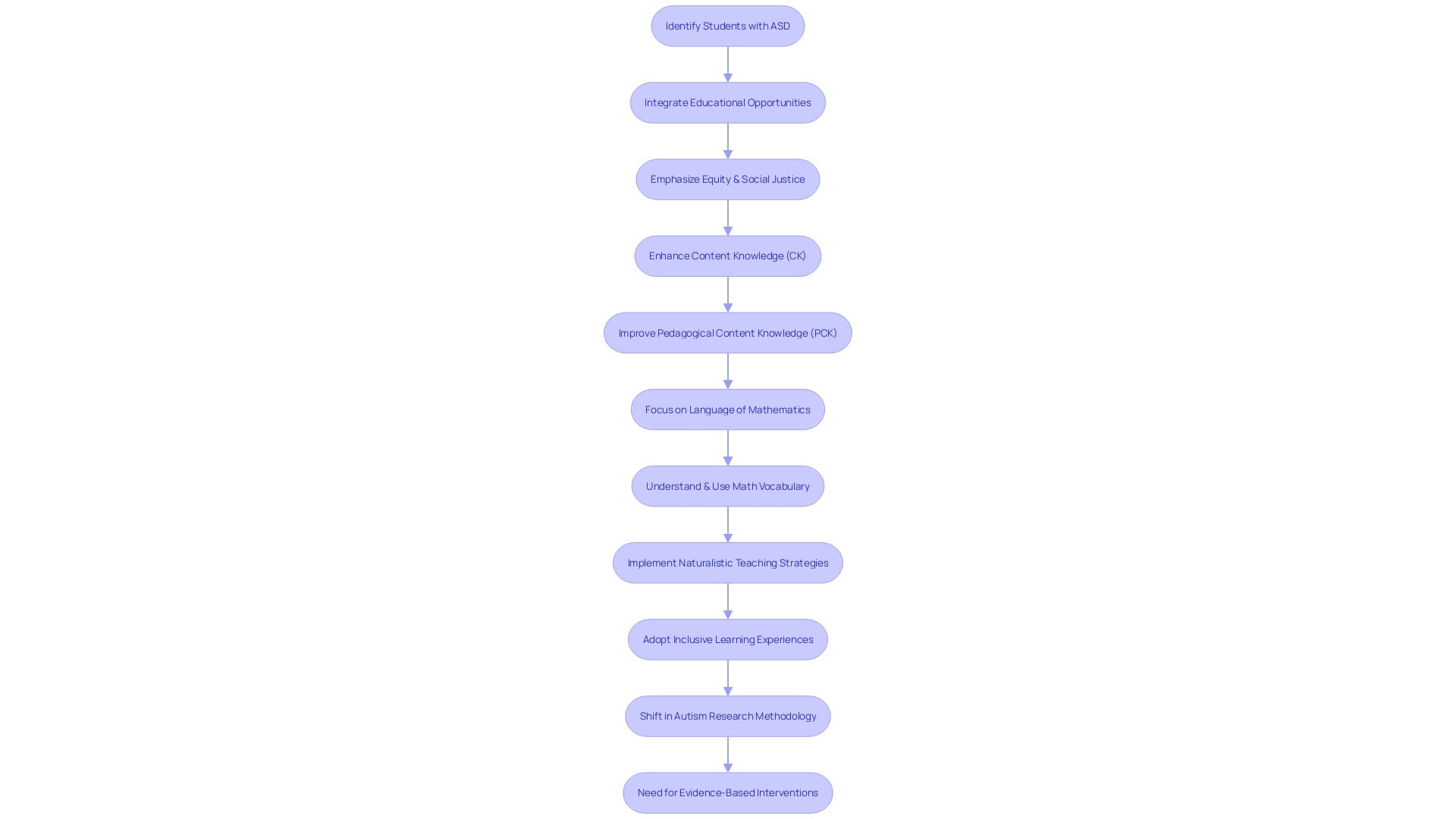
Navigating the application of can be intricate, especially as educators aim to inspire learners from preschool through elementary levels with the latest approaches in science and engineering education. Practitioners often encounter resistance or distractions that may hinder the learning process. However, educators can harness the dynamic nature of learning—a cultural and social process that extends beyond traditional classroom settings.
By integrating principles of equity and fostering a caring community, educators can tailor instruction to the diverse proficiencies of all children.
Research indicates that even very young children are capable of absorbing complex subjects like science and engineering when taught in an engaging, contextually rich environment. To enhance the effectiveness of naturalistic teaching, educators are encouraged to prime students' brains for learning by using , thereby fostering a deeper understanding as the material is formally introduced.
Moreover, child psychologists affirm the in , enhancing social, physical, and emotional skills. Despite concerns about diminishing playtime, recent surveys reveal that parents do recognize the importance of play for their children's well-being. This acknowledgment serves as a foundation for educators to build upon, ensuring that naturalistic teaching strategies incorporate play and exploration.
Furthermore, the suggests that incorporating 'desirable difficulties' such as retrieval practice and varied problem-solving can make classroom tasks more effective. These strategies mirror real-life situations, enabling better retention and application of information and skills.
As the landscape of literacy instruction evolves, with many states adopting curricula based on the science of reading, educators are reminded that of math or literacy at home; instead, they should support what their children are learning at school. This partnership between educators and parents is fundamental in navigating the challenges presented during the implementation of naturalistic teaching strategies.
Through qualitative and quantitative analysis and forming professional networks, educators can further refine their teaching methods. However, it's essential to critically evaluate intervention research to ascertain its effectiveness and respect for learners, particularly in the context of . Parents and educators alike can benefit from understanding these research nuances to enhance their naturalistic teaching practices.
Exploring the impact of through real-life examples offers a compelling narrative of their . The testimony of Dr. David (Dan) R. Offord, a renowned child psychiatrist, reflects the importance of fair and supportive environments for the growth and mental health of children with disabilities. In the spirit of creating equitable opportunities, these strategies have shown remarkable results, particularly for autistic children facing additional .
One poignant case involved a six-year-old boy with autism who struggled to engage with his classmates during a school project. The class, adopting roles as landscape gardeners, created a memorial garden based on the story 'The Selfish Giant.' While initially on the sidelines, the boy's eventual participation illustrated the .
This approach aligns with principles of , which emphasizes breaking down learning into manageable steps, frequent questioning, and immediate feedback. Studies affirming such strategies, including Dr. Offord's insights, stress the necessity of recognizing children's needs and the strengths they bring to their communities.
The shift from quasi-experimental studies to randomized controlled trials in autism research further underscores the commitment to . Clinicians and researchers strive for the most reliable data to support the well-being of children with autism and their caregivers. This evolving landscape of study approaches ensures that interventions continue to be refined and validated, contributing to the broader goal of making 'the race fair' for every child.
through naturalistic teaching strategies is a multi-faceted approach that encompasses , , peer interaction, and . Incorporating visual supports can clarify concepts for children, especially in complex subjects like science and engineering, by providing a concrete representation of abstract ideas. are instrumental in creating interactive and engaging learning experiences that can captivate young minds and cater to various learning styles.
are a vital component of learning, as they foster a dynamic cultural and social exchange, enhancing children's understanding and application of scientific and engineering principles in multiple contexts. Promoting generalization of skills ensures that children can apply their knowledge beyond the classroom, weaving it into their daily lives to solve real-world problems. This holistic approach aligns with the principles of and the broad picture of new educational approaches, focusing on equity and justice throughout the learning process, and is backed by extensive research emphasizing the effectiveness of such strategies for preschool and elementary education.
Naturalistic teaching strategies create an organic and instinctive learning environment by integrating education with day-to-day experiences. These strategies celebrate the strengths of children with disabilities, including those with autism, while addressing their unique needs. By implementing naturalistic teaching, educators can foster a sense of belonging and participation among all students, promoting inclusivity and equity.
The benefits of naturalistic teaching for children with autism are significant. By embedding these strategies into daily activities, children can apply their skills across different environments, promoting independence and flexibility. These strategies tap into the child's interests and choices, fostering motivation and active participation in their own learning journey.
Rigorous research supports the effectiveness of naturalistic teaching, highlighting its positive impact on the well-being and growth of autistic children.
Key principles of naturalistic teaching involve following the child's lead, incorporating appropriate prompts and cues, and seamlessly embedding learning opportunities into everyday activities. These principles align with the importance of fair and supportive systems for the well-being of all children. Current trends in autism research prioritize evidence-based practices, ensuring interventions are tailored to individual learning styles.
Implementing naturalistic teaching in everyday settings is crucial for nurturing consistent development and skill application. Educators focus on creating supportive learning environments that cater to diverse needs, leveraging assistive tools and adapting teaching methods for equitable access to education. Incorporating naturalistic approaches in science and engineering education promotes engagement and relevance.
Technological integration supports personalized and effective instruction for all children.
Real-life examples demonstrate the transformative power of naturalistic teaching, creating inclusive and interest-driven learning environments. The shift towards evidence-based interventions emphasizes the commitment to fair education for every child. By embracing naturalistic teaching strategies, parents and educators empower children and contribute to a more just and understanding society.
Maximizing learning outcomes through naturalistic teaching involves visual aids, technology integration, peer interaction, and skill generalization. These practices align with effective instruction and the broader goals of equity and justice in education.
By embracing naturalistic teaching strategies, parents and educators can provide valuable insights and expert advice, supporting their children's learning journey and fostering inclusive educational environments.
What are naturalistic teaching strategies?
Naturalistic teaching strategies are educational methods that integrate learning with a child's natural inclinations and environments, making the process feel instinctive and organic. These strategies are especially effective for children with autism as they are tailored to the child's interests and capabilities within their day-to-day experiences.
How do naturalistic teaching strategies benefit children with autism?
These strategies help children with autism develop communication, social engagement, and problem-solving skills. They promote independence, motivation, and active participation, as children apply their learning across various environments.
What did Dr. David (Dan) R. Offord contribute to the concept of naturalistic teaching?
Dr. Offord advocated for fair and equitable educational opportunities for all children, including those with disabilities. His vision resonates with naturalistic teaching strategies by emphasizing the importance of providing a level playing field in education.
How do educators implement naturalistic teaching in classrooms?
Educators create interactive environments where every object and action can become a lesson, often using play and child-led interactions. They adapt teaching methods to include cultural and social aspects of learning, and leverage assistive tools to ensure equitable access to education for all students.
What are the key principles of naturalistic teaching?
The key principles include following the child's lead, using appropriate prompts and cues, embedding learning opportunities in daily activities, and utilizing reinforcement strategies to encourage positive behaviors and skill acquisition.
Has research methodology around autism interventions changed recently?
Yes, there has been a shift from quasi-experimental studies to randomized-controlled trials, which provide more reliable evidence supporting the effectiveness of interventions like naturalistic teaching.
Can naturalistic teaching strategies be used outside of special education?
Absolutely. These strategies are adaptable to all young learners and are particularly impactful in inclusive education settings, promoting engagement and meaningful experiences across various subjects, including science and engineering.
What role does technology play in naturalistic teaching?
Technology provides support for educators, particularly in remote areas, by offering interactive and personalized instructional resources that can enhance the learning experience for all children.
What challenges might educators face when applying naturalistic teaching strategies, and how can they overcome them?
Educators may encounter resistance or distractions but can overcome these by fostering a caring community, tailoring instruction to diverse proficiencies, and integrating principles of equity. Using pre-tests and incorporating play are also effective ways to enhance learning.
What are some success stories involving naturalistic teaching?
Case studies show children with autism engaging more deeply with learning activities when they are interest-driven and integrated into meaningful experiences. These narratives highlight the effectiveness of naturalistic teaching in fostering inclusive, supportive learning environments.
How can learning outcomes be maximized using naturalistic teaching strategies?
Maximizing learning involves using visual aids and technology tools, encouraging peer interactions, and promoting the generalization of skills so that children can apply their knowledge in real-world situations. These practices are supported by research and aim to enrich learning for all students.