Group therapy has become a wonderful way for children with Autism Spectrum Disorder (ASD) to connect and grow socially. In these supportive environments, kids can really thrive, learning to read social cues and communicate effectively, all while feeling a sense of belonging. But here’s the big question: how can caregivers tap into the benefits of group therapy and other activities to help their child’s social skills truly shine?
Let’s explore this together! In this article, we’ll dive into practical strategies and insights that can empower you as a parent or caregiver, guiding your child on this important journey. After all, you’re not alone in this - we’re here to help you every step of the way!
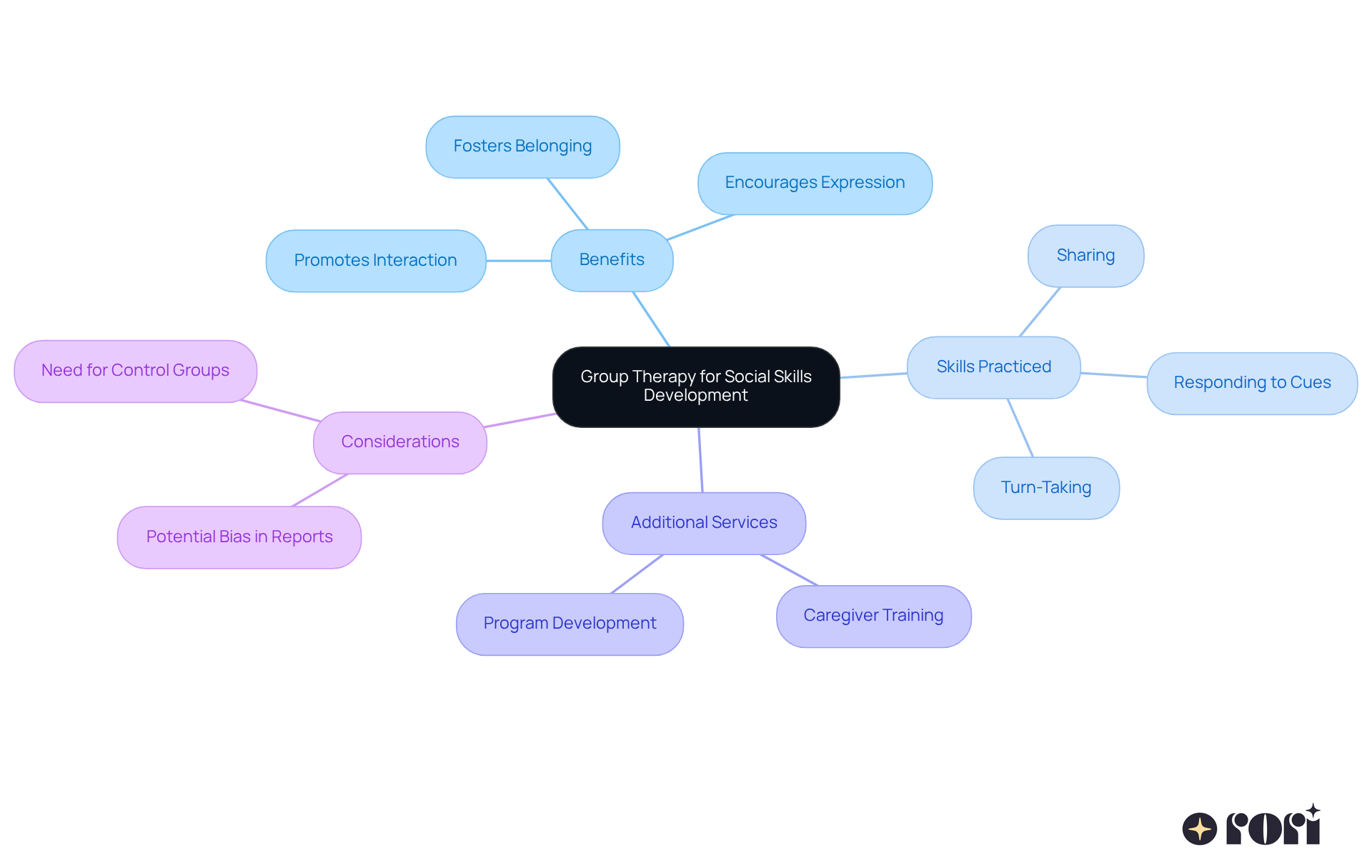
Group therapy serves as a valuable resource for promoting social interaction in children with ASD through group therapy, enabling them to develop important social skills. It creates a structured space that is effective for promoting social interaction in children with ASD through group therapy, enabling young people to connect with others, practice their communication, and learn about community norms. Research shows that group social skills interventions (GSSIs) lead to moderate improvements in skills, with an overall effect size of 0.51 for youth with ASD. This means kids can interact more effectively with their peers!
In these group settings, children get to practice turn-taking, sharing, and responding to social cues, which are essential for promoting social interaction in children with ASD through group therapy. Plus, the supportive atmosphere of group therapy is essential for promoting social interaction in children with ASD through group therapy, encouraging kids to express their feelings and learn from one another, fostering a sense of belonging and community. Rori Care also offers additional services like caregiver training and program development, which really boost group therapy by giving caregivers tools to reinforce skills at home and ensuring that programs are tailored to meet individual needs.
However, it’s important to keep in mind that self-reports and parental feedback can sometimes be influenced by positive expectations, which might affect how outcomes are perceived. Recent studies have pointed out the need for attention control groups in future research to see if GSSIs truly outperform other active conditions. Experts emphasize that GSSIs play a crucial role in promoting social interaction in children with ASD through group therapy, as they enhance social skills and support emotional understanding and mutual regulation among participants. This makes them a in the therapeutic journey for children with ASD.
Let’s explore this together! If you’re a parent looking for ways to support your child, know that you’re not alone, and there are resources available to help you every step of the way!
To help strengthen the skills learned in group therapy, parents can try out some fun home activities that encourage . Here are a few effective strategies:
Let’s explore these ideas together! Your involvement can make a world of difference!
Creating a nurturing atmosphere is essential for promoting social interaction in children with ASD through group therapy. Here are some friendly strategies to consider:
Additionally, participating in group therapy that is focused on promoting social interaction in children with ASD, guided by qualified therapists, can significantly enhance communication and relationships in a group setting. This approach not only fosters better social interactions but also empowers caregivers with essential , like behavior modification techniques and data collection methods. By equipping caregivers with the knowledge and skills to support their children’s behavioral goals, Rori Care ensures a consistent and nurturing environment that boosts the effectiveness of interventions.
Let’s explore this together! We’re here to help you every step of the way!

To enhance communication skills in children with autism, let’s explore some helpful tools and techniques together:
Alongside these methods, consider promoting social interaction in children with ASD through group therapy with qualified therapists. This structured setting can enhance relationships and provide valuable education for caregivers, ensuring that parents are well-equipped to support their child's development. By combining these tools and techniques, you can significantly improve your child's communication skills, paving the way for better interactions and overall growth. We’re here to help you every step of the way!

To effectively reinforce social skills in children with ASD, let’s explore some friendly strategies together:
Let’s keep this conversation going! What ? We’re here to help you every step of the way!

Group therapy really shines as a key way to boost social interaction for kids with Autism Spectrum Disorder (ASD). It creates a structured space where these children can pick up essential social skills, connect with their peers, and learn about communication and community norms. The evidence backing group social skills interventions (GSSIs) shows just how effective they can be in improving social interactions, making them a fantastic resource in the therapeutic journey for kids with ASD.
Throughout this article, we've shared various strategies to encourage social engagement, both in group settings and at home. From setting up playdates and organized activities to creating supportive environments and using communication tools, parents and caregivers have practical methods to reinforce what’s learned in therapy. Plus, the focus on consistent practice and positive reinforcement highlights just how important it is to nurture these skills in everyday life.
Ultimately, helping kids with ASD develop social skills is a team effort that goes beyond therapy sessions. By getting involved in group therapy and using supportive strategies at home, caregivers can truly make a difference in their child's social growth. Embracing these approaches not only boosts communication and interaction but also fosters a sense of belonging and confidence, empowering children with ASD to thrive in their social worlds. Let’s explore this together!
What is the role of group therapy in social skills development for children with ASD?
Group therapy serves as a valuable resource for promoting social interaction in children with ASD, enabling them to develop important social skills in a structured environment. It helps children connect with others, practice communication, and learn about community norms.
What improvements can be expected from group social skills interventions (GSSIs)?
Research shows that GSSIs lead to moderate improvements in social skills, with an overall effect size of 0.51 for youth with ASD, meaning children can interact more effectively with their peers.
What social skills do children practice in group therapy?
In group therapy, children practice essential social skills such as turn-taking, sharing, and responding to social cues, which are crucial for enhancing social interaction.
How does the atmosphere of group therapy benefit children with ASD?
The supportive atmosphere of group therapy encourages children to express their feelings and learn from one another, fostering a sense of belonging and community.
What additional services does Rori Care offer to enhance group therapy?
Rori Care offers caregiver training and program development services, which help reinforce skills at home and ensure that programs are tailored to meet individual needs.
What should be considered regarding feedback on GSSIs?
It's important to note that self-reports and parental feedback may be influenced by positive expectations, which can affect perceived outcomes. Recent studies suggest the need for attention control groups in research to evaluate the effectiveness of GSSIs compared to other conditions.
What home activities can parents implement to foster peer interaction?
Parents can encourage peer interaction through regular playdates, organized activities that require teamwork, role-playing everyday social situations, community activities, and family participation in these events.
How do playdates contribute to social skills development?
Regular playdates provide a familiar setting for kids to interact, helping to strengthen friendships and promote social skills through activities that encourage teamwork.
What types of organized activities are beneficial for children with ASD?
Organized games like 'Simon Says' or 'Duck, Duck, Goose' help children practice social rules in a fun way, boosting their creativity and problem-solving skills.
How does role-playing assist children in social interactions?
Role-playing helps children practice everyday social situations, preparing them for real-life interactions and developing important communication skills while also addressing social anxiety.
Why are community activities important for children with ASD?
Community activities provide natural opportunities for socializing and allow children to connect with peers in structured settings, which is crucial for emotional well-being and can help lower anxiety levels.
What is the significance of family participation in social skills development?
Family participation in community activities models positive interactions and strengthens social skills in a supportive environment, helping children feel secure as they develop their interaction abilities.