Introduction
Promoting positive behavior in children with autism isn’t just a noble goal; it’s a journey that can truly enhance their quality of life. By using Positive Behavior Support (PBS), caregivers and educators can create warm environments that encourage positive interactions while also addressing those challenging behaviors.
But here’s the real question: how can we effectively implement these strategies to ensure lasting change? It’s all about collaboration among parents, teachers, and clinicians. Let’s explore this together! This article dives into key strategies that can foster positive behavior, offering actionable insights for anyone committed to supporting the growth of children with autism. We’re here to help you every step of the way!
Define Positive Behavior Support (PBS) and Its Importance
(PBS) is all about enhancing the quality of life for individuals with autism. It encourages positive actions while gently reducing the challenging ones. At the heart of PBS is understanding why certain behaviors happen. This insight helps us teach new skills and create that promote .
Imagine a young person thriving socially and emotionally in a space designed just for them! That’s what PBS aims for. It’s not just about tackling behavioral challenges; it’s about creating a nurturing atmosphere where everyone can flourish. When caregivers and educators implement PBS, they adopt a structured approach that in children with autism, communication, and overall well-being.
Research shows that when PBS is applied consistently, it can lead to a remarkable 50% reduction in . That’s a game-changer for young individuals and their families! Plus, when caregivers are educated about PBS, they make informed decisions that lead to . This means they can effectively support their children’s goals.
Aligning with not only eases stress for families but also fosters a more supportive environment for individuals with autism. Let’s explore this together! We’re here to help you every step of the way!

Explore Key Features of Positive Behavior Support
Key features of include:
- : PBS really shines when it comes to tailoring interventions for each young person. Every child with autism has their own unique strengths and challenges, right? That’s why it’s so important to create strategies that fit their individual needs. At Rori Care, our qualified analysts craft these personalized plans, setting measurable goals and using evidence-based strategies to help kids thrive.
- : You know, using data to track actions and monitor progress is a big deal in PBS. It helps practitioners spot behavioral trends and make informed tweaks to interventions. At Rori Care, our care engine updates intervention and skill acquisition plans after each session based on what’s been achieved. Research shows that keeping up with data can lead to significant improvements in challenging behaviors, with 90% of kids making remarkable progress when suggested hours are fully utilized with active caregiver involvement.
- : PBS is all about teaching new skills that can replace those challenging behaviors. By fostering independence and self-regulation, children learn to navigate their environments more effectively, which is so crucial for their overall growth.
- Collaboration: thrives on . This collaboration ensures consistency and support across all settings, which is key to reinforcing positive behaviors. Research indicates that schools implementing PBS with fidelity have seen over 70% of students not receiving office discipline referrals, showcasing the power of a unified approach.
- Encouragement: Let’s not forget the ! By celebrating desired behaviors with positive feedback, young learners are more likely to repeat those actions, creating a joyful learning environment.
Understanding these features helps caregivers apply that are effective in in a sustainable way. Ultimately, can enhance the quality of life for individuals with autism. Let’s explore this together!

Implement Positive Behavior Support Strategies at Home
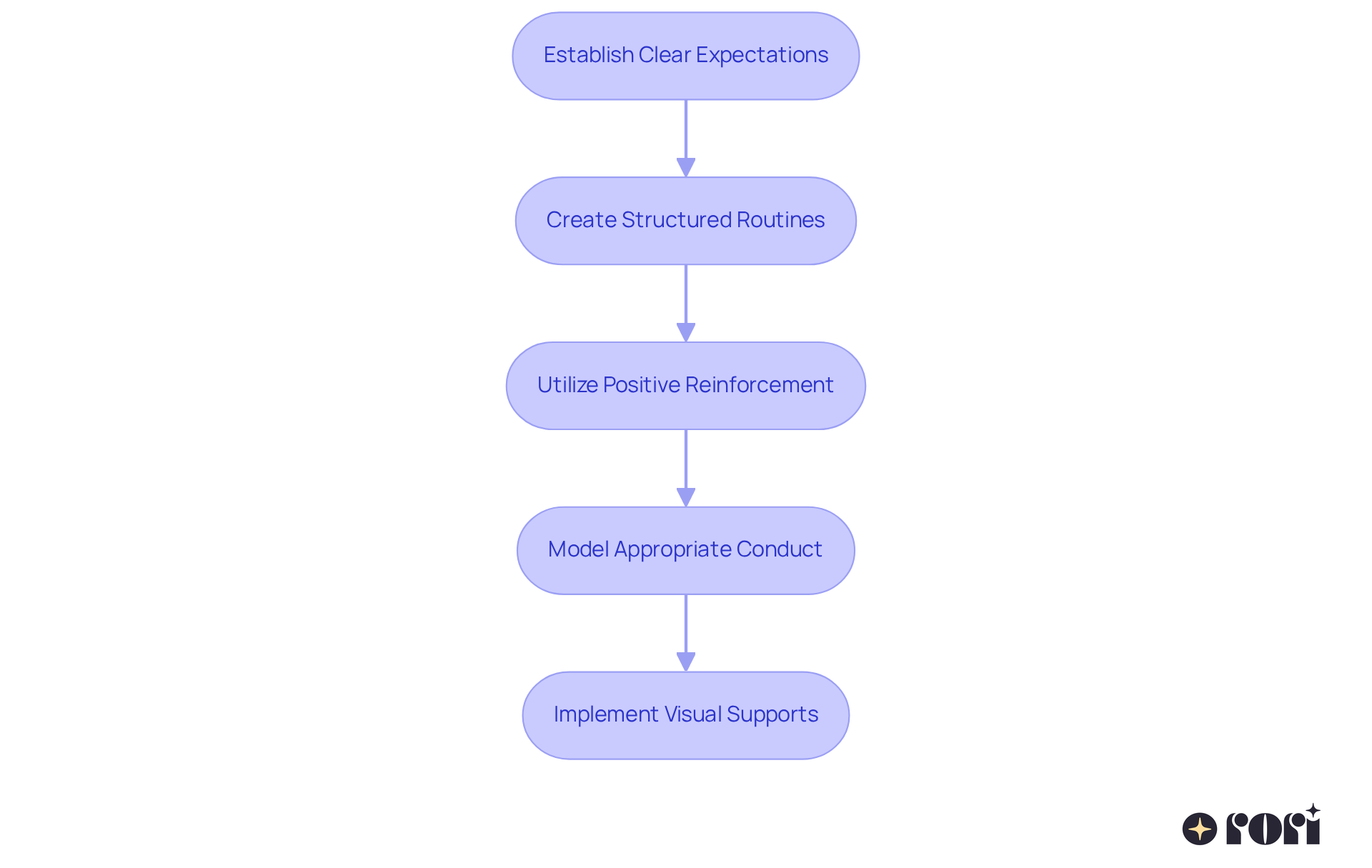
To effectively implement at home, let’s explore some actionable steps together:
- Establish : It’s important to clearly communicate what you expect from your child using simple language and visual aids. This approach helps young ones understand what’s anticipated of them in different situations, reducing uncertainty and stress.
- Create : Children with autism really thrive on predictability. By creating a consistent daily routine, you can significantly reduce . Research shows that foster a sense of safety, making kids more open to learning new skills.
- Utilize : Strengthen the behaviors you want to see with praise, rewards, or token systems. This not only motivates your child to repeat positive actions but also builds a sense of achievement. Studies indicate that can greatly improve behavior and engagement in kids undergoing ABA therapy.
- Model Appropriate Conduct: Show your child the behaviors you’d like to see. Kids learn a lot by watching, so modeling positive interactions can be super effective. This aligns with findings that emphasize the importance of and consistent modeling in encouraging desired behaviors.
- Implement : Use visual schedules, charts, or social stories to help your child understand expectations and routines. Visual aids can boost comprehension and lessen frustration, making transitions smoother and more manageable.
By weaving these strategies into your daily life, you can that encourages positive behavior and . This ultimately leads to better developmental outcomes for your child. We’re here to !
Foster Collaboration Among Parents, Teachers, and Clinicians
To foster collaboration among parents, teachers, and clinicians, let’s explore some friendly strategies together:
- : Keeping the lines of communication open is key! Regular updates and discussions about your child’s progress help everyone stay informed and aligned. Research shows that effective parent-teacher communication is essential for building strong family-school partnerships, which can significantly impact your child’s success both in and out of school.
- : It’s super helpful to collaboratively set clear, attainable objectives for your little one. This way, everyone is on the same page and can measure progress effectively. Studies indicate that occurs when parents and teachers share mutual respect and goals, leading to better educational outcomes.
- : How about organizing some training sessions for parents and educators on ? This shared learning experience can really enhance understanding and implementation of techniques. Educators who are skilled in family involvement and autism-centered communication feel more confident engaging with parents, which can lead to better results for students. that empower you with ABA principles, helping you support your child’s behavioral goals effectively.
- : Your insights as a parent are invaluable! Encourage participation in developing behavior support plans. and reduce emotional stress, making it a vital part of successful interventions. When caregivers are actively involved, as supported by Rori Care's approach, it often leads to more effective and lasting behavioral improvements.
- Utilize Technology: Let’s not forget about technology! It can really help facilitate communication and data sharing among everyone involved. Tools like shared apps or platforms can and keep everyone connected. Rori Care provides flexible meeting options, including evening conferences and virtual updates, to fit into your busy schedule, making communication more inclusive.
By fostering collaboration, we can all contribute to a comprehensive support system that is essential for , enhancing your child’s behavioral development and overall well-being, supported by the compassionate ABA treatment provided by Rori Care. We’re here to help you every step of the way!

Conclusion
Promoting positive behavior in children with autism is such an important journey! It’s all about enhancing their quality of life through caring and structured approaches. When caregivers and educators use Positive Behavior Support (PBS), they can create spaces that not only help reduce challenging behaviors but also encourage growth, communication, and emotional well-being. This holistic approach really focuses on understanding each child’s unique needs and tailoring interventions that empower them to thrive.
Throughout this article, we’ve explored some key strategies for effective PBS. We talked about the importance of individualized approaches, making decisions based on data, developing skills, collaborating with everyone involved, and the magic of positive reinforcement. These elements work together to create a supportive framework that nurtures positive behaviors and emotional growth. The evidence shows that when these strategies are consistently applied, we can see remarkable improvements in behavior, leading to better developmental outcomes.
Ultimately, it’s clear: fostering positive behavior in children with autism takes a team effort from parents, educators, and clinicians. By embracing collaboration and using effective PBS strategies, we can create a nurturing environment that significantly impacts the lives of these children. This commitment to teamwork and communication not only enhances behavioral outcomes but also lays the groundwork for lifelong success. So, let’s take proactive steps today to ensure a brighter future for these children, giving them the support they need to flourish! We’re here to help you every step of the way!
Frequently Asked Questions
What is Positive Behavior Support (PBS)?
Positive Behavior Support (PBS) is a strategy aimed at enhancing the quality of life for individuals with autism by encouraging positive behaviors and gently reducing challenging ones.
Why is understanding behavior important in PBS?
Understanding why certain behaviors occur is crucial in PBS as it helps teach new skills and create supportive environments that promote positive interactions.
What is the ultimate goal of PBS?
The ultimate goal of PBS is to create a nurturing atmosphere where individuals can thrive socially and emotionally, rather than just addressing behavioral challenges.
How does PBS impact children with autism?
When implemented consistently, PBS can lead to a significant reduction in challenging behaviors, improving communication and overall well-being for children with autism.
What percentage reduction in challenging behaviors can be achieved with PBS?
Research shows that consistent application of PBS can lead to a remarkable 50% reduction in challenging behaviors.
How does caregiver education about PBS influence outcomes?
Educating caregivers about PBS enables them to make informed decisions that support their children’s goals, leading to better behavioral outcomes.
How does PBS align with ABA principles?
Aligning PBS with Applied Behavior Analysis (ABA) principles eases stress for families and fosters a more supportive environment for individuals with autism.
List of Sources
- Define Positive Behavior Support (PBS) and Its Importance
- What Is Positive Behavior Support, and How Does It Improve Autism Treatment? (https://thetreetop.com/aba-therapy/what-is-positive-behavior-support-and-how-does-it-improve-autism-treatment)
- Positive Behaviour Support is effective when implemented correctly: a response to “Restrictive practice – A pathway to elimination” (Spivakovsky, Steele, & Wadiwel, 2023) (https://tandfonline.com/doi/full/10.1080/23297018.2024.2391804)
- Success Rate of Early Intervention for Autism | Connect n Care (https://connectncareaba.com/blog/early-intervention-autism-success-rate-statistics)
- Autism Therapy: Key Statistics (https://ambitionsaba.com/resources/autism-therapy-statistics)
- Positive Behavior Support (PBS) (https://asatonline.org/for-parents/positive-behavior-support-pbs)
- Explore Key Features of Positive Behavior Support
- Positive behavioral interventions and supports (PBIS) | Psychology | Research Starters | EBSCO Research (https://ebsco.com/research-starters/psychology/positive-behavioral-interventions-and-supports-pbis)
- Individualized Positive Behavior Support in School Settings - Ailsa E. Goh, Linda M. Bambara, 2012 (https://journals.sagepub.com/doi/abs/10.1177/0741932510383990)
- The Benefits of Data-Driven Decision Making in ABA Therapy | Advanced Autism Services (https://advancedautism.com/post/the-benefits-of-data-driven-decision-making-in-aba-therapy)
- Positive behaviour support: a systematic literature review of the effect of staff training and organisational behaviour management - PMC (https://pmc.ncbi.nlm.nih.gov/articles/PMC9897795)
- The Numbers Don't Lie: Revealing Autism Therapy Statistics | Above and Beyond Therapy (https://abtaba.com/blog/autism-therapy-statistics)
- Implement Positive Behavior Support Strategies at Home
- Success Rate of Early Intervention for Autism | Connect n Care (https://connectncareaba.com/blog/early-intervention-autism-success-rate-statistics)
- Early Intervention Autism: New Research Shows 87% Success Rate at 18 Months (https://globalrph.com/2025/07/early-intervention-autism-new-research-shows-87-success-rate-at-18-months)
- Study finds autism early intervention highly effective | Autism Speaks (https://autismspeaks.org/science-news/early-intervention-toddlers-autism-highly-effective-study-finds)
- The Numbers Don't Lie: Revealing Autism Therapy Statistics | Above and Beyond Therapy (https://abtaba.com/blog/autism-therapy-statistics)
- The Importance of Setting Clear Expectations in ABA Therapy - SoaringHigh ABA (https://soaringhighaba.com/post/the-importance-of-setting-clear-expectations-in-aba-therapy)
- Foster Collaboration Among Parents, Teachers, and Clinicians
- Parent–teacher communication for children on the autism spectrum: An examination of communication skill use and problematic communication (https://onlinelibrary.wiley.com/doi/10.1002/pits.22787)
- 35 Quotes about Communication to Inspire Collaboration (https://vibe.us/blog/35-quotes-about-communication?srsltid=AfmBOorfQ_ID6Tg9wnYlNpFpGPbYyMX53AGMAaHP2DMjb53JXkhVQ0lF)
- Success Rate of Early Intervention for Autism | Connect n Care (https://connectncareaba.com/blog/early-intervention-autism-success-rate-statistics)
- Research on Parent-Teacher Collaboration for Autism - Guiding Growth (https://guidinggrowth.app/research-on-parent-teacher-collaboration-for-autism)
- Parent-Teacher Communication about Children with Autism Spectrum Disorder: An Examination of Collaborative Problem-Solving - PMC (https://pmc.ncbi.nlm.nih.gov/articles/PMC5383212)