Understanding the unique interests of individuals with autism can really change the game in therapeutic care. By tapping into these passions, caregivers and clinicians can craft engaging treatment plans that not only motivate but also foster meaningful growth. But here’s the thing: the real challenge is figuring out how to weave these interests into personalized strategies that truly resonate with each child.
So, what can we do to bridge this gap? What are the best practices that ensure every autistic individual gets the tailored support they need to thrive? Let’s explore this together! Your journey as a parent is important, and we’re here to help you every step of the way!
Unique topics or activities can be incredibly , and it’s so important for clinicians and caregivers to understand this. These passions can be powerful tools in treatment! For example, if a child loves trains, incorporating train-related activities into therapy can really boost their motivation and involvement. Did you know that about 75% of autistic youth have at least one special passion? Among these, 44% are drawn to sensory-related activities, while 19% are excited about vehicles and transportation. By recognizing and supporting these interests, caregivers can create a nurturing environment that fosters learning and personal growth, in line with ABA principles.
As Temple Grandin wisely said, "The most interesting people you’ll find are ones that don’t fit into your average cardboard box." This really highlights the importance of embracing each young person’s unique passions. However, it’s crucial for caregivers to ensure these interests are genuinely engaging for the child, rather than something imposed on them. This approach can lead to more effective treatment outcomes.
At Rori Care, we actively involve caregivers in the planning and assessment process, empowering them to make informed choices that positively impact their child’s development. Plus, by integrating clear progress tracking and adaptive strategies into treatment, we can enhance the effectiveness of interventions. Anecdotal evidence suggests that kids who engage with their passions in therapy often show improved communication and emotional regulation. This really reinforces the need for personalized approaches in autism care. Let’s explore this together!

Creating personalized treatment plans starts with understanding each child's unique abilities, challenges, and interests. At Rori Care, our dedicated professionals kick off this journey with a thorough evaluation, gathering important insights to shape a tailored plan just for your child.
Our compassionate clinicians are here to support families through Applied Behavior Analysis treatment, ensuring that every plan is crafted to promote positive behavior changes and skill development. For example, if your little one shines in visual learning, we can incorporate fun visual aids and interactive activities to boost their understanding and retention of new skills.
But that’s not all! Our behavior care engine is designed to adapt. After each session, we review the behavior intervention and skill acquisition plans based on what’s been achieved. This means we’re always fine-tuning the treatment to align with your child’s evolving needs and interests.
By focusing on personalization and encouraging active involvement from caregivers, we can create a nurturing therapeutic environment that fosters growth and independence. Let’s explore this journey together! We’re here to !

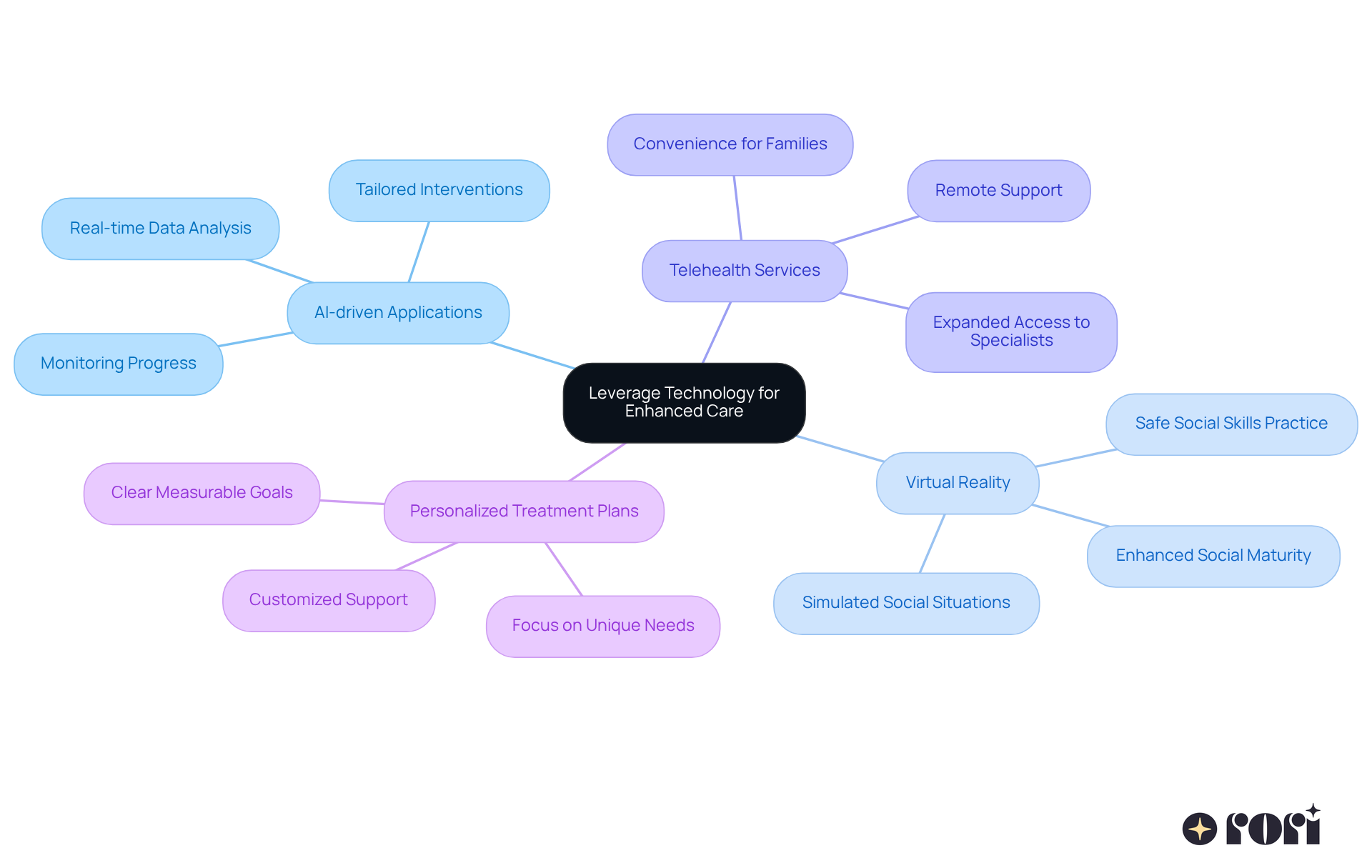
Incorporating technology into autism care can really enhance the therapeutic experience! 🌟 are fantastic because they can monitor progress and tailor interventions based on real-time data. This means more personalized treatment plans that truly fit each child’s unique needs, strengths, challenges, and goals, which includes specialized autism care for unique interests. At Rori Care, we pride ourselves on creating customized plans that offer just the right support.
We set clear, measurable goals for behavior change and skill development, which helps families see transparent benchmarks for progress. Isn’t it reassuring to know that studies show intelligent interaction technologies have a Standardized Mean Difference (SMD) of 0.80? That highlights their positive impact on social, cognitive, and behavioral aspects of autism!
And let’s not forget about virtual reality (VR)! This innovative tool simulates social situations, allowing young individuals to practice social skills in a safe environment. It can lead to enhanced social maturity and better developmental outcomes. Plus, telehealth services are a game-changer, expanding access to specialists and enabling families to get support right from the comfort of their homes.
This shift towards technology not only makes interventions more engaging but also empowers our qualified behavior analysts to craft effective treatment plans tailored to each individual. We’re always monitoring the client’s progress and responsiveness to the intervention, making adjustments as needed to optimize outcomes.
The integration of AI in specialized autism care for unique interests isn’t just a passing trend; it represents a significant advancement in our approach to personalized therapy. It ensures that every individual has the opportunity to thrive. Let’s explore this together! We’re here to help you every step of the way!
Family engagement is truly at the heart of effective autism treatment. It’s so important for clinicians to actively involve parents in the therapeutic process. By encouraging open communication and collaboration, everyone benefits! For example, regular meetings can be a great way to discuss developments, share insights, and adjust treatment goals as needed.
Offering parents training on specific strategies is another fantastic way to help. Not only does this enable them to reinforce skills at home, but it also deepens their understanding of ABA principles. This knowledge leads to informed decision-making that can really make a difference in their child’s progress. Research shows that when families are involved, kids often see significant improvements in communication, behavior, and overall development. In fact, a pooled effect size of 0.55 suggests substantial enhancements across various outcomes for youth!
Let’s not forget the emotional support that parents provide. It’s vital for keeping a child motivated and engaged throughout therapy. By fostering a strong partnership between families and clinicians, and equipping caregivers with the knowledge and skills they need, the therapeutic journey becomes a shared endeavor. Together, we can enhance the likelihood of success!
So, let’s explore this together! Your involvement can truly !

Embracing the unique interests of individuals with autism is so important for effective treatment and personal growth. When caregivers and clinicians recognize and integrate these passions into their practices, they create a more engaging and motivating environment. This not only enhances the treatment experience but also respects each child's individuality. Plus, it aligns beautifully with the principles of Applied Behavior Analysis, leading to better outcomes.
The article shares some great practices that can really transform autism care. Think:
Each of these strategies is crucial for tailoring care to meet the specific needs and strengths of autistic individuals. From AI-driven applications to family training and support, these methods work together to create a more effective and holistic approach to autism treatment.
Ultimately, understanding and supporting special interests in autism is vital. It’s a call to action for caregivers and professionals to prioritize personalized strategies, embrace innovative technologies, and build collaborative relationships with families. By doing this, we can empower autistic individuals to thrive and reach their full potential, ensuring that every child’s unique journey is celebrated and supported. Let’s explore this together!
What are special interests in autism?
Special interests in autism refer to unique topics or activities that are particularly engaging for individuals with autism, which can be utilized as powerful tools in treatment and therapy.
How prevalent are special interests among autistic youth?
About 75% of autistic youth have at least one special passion, with 44% drawn to sensory-related activities and 19% excited about vehicles and transportation.
How can caregivers support a child's special interests?
Caregivers can support a child's special interests by incorporating these passions into therapy and activities, ensuring that they are genuinely engaging for the child rather than imposed.
What is the significance of recognizing special interests in therapy?
Recognizing special interests can boost a child's motivation and involvement in therapy, leading to more effective treatment outcomes and fostering a nurturing environment for learning and personal growth.
How does Rori Care involve caregivers in the treatment process?
Rori Care actively involves caregivers in the planning and assessment process, empowering them to make informed choices that positively impact their child's development.
What evidence supports the effectiveness of integrating special interests into therapy?
Anecdotal evidence suggests that children who engage with their passions in therapy often show improved communication and emotional regulation, reinforcing the need for personalized approaches in autism care.