In the realm of ABA therapy, practitioners may encounter a phenomenon known as extinction bursts. These occur when a behavior that was previously reinforced no longer receives the same reinforcement, leading to an increase in that behavior's intensity or frequency. Understanding and anticipating extinction bursts are critical for therapists to navigate these challenging episodes effectively and support progress in therapy.
Recent studies have shed light on the complexities of addressing challenging behaviors, particularly in individuals with autism. The online survey by Colizzi et al. highlighted that behavioral issues intensified for more than one-third of individuals with autism during the pandemic.
Addressing these behaviors requires evidence-based procedures that not only identify the function of the behavior but also develop interventions tailored to those functions.
Furthermore, the field has recognized the necessity of a thorough and precise definition of problem behaviors and the importance of assessing potential side effects of intervention strategies. This holistic approach ensures that behaviors are not pathologized without understanding their context and functionality for the individual, adhering to the principle that behaviors are a logical result of a person's history and environment.
As ABA therapy continues to evolve, it remains imperative to maintain a high standard of coordinated care and best practices, as emphasized by experienced behavior analysts. By integrating robust technology solutions and streamlined processes, therapists can focus on delivering quality care that is both effective and efficient, ultimately fostering better outcomes for those receiving ABA therapy.
In the realm of ABA therapy, practitioners may encounter a phenomenon known as extinction bursts. These occur when a behavior that was previously reinforced no longer receives the same reinforcement, leading to an increase in that behavior's intensity or frequency. For example, a child who has been routinely given attention for a specific behavior may exhibit more pronounced or frequent behavior when that attention is withdrawn.
Understanding and anticipating are critical for therapists to navigate these challenging episodes effectively and support progress in therapy.
Recent studies have shed light on the complexities of addressing challenging behaviors, particularly in individuals with autism. The online survey by Colizzi et al. highlighted that behavioral issues intensified for more than one-third of individuals with autism during the pandemic.
Addressing these behaviors requires evidence-based procedures that not only identify the function of the behavior but also develop interventions tailored to those functions. The introduction of the Interview Informed Synthesized Functional Analysis (IISCA) by Hanley et al. in 2014 is one such approach that allows for the simultaneous assessment of multiple reinforcers within the same session, offering a nuanced understanding of the behavior in question.
Furthermore, the field has recognized the necessity of a thorough and precise definition of problem behaviors and the importance of assessing potential side effects of intervention strategies. This holistic approach ensures that behaviors are not pathologized without understanding their context and functionality for the individual, adhering to the principle that behaviors are a logical result of a person's history and environment.
As ABA therapy continues to evolve, it remains imperative to maintain a high standard of coordinated care and best practices, as emphasized by experienced behavior analysts. By integrating robust technology solutions and streamlined processes, therapists can focus on delivering quality care that is both effective and efficient, ultimately fostering better outcomes for those receiving ABA therapy.
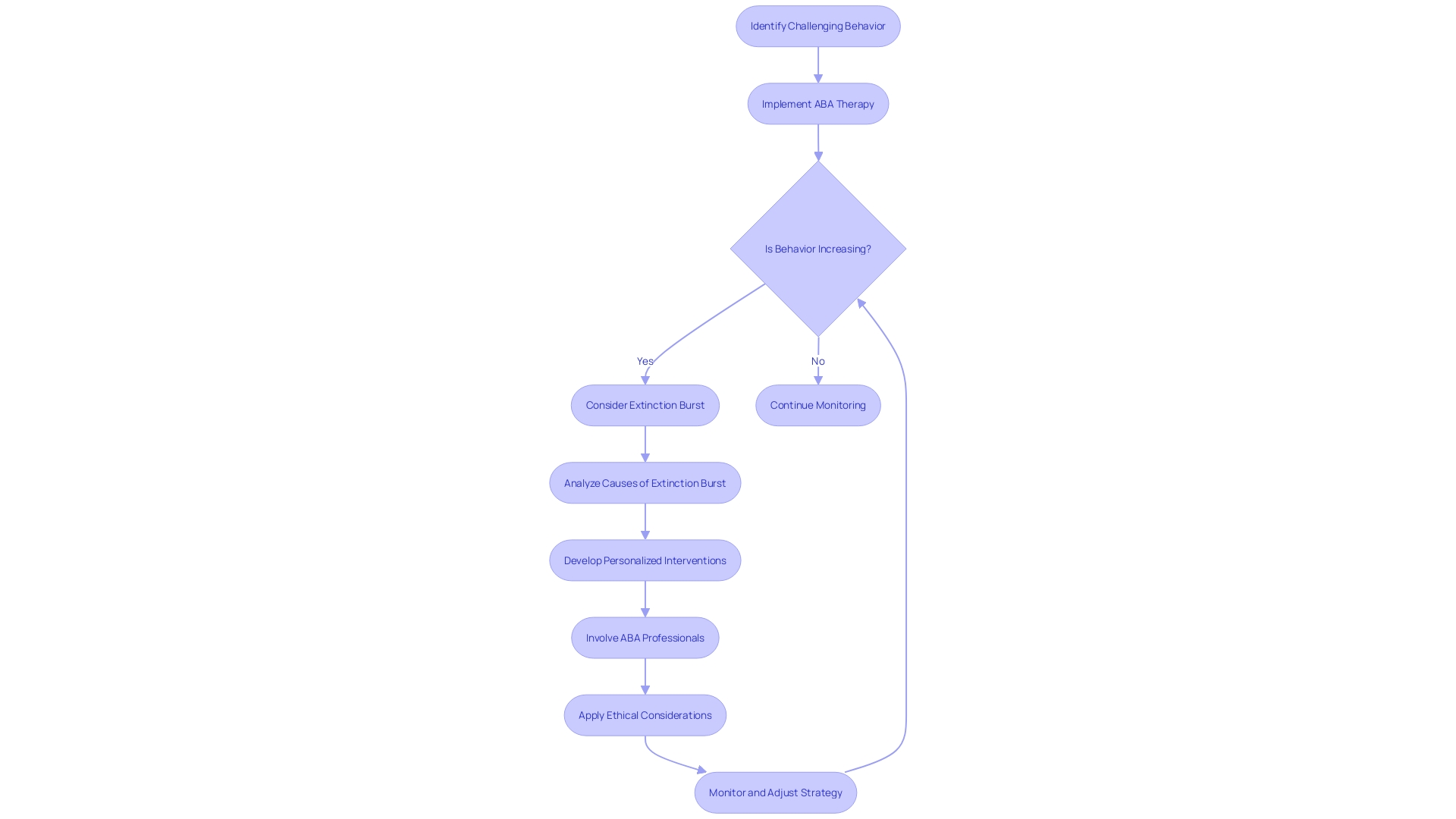
Understanding the principles of ABA therapy is fundamental to managing behaviors effectively. At the core of this approach lies the concept of extinction. This term refers to the strategic reduction of a behavior by ceasing the reinforcement that was maintaining it.
The idea is that if a behavior is not reinforced, over time, it will occur less frequently or even stop altogether. This method is particularly relevant when addressing behaviors that are harmful or disruptive.
In practice, extinction might be employed when a child engages in behaviors such as head-banging or smearing, which can be harmful or highly stressful for caregivers. The aim is to guide the child towards alternative, more appropriate responses to the environment. However, it's important to consider the broader implications of behavioral interventions.
Critics, including some adults with autism, have expressed concerns that while certain behaviors may become less frequent, making an individual appear more 'neurotypical', this may not equate to improved well-being and could potentially lead to burnout or mental health issues.
The shift towards a more nuanced understanding of autism and its therapies has been significant. With now understood to be as common as 1 in 36 individuals, the complexity of the spectrum is better recognized. This has led to a reassessment of intervention strategies, taking into account the diverse needs and abilities of those on the spectrum.
Furthermore, experts in the field are moving towards a framework that prioritizes underlying mechanisms over symptomatic clusters. This aligns with broader trends in psychiatry, such as the Research Domain Criteria (RDoC) from the National Institute of Mental Health, which emphasizes cognitive control constructs like response selection and inhibitory control. Such constructs are key in decision-making processes, where the goal is to filter out irrelevant factors and suppress automatic responses to make the most adaptive decisions.
Technology solutions are also being enhanced to support best practices in ABA therapy, aiming to provide high-quality, coordinated care and streamlined review processes. These advances are geared towards addressing the unique challenges faced by those with autism and ensuring that therapeutic interventions are as effective and individualized as possible.

In Applied Behavior Analysis, it's not uncommon to observe an increase in a problematic behavior once it stops being reinforced — this phenomenon is termed an 'extinction burst.' Such bursts manifest as a temporary escalation in the behavior's frequency, intensity, or both, potentially leading to the misconception that the therapeutic approach is failing. On the contrary, extinction bursts should be viewed as a predictable part of the therapeutic journey towards behavior modification.
The concept is akin to , which refrains from labeling behaviors as symptoms of an underlying disease; rather, it sees them as logical responses shaped by past experiences and the present environment. Similarly, extinction bursts are natural reactions to change. In the context of therapy, they are a signal that the treatment is altering the environment's response to certain behaviors, catalyzing an adjustment period as individuals learn to adapt to new reinforcement patterns.
When a behavior that was previously reinforced is no longer met with the same outcome, individuals may experience what is known as an 'extinction burst.' This phenomenon is characterized by an increase in the intensity or frequency of the behavior as the individual seeks to regain the lost reinforcement. It's an expected part of the learning process, signaling that the individual is adapting to the new conditions.
Such bursts are particularly relevant in the context of ABA therapy, where understanding and managing these responses can be pivotal for the progress of individuals with autism.
Recent studies, such as those by Colizzi et al. and Napolitano et al., have highlighted the complexity of behavior problems in individuals with autism, especially during challenging times like the pandemic. The work by Hanley et al.
with the has contributed to a more nuanced understanding of problem behaviors by taking into account multiple reinforcers. This is essential as traditional functional assessments may not always capture the full picture.
The evolving landscape of mental health, underscored by the updates shared at the 2023 CHI Conference and the ongoing research at institutions like Eastern Michigan University, emphasizes the need for innovative solutions and evidence-based practices to support mental health and behavioral challenges. As technology continues to play a role in healthcare, professionals are tasked with ensuring that interventions remain effective and accessible, particularly for marginalized communities. The insights provided by experts in the field, such as those with over a decade of clinical experience, remind us of the importance of coordinated care and the use of technology to enhance treatment outcomes.
While the journey of managing extinction bursts and other behavioral challenges can be complex, the integration of functional analysis and evidence-based strategies remains a cornerstone of effective therapy. The goal is to create a supportive environment where individuals can learn and grow, ultimately leading to more positive and sustainable behavior changes.
Understanding and anticipating extinction bursts is crucial in ABA therapy. These bursts occur when a previously reinforced behavior no longer receives the same reinforcement, leading to an increase in intensity or frequency. While challenging, extinction bursts are a predictable part of the therapeutic journey towards behavior modification.
Recent studies have highlighted the complexities of addressing challenging behaviors, especially in individuals with autism. The pandemic intensified behavioral issues for over one-third of individuals with autism, emphasizing the need for evidence-based procedures and tailored interventions. The Interview Informed Synthesized Functional Analysis (IISCA) provides a nuanced understanding of problem behaviors by considering multiple reinforcers within the same session.
A thorough definition of problem behaviors and assessment of intervention side effects are essential. This holistic approach ensures behaviors are understood in their context and functionality for the individual, avoiding pathologization without proper understanding. Coordinated care and best practices are crucial in delivering effective and efficient ABA therapy.
Integrating technology solutions and streamlined processes is crucial to support parents and individuals. These advancements provide valuable insights and empower parents with expert advice, enhancing the effectiveness and individualization of therapeutic interventions. Managing extinction bursts and addressing challenging behaviors require a comprehensive approach.
Understanding their function and utilizing evidence-based strategies create a supportive environment for individuals to learn and grow. The goal is to promote positive and sustainable behavior changes, ensuring the well-being and progress of individuals receiving ABA therapy.
What is an extinction burst in ABA therapy?
An extinction burst is a phenomenon where the frequency or intensity of a behavior increases when the reinforcement that previously maintained it is removed. It is considered a normal part of the behavior modification process in ABA therapy.
Why is it important to understand extinction bursts in ABA therapy?
Understanding extinction bursts is crucial for therapists to effectively navigate these challenging episodes, which can be mistaken for a worsening of the behavior. Recognizing extinction bursts allows therapists to support progress and ensure that therapy continues effectively.
What is the Interview Informed Synthesized Functional Analysis (IISCA)?
The IISCA, introduced by Hanley et al. in 2014, is an approach that allows for the assessment of multiple reinforcers within the same session to gain a deeper understanding of problem behaviors and develop tailored interventions.
How has the understanding of autism and its therapies changed recently?
The understanding of autism has evolved to recognize the complexity of the spectrum and the diverse needs of those affected. There is a shift towards individualized intervention strategies and a focus on underlying mechanisms rather than just symptomatic clusters.
How are concerns about ABA therapy and well-being being addressed?
Critics have raised concerns that while ABA therapy may reduce certain behaviors, it might not improve overall well-being and could lead to burnout or mental health issues. The field is moving towards a holistic approach that assesses the context and functionality of behaviors to ensure they are not pathologized without understanding.
What role does technology play in ABA therapy?
Technology solutions are being enhanced to support best practices in ABA therapy, providing high-quality, coordinated care and streamlined review processes. They aim to address the unique challenges faced by those with autism and ensure therapeutic interventions are effective and individualized.
What is the concept of extinction in ABA therapy?
Extinction in ABA therapy refers to the process of strategically reducing a behavior by stopping the reinforcement that was maintaining it, with the goal of decreasing or stopping the behavior over time.
Can extinction bursts be a sign that therapy is failing?
No, extinction bursts are not a sign of failure but rather a predictable part of the therapeutic journey. They indicate that the environment's response to certain behaviors is changing, leading to an adjustment period.
What is the prevalence of autism according to recent understanding?
Recent understanding indicates that autism is more common than previously thought, with prevalence rates as high as 1 in 36 individuals.
How do extinction bursts relate to the learning process in ABA therapy?
Extinction bursts are an expected part of the learning process in ABA therapy, signaling that the individual is adapting to changes in reinforcement patterns and learning to navigate the new conditions.