Autism Spectrum Disorder (ASD) is a complex neurodevelopmental condition that affects individuals' social skills, communication abilities, and behavior. It is a spectrum disorder, meaning that it encompasses a wide range of symptoms and challenges that vary from person to person. In this informative article, we will explore the characteristics of ASD, including restricted and repetitive behaviors, communication and social skills deficits, sensory issues, cognitive and verbal abilities, and the importance of early identification and support.
We will also discuss the criteria for diagnosing ASD, treatment and intervention strategies, and available resources for families and caregivers. By delving into these topics, we aim to provide valuable insights and empower parents with expert advice to better understand and support individuals with ASD.
Autism Spectrum Disorder (ASD) encompasses a wide range of neurodevelopmental conditions that uniquely affect individuals' social skills, communication abilities, and behavior. People with ASD may engage in repetitive behaviors and have highly focused interests, showcasing the diversity within the spectrum. Variability is a hallmark of ASD, with each person experiencing symptoms in distinct ways that persist throughout their lives.
The complexity of this spectrum is illustrated by cases like that of Lil, a 17-year-old transitioning from a special school to a new environment, which highlights the challenges faced due to the uncertainty and unfamiliarity of new settings. Meanwhile, it's crucial to recognize the strengths individuals on the autism spectrum can bring to various settings, such as their dedication and reliability in the workplace, where they often exhibit lower absenteeism and longer tenures compared to neurotypical coworkers.
Recent scientific advances provide insights into the role neurotransmitters like dopamine play in the development of ASD, underscoring the importance of continued research in understanding and potentially treating this condition. Furthermore, the development of AI tools for early diagnosis points to a future where support and interventions can be tailored more effectively.
Understanding and supporting individuals with ASD is not just about recognizing the challenges they face; it's also about appreciating the and contributions they bring to society. Through awareness and acceptance, we can foster environments that celebrate neurodiversity and enable individuals with autism to live productive, purposeful, and meaningful lives.
Autism Spectrum Disorder (ASD) is identified by a set of behaviors and is considered a 'spectrum condition' that impacts individuals differently and to varying degrees. The official criteria for diagnosis, as stated in the American Psychiatric Association's Diagnostic and Statistical Manual (DSM-5), include ongoing challenges in social interaction and communication across a variety of settings and restricted, repetitive behaviors, interests, or activities. Symptoms of ASD typically manifest in early childhood and must significantly hinder everyday functioning to meet the diagnostic threshold.
While an official diagnosis is traditionally obtained through a medical assessment, the recognize and accept self-diagnosis, acknowledging the limitations and often inconclusive results of current medical testing models for autism. For some, an official diagnosis may not change the support they require, making the process, which can be lengthy and costly, unnecessary.
The conversation about diagnosis is evolving, with advancements such as those made by NeuroQure, which has developed a gene therapy approach for neurological disorders, including ASD. This progress is vital as early identification of ASD allows for timely intervention, which can significantly improve the quality of life for individuals with ASD and their families. This is supported by research indicating better outcomes for children who start behavioral therapy early.
Autism is estimated to occur in as many as 1 in 36 individuals. The expansive nature of the autism spectrum means that each person's experience is unique, and awareness of this variability is essential for providing appropriate support. The understanding and acceptance of different behaviors and needs are crucial, not only for those directly interacting with individuals with ASD but also for society as a whole.
Autism Spectrum Disorder (ASD) presents a complex array of symptoms that manifest uniquely in each individual. These symptoms often include a range of challenges in social interaction and communication. For instance, individuals on the spectrum may find it difficult to make and sustain eye contact, comprehend and use nonverbal cues effectively, and navigate the intricacies of forming and maintaining relationships.
Additionally, repetitive behaviors and intense, focused interests in specific subjects are common characteristics of ASD. Sensory sensitivity is also a notable symptom, with individuals often experiencing heightened responses to sensory input, which can include averse reactions to certain sounds, lights, or textures.
Understanding the nuances of ASD is critical for accurate diagnosis and support. Diagnostic criteria from the DSM-5, along with reports from caregivers and observations by healthcare professionals, provide the framework for identifying ASD. It is essential to recognize that no single diagnostic tool is definitive; a comprehensive assessment often involves referrals to specialists and multidisciplinary teams.
Recent studies underscore the importance of recognizing the co-occurrence of physical and mental health conditions in individuals with ASD. For example, research indicates that autistic individuals face increased risks of certain health concerns, including neurological issues, epilepsy, and mental health challenges, which can impact their overall quality of life and life expectancy.
In light of these complexities, it is imperative to continue expanding our understanding of ASD across the lifespan. While significant strides have been made in early diagnosis and intervention for children and adolescents, the remain under-researched and require greater attention.
Individuals on the autism spectrum may face significant challenges when it comes to communication and social interaction. Often, these difficulties arise from a nuanced and literal interpretation of language. For example, recognizing the subtle differences between genuine and posed smiles can be perplexing due to the social nuances involved. Genuine smiles, which involve involuntary activation of eye muscles, are typically associated with positive emotions, while posed smiles might not reflect true feelings. This distinction is crucial in social communication yet can be perplexing for those with autism, who may interpret expressions literally.
The development of pragmatic skills, like understanding figurative language such as metaphors, similes, and idioms, typically burgeons in early childhood for most children and continues to mature into adulthood. However, this development is often slower for autistic individuals. Research indicates that while some autistic individuals may encounter difficulties due to an impaired Theory of Mind, others may struggle due to deficiencies in core language skills like vocabulary and grammar.
Despite these challenges, individuals with autism can possess remarkable strengths and unique perspectives in communication. With support, they can learn to use alternative methods like , including photos, gestures, or structured questions to aid conversation. This personalized approach to communication not only fosters a better understanding of their capabilities but also highlights the importance of recognizing and nurturing the individual communication strengths of each person on the autism spectrum.
Autism Spectrum Disorder (ASD) is characterized by a diverse range of behaviors, including repetitive motions such as hand flapping and rocking, which are often mechanisms individuals use to manage their sensory environment. The complexity of these behaviors can lead to significant challenges, as up to 80% of children and adolescents with autism exhibit problematic behaviors, including aggression towards themselves or others. Such behaviors not only result in high healthcare costs but also pose difficulties in emotional regulation for the individuals affected by ASD. Many of these individuals, especially the 30% to 40% who are minimally verbal and those with limited emotional insight, struggle to communicate their internal states, contributing to unpredictable aggressive behaviors. This unpredictability can hamper access to community resources, educational opportunities, and can even lead to isolation for their families.
Research from institutions like the UC Davis MIND Institute highlights the importance of understanding the underlying mechanisms of ASD to develop personalized and effective interventions. Studies reveal that strategies attempting to change the repetitive behaviors in ASD are often flawed, lacking clear definitions of what constitutes 'problem behavior' and not considering the potential side-effects of interventions. Furthermore, a significant portion of these behaviors might not be harmful, such as stereotypic behaviors, and the reasons behind them are not fully explored.
The urgency of addressing these challenges is underscored by data from The Center for Discovery, which indicates that AI and machine learning can play a pivotal role in predicting significant behaviors in individuals with ASD. This prediction can lead to more proactive approaches to mitigate the impact of these behaviors. Additionally, groundbreaking research using transport-based morphometry has unveiled brain structure patterns that correlate with genetic variations linked to ASD, providing new pathways for understanding and potentially treating the disorder.
With current estimates indicating that 2.8% of children are diagnosed with autism by the age of eight, and given the , it is clear that the insights from these studies are not just academically interesting but carry profound implications for the lives of those with ASD and their families. Effective strategies and interventions, grounded in a deep understanding of the ASD spectrum and its manifestations, are essential for improving the quality of life and health outcomes for individuals with autism.
Individuals on the autism spectrum often grapple with sensory processing challenges which manifest as hypersensitivity or hyposensitivity to various stimuli like sound, light, and texture. For some, everyday environments become a cacophony of overwhelming sensations, leading to difficulties in settings such as schools or during social interactions. The sensory processing difficulties are often accompanied by co-occurring conditions like epilepsy, anxiety, and ADHD, which compound the challenges faced.
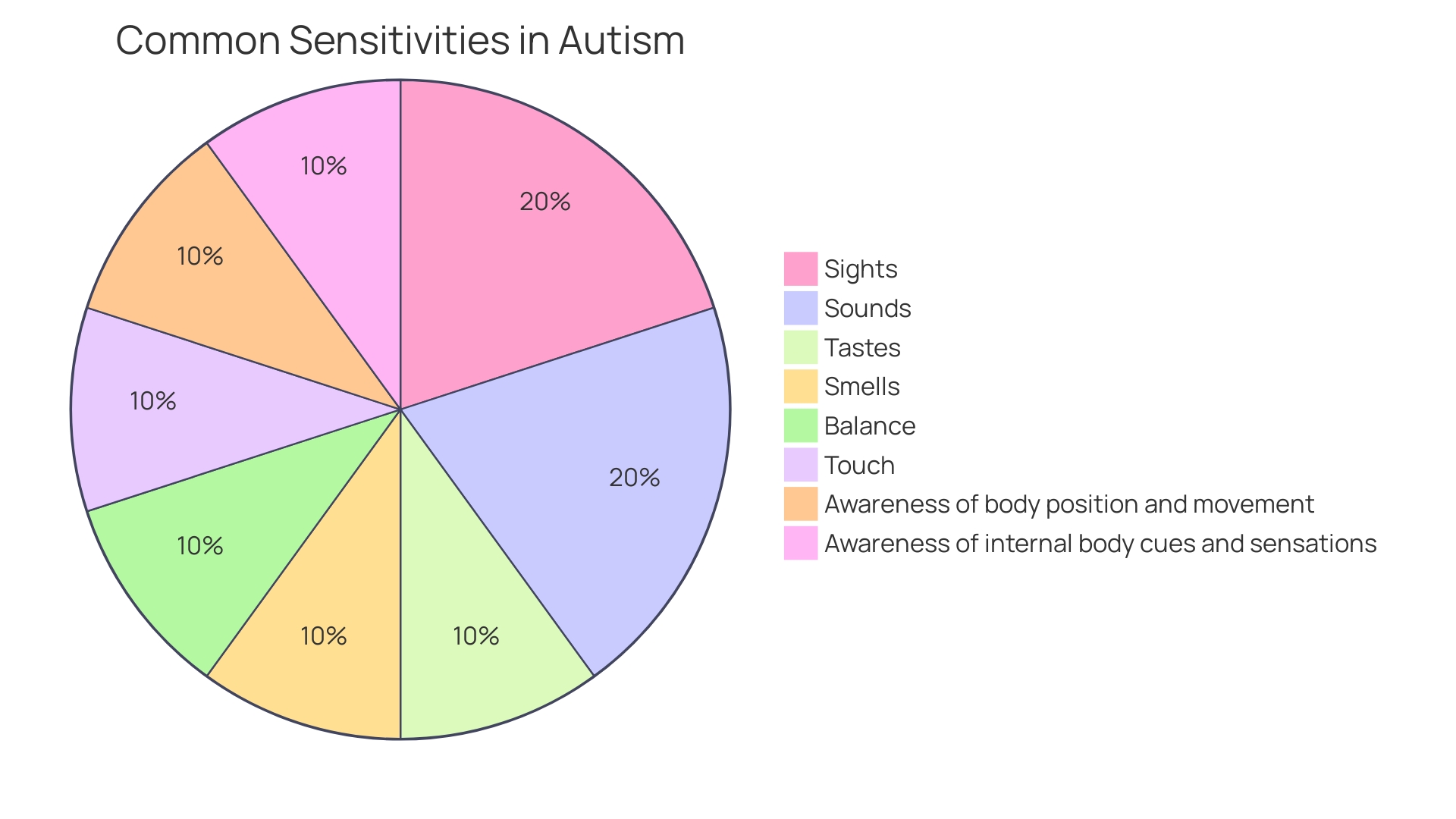
The spectrum of sensitivities can include reactions to sights, sounds, tastes, smells, as well as proprioceptive and vestibular inputs. These sensory experiences may be intense and confusing, making it difficult for those with autism to articulate their discomfort. For instance, a person with hypersensitivity to sound might find the bustling noise of a shopping mall unbearable, affecting their ability to function in such spaces.
Recent research has uncovered intriguing connections between autism and synesthesia, suggesting that individuals with autism may be more likely to experience synesthesia responses. Furthermore, studies have highlighted the potential of genetic mutations associated with autism to affect neural circuits, particularly in the auditory system, impacting how sound information is processed.
Amidst these challenges, there are promising developments in technology aimed at improving accessibility for those with sensory sensitivities. For example, advancements in spatial audio technology have been shown to assist individuals with vision impairments in navigating computer games, indicating potential applications for those with auditory hypersensitivities.
Autism, being a complex neurodevelopmental disorder, is associated with a higher risk of physical and mental health conditions, as well as an increased mortality rate. This emphasizes the importance of a better understanding of the and the need for tailored support to enhance the quality of life for those on the spectrum.
Autism Spectrum Disorder (ASD) presents a range of cognitive and linguistic capabilities among individuals, from those with intellectual disabilities to others with average or even superior intelligence. Communication abilities also vary, with some individuals exhibiting fluent verbal skills, while others may have minimal verbal communication or be nonverbal. The diversity in ASD necessitates an individualized approach to enhance each person's unique skills and address their specific challenges.
Research conducted by Professor Vikram Jaswal of the University of Virginia explores the , challenging the traditional conflation of speech with language and cognitive ability. The study employed an innovative technique akin to the game Whac-a-Mole, where participants tapped lit letters on a tablet. This method revealed that nonspeaking autistics can anticipate the sequence of letters in a sentence they have heard, suggesting a capacity for literacy and symbolic thought independent of speech.
Contemporary literacy instruction tends to prioritize speech-based methods, which may not accommodate the unique learning needs of nonspeaking individuals with ASD. However, just as deaf individuals can express language through sign language with proper instruction, nonspeaking autistics could also benefit from tailored literacy approaches.
The concept of inner speech is integral to understanding the cognitive development and working memory in ASD. Inner speech functions as a cognitive tool beyond its role in speech planning and monitoring. It aids memory and enables the abstract labeling of stimuli, facilitating a deeper understanding of complex tasks.
It's crucial to recognize that the term 'high functioning autism,' while not a formal medical diagnosis, is used to describe individuals on the autism spectrum with milder symptoms and higher intellectual capabilities. These individuals still face significant social, sensory, and behavioral challenges.
As we continue to adapt educational strategies for autistic individuals, it's essential to consider their diverse range of abilities and learning styles. By doing so, we can support their growth and integration into society more effectively.
Autism Spectrum Disorder (ASD) is a complex condition characterized by a range of symptoms, abilities, and needs. It's a spectrum because no two individuals with ASD are alike; their experiences and challenges are unique. For example, some may navigate their daily lives with minor support, exhibiting subtle symptoms, whereas others may face more pronounced challenges and require extensive support. The term 'spectrum' captures this diversity and underscores the importance of . In the words of Dr. Dan R. Offord, 'I do not mind if my children are in a race as long as the race is fair' – a sentiment that reflects the need for equitable support for children with disabilities, such as those on the autism spectrum.
The spectrum concept is supported by recent research, like the large-scale study by The Center for Discovery, which used AI and machine learning to predict significant behavior changes in individuals with ASD. This predictive ability is vital for creating personalized support strategies. Additionally, federal efforts like The Kevin and Avonte Program recognize the severity of challenges such as wandering, providing grants to enhance safety and awareness in the community. State Medicaid plans also play a critical role, impacting care access for one in five people, including many on the autism spectrum.
Statistics highlight the urgency of addressing ASD, with 8 out of 10 individuals reporting mental health issues. These challenges are not just personal but affect families and communities nationwide. Building a supportive environment requires recognizing both the strengths and the needs of individuals with ASD, reducing stressors, and ensuring resources are available to foster their well-being. As they transition into different life stages, like the 17-year-old transitioning from special school to a community-based setting, it's crucial to address the uncertainties they face and provide continuity and support in their journey. The spectrum nature of ASD emphasizes the necessity for a society that adapts to the varied needs of these individuals, allowing them to thrive and participate meaningfully in all aspects of life.

Understanding the Autism Spectrum and its diagnosis is an evolving field that embraces various approaches, including within the neurodivergent community. Many adults find the medical model of testing for Autism Spectrum Disorder (ASD) to yield inconclusive results, leading some to self-diagnose. This is particularly significant given that the autistic community highly values and accepts self-diagnosis, acknowledging the complexities and limitations of formal testing protocols.
Innovation in the diagnostic process is underway. A pioneering research study has introduced a combined method for early ASD detection, involving a parent-child block-play protocol to observe interaction patterns and an attention-enhanced deep learning framework capable of analyzing this data. This model aims to discern potential ASD indicators through the nuances of social and cognitive development behaviors.
Research highlights the urgency of early intervention. The Autism Community in Action (TACA) emphasizes the treatability of autism and the importance of timely diagnosis for effective treatment outcomes. NeuroQure is one such entity striving to bridge the diagnostic gap with technologies that could offer families insights into ASD within weeks of birth.
Developments in machine learning models, such as 'AutMedAI', have shown promising results. A study utilizing a large database has demonstrated this model's ability to identify roughly 80% of children with autism before 24 months, using just 28 parameters obtainable without extensive assessments. Such advancements underscore the critical role of early screening and the potential of innovative diagnostic tools to transform the lives of individuals with ASD and their families.
ASD is characterized by a variety of behaviors impacting social interaction, communication, and behavior. The DSM-5 outlines criteria for diagnosis, emphasizing persistent challenges in communication and social interactions across multiple environments, alongside restricted, repetitive patterns of behavior or interests. With autism estimated to affect as many as 1 in 36 individuals, understanding these symptoms is crucial for timely support and resources.
Harnessing the power of evidence-based interventions is paramount for individuals on the autism spectrum. As the landscape of autism research evolves with the advent of big data and advanced analytics, it is essential to individualize therapeutic strategies to meet the distinct needs of each person. Applied Behavior Analysis (ABA), speech and occupational therapies, alongside social skills training, form a cornerstone in developing communication abilities and social competencies while also providing tools for managing challenging behaviors. The innovative Interview Informed Synthesized Functional Analysis (IISCA) is one such method that has been gaining traction, particularly in its tailored approach to addressing specific behavioral issues.
Research endeavors, such as randomized controlled trials, have underscored the necessity for interventions grounded in meticulous study and analysis to ensure efficacy. This is in response to the dynamic and often challenging nature of behaviors associated with autism, which were reported to intensify for many during the pandemic. With a multitude of research studies at their disposal, clinicians now more than ever have the means to choose the best-suited interventions for their patients based on . Such interventions are not only designed to improve the well-being of individuals with autism but are also geared toward fostering environments where caregivers are empowered and children's mental health is prioritized, establishing a strong foundation for their future development.
Autism Spectrum Disorder (ASD) is recognized by its onset in early childhood, with a heritable neurodevelopmental profile marked by social communication challenges and repetitive behaviors. When identified early, interventions can be tailored to enhance communication, social skills, and adaptive behaviors, ultimately fostering independence and social inclusion. The significance of early identification is underscored by the fact that 31–55% of individuals with ASD also have an intellectual disability, which poses additional challenges.
The urgency for early support is highlighted by recent statistics showing a surge in autism referrals and lengthy waits for assessments, with a 27% increase in new referrals over the past year and a staggering 306% rise in children awaiting an autism assessment since the pandemic. Such delays can exacerbate the challenges faced by autistic children, including co-occurring emotional and behavioral problems, which can lead to their exclusion from meaningful participation in daily life.
Autistic identity, encompassing both personal and social dimensions, is pivotal during adolescence, a critical period for identity development. Personal identity shapes life choices, and for autistic individuals, incorporating autism into their identity can influence pivotal decisions, such as career paths that align with their strengths. Social identity, derived from community belonging, provides a sense of continuity and differentiation within social interactions.
Supporting autistic children's development and well-being is not just a health issue but a societal equity imperative, as emphasized by the late Dr. David (Dan) R. Offord. The goal is to ensure 'a fair race' for all children, especially those with disabilities, by recognizing their needs, valuing their contributions, and providing resources to caregivers. Through dedicated , which addresses wandering behaviors, and state Medicaid plans offering tailored support, there is progress in ensuring autistic individuals can thrive in their communities.

Navigating the journey with autism spectrum disorder (ASD) can be complex, but families and caregivers are not alone in this process. Access to a variety of supportive resources can be transformative, offering not just knowledge but also a sense of community and practical assistance. Engaging with parent support groups and educational programs allows caregivers to exchange experiences and strategies, fostering an environment of shared learning and mutual support. Advocacy organizations play a pivotal role in raising awareness, influencing policy, and championing the rights of individuals with ASD, ensuring their voices are heard and respected. Additionally, therapy providers with expertise in ASD offer tailored interventions that can significantly enhance the quality of life for those affected. These resources collectively contribute to a well-rounded support system, which is crucial for the well-being and development of individuals with ASD and their families.
For instance, community-based initiatives, such as the Friends of St James Park in Southampton, UK, provide a blend of social engagement and skill-building opportunities, which can be especially beneficial during transition periods that are known to be challenging for autistic individuals due to changes in routines and environments. As noted by the late Dr. David (Dan) R. Offord, a child psychiatrist, providing , including those with ASD, is foundational to their mental health and societal equity. This involves acknowledging their unique needs and contributions, alleviating persistent stressors, and equipping caregivers with necessary resources.
The importance of caregivers staying informed about new research, treatments, and therapies cannot be understated, as this enables them to make well-considered decisions regarding their child's care. It is essential for caregivers to critically evaluate the information available, consulting with experts to discern credible data from misleading sources. This ongoing learning process is a key component of effective caregiving, as highlighted by caregivers who emphasize the need for continuous education.
Statistics reveal the breadth of the caregiving landscape in the United States, with over 53 million adults engaged in caregiving activities, a significant increase from previous years. Among these, many are providing care without compensation, highlighting the dedication and commitment of families and caregivers in supporting their loved ones with disabilities, including ASD.
By harnessing these resources and continuing to advocate for fair and supportive environments, caregivers can help ensure that individuals with ASD can participate meaningfully in all aspects of life, from school and home to leisure activities, thereby fostering their inclusion and mental health.

In conclusion, Autism Spectrum Disorder (ASD) is a complex condition that affects individuals' social skills, communication abilities, and behavior. It is a spectrum disorder, meaning that symptoms and challenges vary from person to person.
Throughout this article, we explored the characteristics of ASD, including restricted and repetitive behaviors, communication and social skills deficits, sensory issues, cognitive and verbal abilities, and the importance of early identification and support.
Diagnosing ASD involves ongoing challenges in social interaction and communication, along with restricted, repetitive behaviors. Self-diagnosis is also recognized and accepted within the autistic and neurodivergent communities.
Individuals with ASD may experience difficulties in social interaction, communication, and sensory processing. Alternative methods of communication can aid conversation and highlight individual strengths. It is crucial to understand and support individuals with ASD in a comprehensive manner.
Restricted or repetitive behaviors are common in individuals with ASD. Understanding these behaviors and considering potential side-effects of interventions is important. Advancements in AI and machine learning can help predict and mitigate significant behaviors.
Sensory issues are a significant challenge for individuals with ASD. Advances in technology, such as spatial audio, can improve accessibility for those with sensory sensitivities.
Cognitive and verbal abilities vary among individuals with ASD. Recognizing and supporting each person's unique skills and challenges is crucial. Alternative literacy approaches can benefit nonspeaking individuals.
Overall, understanding and supporting individuals with ASD require a comprehensive approach. By recognizing their strengths, advocating for early identification and support, and utilizing evidence-based interventions, we can create an inclusive and supportive environment that enables individuals with ASD to thrive and participate meaningfully in all aspects of life.
What is Autism Spectrum Disorder (ASD)?
Autism Spectrum Disorder (ASD) is a range of neurodevelopmental conditions that affect an individual's social skills, communication abilities, and behavior. It can include repetitive behaviors and highly focused interests, and symptoms are experienced uniquely by each person.
How does ASD affect individuals?
ASD affects individuals differently, with some displaying challenges in new environments due to uncertainty and unfamiliarity, while others may bring strengths like dedication and reliability, especially in the workplace.
What are the official criteria for diagnosing ASD?
The DSM-5 outlines criteria for ASD diagnosis, including ongoing challenges in social interaction and communication across various settings, and restricted, repetitive behaviors, interests, or activities.
Can self-diagnosis be accepted for ASD?
Yes, within the autistic and neurodivergent communities, self-diagnosis is recognized and accepted due to the limitations of medical testing models for autism.
Why is early diagnosis and intervention important for individuals with ASD?
Early diagnosis allows for timely intervention, which can significantly improve quality of life for individuals with ASD and their families, leading to better outcomes.
What are common symptoms of ASD?
Symptoms include challenges in social interaction and communication, repetitive behaviors, focused interests, and sensory sensitivity, such as heightened responses to sensory input like sounds, lights, or textures.
What are some associated challenges and conditions with ASD?
Individuals with ASD may also face increased risks of health concerns like neurological issues, epilepsy, and mental health challenges, impacting their overall quality of life.
How are communication and social skills affected by ASD?
Autistic individuals may interpret language literally, have difficulty with nonverbal cues, and may struggle with the intricacies of relationships. They may also develop pragmatic skills at a slower pace and use alternative communication methods.
What are restricted or repetitive behaviors in ASD?
These behaviors can include hand flapping, rocking, and can sometimes manifest as problematic behaviors like aggression, which can lead to high healthcare costs and challenges in emotional regulation.
How does ASD impact sensory processing?
Individuals with ASD might be hypersensitive or hyposensitive to stimuli, affecting their ability to function in environments like schools or social settings. They might also have co-occurring conditions like anxiety and ADHD.
What is the range of cognitive and verbal abilities in ASD?
There is a wide range, from intellectual disabilities to superior intelligence, and from fluent verbal skills to minimal or non-verbal communication.
Why is ASD considered a spectrum?
ASD is considered a spectrum due to the wide range of symptoms, abilities, and needs among individuals. No two individuals with ASD are alike, and their experiences and challenges require tailored approaches to intervention.
What are some of the approaches to diagnosis and screening for ASD?
Approaches include medical assessments, self-identification, and innovative tools like AI and machine learning models that can predict significant behavior changes and assist with early detection.
What treatments and interventions are effective for ASD?
Evidence-based interventions like Applied Behavior Analysis (ABA), speech and occupational therapies, social skills training, and personalized strategies like the Interview Informed Synthesized Functional Analysis (IISCA) are key in addressing the needs of individuals with ASD.
What resources are available for families and caregivers of individuals with ASD?
Support groups, advocacy organizations, therapy providers, community-based initiatives, and educational programs provide knowledge, community, and practical assistance. It is important for caregivers to stay informed about new research and therapies to make well-considered decisions.