Autism Spectrum Disorder (ASD) encompasses a wide range of challenges and strengths, with Level 1 Autism, also known as high-functioning autism, representing one end of this spectrum. Individuals with Level 1 Autism often display milder social difficulties and repetitive behaviors, while also exhibiting normal to above-average intellectual abilities. However, the subtler presentation of Level 1 Autism can often lead to misunderstandings and oversight.
Understanding the unique needs of individuals with Level 1 Autism is crucial for providing them with the necessary support to navigate complex social environments. Recent advancements in AI-assisted early diagnosis and innovative research models offer promising developments in addressing the needs of individuals across the autism spectrum. By empowering parents with valuable insights and expert advice, we can work towards a future where individuals with ASD can thrive based on their unique strengths and challenges.
Autism Spectrum Disorder (ASD) represents a diverse array of challenges and strengths, with symptoms manifesting uniquely in each individual. , often referred to as , is at one end of this spectrum. Individuals with typically exhibit milder and may engage in restricted, repetitive patterns of behavior. Despite these challenges, they often have normal to above-average intellectual abilities and can articulate their thoughts clearly, though they might still struggle with the subtleties of social interaction and communication cues.
Understanding Level 1 Autism is essential, as it can often be misunderstood or overlooked due to its compared to more pronounced forms of ASD. Individuals with this diagnosis may navigate life with fewer needs for support, but they still face significant hurdles, especially in navigating complex social environments. It's important to recognize that the term "high-functioning" does not imply an absence of difficulties but rather indicates a different set of challenges and needs that are just as deserving of understanding and support.
The personal experiences of those with Level 1 Autism underscore the spectrum's variability. For instance, a case study published in the Journal of Personalized Medicine described twins with "level 3 severity" ASD who, despite sharing similar genetic backgrounds, displayed distinct characteristics and required highly . This highlights the importance of a tailored approach in managing ASD, regardless of the level of severity.
Recent advances, including and novel brain organoid models, are promising developments for understanding and addressing the needs of individuals across the autism spectrum. These innovations, coupled with ongoing research and , pave the way for a future where individuals with ASD can thrive in ways that align with their unique strengths and challenges.
, sometimes referred to as , is marked by challenges in , despite relatively intact language and cognitive skills. Individuals with this condition may find initiating and maintaining conversations arduous. They often have difficulty interpreting nonverbal cues and forming . Additionally, and an intense focus on specific interests are common, which can manifest as a strong adherence to routines. This level of autism, which is differentiated from more severe forms, still results in considerable difficulties, such as in various life areas. Moreover, recent research underscores the importance of understanding the unique experiences and needs of individuals with , as they navigate societal expectations and personal well-being.
Autism Spectrum Disorder (ASD) presents a myriad of challenges, not the least of which is navigating . For those with , sometimes known as high-functioning autism, interpreting and employing various forms of communication, from body language to tonal nuances, can be particularly perplexing. These difficulties can result in frequent misunderstandings, making everyday a complex task.
Dr. Katie Maras from the Centre for Applied Autism Research highlights the hurdles that face, such as grasping alternative perspectives and contextualizing events beyond minute details. Her research underscores the necessity of specific strategies and adaptations to aid in communication, such as breaking down multifaceted questions and providing written prompts to assist with structuring responses.
Evidence of these challenges is found in recent studies, such as the one led by Vikram Jaswal, Professor of Psychology at the University of Virginia. The study explored whether process language akin to their speaking peers, revealing that literacy and the ability to predict linguistic patterns may not be as impaired as once thought.
Despite the challenges, it's important to recognize the resilience and adaptability many exhibit. Compensatory strategies, often hidden from view, are employed to align their natural tendencies with societal expectations. As noted by Gregory Wallace, PhD, and echoed by others in the field, there's a gap in understanding the lifelong trajectory of autistic adults, particularly as they age.
Statistics shed light on the complexity of autism's impact on social relationships and mental health. Research indicates that autistic individuals are at an increased risk of co-occurring physical and mental health conditions, with implications for quality of life and lifespan. The nuanced expression of mood disorders, such as depression, can manifest in various ways, including social and behavioral issues.
The COVID-19 pandemic has further highlighted the vulnerabilities of the autistic population, intensifying the need for support and the importance of understanding each individual's unique experience. Emotional well-being, according to the data, has been significantly affected by the pandemic, emphasizing the importance of tailored interventions and the value of ongoing support.
It is critical to provide that acknowledges the diversity of the autistic experience, ensuring that strategies and interventions are as unique as the individuals they aim to assist. With a better understanding of the challenges and strengths inherent in autism, we can move towards a more inclusive and supportive society.
Individuals on the autism spectrum, particularly those with , often exhibit a need for consistency and may struggle with . They are prone to engaging in , such as arranging objects in a certain order or repeating certain motions, like hand-flapping. These behaviors can be seen as ways of coping with a world that feels unpredictable or overwhelming.
For many with , these routines and repeated actions provide a sense of structure and security. However, they can also become obstacles to learning new skills and adapting to change, which are essential for leading an independent life. A study by Colizzi et al. highlights that , such as the recent pandemic, underscoring the importance of addressing these behaviors with care and understanding.
The use of innovative approaches, like the AR application designed to translate tactile sensations into visual or auditory information, demonstrates that adapting the environment to the needs of those with autism can significantly reduce distress and promote better coping strategies. This can be particularly beneficial in settings that involve sensory stimuli that might otherwise be overwhelming, such as a dental office.
Furthermore, the research emphasizes the importance of and interventions like the Interview Informed Synthesized Functional Analysis (IISCA), which consider multiple reinforcing factors. These methods acknowledge that challenging behaviors often arise from complex interactions between an individual's unique characteristics and their environment.
By identifying the underlying reasons for these behaviors through assessments, parents and educators can tailor interventions that not only address the immediate behavior but also equip individuals with strategies to handle new situations and reduce stress. This aligns with the vision of Dr. David Offord, who advocated for a fair and supportive environment for all children, including those with disabilities, to ensure their mental health and equitable participation in society.
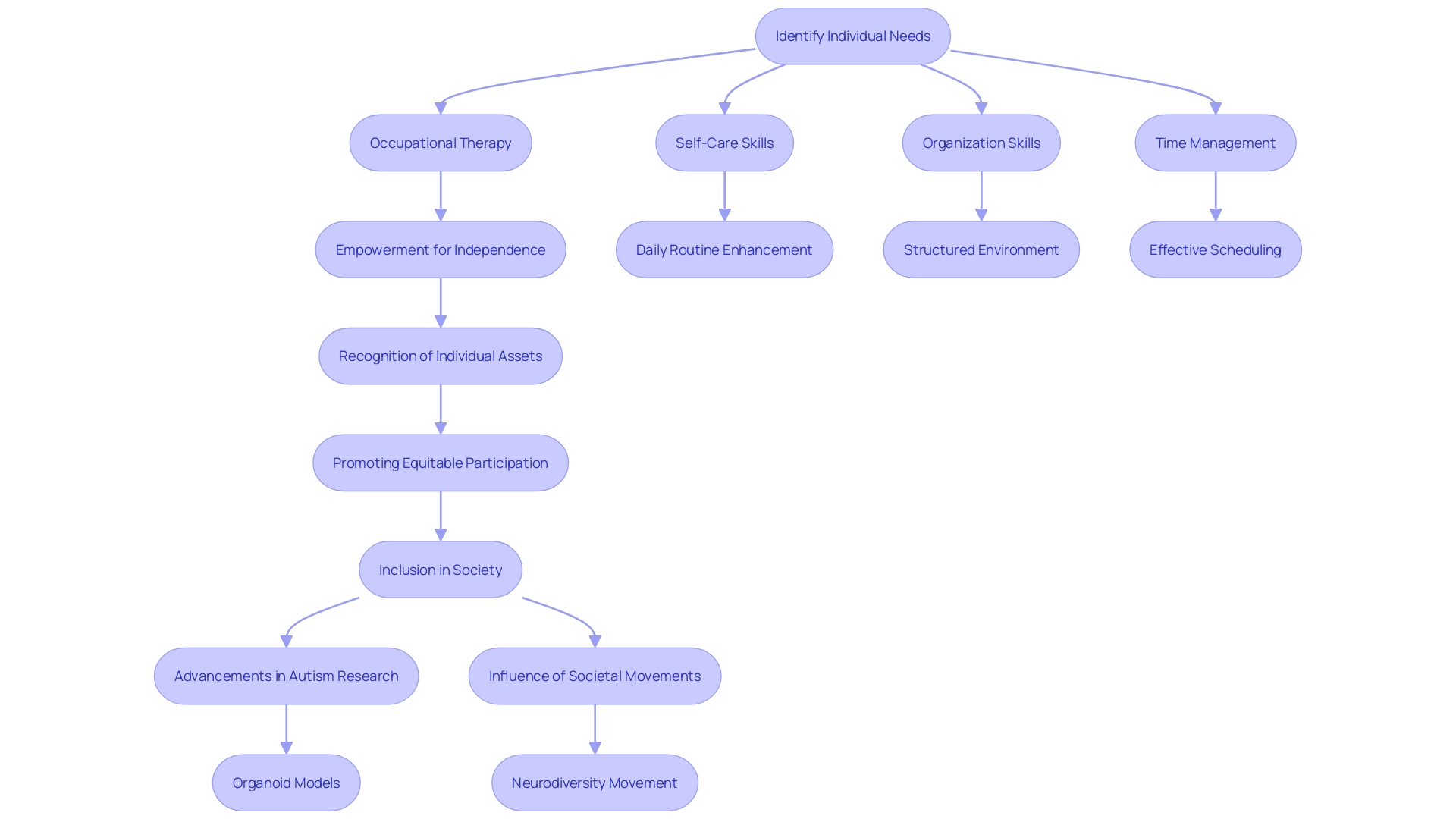
Individuals with Level 1 Autism, while capable of leading independent lives, often benefit from to enhance their self-sufficiency. These supports can encompass self-care, organization, and time management. Occupational therapists, such as Kara from Florida, emphasize the value of designed to empower children with autism. She notes that autonomy is a critical aspect of childhood development and can be encouraged through exposure to various life experiences.
Recognizing the individual assets and addressing the specific needs of children with disabilities, as reflected by the late Dr. David Offord's views on equitable participation in society, is crucial for their mental health and overall well-being. This approach aligns with the , which aims to enable individuals to perform meaningful activities despite any challenges they may face.
Recent advancements in understanding autism, including the development of organoid models to study the human cerebellum, underscore the and innovation in providing effective support for those with autism. These scientific breakthroughs are paralleled by societal movements, such as the , which advocate for the recognition and inclusion of individuals with neurological differences.
Identifying , often marked by subtle developmental nuances, is essential for initiating that can significantly enhance outcomes. While some children with may exhibit clear-cut signs such as delayed speech or distinct repetitive behaviors, others might only subtly struggle with social interactions, making a complex task that requires keen observation and clinical judgment. The heterogeneity of symptoms necessitates a tailored approach to each child, moving beyond sole reliance on traditional screening tools like the Modified Checklist for Autism in Toddlers-Revised with Follow-Up (M-CHAT-R/F), which, despite its usefulness, shows limitations in sensitivity, especially in real-world primary care settings.
Advanced technologies, including and eye-tracking, are emerging as groundbreaking tools for earlier and more precise detection of autism. These methods provide objective insights and can analyze patterns of behavior that may not be as evident to the human eye. For instance, eye-tracking technology captures the unique visual attention differences in children with autism, which can be indicative of the condition well before other symptoms consolidate.
Moreover, recent studies highlight the potential of models to sift through large datasets and identify autism with high accuracy rates. One such study using the Auto Media model demonstrated an 80% success rate in recognizing children with autism, showcasing the power of combining technology with traditional diagnostic methods.
The quest for accurate is not just a medical concern; it's a societal imperative. Organizations like The Autism Community in Action (TACA) and NeuroQure are tirelessly working to fill the diagnostic gap, understanding that the sooner treatment begins, the better the life trajectory for the child. These to alleviate the long diagnostic journeys that families often endure, marking a significant stride toward that can reshape the futures of children with Level 1 Autism.
The process of identifying (ASD) is multifaceted, typically involving and discussions with parents or caregivers. Professionals, such as psychologists and developmental pediatricians, are integral in this evaluation. Notably, a is not always necessary for identifying as autistic, as the community accepts self-identification due to the limitations in medical testing. However, for some, a can aid in and is a personal choice. Recent advancements, such as the Auto Media model, are promising in improving using non-invasive parameters, potentially transforming the diagnostic landscape for ASD. Moreover, to managing ASD, highlighted in case studies like the one involving dizygotic twins with Level 3 ASD, show success in reducing symptom severity. These advances underscore the importance of , which can lead to more effective interventions and better outcomes for individuals with ASD.

Tailoring therapeutic approaches to the individual needs of those with Level 1 Autism is crucial for fostering their independence and enhancing their quality of life. stands as a cornerstone of autism interventions, with the recent ABA Practice Guidelines released by the Council of Autism Service Providers ensuring the highest standard of care. These guidelines emphasize the necessity of to realize the full potential of ABA in and promoting .
Complementing ABA, other specialized therapies such as speech and language therapy, and address the specific challenges faced by individuals with Level 1 Autism. Speech therapy can significantly improve communication skills, while aids in enhancing daily living skills and sensory integration. As Dr. Jan Blacher notes, the spectrum of autism is diverse, and the same intervention procedures cannot be universally applied. This understanding is crucial in developing a that acknowledges the unique strengths and requirements of each person.
Jonah Davids, from the American Fund, underscores the importance of recognizing the assets that individuals with autism contribute to their communities. By providing a well-supported environment, we can reduce stress and ensure that everyone, regardless of their abilities, can participate meaningfully in society. This is in line with the vision of Dr. David (Dan) R. Offord, who advocated for a fair and engaged society for children, including those with disabilities. With the evolving landscape of autism research emphasizing over quasi-experimental studies, clinicians are now equipped to choose the most effective interventions based on the latest evidence, ensuring equitable and effective treatment for individuals with Level 1 Autism.
Supporting individuals with in educational and can significantly enhance their ability to succeed and contribute meaningfully to society. Tailored accommodations and modifications to these settings are crucial, as evidenced by various initiatives and research findings. For instance, are among the practical strategies that can be implemented to facilitate learning and productivity. Moreover, adapting the layout and noise levels in workspaces can be beneficial, especially for neurodivergent individuals who may find typical open-plan offices too distracting.
Statistics show that while a considerable number of people with autism desire to work, their employment rates are disproportionately low when compared to both non-disabled individuals and those with other disabilities. This emphasizes the need for more . Initiatives like the Kevin and Avonte Program, which addresses the challenges of wandering and elopement through , demonstrate the positive impact of targeted support.
Furthermore, the Emirates and Dubai International Airport collaboration to improve , including rehearsal flying experiences, highlights the broader potential for accommodations to enhance everyday activities and experiences.
By embracing these accommodations and creating awareness within workplaces, we can foster an environment where individuals with not only thrive but also enrich the diversity and productivity of our communities.

For individuals with , is a critical aspect that merits attention, as they are particularly susceptible to various including anxiety, depression, and ADHD. The intersection of autism with these co-occurring disorders can substantially impact their day-to-day functioning and overall quality of life. Acknowledging the unique challenges faced by those on the autism spectrum, it becomes imperative to ensure that they receive support that is both understanding of their specific needs and conducive to their full participation in educational, domestic, and recreational settings. This holistic approach to mental health is pivotal in creating equitable opportunities for those with autism to thrive alongside their peers.

For individuals with Level 1 Autism, tailored support in educational and professional environments can be essential to their success. and access to play a vital role in educational settings. Similarly, are crucial for enhancing their productivity and success in employment. Harvard Medical School's Adult Autism Health Resources initiative emphasizes the necessity of quality medical care and ongoing support for autistic adults, echoing the sentiment that inclusivity and acceptance are fundamental to the well-being of individuals with Level 1 Autism.
In the realm of higher education, it's estimated that 0.75% of the UK higher education population has social or communication difficulties, including autism. This demographic often excels academically, benefiting from traits such as attention to detail and strong memory. However, they may face challenges with social aspects and transitions in university life. To address these challenges, strategies have been identified through research involving , their parents, and college staff.
The workplace is another area where inclusivity is key. advocates for not only hiring neurodivergent individuals but supporting their career development. This approach can help fill talent gaps and promote equitable employment opportunities. In fact, only about 3 in 10 working-age autistic individuals are employed, representing the largest pay gap among disability groups. Initiatives like the Kevin and Avonte Program and state Medicaid plans aim to address these disparities by providing grants, education, and training to support the autistic community.
Real-world examples, such as Emirates and Dubai International Airport's efforts to improve the travel experience for neurodivergent passengers, demonstrate the positive impact of such accommodations. By facilitating rehearsal flying experiences, the initiative helps children like 11-year-old Humza become comfortable with the travel process, showcasing the importance of practical support and inclusivity.
As Associate Professor Gregory Wallace notes, there is a lack of research on autistic adults, particularly in middle and older adulthood. This underscores the need for continued advocacy and for individuals with Level 1 Autism. TACA's dissemination of medical research and treatment information to the autism community further exemplifies the ongoing efforts to provide necessary services and accommodations in both the school system and beyond.

For individuals with , sometimes referred to as high-functioning autism, navigating life can be akin to running a race with unique hurdles. Dr. David (Dan) R. Offord, a notable child psychiatrist, once said, "I do not mind if my children are in a race as long as the race is fair." This sentiment underscores the importance of providing equitable support to those with autism, ensuring they can engage meaningfully in education, home life, and leisure activities - essential for .
While many with are able to live independently, there are instances where is necessary, particularly for those facing or emotional and behavioral problems. In these cases, become invaluable. These tailored environments focus on fostering independence and , ultimately enhancing the quality of life for those with autism.
Recent initiatives, such as the Kevin and Avonte Program, address specific challenges like wandering and elopement, which can be particularly dangerous. This program, named after two autistic teens who tragically lost their lives, has distributed $10.3 million across 77 grants to help prevent such incidents. The program also aims to raise public awareness and establish community partnerships, emphasizing the need for .
Moreover, the Interagency Autism Coordinating Committee (IACC) emphasizes the necessity of collaboration across federal agencies and the autism community to better coordinate efforts and services. The IACC, which includes a diverse group of stakeholders, including autistic adults and family members, strives to address the needs and challenges faced by the autism community effectively.
Understanding the scale of the challenge, it's imperative to acknowledge the existing adult autistic population, as highlighted by Christopher McDougle, MD, with the need for ongoing medical care akin to that provided to neurotypical individuals. The aim is to create a supportive framework that ensures no one is left behind, embodying the commitment to "make the race fair" for everyone.

In conclusion, understanding and addressing the unique needs of individuals with Level 1 Autism is crucial for their success and well-being. Recent advancements in AI-assisted early diagnosis and innovative research models offer promising developments in supporting individuals across the autism spectrum.
Individuals with Level 1 Autism face challenges in social communication, behavioral flexibility, and repetitive behaviors. Tailored approaches, such as communication strategies and environmental adaptations, can help improve their social interactions and coping skills.
Providing structured support, such as occupational therapy and exposure to diverse experiences, enhances the self-sufficiency of individuals with Level 1 Autism. Early identification through advanced technologies like machine learning and eye-tracking can lead to timely interventions that significantly improve outcomes.
Accurate diagnosis and personalized treatment approaches are essential for individuals with Level 1 Autism. Inclusive hiring practices and workplace accommodations are necessary to create equitable employment opportunities and support their success in the workforce.
Supporting mental well-being and addressing co-occurring mental health conditions are crucial for individuals with Level 1 Autism. By recognizing their unique challenges and strengths, we can create a more inclusive and supportive society that allows them to thrive.
Tailored support in educational and work environments, such as individualized education plans and workplace accommodations, is fundamental for their success. Long-term care and residential programs play a crucial role in providing additional support when needed.
In summary, by understanding the needs of individuals with Level 1 Autism and providing tailored support, we can create a future where they can thrive based on their unique strengths and challenges. Ongoing research, advancements in technology, and inclusive initiatives are paving the way towards a more inclusive and supportive society for individuals across the autism spectrum.
What is Autism Spectrum Disorder (ASD)?
Autism Spectrum Disorder (ASD) is a range of neurodevelopmental conditions characterized by challenges in social interaction, communication, and by restricted and repetitive behavior. Individuals with ASD may also possess unique strengths.
What is Level 1 Autism?
Level 1 Autism, often known as high-functioning autism, is a classification within ASD where individuals typically have milder social difficulties, normal to above-average intellectual abilities, and may engage in restricted, repetitive patterns of behavior.
Does high-functioning autism mean individuals do not face significant challenges?
No, the term 'high-functioning' does not imply an absence of difficulties. Individuals with high-functioning autism still face challenges, particularly with the subtleties of social interaction and communication, as well as possible sensory sensitivities.
Why is understanding Level 1 Autism important?
Understanding Level 1 Autism is crucial because it can be misunderstood or overlooked due to its subtle presentation. Recognizing the unique challenges these individuals face is essential for providing appropriate support.
What are some recent advances in autism research and care?
Recent advances include AI-assisted early diagnosis, brain organoid models for study, and personalized care approaches. These developments have the potential to improve the understanding and support of individuals across the autism spectrum.
What are the main social communication challenges for individuals with Level 1 Autism?
Individuals with Level 1 Autism may struggle with interpreting nonverbal cues, initiating and maintaining conversations, understanding different perspectives, and contextualizing events. They also face a higher risk of co-occurring mental health conditions.
What is the significance of behavioral flexibility and repetitive behaviors in autism?
Behavioral flexibility refers to the ability to adapt to change, which can be challenging for individuals with autism. Repetitive behaviors, such as arranging objects or hand-flapping, provide a sense of structure but can be obstacles to learning new skills.
How does Level 1 Autism affect daily functioning and independence?
While individuals with Level 1 Autism are capable of living independently, they often benefit from structured support in areas like self-care, organization, and time management to enhance their self-sufficiency.
What are early developmental markers for Level 1 Autism?
Early markers can include delayed speech, repetitive behaviors, and subtle struggles with social interactions. Advanced technologies like machine learning and eye-tracking are improving the detection of these early signs.
What is involved in the diagnosis and assessment process for Level 1 Autism?
The process typically involves behavioral observations and discussions with caregivers, often conducted by psychologists or developmental pediatricians. There is also a growing acceptance of self-identification within the autism community.
What therapeutic approaches are used to treat Level 1 Autism?
Applied Behavior Analysis (ABA) therapy is a cornerstone of autism interventions. Speech and language therapy and occupational therapy are also important for addressing specific challenges.
Why are specialized support and accommodations important for individuals with Level 1 Autism?
Tailored support in educational and work environments is crucial for success and meaningful participation in society. Accommodations can include visual supports, individualized instruction, and adapted workspaces.
What mental health considerations are important for individuals with Level 1 Autism?
Individuals with Level 1 Autism are susceptible to mental health conditions like anxiety, depression, and ADHD. Support that is understanding and conducive to their full participation is essential for their mental well-being.
How can educational and workplace support be improved for individuals with Level 1 Autism?
Improvements can be made through individualized education plans, access to special education professionals, inclusive hiring practices, and workplace accommodations that support productivity and success.
What are long-term care and residential programs for Level 1 Autism?
These are specialized facilities that focus on fostering independence and improving social skills for those needing additional support due to co-occurring conditions or emotional and behavioral problems. Programs like the Kevin and Avonte Program also address challenges such as wandering and elopement.