Creating a supportive environment is so important for helping children with autism grow. Predictability really serves as a cornerstone for effective therapy. By setting up structured routines and clear expectations, caregivers can boost skill development and emotional regulation, allowing young individuals to truly thrive.
But here’s the question: how can families and therapists team up to create these predictable environments? It’s all about ensuring that each child gets the tailored support they need. Let’s explore this together!
Creating a structured setting in autism therapy focuses on predictable environments and their impact on skill development, allowing young individuals to easily anticipate their daily activities and transitions. Think of it as a comforting routine that includes familiar surroundings and clear expectations, which helps minimize surprises. This kind of environment is essential for easing anxiety and boosting comfort, allowing kids to focus on learning and developing new skills.
For example, using visual schedules and consistent cues can really help children understand what’s coming next. It’s all about promoting that sense of security and stability. In applied behavior analysis (ABA) therapy, the concept of predictable environments and their impact on skill development in autism therapy is key. They create a framework that helps young individuals thrive and engage more effectively in their therapeutic activities by focusing on predictable environments and their impact on skill development in autism therapy. Research shows that having these routines not only improves behavior but also supports emotional regulation, making it easier for kids to manage anxiety and transitions.
By setting up these organized environments, caregivers can significantly enhance the overall quality of life for youth with developmental disorders. It’s about fostering independence and building confidence in their daily interactions. At Rori Care, we truly believe in the power of individualized planning in our behavioral programs. We set measurable goals and use to ensure that each child gets the personalized support they need.
Our Board Certified Behavior Analysts are dedicated to continuously assessing and adjusting therapy plans, making sure families receive the support they require. Plus, we offer complimentary consultations to help navigate the challenges that come after a diagnosis. Let’s explore this together!

In autism therapy, predictable environments and their impact on skill development are vital, providing a sense of safety and control for young individuals. When kids know what to expect, they tend to feel less anxious and stressed, which can really . Think about it: predictable routines help children develop emotional management skills since they can anticipate changes and prepare for transitions.
Plus, having that predictability fosters independence! It allows kids to navigate their surroundings with confidence. Research shows that individuals with autism thrive in predictable environments and their impact on skill development in autism therapy, where consistent routines and clear expectations help them focus on learning and social interactions. This stability is essential for their overall growth and well-being.
And let’s not forget about the caregivers! Empowering them with ABA principles and strategies boosts their ability to support their children’s behavioral goals. When caregivers are educated, they gain the knowledge and skills needed to provide the right support at home, complementing professional interventions and promoting consistency. This informed approach leads to better behavioral outcomes, as active caregiver involvement aligns with therapeutic strategies, ultimately benefiting the child’s development.
So, let’s explore this together! We’re here to help you every step of the way!
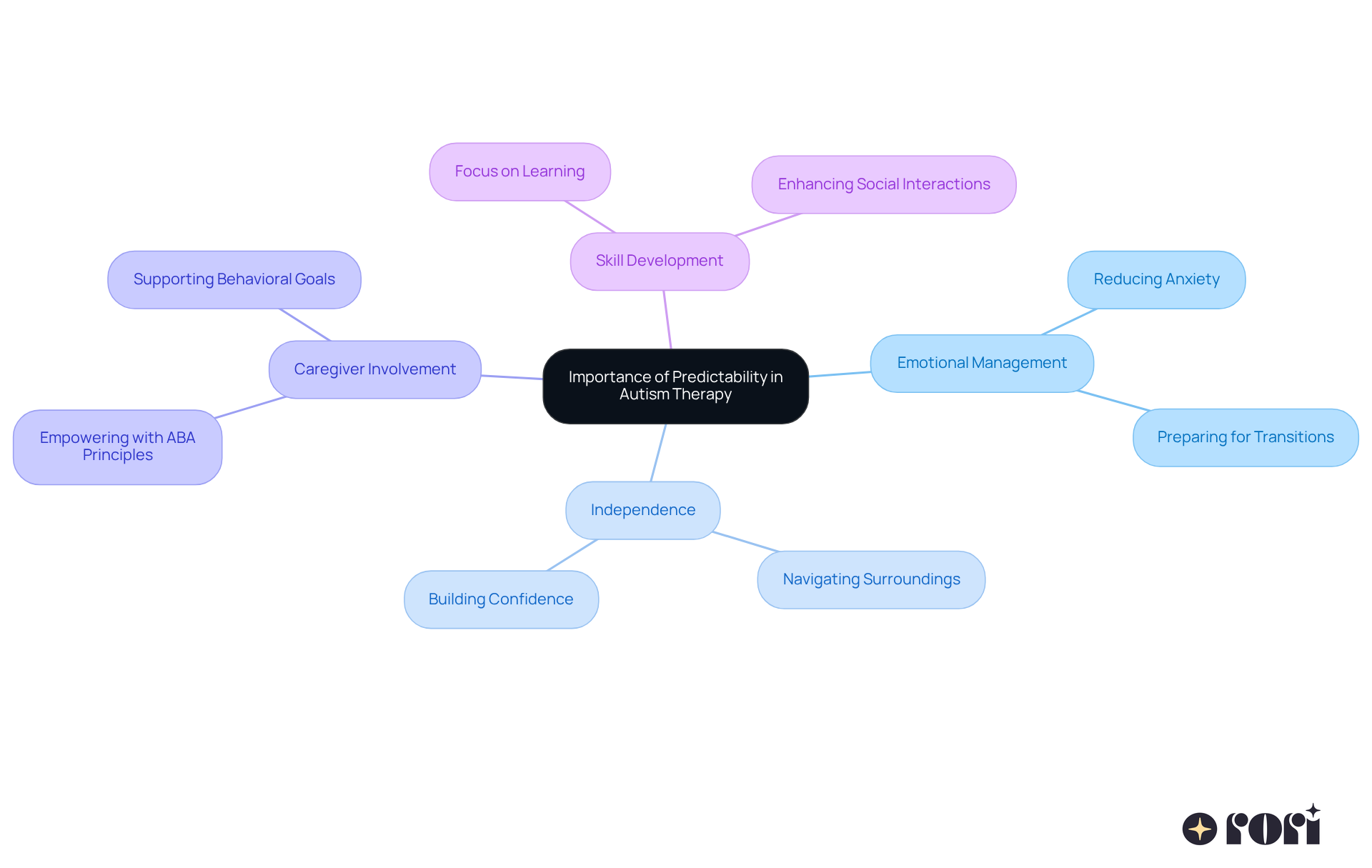
The difference for individuals with autism can be significant when considering predictable environments and their impact on skill development in autism therapy. They help improve concentration and attention by cutting down on those unexpected changes that can throw kids off track. When kids have , they get more chances to practice important daily skills like self-care and social interactions in a safe space. This repetition is key! Research shows that when ABA therapy focuses on consistent practice, it leads to lasting improvements in attention and communication skills. In fact, about 90% of individuals see significant progress when caregivers are actively involved and the recommended hours are followed.
Plus, predictable settings can help kids manage their emotions better, which means fewer meltdowns and behavioral issues. Children in these environments often feel more secure and are more willing to engage with their peers and therapists. For instance, having structured routines can really help reduce anxiety and create a sense of comfort, allowing kids to focus on meaningful interactions. Overall, the organized nature of these settings, which are predictable environments and their impact on skill development in autism therapy, is crucial for the success of ABA therapy, supporting the growth and development of children with developmental disorders. This approach is beneficial for individuals of all ages facing behavioral challenges or skill deficits, including those with Autism Spectrum Disorders, ADHD, and learning disabilities.
Let’s explore this together! We’re here to help you every step of the way!

Creating predictable environments and their impact on skill development in autism therapy can truly make a significant difference for families. First off, establishing consistent daily routines is key. Think about setting specific times for activities, meals, and therapy sessions. Visual schedules work wonders here! They give clear signals for what’s next, which can boost task compliance and independence in young ones.
Next, let’s talk about transition cues. Using timers or visual signals can help prepare kids for changes between activities. This little step can significantly reduce anxiety that often comes with unexpected shifts.
Now, consider designing a sensory-friendly environment. It’s all about minimizing distractions and supporting focus. Make sure materials and furniture are organized to facilitate supervision and engagement.
And remember, flexibility is important! While it’s great to have structure, being able to is essential. As Rori Care puts it, "We empower your young one with the skills they need to navigate the world independently." This highlights how personalized behavior intervention plans by qualified analysts can lead to positive behavior change and skill acquisition.
Also, it’s worth noting that ABA therapy is the only scientifically validated treatment for developmental disorders that’s covered by insurance. This makes it more accessible for families. By working together, therapists and parents can create supportive, predictable environments and their impact on skill development in autism therapy, thereby enhancing learning and development for children with autism. This approach can lead to improved emotional stability and focus. Let’s explore this together!

Creating predictable environments in autism therapy is so important for helping our kids develop skills and feel good about themselves. When caregivers set up structured settings that reduce surprises, it makes it easier for children to navigate their daily activities with confidence. This focus on predictability not only eases anxiety but also helps kids manage their emotions, allowing them to concentrate on learning and enjoying meaningful interactions.
Throughout this article, we’ve explored some key insights, like the value of consistent routines, the power of visual schedules, and the benefits of transition cues. These elements come together to create a safe space where children can practice essential skills like self-care and social interaction. Plus, when caregivers get involved in the therapy process, it really boosts outcomes. Their understanding of ABA principles means they can offer consistent support at home, which is a game changer!
Ultimately, we can’t stress enough how vital predictable environments are. By putting structured routines and strategies in place that cater to each child’s unique needs, families can really enhance their child’s learning experience and emotional well-being. Embracing this approach not only encourages independence but also sets the stage for lasting improvements in behavior and skill development. Let’s work together-caregivers and therapists-to create these supportive environments, ensuring every child has the chance to thrive! We’re here to help you every step of the way!
What are predictable environments in autism therapy?
Predictable environments in autism therapy refer to structured settings that focus on familiar routines and clear expectations, allowing young individuals to anticipate their daily activities and transitions, which helps minimize surprises.
How do predictable environments impact skill development in children with autism?
They promote a sense of security and stability, easing anxiety and boosting comfort, which allows children to focus on learning and developing new skills more effectively.
What tools can be used to create predictable environments?
Tools such as visual schedules and consistent cues can help children understand what’s coming next, enhancing their ability to navigate transitions.
What is the role of predictable environments in Applied Behavior Analysis (ABA) therapy?
In ABA therapy, predictable environments are key to creating a framework that helps young individuals thrive and engage more effectively in their therapeutic activities.
How do structured environments benefit emotional regulation in children with autism?
Research shows that having structured routines not only improves behavior but also supports emotional regulation, making it easier for kids to manage anxiety and transitions.
What is the goal of creating organized environments for youth with developmental disorders?
The goal is to enhance the overall quality of life for these individuals by fostering independence and building confidence in their daily interactions.
How does Rori Care approach individualized planning in behavioral programs?
Rori Care believes in the power of individualized planning by setting measurable goals and using evidence-based strategies to provide personalized support for each child.
What support do families receive from Rori Care?
Families receive continuous assessment and adjustment of therapy plans from Board Certified Behavior Analysts, along with complimentary consultations to help navigate challenges after a diagnosis.