Case Conceptualization in Therapy: Unveiling the Power of Personalized Treatment
Therapy is more than just addressing symptoms; it's about understanding the intricate web of emotions, cognitions, behaviors, and experiences that shape an individual's life. Case conceptualization is the foundational element that allows therapists to distill their clients' unique patterns and narratives into a cohesive understanding that guides effective treatment. In this article, we explore the definition and purpose of case conceptualization, the components involved, and the steps to develop a comprehensive conceptualization.
We also delve into the importance of theoretical orientation, the process of gathering and organizing client information, identifying patterns and themes, formulating treatment goals and plans, and the challenges and considerations in case conceptualization. Finally, we highlight the benefits of effective case conceptualization for both therapists and clients. This informative and authoritative article empowers parents with valuable insights and expert advice, emphasizing the significance of tailored case conceptualization in achieving positive therapeutic outcomes.
is a foundational element that allows therapists to distill the unique patterns and narratives of their clients into a cohesive understanding that guides . This process is not merely about assessing symptoms but involves a creative and systemic approach to deciphering the intricate web of a person's emotions, cognitions, behaviors, and experiences. A profound example of this is the use of , which taps into a client's intrinsic ability to find novel solutions and apply them to their life challenges, fostering a sense of forward movement and .
The impact of psychotherapy is well-documented, with studies indicating that it has a significant effect size of about 0.80 and that the average client benefits more from therapy than 79% of untreated individuals. These statistics underscore the efficacy of therapy across various conditions and age groups, highlighting the importance of a tailored case conceptualization in achieving these positive outcomes.
Harald's story illustrates the power of . Despite his supportive roles as a husband, father, and friend, Harald's life was overshadowed by a past trauma, which led him to prioritize others over himself. Through therapy that addressed his unique history and its influence on his current behavior, Harald could begin to reconcile his past and redefine his approach to self-care and relationships.
Furthermore, the current landscape of mental health reveals that while are available to support individuals, their adoption rates are low. This highlights the need for more engaging, personalized therapeutic approaches that resonate with clients' experiences and foster sustained engagement and progress.
Ultimately, the philosophy behind is rooted in the understanding that each individual's psyche is a complex mosaic of learned patterns, beliefs, and experiences. By bringing these elements to light, therapists can navigate the nuances of psychological suffering and empower clients to embark on meaningful change.

Therapeutic case conceptualization is akin to creating a map of a client's . It involves piecing together a coherent picture from the —the specific issue prompting them to seek therapy. Beyond the surface-level concern, a thorough exploration of the client's background is crucial, delving into their developmental history, familial relationships, and pivotal life events to uncover patterns and contextual factors.
Assessment data plays a vital role, gathered through a blend of clinical assessments, direct interviews, and observational techniques, which provides a window into the client's inner world of thoughts, feelings, behaviors, and social interactions. Diagnosis, while sometimes contentious, serves as a framework to understand and categorize the client's experiences within the broader context of .
Equally important is the recognition of the . Identifying these assets—including coping strategies and support networks—helps to empower clients, enabling them to draw on these resources throughout the therapeutic journey. This approach aligns with the insights from the experts who underscore the importance of , thereby fostering a sense of agency and creativity in clients.
In the dynamic field of , recent advancements underscore the potential of integrating pharmacological interventions with psychotherapeutic techniques, as seen in the innovative approach of midomafetamine-assisted therapy for PTSD. Such developments reflect the evolving understanding of complex conditions and the multifaceted nature of effective treatment modalities.
A comprehensive case conceptualization, therefore, is not a static document but a living, breathing guide that evolves with the client's progress, new discoveries, and the incorporation of cutting-edge research and therapeutic practices. It equips therapists with a strategic overview of the client's situation, allowing for that are as unique as the individuals they serve.
The process of is a critical component of , serving as a framework that helps therapists to identify and understand the multifaceted elements influencing a client's situation. It is an integrated approach that starts with Information Gathering, where therapists collect essential data through various means such as assessments, interviews, and observations.
Subsequently, the therapist moves to Analysis and Synthesis, where they dissect the information to discover patterns and themes that reveal underlying factors affecting the client’s issues. It’s in this phase that therapists avoid focusing too much on the problem, which can trap clients in a problem-saturated mindset, leaving them feeling helpless and without direction. Instead, therapists aim to draw on the client's inner resources and creativity, as described by various experts, who highlight the to old problems through creative engagement.
Hypothesis Formation follows, where therapists develop educated guesses about the client’s difficulties, taking into account potential causes and perpetuating factors, as illustrated in the case of Harald whose past trauma influenced his current behavior. This stage is crucial for crafting a narrative that makes sense of the client’s experiences and guides the subsequent therapeutic intervention.
The fourth step, , involves therapists working together with clients to examine and refine these hypotheses. This collaborative approach aligns with the philosophy that proof, much like in mathematics, is a social construct aimed at persuasion and verification through multiple perspectives.
Finally, is where an is created, anchored in the comprehensive understanding developed through the . This plan includes specific goals and interventions designed to leverage the client's strengths and address their concerns. Statistics support the effectiveness of psychotherapy, showing that the average client receiving therapy is better off than 79% of untreated clients, emphasizing the importance of a well-constructed treatment plan based on a solid .
In the realm of psychotherapy, the approach a therapist takes to understand and address a client's concerns—known as —is deeply influenced by their . A narrative, as described in the field of psychology, binds the beginning, middle, and end of a client's story, allowing for a hermeneutic interpretation of their experiences. This , part of a broader , delves into both the content and the form of the client's expressed thoughts, providing valuable insights that shape the therapeutic process.
Indeed, the American Psychological Association (APA) has acknowledged the efficacy of psychotherapy, citing studies that demonstrate an average effect size of 0.80 and that an average client undergoing therapy fares better than 79% of untreated individuals. This indicates a significant impact, yet the precise reasons behind the ness of psychotherapy remain a topic for further exploration.
Furthermore, the importance of focusing on solutions and resources rather than dwelling on problems is emphasized. Engaging clients in creative processes can catalyze the discovery of new solutions, drawing on their inner resources to transform their perspective and foster progress. This shift from a problem-saturated mindset to a solution-oriented approach can be instrumental in facilitating meaningful change in therapy.
Psychotherapy's ness is not uniform across all cases, and no single approach is deemed superior. Research highlights the variability in the quality of psychotherapy studies and the existence of biases, underscoring the need for critical evaluation. Nonetheless, interventions such as Interpersonal Group Therapy (IGT) have shown promise, particularly in low- and middle-income countries where cost-ness is a key consideration.
Ultimately, the choice of and the subsequent must align with the therapist's expertise and the client's unique needs, ensuring a personalized and .
To effectively conceptualize a therapy case, therapists meticulously collect and structure a wealth of . This process is not unlike the detailed note-taking that healthcare providers undertake, as seen with , which aims to streamline pediatric care notes for clarity and efficiency. In therapy, the gathering of client data is similarly intricate, encompassing , current symptoms, and the many psychosocial elements that shape .
For instance, consider the case of Harald, a middle-aged man whose compulsion to help others stems from a traumatic incident in his past. This example illustrates how critical it is to unravel the complex tapestry of a client's life to understand their mental state truly. By meticulously organizing this data, therapists can pinpoint patterns and themes crucial to formulating an .
Modern methods of data collection in therapy often mirror the advancements seen in medical practices, where like Ascribe optimize the healthcare provider experience. As Paul Clark's expertise in AI leads the way in care, therapists also employ various tools, from traditional interviews to cutting-edge technology, for deeper insights.
Moreover, group therapy initiatives by companies like Two Chairs show promising satisfaction rates, indicating that efficient data handling can lead to better outcomes. Just as in individual therapy, identifying core issues, such as loneliness, through structured information can enable a more .
Understanding a client fully requires going beyond surface-level problems. As therapists like April, transitioning from IT to therapy, contemplate the impact of AI on their profession, the focus remains on harnessing technology to enrich the client-therapist interaction, not replace it. Ultimately, the careful assembly of a client’s narrative is a foundational step in the journey toward healing and growth.
Delving into the complexities of human behavior, in therapy is akin to assembling a puzzle where each piece represents the client's thoughts, emotions, behaviors, or interpersonal dynamics. Identifying recurring patterns and themes is not merely an academic exercise but a critical step in uncovering the unique tapestry of factors that shape the client’s psychological landscape. These patterns and themes are the threads that, when woven together, form a narrative that can guide .
Consider Harald, a middle-aged man who consistently placed the needs of others above his own. His propensity for self-sacrifice was not merely a personality trait but a response molded by a traumatic past—a serious accident for which he felt responsible. This pattern of behavior, rooted in Harald's history, highlights the importance of understanding the individual context when developing .
In the realm of mental health, the effectiveness of various psychotherapeutic approaches, such as psychoanalysis, cognitive behavioral therapy (CBT), and humanistic therapy, has been extensively debated. It’s been understood that no single type of psychotherapy is universally superior. This underscores the value of based on the individual's unique circumstances rather than relying solely on one-size-fits-all solutions.
Furthermore, the advent of technology in mental health care has introduced that promise to improve service scalability. Nonetheless, their effectiveness is contingent upon successful integration into clinical workflows and addressing the specific needs of practitioners. This is exemplified by the low engagement rates with digital technologies among behavioral health professionals, due to various barriers such as concerns about data privacy, system costs, and ease of use.
Adding to the therapist's repertoire, is lauded for its power to foster new perspectives and solutions. It involves drawing on inner resources, as expressed in the arts, to catalyze change in other life areas. This approach aligns with the sentiment that overemphasis on problems can trap clients in a state of helplessness, whereas focusing on solutions and resources can propel them towards healing and growth.
In light of these insights, emerges as a dynamic and multifaceted process. It is not merely about identifying problems but also about harnessing a client's strengths and capacities for creativity to forge a path to well-being. It's about looking beyond the surface to the underlying narrative, where every element—from personal history to the potential of innovative interventions—plays a crucial role in shaping the therapeutic journey.

Crafting precise treatment goals and establishing are fundamental in therapy, guided by a comprehensive case conceptualization. Therapists, in collaboration with their clients, set to navigate the course of treatment. These well-defined targets ensure that both therapist and client are aligned towards achieving tangible progress, with objectives serving as along the way.
Through a shared understanding of these goals, the is strengthened, promoting an active and engaged participation from the client. As goals are set with a clarity of purpose, they are consistently evaluated to ensure the treatment remains effective and responsive to the client's evolving needs.
Innovations in the medical field, such as algorithms using artificial intelligence to , underscore the importance of precision and adaptability in care strategies. These advancements highlight the potential for technology to refine how treatment responses are measured and adjusted, ensuring that individual patient differences are accounted for in the pursuit of optimal therapeutic outcomes. As evolves, the integration of these principles and technologies promises to further empower clients and therapists in their journey towards mental well-being.
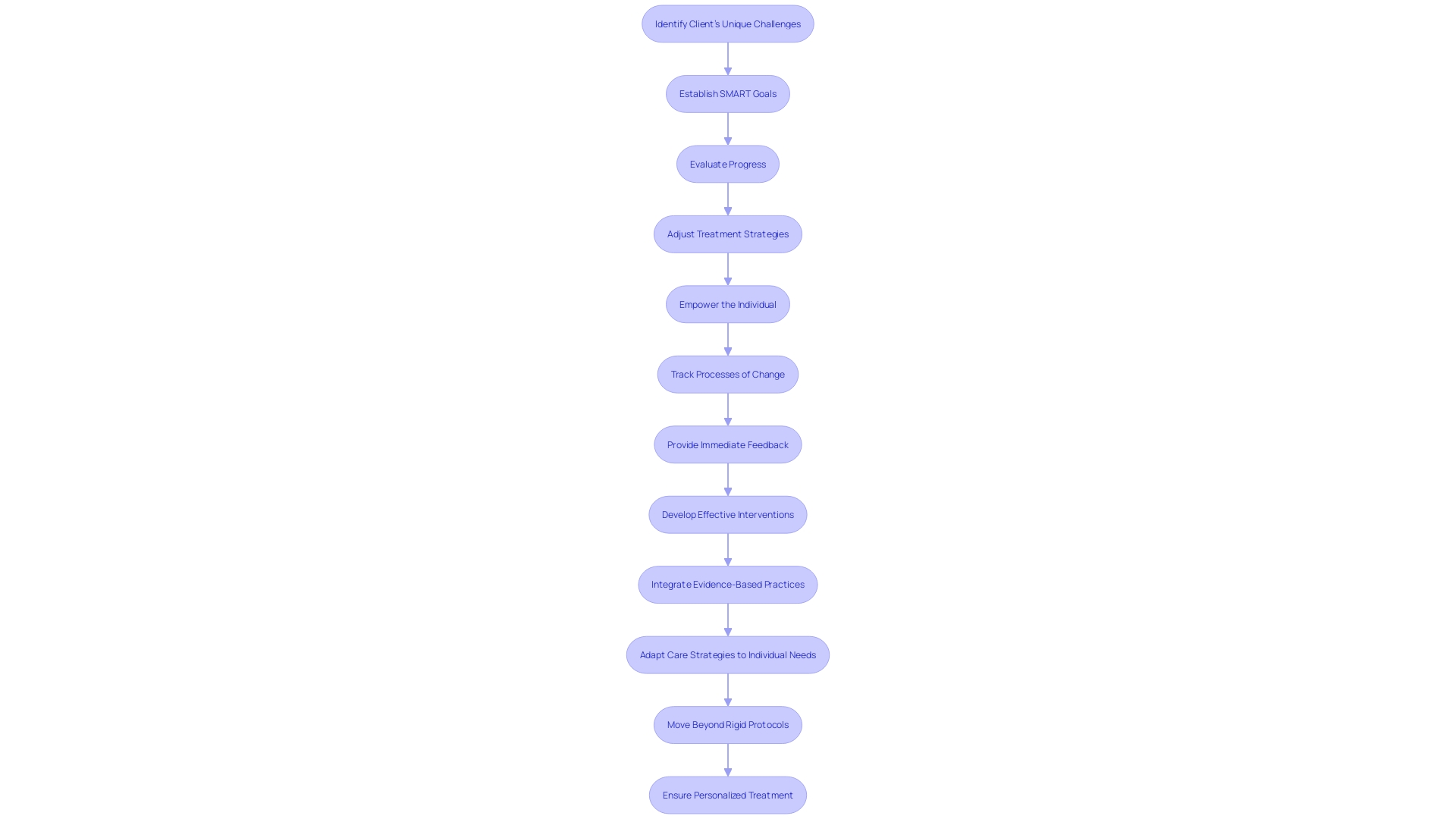
Imagine Harald, a middle-aged man who's led a fulfilled life with a loving family and supportive friends. Despite his seemingly stable situation, Harald is haunted by a traumatic past event that led to a prison sentence. Compelled by a deep-seated need to atone, he often neglects his own needs to assist others.
In therapy, a clinician might unravel Harald's behavioral patterns and the origins of his guilt and self-sacrifice through a process known as . This approach is not just a theoretical exercise; it's a practical, with proven efficacy in treating a variety of , including .
Clinical studies confirm the effectiveness of (CBT) in managing conditions like health anxiety, with significant improvements observed when compared to standard care or other therapeutic interventions. For instance, a meta-analysis involving over a thousand participants showed that CBT had a substantial impact on health anxiety, with effect sizes ranging from Hedges' g at 0.95 post-treatment to 0.34 at follow-up. These findings underscore the importance of a , one that's grounded in empirical research and adapted to the individual's unique circumstances.
Bringing creativity into therapy can also be transformative, as it taps into a client's inner resources and encourages a shift away from problem-centric thinking. This shift is vital, as it allows individuals to find new solutions and perspectives that can be applied to various life situations. The essence of therapy lies in its ability to not only understand and analyze problems but also to engage clients in finding their path to well-being.
As for the prevalence of anxiety, it's a common mental health concern affecting millions worldwide. In the United States alone, impact 19.1% of adults, with young adults and women being particularly susceptible. Despite their treatability, a significant number of those affected do not seek help.
These statistics highlight a critical gap in mental health care and the need for increased awareness and access to effective treatment options.
In summary, in therapy is a dynamic and multifaceted process that integrates a person's history, current challenges, and potential for growth. It is supported by a wealth of research advocating for the effectiveness of treatment modalities like CBT, particularly in the context of . By combining a strong empirical foundation with a creative and individualized approach, therapy can pave the way for profound personal change and healing.
Grasping the intricacies of within therapy can be both a formidable yet essential task. Therapists must navigate complex scenarios, as each woven from the individual's personal history, current circumstances, and future aspirations. Consider, for instance, the tale of Harald, a man whose life is seemingly well-ordered with family and friends, but who carries the weight of a past trauma that continues to shape his actions and relationships.
Such depth of character requires a therapist to engage in a thorough and sensitive exploration to construct an .
The process of requires a delicate balance between objective assessment and the subjective interpretation that each therapist brings to the table. It's an artful blend of science and intuition, as therapists must draw upon their expertise while remaining open to the evolving narrative of their clients. The need for , as initial conceptualizations must be revisable in light of new insights or shifts in the client's goals.
Moreover, the cultural lens through which a client's experiences are viewed cannot be ignored. In the evolving landscape of digital technologies in mental health care, as highlighted by recent studies and the digital-assurance process in healthcare organizations, clinicians are increasingly aware of the need to ensure that new tools align with their clients' cultural and individual contexts. This alignment is critical to avoid potential ethical, legal, and social issues, as emphasized in case studies examining the evolution of emerging technologies.
Emerging research underscores the importance of adopting a in therapy. It has been shown that dwelling excessively on problems can anchor clients in a state of helplessness, whereas tapping into their creativity can catalyze positive change. As one author puts it, creativity allows individuals to find new solutions in old situations, thereby unlocking paths to progress that were previously unseen.
Statistics reinforce the effectiveness of psychotherapy, with studies indicating that the average client who receives therapy fares better than 79% of untreated individuals. This data is a testament to the , provided the is handled with the necessary skill and sensitivity.
In summary, while the challenges of developing a comprehensive are manifold, the potential rewards are substantial. By weaving together a nuanced understanding of the individual, harnessing the therapeutic power of creativity, and staying attuned to , therapists can offer interventions that are truly transformative.
Effective case conceptualization stands as a pivotal element in the therapeutic process, offering substantial advantages for both therapists and clients. It allows for the crafting of that align with the unique needs and aspirations of the client. Through a deep comprehension of the factors underlying a client's struggles, therapists can that are both potent and efficient.
Moreover, this approach fosters a , whereby clients and therapists work in concert, thereby reinforcing the and boosting client involvement.
An integral component of this conceptual framework is its capacity to facilitate of client progress. This active approach to therapy is backed by evidence from a study indicating that psychotherapy yields a large effect size of 0.80, demonstrating its substantial benefit to clients. Furthermore, the average individual receiving psychotherapy fares better than 79% of those who do not receive such treatment.
Case conceptualization also addresses a by focusing on solutions and resourceful approaches rather than dwelling extensively on problems, which can lead to a sense of helplessness. Encouraging clients to harness their creativity and resourcefulness, as highlighted by the inventive application of , clients can redirect these skills to bring about progress in their lives. In doing so, therapy transcends beyond the sessions, impacting the clients' daily lives and decisions, which is particularly crucial in the face of mental health's significant economic burden, including loss of productivity and financial strain.
By integrating these insights, therapists can significantly enhance the quality and effectiveness of mental health care, which is especially pertinent given the high prevalence of depression and anxiety in regions such as Latin America. A clear case conceptualization not only bolsters the therapeutic alliance but also serves as a valuable tool for therapists to provide targeted and impactful support for their clients' mental well-being.

In conclusion, case conceptualization is a vital process in therapy that helps therapists understand the unique patterns and narratives of their clients. It goes beyond symptom management and considers the complex interplay of emotions, cognitions, behaviors, and experiences that shape an individual's life. The components of case conceptualization, including gathering and organizing client information, identifying patterns and themes, formulating treatment goals and plans, and addressing challenges, contribute to effective therapy.
Theoretical orientation plays a significant role in case conceptualization, as it guides therapists in understanding and addressing clients' concerns. A personalized approach that aligns with the therapist's expertise and the client's needs is essential for successful therapy.
The process of developing a case conceptualization involves gathering information, analyzing and synthesizing data, forming hypotheses, collaborating with clients, and creating a treatment plan. This comprehensive approach allows therapists to tailor interventions that leverage the client's strengths and target their specific concerns.
Effective case conceptualization benefits both therapists and clients. It enables the creation of individualized treatment plans that align with the client's unique needs and goals. By fostering a collaborative environment, case conceptualization enhances client involvement and strengthens the therapeutic relationship.
Additionally, focusing on solutions and resourceful approaches empowers clients to tap into their creativity and find new perspectives for personal growth.
In summary, case conceptualization is a powerful tool in therapy that allows therapists to understand and address the intricate aspects of their clients' lives. By tailoring treatment plans based on a comprehensive case conceptualization, therapists can guide clients towards positive therapeutic outcomes. The integration of creativity, cultural considerations, and ongoing evaluation further enhances the effectiveness and impact of therapy.
What is case conceptualization in therapy?
Case conceptualization is a process used by therapists to understand and organize a client's unique patterns, emotions, cognitions, behaviors, and experiences. It is a comprehensive and systemic approach that guides effective treatment and fosters personal growth.
Why is case conceptualization important in therapy?
Case conceptualization is important because it provides a tailored understanding of the client, which is essential for achieving positive therapeutic outcomes. It ensures that the treatment is personalized and considers the complexity of the individual's psyche.
How does case conceptualization improve the impact of psychotherapy?
Studies indicate that psychotherapy has a significant effect size (about 0.80), and clients undergoing therapy tend to fare better than those untreated. Case conceptualization enhances this effect by ensuring that therapy is customized to the individual's specific needs and circumstances.
What are the components of a therapeutic case conceptualization?
The components include: collecting and assessing information about the client's presenting problem, developmental history, familial relationships, and life events; diagnosis within the context of mental health; identifying client's strengths, coping strategies, and support networks; incorporating clinical assessments, interviews, and observational techniques; evolving the conceptualization with the client's progress and new research.
What are the steps to develop a case conceptualization?
The steps include: 1. Information Gathering: Collecting essential data through assessments, interviews, and observations. 2. Analysis and Synthesis: Identifying patterns and themes. 3. Hypothesis Formation: Developing educated guesses about the client's difficulties. 4. Collaborative Exploration: Working with clients to refine hypotheses. 5. Treatment Planning: Creating an individualized treatment plan based on the conceptualization.
How does theoretical orientation influence case conceptualization?
Theoretical orientation shapes a therapist's understanding and approach to a client's concerns. It informs how the therapist interprets a client's narrative and influences the therapeutic process, including the selection of interventions and the focus on solutions or problems.
What role does client information play in case conceptualization?
Client information is crucial as it includes personal history, current symptoms, and psychosocial factors. Therapists use this information to identify patterns and themes that inform the development of an effective treatment plan.
How are treatment goals and plans formulated in therapy?
Treatment goals are set using the SMART criteria (Specific, Measurable, Achievable, Relevant, Time-Bound) to navigate the course of therapy. These goals are collaboratively defined and consistently evaluated to ensure the treatment remains responsive to the client's needs.
Can you provide an example of how case conceptualization is applied in therapy?
In the case of Harald, a therapist might explore his behavioral patterns and the origins of his guilt and self-sacrifice. Using case conceptualization, they would create a treatment plan tailored to address Harald's unique history and current issues, such as cognitive-behavioral therapy for his anxiety.
What are the challenges in case conceptualization?
Challenges include maintaining a balance between objective assessment and subjective interpretation, staying flexible as new insights emerge, considering cultural contexts, and ensuring ethical use of digital tools in therapy.
What are the benefits of effective case conceptualization?
Effective case conceptualization offers several benefits, including: crafting individualized treatment plans; strengthening the therapeutic relationship; facilitating ongoing evaluation and monitoring of progress; focusing on solutions and creativity to empower clients; enhancing the overall quality and effectiveness of mental health care.