In the field of Applied Behavior Analysis (ABA) therapy, precise measurement of behavior is crucial for tailoring effective treatments for children with autism. This article explores the various metrics used in ABA therapy, including duration, rate, frequency, latency, and topography of behavior. These measurements provide valuable insights for therapists in monitoring progress and adjusting interventions.
Additionally, the article discusses the importance of inter-observer agreement and the diverse data collection tools and techniques used in ABA therapy. Challenges in data collection are also addressed, along with best practices for ensuring accurate and comprehensive data collection. By understanding these concepts and methodologies, parents and caregivers can actively participate in the therapeutic process, supporting the well-being and progress of their children.
In the field of , precise measurement of behavior is pivotal for tailoring effective treatments for children with autism. This intricate process involves several metrics, such as duration, rate, frequency, latency, and topography of behavior, which collectively guide therapists in monitoring progress and adjusting interventions for optimal outcomes.
Duration of Behavior: The length of time a behavior persists is critical to assess, especially when addressing prolonged occurrences like tantrums or engagement in specific tasks. These measurements provide insight into the stamina or persistence of a behavior, allowing for more targeted interventions.
Rate of Behavior: Recording the number of instances a behavior occurs within a given timeframe can shine a light on its prevalence, assisting therapists in understanding the intensity of actions such as repetitive movements or aggression.
Frequency of Behavior: Understanding how often a behavior presents itself is vital for identifying patterns and establishing baselines, which is particularly useful for behaviors like initiating eye contact or social interactions.
Latency of Behavior: The time elapsed between a prompt and the subsequent behavior, known as latency, is a valuable metric for evaluating a child's responsiveness. This can include measuring the delay before a child follows an instruction or starts a conversation.
Topography of Behavior: Analyzing the specific shape or form of a behavior helps in correctly identifying and describing actions such as hand-flapping or other physical mannerisms.
To ensure the integrity of behavioral data, Inter-observer Agreement (IOA) is employed, where multiple observers independently assess and align their observations, bolstering the reliability of the collected data.
Data collection tools and techniques in ABA therapy are diverse and include methods such as Frequency Recording, Duration Recording, Interval Recording, and Time-Sample Recording, each offering unique insights and supporting comprehensive behavioral analysis.
Moreover, the ABC (Antecedent-Behavior-Consequence) Analysis is instrumental in unraveling the factors influencing behaviors by examining what precedes and follows them, enabling the creation of tailored intervention strategies.
Despite these robust methods, challenges in data collection can arise, including observer accuracy, ethical considerations, and the need for consistency across different observers. ABA therapists are adept at navigating these complexities to implement effective data collection procedures.
Adhering to best practices is paramount for data collection in ABA therapy. It involves meticulous training of observers, utilizing multiple methods for cross-validation, maintaining comprehensive documentation, and regular data review to refine treatment plans.
By grasping these essential concepts and methodologies, parents and caregivers can engage more deeply in the therapeutic process, aiding in the advancement and well-being of their children.
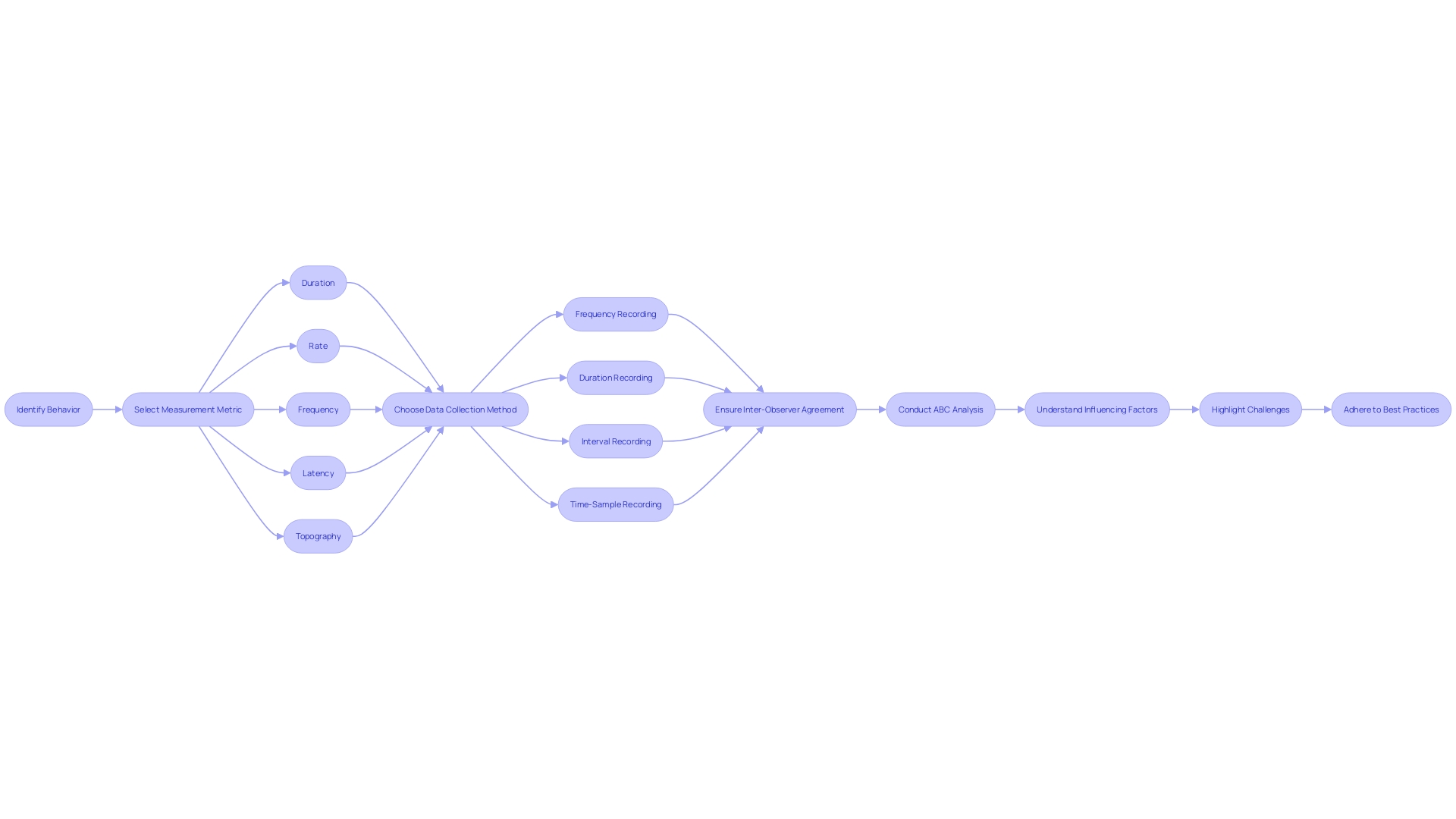
In conclusion, precise measurement of behavior is crucial in Applied Behavior Analysis (ABA) therapy for children with autism. Metrics such as duration, rate, frequency, latency, and topography of behavior provide valuable insights for therapists in monitoring progress and tailoring interventions. Duration helps assess the persistence of behavior, rate reveals its prevalence, frequency identifies patterns, latency measures responsiveness, and topography analyzes the specific form of behavior.
To ensure the reliability of behavioral data, inter-observer agreement (IOA) is employed, where multiple observers independently assess and align their observations. Various data collection tools and techniques, including frequency recording, duration recording, interval recording, and time-sample recording, offer unique insights and support comprehensive analysis. The ABC (Antecedent-Behavior-Consequence) Analysis is also instrumental in understanding the factors influencing behaviors and creating tailored intervention strategies.
Challenges in data collection can arise, such as observer accuracy, ethical considerations, and consistency across different observers. However, ABA therapists are skilled in navigating these complexities to implement effective data collection procedures. Adhering to best practices, such as meticulous observer training, cross-validation of methods, comprehensive documentation, and regular data review, is paramount.
By understanding these concepts and methodologies, parents and caregivers can actively participate in the therapeutic process. Their engagement supports the well-being and progress of their children, empowering them with expert advice and valuable insights.
What is the purpose of measuring behavior in ABA therapy?
The measurement of behavior in ABA therapy is essential for crafting effective treatments for children with autism by monitoring progress and adjusting interventions accordingly.
What does the duration of behavior indicate in ABA therapy?
The duration of a behavior indicates the length of time a behavior persists, such as the duration of tantrums or engagement in tasks, which helps in assessing the stamina or persistence of the behavior.
How is the rate of behavior used in ABA therapy?
The rate of behavior refers to the number of times a behavior occurs within a set timeframe, which helps to determine the prevalence and intensity of actions like repetitive movements or aggression.
What is the importance of measuring the frequency of behavior?
Measuring the frequency of behavior is crucial for identifying patterns, establishing baselines, and is particularly useful for behaviors like initiating eye contact or social interactions.
What does latency of behavior measure in ABA therapy?
Latency of behavior measures the time taken between a prompt and the subsequent behavior, evaluating a child's responsiveness, such as the delay before following an instruction.
What is topography of behavior in ABA therapy?
Topography of behavior analyzes the specific shape or form of a behavior, which is instrumental in accurately identifying and describing actions like hand-flapping.
What is Inter-observer Agreement (IOA) in ABA therapy?
IOA involves multiple observers independently assessing and aligning their observations to ensure the reliability of the behavioral data collected.
What data collection tools are used in ABA therapy?
Data collection tools in ABA therapy include Frequency Recording, Duration Recording, Interval Recording, and Time-Sample Recording, each providing unique insights for behavioral analysis.
How does ABC Analysis help in ABA therapy?
ABC Analysis helps by examining the antecedents and consequences of behaviors, revealing the factors that influence them and assisting in creating tailored intervention strategies.
What challenges might arise in data collection for ABA therapy?
Challenges include ensuring observer accuracy, ethical considerations, and maintaining consistency across different observers.
What best practices are involved in data collection for ABA therapy?
Best practices involve training observers meticulously, using multiple methods for cross-validation, maintaining comprehensive documentation, and regularly reviewing data to refine treatment plans.