Understanding the Significance of Predictable Environments in ABA Therapy

Explore the significance of predictable environments in ABA therapy for children with autism.

Introduction

Have you ever wondered how a little predictability can make a big difference for kids with autism? Creating a stable and predictable environment can truly transform their experience in ABA therapy. These carefully structured settings foster a sense of security, allowing children to thrive through consistent routines, clear expectations, and uniform responses from caregivers.

But how can we, as parents and therapists, create these predictable spaces that truly help our kids thrive? Exploring strategies and understanding the profound impact of predictability can pave the way for enhanced learning and emotional well-being in children navigating the complexities of autism. Let’s dive into some strategies that can make a real difference and see how predictability can help our kids feel more at ease and ready to learn.

Define Predictable Environments in ABA Therapy

Have you ever noticed how a little predictability can make a world of difference for your child? In ABA therapy for children with autism, the significance of predictable environments is evident as they provide organized settings where routines, expectations, and responses are consistently applied. These environments are characterized by:

  • Routine: Daily activities follow a consistent schedule, allowing children to anticipate what comes next. You know, many kids really thrive when they have a routine to follow! Research shows that kids feel more engaged in activities when things are organized, leading to better retention and involvement.
  • Clear Expectations: Children understand what is expected of them in various situations, which significantly reduces uncertainty. This clarity is essential, as familiar routines help kids manage their emotions, resulting in fewer outbursts and greater emotional stability.
  • Consistent Responses: Caregivers and therapists respond to behaviors in a uniform manner, reinforcing learning and behavioral expectations. When caregivers learn about ABA principles through Rori Care's program, they gain the skills needed to effectively support their child's progress, reinforcing what they learn during therapy.

Creating these kinds of spaces is so important for kids with autism, as it emphasizes the significance of predictable environments in ABA therapy for children with autism, allowing them to truly shine when things are predictable! The significance of predictable environments in ABA therapy for children with autism is that they play a crucial role in significantly reducing anxiety levels. Many parents notice their children feeling anxious when routines are disrupted, but those who follow regular schedules report a 78% decrease in frustration and improved communication. This organized approach not only promotes a sense of security but also enhances overall developmental outcomes, enabling caregivers to make informed choices that positively influence their child's progress. By creating these supportive environments, you’re not just helping your child; you’re paving the way for their future success.

This mindmap illustrates how predictable environments in ABA therapy are structured. Start at the center with the main idea, then follow the branches to see how Routine, Clear Expectations, and Consistent Responses contribute to creating supportive spaces for children with autism. Each branch shows specific aspects that help children thrive in therapy.

Outline the Benefits of Predictable Environments for Children with Autism

For many parents, creating a predictable environment can feel daunting, but it underscores the significance of predictable environments in ABA therapy for children with autism. These environments offer a ton of benefits that can really help kids thrive:

  1. Reduced Anxiety: When kids know what to expect, it takes a load off their shoulders. They can focus on learning instead of worrying about surprises, which helps them feel safe and secure.
  2. Enhanced Conduct: Routines help kids understand how their actions lead to certain outcomes. When they know what’s coming next, they’re less likely to act out.
  3. Enhanced Learning: A structured setting allows for repeated practice, which is key for building skills. This repetition not only boosts learning but also helps kids feel more confident in what they can do.
  4. Enhanced Autonomy: As kids get used to their routines, they start to become more independent. They learn to handle their daily activities with less help from adults.
  5. Better Social Interactions: Predictability builds confidence, making it easier for kids to connect with their peers and adults. When they feel secure, they’re more likely to engage socially.
  6. Emotional Regulation: Familiar routines help kids manage their feelings better, leading to improved self-control and coping skills. This emotional stability is so important for their overall well-being.

Let’s talk about some simple strategies like using visual supports and First-Then Boards. Visual supports can clarify what’s expected, while First-Then Boards lay out a clear sequence of activities, making transitions smoother. Plus, when caregivers feel empowered, they can really make a difference in their child’s progress. By learning about ABA principles and strategies, they can support their child’s goals consistently.

These shared advantages underscore the significance of predictable environments in ABA therapy for children with autism, paving the way for a brighter, more confident future together. Consistently checking in and adjusting routines to fit each child’s needs ensures that they remain effective and supportive.
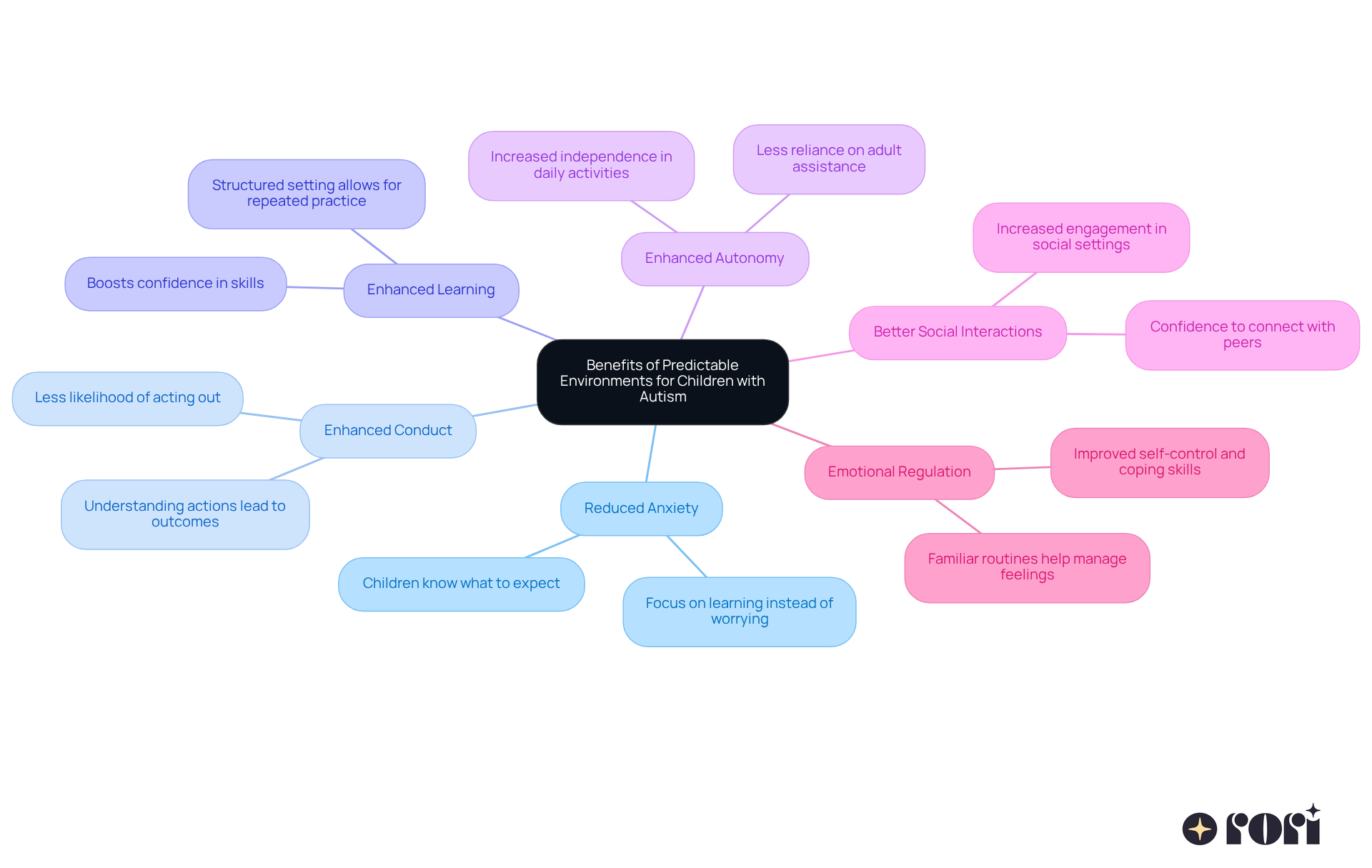
The central node represents the main topic, while each branch shows a specific benefit. The sub-branches provide additional details about how these benefits help children thrive. This layout helps visualize the connections and importance of each benefit in a clear and engaging way.

Provide Strategies for Implementing Predictable Environments in ABA Therapy

Ever feel like your child's day is a bit unpredictable? You're not alone! Creating a predictable environment emphasizes the significance of predictable environments in ABA therapy for children with autism, which can be a game-changer for both you and your little one. Here are some friendly strategies to help you out:

  1. Establish a Daily Schedule: How about making a fun visual timetable together? It can really help your child know what’s coming next! This aligns perfectly with the patient-centered approach of ABA therapy, which emphasizes the significance of predictable environments in ABA therapy for children with autism by adapting to each child's unique needs.
  2. Utilize Visual Supports: Let’s use some colorful charts or fun images to show what tasks are coming up! These visual aids can make it easier for young learners to grasp what’s happening throughout the day.
  3. Maintain Consistent Responses: It’s super important that everyone - caregivers and therapists - responds the same way to behaviors. This helps your child feel secure and reinforces the same expectations across different settings.
  4. Create Structured Spaces: Let’s tidy up the space a bit to help your child focus better! Organizing the environment can minimize distractions and promote engagement, which underscores the significance of predictable environments in ABA therapy for children with autism for improving learning and social skills.
  5. Implement Transition Cues: Using a timer or a fun visual signal can really help your child know when it’s time to switch activities! This strategy can make transitions smoother and less stressful.
  6. Engage Youngsters in Planning: Why not let your child help make their own schedule? It gives them a sense of control and makes it more fun! This involvement aligns with the principles of ABA therapy that emphasize active participation.

By implementing these strategies, you’re not just helping your child; you’re creating a calmer, more supportive environment for everyone. Isn't that what we all want?
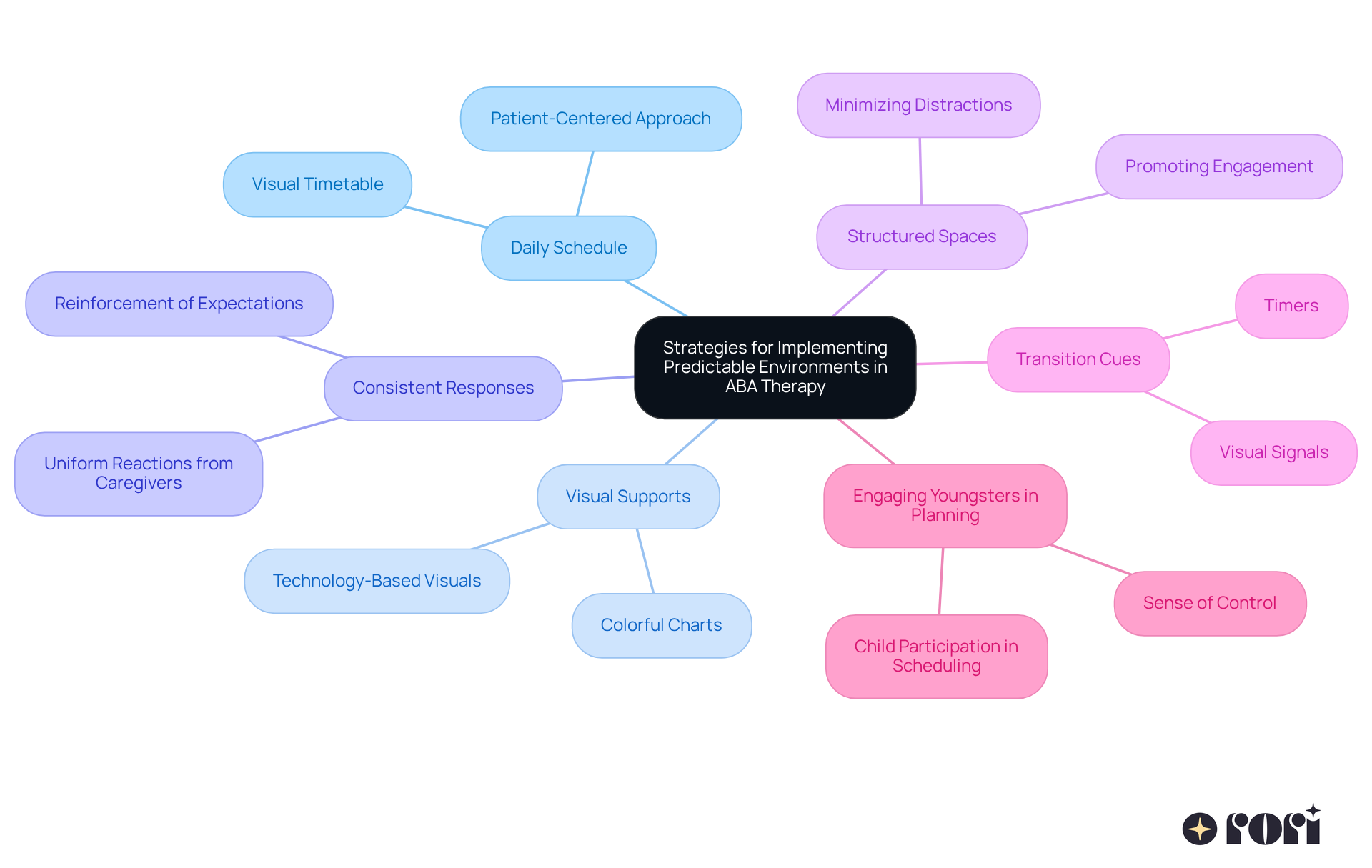
The central idea is about making environments predictable for children in ABA therapy. Each branch represents a different strategy you can use, and the sub-branches provide more details or examples. Follow the branches to explore how each strategy contributes to a supportive environment.

Explain the Importance of Consistency in ABA Therapy

Have you ever felt overwhelmed trying to keep things consistent for your child? Consistency really plays a huge role in ABA therapy, and here’s why it matters:

  1. Reinforces Learning: When strategies are applied consistently, it helps young learners grasp and internalize what’s expected of them. This leads to better skill acquisition, which is so important!
  2. Establishing a stable environment underscores the significance of predictable environments in ABA therapy for children with autism, as a predictable setting can really ease anxiety. Knowing the significance of predictable environments in ABA therapy for children with autism helps kids focus better on learning and socializing.
  3. Facilitates Generalization: If kids encounter the same expectations in different places, they’re more likely to use the skills they’ve learned in therapy in real-life situations. How cool is that?
  4. Builds Trust: Consistency helps create a trusting bond between the child and their therapist. This trust is key for effective learning and emotional support.
  5. Enhances Behavioral Management: When reactions to behaviors are consistent, kids start to understand the outcomes of their actions, which can encourage positive behavior changes.

When you see your child thriving, it makes all the effort worthwhile! Remember, every small step you take toward consistency can lead to big changes in your child's life!
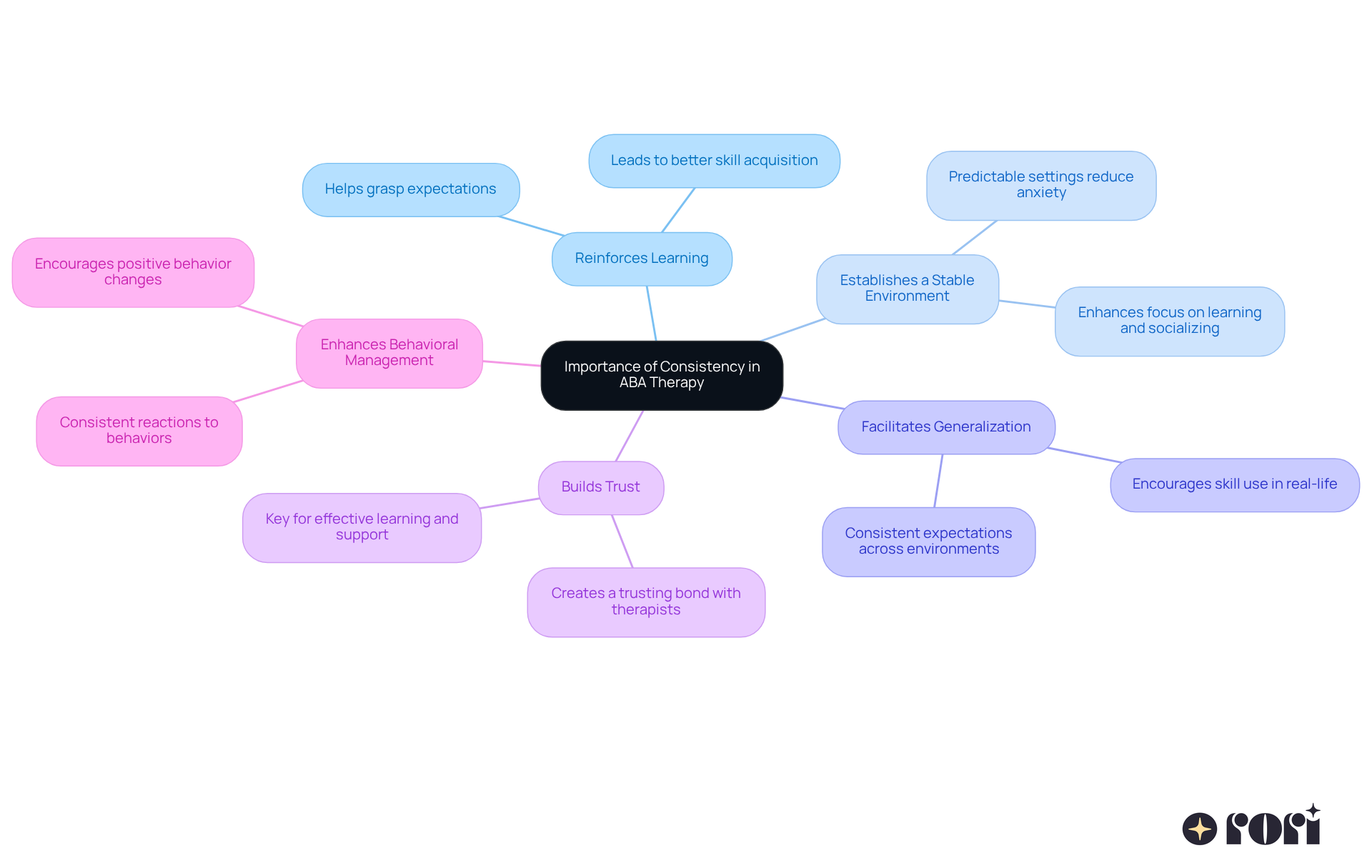
This mindmap shows how consistency impacts various aspects of ABA therapy. Start at the center with the main idea, then follow the branches to explore each point and its significance. Each color represents a different aspect of how consistency helps children thrive in therapy.

Conclusion

Have you ever noticed how a little predictability can make a world of difference for your child? Creating predictable environments in ABA therapy is key to helping children with autism feel secure and stable. When you establish routines, clear expectations, and consistent responses, you’re setting the stage for a positive therapeutic experience. This predictability not only eases anxiety but also opens the door to better learning, emotional regulation, and social interactions.

The benefits of predictable environments are truly remarkable! They help reduce anxiety, improve behavior, and boost independence. By providing clarity, these environments allow children to understand their actions and the consequences that follow. Simple strategies like:

  • Visual supports
  • Daily schedules
  • Consistent responses

can make all the difference, ensuring your child feels secure and supported in their growth.

In conclusion, the importance of predictable environments in ABA therapy cannot be overstated. When you use these strategies, you’re creating a warm space where your child can truly shine. Embracing predictability not only helps with behavior management but also builds trust and confidence, making a lasting impact on your child’s life. So, let’s take those proactive steps together to help your child find their path to success!

Frequently Asked Questions

What are predictable environments in ABA therapy?

Predictable environments in ABA therapy are organized settings where routines, expectations, and responses are consistently applied, helping children with autism feel secure and engaged.

How does routine benefit children in ABA therapy?

A consistent daily routine allows children to anticipate what comes next, leading to increased engagement in activities and better retention and involvement.

Why are clear expectations important for children with autism?

Clear expectations help children understand what is expected of them, reducing uncertainty and managing their emotions, which results in fewer outbursts and greater emotional stability.

What role do consistent responses play in ABA therapy?

Consistent responses from caregivers and therapists reinforce learning and behavioral expectations, helping children understand and adapt their behaviors more effectively.

How do predictable environments affect anxiety levels in children with autism?

Predictable environments significantly reduce anxiety levels, with many parents reporting a 78% decrease in frustration when following regular schedules.

What overall benefits do predictable environments provide for children with autism?

Predictable environments promote a sense of security and enhance overall developmental outcomes, allowing caregivers to make informed choices that positively influence their child's progress.


List of Sources

  1. Define Predictable Environments in ABA Therapy
    • 59 Inspirational Quotes About Autism - Hidden Talents ABA (https://hiddentalentsaba.com/autism-quotes)
    • Inspirational ABA and Autism Quotes - Mrs. Moe's Modifications (https://mrsmoesmodifications.com/inspirational-aba-and-autism-quotes)
    • The Numbers Don't Lie: Revealing Autism Therapy Statistics | Above and Beyond Therapy (https://abtaba.com/blog/autism-therapy-statistics)
    • How Predictable Environments Benefit Children with Autism in ABA Therapy – Rori Blog (https://rori.care/post/how-predictable-environments-benefit-children-with-autism-in-aba-therapy)
    • Inspiring Autism Quotes That Celebrate Uniqueness - Hello ABA Therapy (https://helloaba.com/inspirational-autism-quotes)
  2. Outline the Benefits of Predictable Environments for Children with Autism
    • 80 Inspiring Quotes on Autism Awareness and Support - Empower ABA (https://empoweraba.com/80-inspiring-quotes-on-autism-awareness-and-support)
    • Autism And The Importance Of Predictability In Routine (https://allaboutaba.com/blog/autism-and-the-importance-of-predictability-in-routine)
    • The Importance of Structure for Kids with Autism (https://crossrivertherapy.com/articles/autism-and-the-importance-of-structure)
    • Why Predictable Routines Are So Important For Autistic Preschoolers (https://autismlittlelearners.com/autistic-child)
    • 59 Inspirational Quotes About Autism - Hidden Talents ABA (https://hiddentalentsaba.com/autism-quotes)
  3. Provide Strategies for Implementing Predictable Environments in ABA Therapy
    • Using Visual Supports in ABA Therapy | Links (https://linksaba.com/using-visual-supports-in-aba-therapy)
    • 80 Inspiring Quotes on Autism Awareness and Support - Empower ABA (https://empoweraba.com/80-inspiring-quotes-on-autism-awareness-and-support)
    • Creating Predictable Daily Routines for Children with Autism: Effective ABA Therapy Strategies | Mestre Behavior (https://mestrebehavior.com/daily-routines-aba-therapy)
    • Quotes About Autism (https://usevisualstrategies.com/quotes-about-autism)
    • 59 Inspirational Quotes About Autism - Hidden Talents ABA (https://hiddentalentsaba.com/autism-quotes)