Personalized ABA therapy is changing the game for children with autism in academic settings. It offers tailored strategies that meet their unique learning needs. By focusing on individualized interventions, this approach not only boosts academic performance but also nurtures essential social skills and builds confidence.
But here’s the big question: how can educators and therapists team up effectively to implement these strategies? It’s all about ensuring that every child reaches their full potential. Let’s explore this together!
When we look at the relationship between personalized therapy, technology, and family involvement, we uncover the key to unlocking academic growth and success. Imagine a world where your child thrives, not just academically but socially too. That’s the goal, and we’re here to help you every step of the way!
Personalized ABA therapy for academic growth is essential for achieving academic success! It tailors interventions to meet the unique needs of each child. You know, many kids with autism often struggle in , which can really hold back their learning and social skills. But with personalized treatment plans crafted by qualified analysts, therapists can zoom in on specific abilities that match each learner's style and pace.
These plans include clear goals and evidence-based methods to encourage positive behavior changes and skill development. Plus, they’re continuously assessed and adjusted to fit the individual’s needs. For example, a young learner who finds communication tough might really benefit from targeted speech interventions woven into their schoolwork. This not only helps them engage better in class but also boosts their confidence and motivation to learn!
Research shows that kids receiving ABA interventions often see significant improvements in their social skills and friendships, which are super important for doing well in school. And here’s something to keep in mind: personalized ABA strategies usually involve 25 to 40 hours of therapy each week over 1 to 3 years. That’s a big commitment, but it’s key for achieving effective results.
Collaboration is essential! Board-Certified Behavior Analysts (BCBAs), therapists, and families need to work together to ensure that interventions are tailored and consistently reinforced. This teamwork maximizes the chances of success. At Rori Care, our clinical leadership team is dedicated to embracing neurodiversity and empowering caregivers with ABA principles and strategies. We believe in supporting behavioral goals through active involvement and data collection.
Overall, kids who receive tailored interventions show remarkable progress in communication, social skills, and adaptive behaviors. Thriving in academic settings often requires personalized ABA therapy for academic growth. So, let’s explore this journey together! We’re here to help you every step of the way!

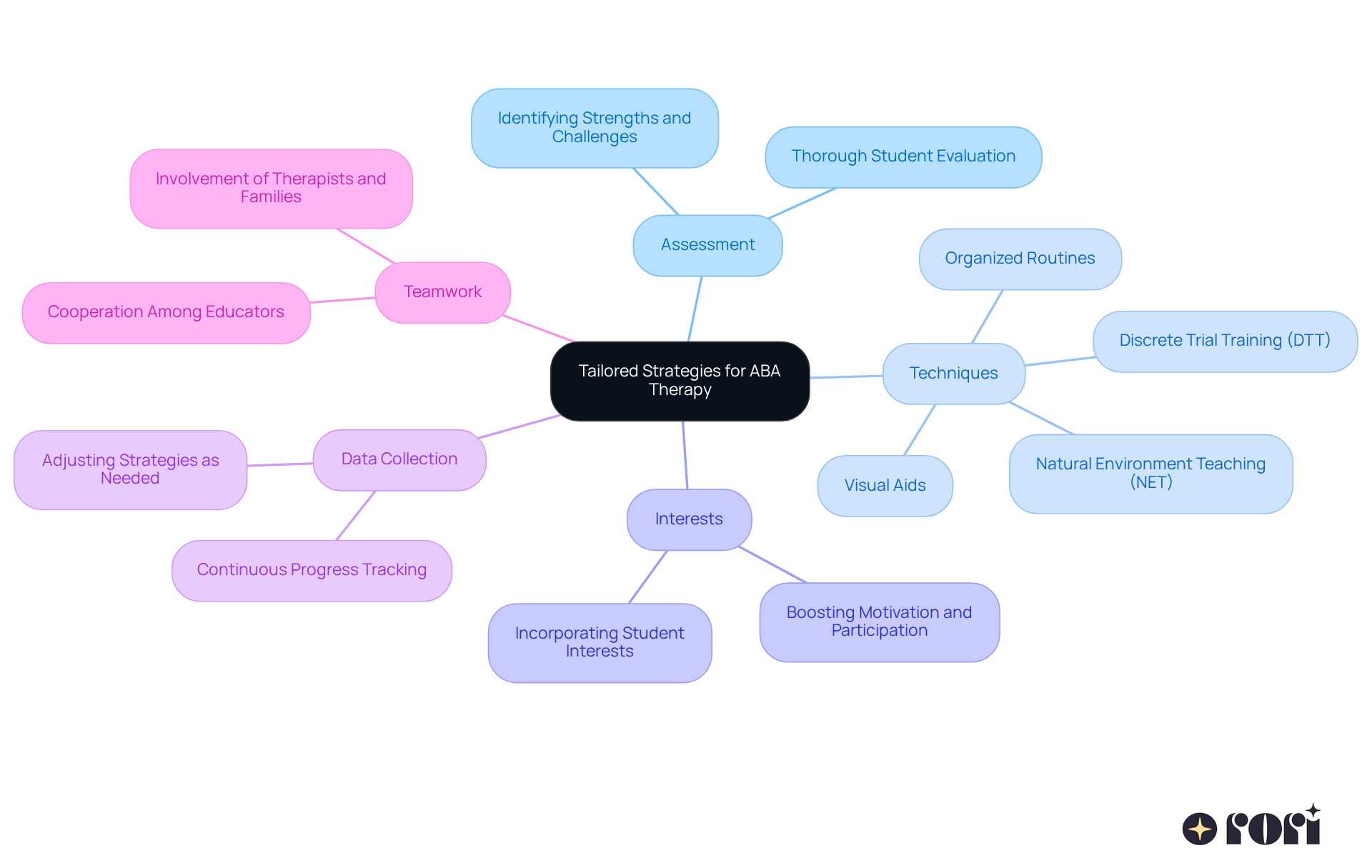
To effectively implement tailored strategies, it’s essential for educators and therapists to start with a thorough assessment of each student’s unique strengths and challenges. Think about it: techniques like Discrete Trial Training (DTT) and Natural Environment Teaching (NET) can really make a difference in creating engaging learning experiences. For instance, using visual aids and organized routines can help individuals with autism understand expectations and stay focused during lessons.
And here’s a thought-incorporating a young person’s interests into learning activities can boost their motivation and participation! Isn’t that a great way to connect? Plus, continuous data collection and analysis are key for tracking progress and tweaking strategies as needed. By fostering cooperation among educators, therapists, and families, these tailored approaches can evolve over time to meet the changing needs of the student. Ultimately, this teamwork can lead to . Let’s explore this together!
Technology is a game-changer for implementing personalized ABA therapy for academic growth at Rori Care! 🌟 Imagine having tools like that let therapists track progress in real-time. This means they can tweak interventions on the fly, making sure each child gets the care they truly need. Every behavioral plan is crafted just for them, focusing on their unique strengths, challenges, and goals.
For instance, our AI-powered care engine whips up progress reports automatically, giving therapists back 50% more time for actual treatment. That’s a win-win for everyone! We set clear, measurable goals for behavior change and skill development, so families can see exactly how their child is progressing.
And let’s not forget about visual schedule apps! They can really help young ones understand their daily routines, easing anxiety and boosting focus. Did you know that studies show 33% of effective interventions target kids under 6? That’s a huge opportunity for early intervention!
Plus, with virtual reality (VR) and augmented reality (AR) technologies, we can create immersive learning experiences that enhance social skills and communication. Take a case study of a young boy with autism, for example. He made remarkable strides in his communication and social skills thanks to AI-powered data-tracking tools. It’s amazing to see how these technologies can make a real difference in therapy!
By embracing these innovations, therapists at Rori Care can provide personalized ABA therapy for academic growth through engaging and interactive experiences tailored to each child’s needs. And with AI-driven analytics, we can spot patterns in behavior and learning, allowing for precise adjustments to treatment plans.
Adopting technology not only simplifies the treatment process but also invites families to be more involved in their child’s learning journey. Let’s explore this together! We’re here to help you every step of the way!

Family involvement is key to making ABA treatment a success! When families , kids can really shine, taking the skills they learn in therapy and applying them to everyday life. To help with this, therapists can provide training and resources that empower parents to support their children’s learning at home.
Think about it: using visual schedules, consistent reinforcement techniques, and setting achievable goals together can make a world of difference. Regular chats between therapists and families are super important too! Sharing progress updates and practical strategies helps parents weave these techniques into daily routines. For example, parents can use reinforcement techniques to encourage positive behaviors and boost academic skills, creating a nurturing learning environment.
Getting families involved in goal-setting not only gives them a sense of ownership but also sparks motivation for both the child and the parents. By building strong partnerships with families, therapists can greatly increase the effectiveness of personalized ABA therapy for academic growth, leading to better academic outcomes. Studies show that kids whose families are actively engaged in counseling tend to make quicker strides in their target behaviors and learning. This just goes to show how vital a collaborative approach is for achieving meaningful progress.
Let’s explore this together! We’re here to help you every step of the way!

Crafting personalized treatment plans in ABA therapy starts with comprehensive assessments, and that’s where the magic happens! These evaluations, like Functional Behavior Assessments (FBAs), competency assessments, and developmental evaluations, gather vital information about a young person’s actions, abilities, and learning styles. By doing this, therapists can pinpoint specific areas that need a little extra attention.
For example, an FBA can reveal what triggers challenging behaviors, allowing therapists to apply focused strategies to tackle these issues effectively. Skills assessments shine a light on strengths and weaknesses, helping to choose the right goals and interventions. And let’s not forget, regularly conducting these assessments is key to monitoring progress and adjusting treatment plans as needed.
Did you know that studies show kids who receive early and intensive ABA intervention often make remarkable strides in communication, social skills, and adaptive abilities? This really highlights how important are in achieving those positive outcomes. At Rori Care, we’re all about using our behavior care engine to continuously refine treatment plans based on progress report data. This means that when suggested hours are fully executed with active caregiver participation, 90% of young individuals see significant progress!
Now, here’s something to consider: about 50% of the time spent in ABA treatment often goes to writing reports. But we’re changing that! By blending personalized therapy with advanced AI, we automate progress report creation, freeing up 50% more time for direct treatment.
Of course, we also need to acknowledge barriers like family dynamics and accessibility issues that can make effective assessments tricky. But by ensuring thorough and ongoing evaluations, therapists can deliver personalized ABA therapy for academic growth, ultimately boosting academic outcomes for children with autism. Let’s explore this together!

Personalized ABA therapy is such a powerful tool for boosting academic growth in children, especially those with autism. By tailoring interventions to meet individual needs, therapists can craft effective treatment plans that not only enhance learning but also build social skills. This ultimately leads to greater academic success!
In this article, we’ve highlighted some key components of personalized ABA therapy. Think about the importance of thorough assessments, the integration of technology for real-time progress tracking, and the vital role of family involvement. Each of these elements creates a comprehensive approach that supports children on their educational journey while empowering families to take an active role in their development.
As education continues to evolve, embracing personalized ABA therapy strategies can truly pave the way for improved learning outcomes. By fostering collaboration among therapists, educators, and families, and leveraging innovative technologies, the potential for academic achievement is limitless. Remember, every child is unique, and with the right support, they can really thrive in their educational environment.
Let’s engage in this journey together! It can lead to transformative results, making a lasting impact on the lives of children and their families. We’re here to help you every step of the way!
What is the significance of personalized ABA therapy for academic success?
Personalized ABA therapy is crucial for academic success as it tailors interventions to meet the unique needs of each child, helping them overcome challenges often faced in traditional school settings.
How do personalized treatment plans work in ABA therapy?
Personalized treatment plans are crafted by qualified analysts and therapists, focusing on specific abilities that match each learner's style and pace. These plans include clear goals and evidence-based methods to encourage positive behavior changes and skill development.
What types of interventions might be included in personalized ABA therapy?
Interventions may include targeted speech interventions, social skills training, and other methods designed to enhance communication, engagement in class, and overall confidence and motivation to learn.
How much therapy is typically involved in personalized ABA interventions?
Personalized ABA strategies usually involve 25 to 40 hours of therapy each week over a period of 1 to 3 years, which is essential for achieving effective results.
Why is collaboration important in the implementation of ABA therapy?
Collaboration among Board-Certified Behavior Analysts (BCBAs), therapists, and families is essential to ensure that interventions are tailored and consistently reinforced, maximizing the chances of success for the child.
What improvements can children expect from personalized ABA therapy?
Children who receive tailored interventions often show significant progress in communication, social skills, and adaptive behaviors, which are crucial for thriving in academic settings.
What strategies can educators and therapists use to implement ABA therapy effectively?
Effective strategies include thorough assessments of each student's strengths and challenges, using techniques like Discrete Trial Training (DTT) and Natural Environment Teaching (NET), incorporating visual aids, organized routines, and integrating students' interests into learning activities.
How can progress be monitored in ABA therapy?
Continuous data collection and analysis are key for tracking progress and adjusting strategies as needed to meet the evolving needs of the student.
What role do families play in the ABA therapy process?
Families play a critical role by fostering cooperation with educators and therapists, which helps in evolving tailored approaches over time to improve academic outcomes.