Visual aids have become essential tools in autism care, using images and symbols to help bridge communication gaps and foster understanding. These resources not only help children express their needs but also create a structured environment that can ease anxiety and promote independence.
But many caregivers might wonder: how can these visual tools be tailored to fit each child's unique needs? And what strategies can ensure they’re implemented successfully? 🤔 Exploring these questions can reveal just how impactful visual aids can be in enhancing learning and communication for children on the autism spectrum.
Let’s explore this together! By understanding how to adapt these tools, we can make a real difference in our children's lives.
The effectiveness of is evident as these important tools use images, symbols, or objects to share information and improve communication for kids with autism. These supports really help children understand their surroundings, express their needs, and manage daily routines more smoothly. By offering a , these aids can significantly reduce anxiety and create a sense of predictability-something that’s so vital for children on the autism spectrum who might struggle with verbal communication. You might find , , and timers among the typical examples, all designed to boost understanding and engagement in various settings.
Research demonstrates the effectiveness of visual aids in autism care, which can lead to and social interactions for kids with autism. For instance, one case study found that using these aids helped , allowing children to explore their environments with more confidence. Plus, to make decisions, which encourages greater independence and involvement in their learning.
The power of visual tools shines through their ability to help kids generalize skills across different situations, making transitions between home and school smoother. Many studies have shown that children who use visual aids often engage more in academic activities, which is linked to better educational outcomes. Overall, the effectiveness of visual aids in autism care is demonstrated by how not only helps with communication but also plays a key role in enhancing the growth and independence of children with autism. Let’s explore this together!

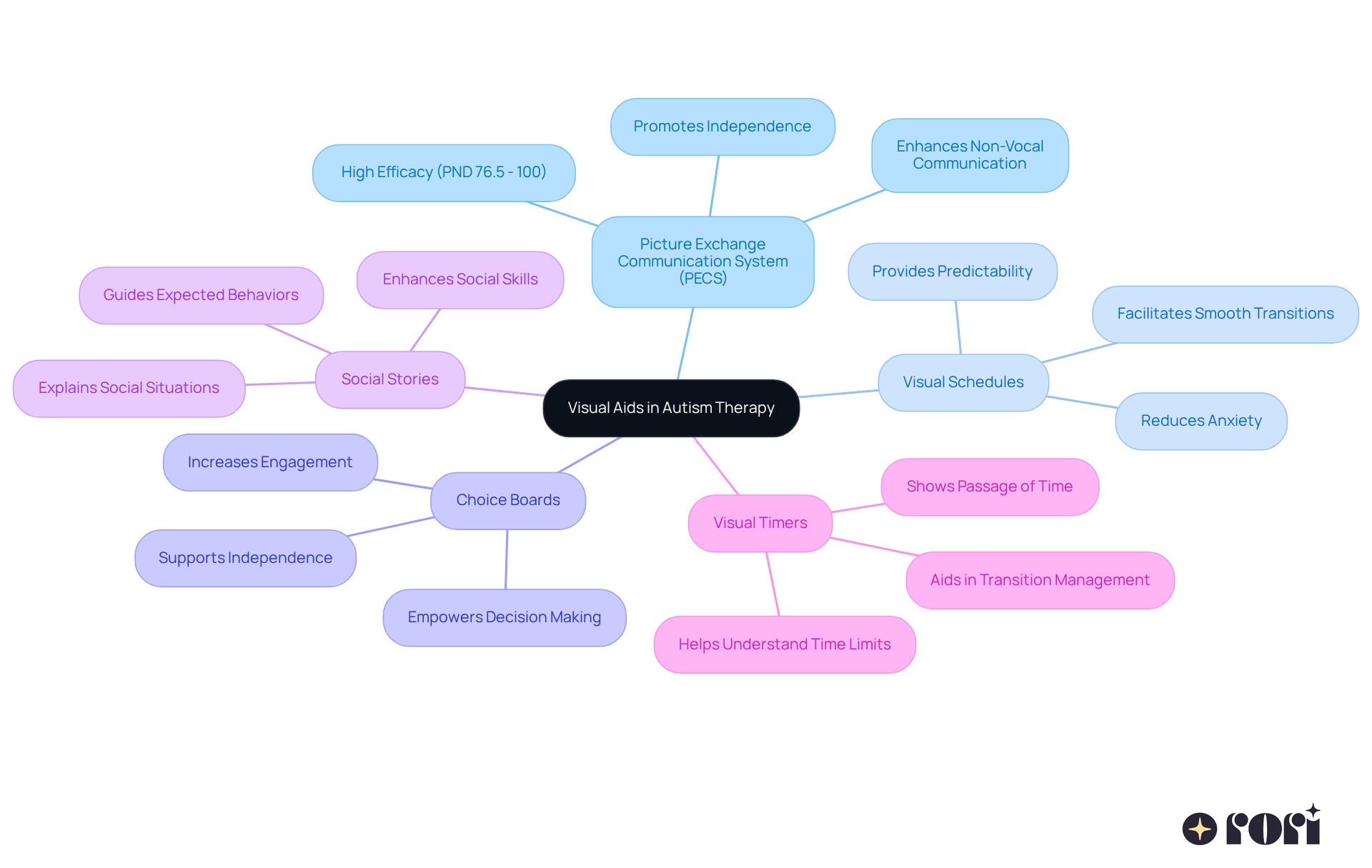
The effectiveness of is extremely important, with each one crafted to help young individuals communicate better and navigate their daily routines. Let’s take a look at some key types:
The to meet the unique needs of each child enhances the effectiveness of visual aids in autism care, ultimately improving their communication skills and involvement in various settings. Let’s explore this together and see how these tools can make a difference!
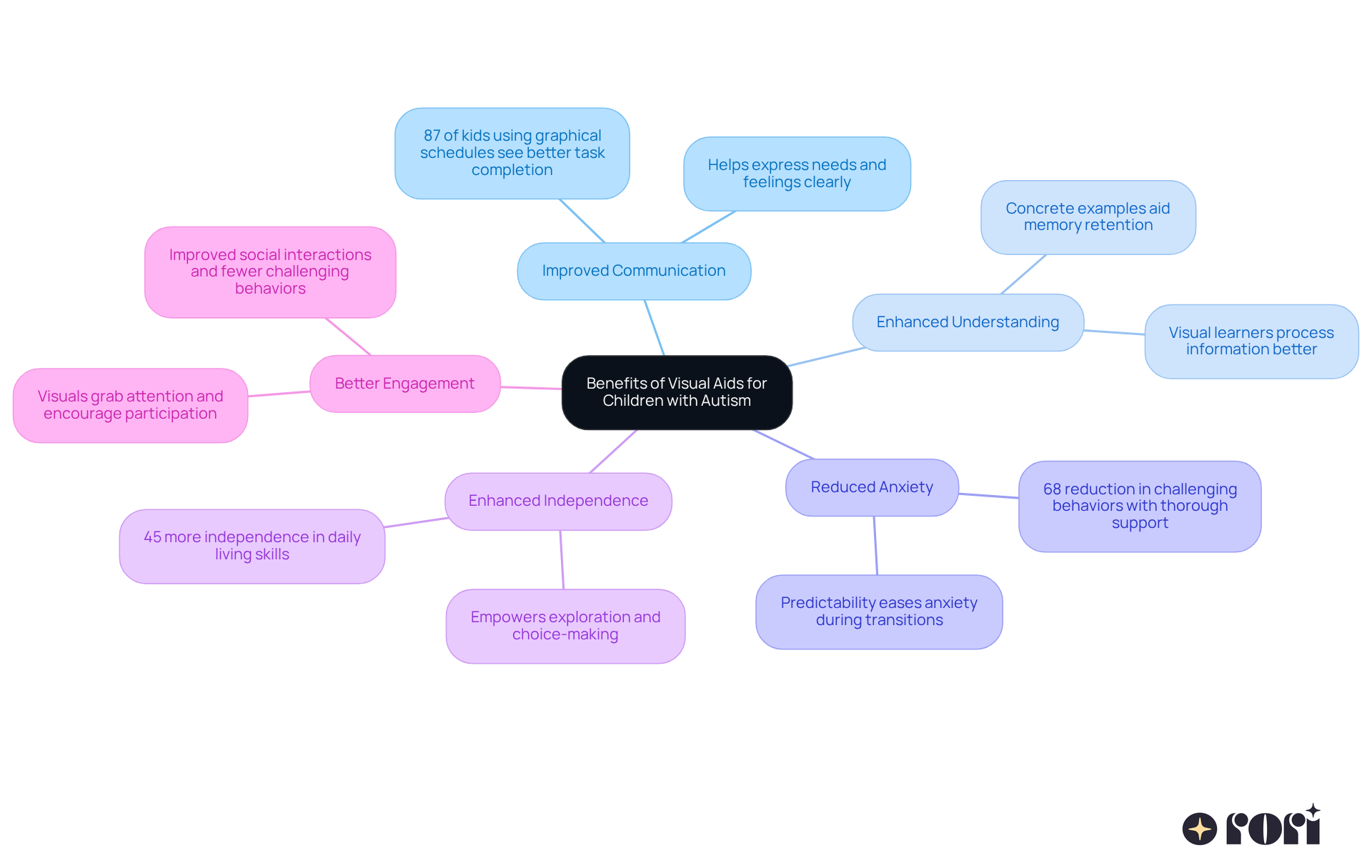
offer a world of benefits for children with autism, really enhancing their learning and communication experiences:
Overall, the effectiveness of visual aids in autism care boosts communication and fosters a nurturing learning environment that encourages growth and success for children with autism. By equipping caregivers with , Rori Care's clinical leadership team ensures families are ready to support their children's development effectively. Let’s explore this together!
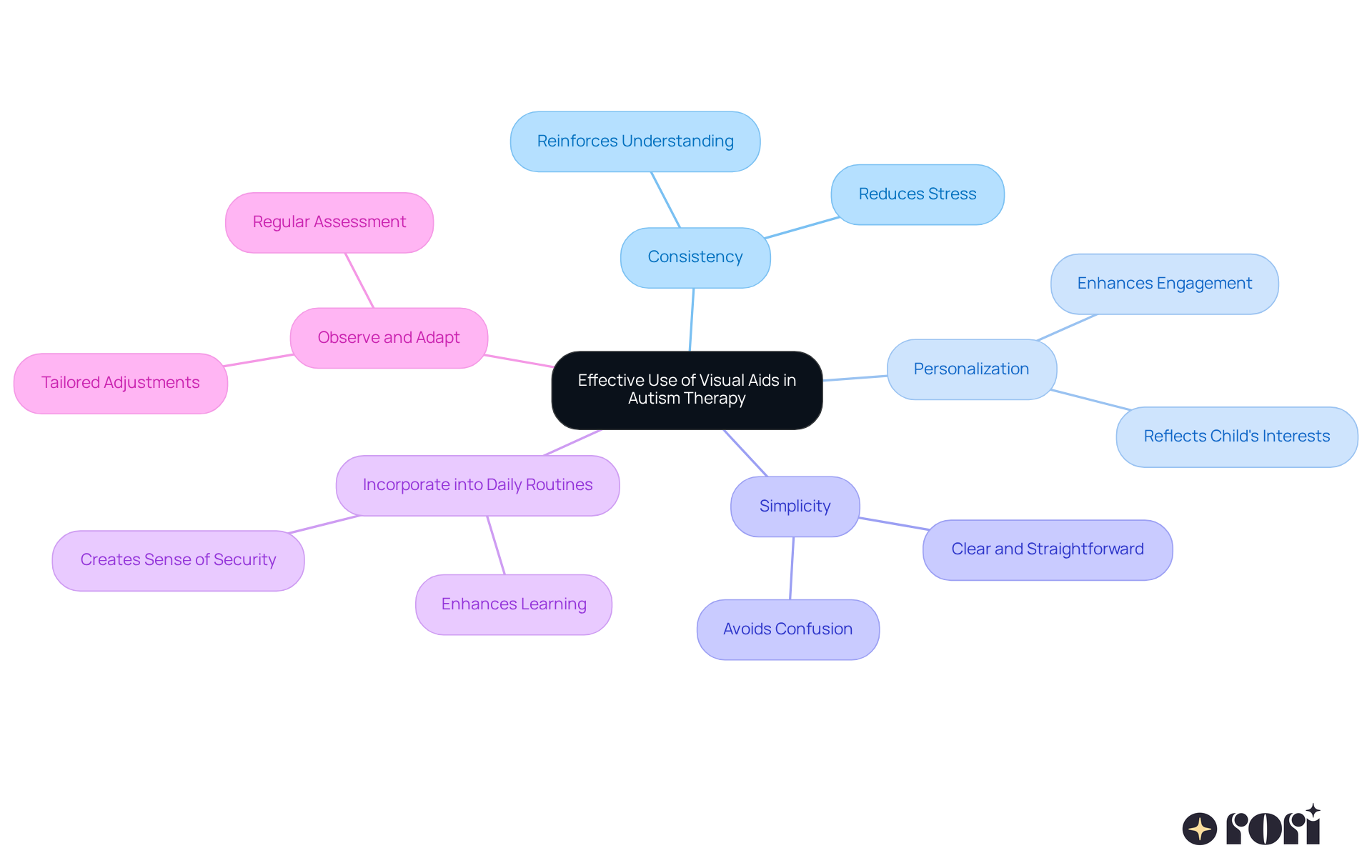
To effectively use , let’s explore some friendly strategies together:
By embracing these strategies, caregivers can create a nurturing environment that maximizes the benefits of visual aids, ultimately . Research highlights the effectiveness of visual aids in autism care, showing that can lead to significant improvements in quality of life and reductions in autism-specific challenges. Let’s work together to make a difference!
Visual aids are truly game-changers in autism care! They’re not just tools; they’re bridges that help children on the spectrum communicate, understand, and gain independence. Imagine your child using images, symbols, or objects to express their needs and navigate daily routines. It’s all about building confidence and easing anxiety.
Throughout this article, we’ve explored various visual aids like Picture Exchange Communication Systems (PECS), visual schedules, choice boards, social stories, and visual timers. Each of these tools brings something special to the table. They can improve communication skills, clarify abstract concepts, and promote independence. The evidence is clear: these aids support children not only in learning environments but also in their emotional well-being and social interactions.
The importance of visual aids in autism care is immense. By focusing on strategies that emphasize consistency, personalization, simplicity, and integration into daily routines, caregivers can truly maximize the impact of these tools. As research continues to shine a light on their effectiveness, it’s crucial for families and educators to embrace visual supports as a core part of autism therapy. This approach paves the way for better communication, enhanced learning outcomes, and an overall improved quality of life for children with autism.
Let’s explore this together! Remember, you’re not alone on this journey. We’re here to help you every step of the way!
What are visual aids in the context of autism care?
Visual aids are tools that use images, symbols, or objects to share information and improve communication for children with autism. They help children understand their surroundings, express their needs, and manage daily routines more effectively.
How do visual aids benefit children with autism?
Visual aids significantly reduce anxiety and create a sense of predictability, which is vital for children on the autism spectrum who may struggle with verbal communication. They help children engage better in various settings and improve their understanding.
Can you provide examples of visual aids used in autism care?
Typical examples of visual aids include picture schedules, social stories, and timers. These tools are designed to enhance understanding and engagement for children with autism.
What does research say about the effectiveness of visual aids in autism care?
Research indicates that visual aids can lead to significant improvements in communication and social interactions for children with autism. Studies have shown that these aids can reduce anxiety and foster independence, allowing children to explore their environments with more confidence.
How do visual aids promote independence in children with autism?
Tools like choice boards empower children to make decisions, encouraging greater independence and involvement in their learning. This ability to make choices enhances their overall engagement and confidence.
How do visual aids help children generalize skills across different situations?
Visual tools assist children in applying learned skills in various contexts, making transitions between home and school smoother. This generalization of skills contributes to better adaptability in different environments.
What impact do visual aids have on academic engagement and outcomes?
Children who use visual aids often engage more in academic activities, which is linked to improved educational outcomes. The use of these aids can enhance overall learning experiences for children with autism.