Differential Reinforcement of Other Behavior (DRO) is a strategic approach within Applied Behavior Analysis (ABA) that aims to encourage positive behavior in children with autism. By rewarding the absence of a challenging behavior within a specific time period, DRO creates an equitable and supportive environment, ensuring a 'fair race' for all children. This method serves as a cornerstone for mental health and equity, fostering engaged and peaceful participation in key life domains.
With evidence-based research backing its effectiveness, DRO can be tailored to meet the unique needs and strengths of each child, particularly those with co-occurring emotional and behavioral challenges. By thoughtfully implementing DRO, caregivers and clinicians can create a nurturing space for children with autism to thrive and participate meaningfully in their communities.
stands out as a strategic approach within Applied Behavior Analysis (ABA) to encourage positive behavior in . By focusing on rewarding the absence of a challenging behavior within a specific time period, DRO promotes an equitable and supportive environment, akin to ensuring a 'fair race' for all children, as emphasized by the late Dr. David (Dan) R. Offord. This method aligns with the goal of fostering engaged and peaceful participation in key life domains, thereby serving as a .
Accompanying the rise of , such as randomized controlled trials, DRO has gained validation as a tool that can be tailored to meet the unique needs and strengths of each child. It holds particular promise for those with , who are at increased risk of social exclusion. By thoughtfully implementing DRO, caregivers and clinicians can create a with autism to thrive and participate meaningfully in their communities.
(DRO) is a powerful strategy utilized in Applied Behavior Analysis that focuses on reinforcing the absence of a target behavior. This approach is particularly effective when working with individuals who have , as it encourages by rewarding moments when an undesired behavior does not occur. For instance, if the goal is to reduce outbursts, a reward might be given during intervals when the individual remains calm and does not exhibit the outburst.
The efficacy of DRO lies in its principles, which combine reinforcement and extinction. Reinforcement involves delivering a reward immediately after the desired behavior is exhibited, making it more likely for the behavior to occur again. Extinction, on the other hand, involves withholding reinforcement for the unwanted behavior, thereby reducing its frequency.
In practice, a New York state-licensed and Board-Certified Behavior Analyst emphasizes that a (CR) is often employed at the outset to establish a clear association between behavior and reward. For instance, just as a child might receive dessert each time they finish their broccoli, a similar principle can be applied in DRO by providing consistent rewards for the absence of the target behavior.
News reports indicate an increase in , with current figures suggesting 1 in 36 individuals are affected, highlighting the importance of tailoring intervention procedures to meet diverse needs. This includes the need for adaptable reinforcement strategies like DRO that can be personalized to fit the unique behavioral patterns of individuals with autism.
Ultimately, DRO is not just about modifying behavior; it's a tool for . As the landscape of autism understanding evolves, so too do the strategies employed to support those on the spectrum, making the principles behind DRO an integral part of a comprehensive approach to autism therapy.
is a critical component in ABA therapy for individuals with autism, offering techniques such as (DRO), (DRA), and (DRI). These strategies are particularly relevant in light of findings that behavior problems in individuals with autism have intensified for more than one-third of this population during challenging times like the pandemic. Differential Reinforcement techniques focus on reinforcing desired behaviors while extinguishing unwanted ones by providing positive reinforcement for either alternative behaviors, the absence of a problem behavior, or behaviors incompatible with the unwanted behavior.
Within the realm of ABA therapy, traditionally play a pivotal role in identifying the functions of problematic behaviors to develop tailored interventions. An innovative approach, the Interview Informed Synthesized Functional Analysis (IISCA), introduced by Hanley et al. in 2014, expands on this by potentially assessing multiple reinforcers concurrently.
This approach underscores the importance of comprehensively understanding the factors contributing to behaviors in order to implement effective reward systems.
Amidst the varied landscape of autism interventions, the utilization of , such as Differential Reinforcement, is paramount. It allows for the identification and reinforcement of behaviors that can lead to success in both home and educational settings. As the field continues to evolve, the integration of technology solutions further supports the adoption of best practices and high-quality care, ensuring coordinated efforts among providers and health plans.
This concerted approach aims to streamline processes and enhance care management, which is vital in addressing the complex needs of individuals with autism and their caregivers.
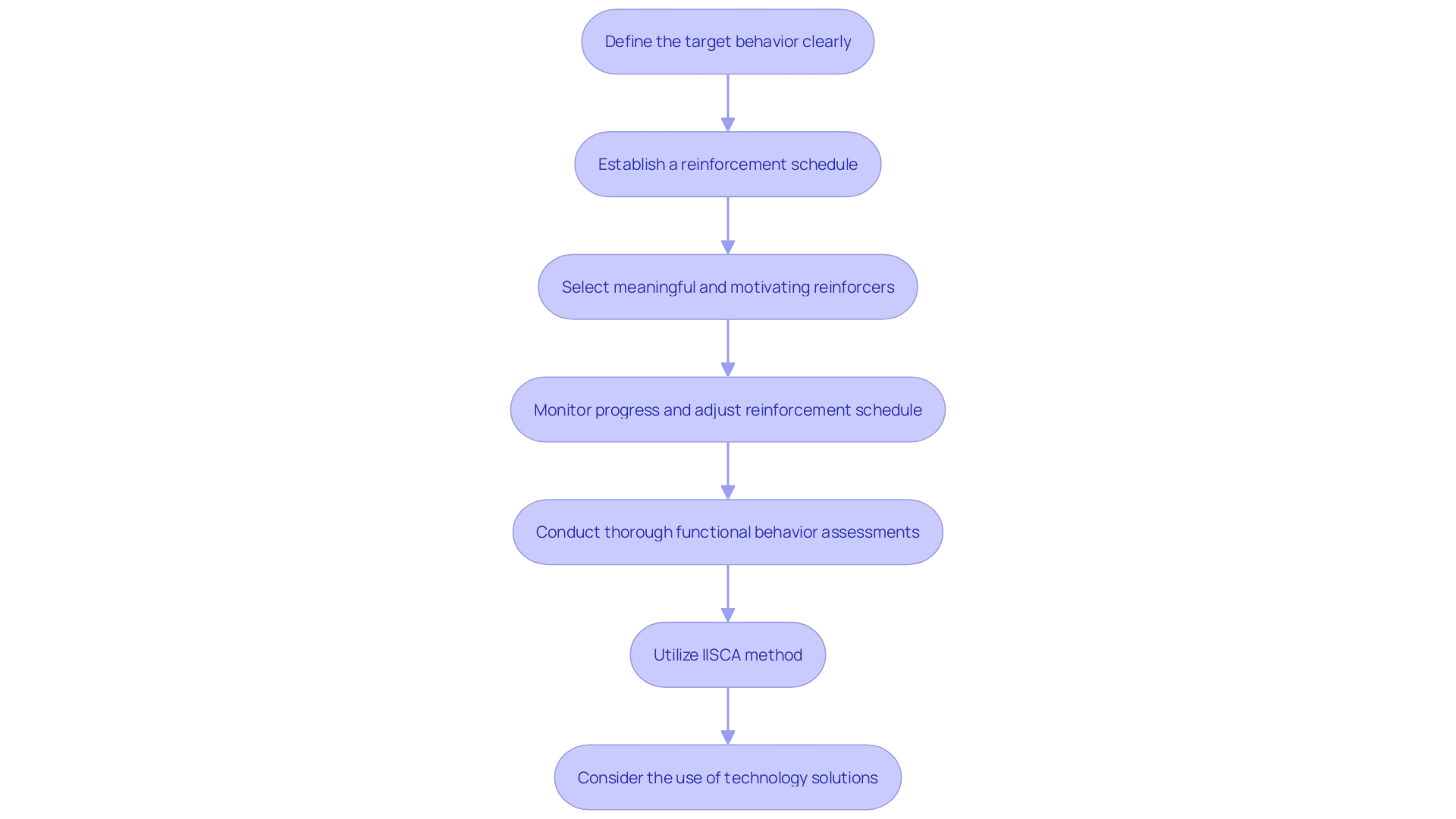
is a strategic method in that focuses on increasing the occurrences of a desirable behavior while decreasing the unwanted ones. It is not just about ignoring the problem behavior; it's a structured technique that rewards the absence of a specific unwanted behavior for a predetermined amount of time. To implement DRO effectively, one must first define the target behavior clearly, ensuring it is observable and measurable.
Then, establish a that is manageable and consistent, selecting reinforcers that are meaningful and motivating for the individual. It is essential to monitor the progress closely, making adjustments to the reinforcement schedule as needed to ensure continued success.
For instance, recent research, including a study by Colizzi et al., highlighted the exacerbation of behavioral problems in individuals with autism during the pandemic. This underscores the need for effective intervention strategies like DRO. The survey found that over one-third of individuals with autism experienced worsened behavior problems, emphasizing the importance of .
These interventions are grounded in thorough or functional analyses, as noted by Napolitano et al., and the innovative Interview Informed Synthesized Functional Analysis (IISCA) introduced by Hanley et al. in 2014. The IISCA advances the traditional methods by potentially assessing multiple reinforcers within the same session, as explained by Slaton et al., providing a more comprehensive understanding of the individual's behavior.
Moreover, professionals in the field, including a Board-Certified Behavior Analyst with over a decade of clinical experience, advocate for the utilization of and enhance treatment efficacy. These solutions support high-quality, coordinated care and facilitate the implementation of best practices across various treatment settings.
In summary, effective DRO implementation requires precision in defining behaviors, selecting appropriate reinforcers, and maintaining a consistent reinforcement schedule, all backed by ongoing monitoring and adjustment based on individual progress. By leveraging the insights from recent studies and the expertise of seasoned professionals, therapists can craft personalized and effective ABA therapy sessions that address the unique needs of their clients.
The effectiveness of ABA therapy hinges on the careful identification and selection of reinforcers that resonate with children who have autism. These reinforcers are not merely rewards but are pivotal components tailored to each child's . A conducts a comprehensive assessment to establish specific, measurable goals for the child.
Reinforcers are then chosen to align with these goals, ensuring that they are both motivating and meaningful.
Recent statistics underscore the necessity for . An online parent survey revealed that more than one third of individuals with autism experienced a worsening of behavior problems during the pandemic, emphasizing the need for effective, function-based interventions. and the Interview Informed Synthesized Functional Analysis (IISCA) are among the used to discern the function of problematic behaviors, allowing for the development of .
Reinforcers can vary widely, from to tangible items, and must be selected with the child's unique interests and needs in mind. The selection process is dynamic and must consider the child's evolving preferences. Flexibility in approach is crucial, as families have different needs and schedules, and what works for one child may not work for another.
Therefore, consistent monitoring and adjustment of strategies are imperative to maintain the child's engagement and ensure continued progress in therapy.
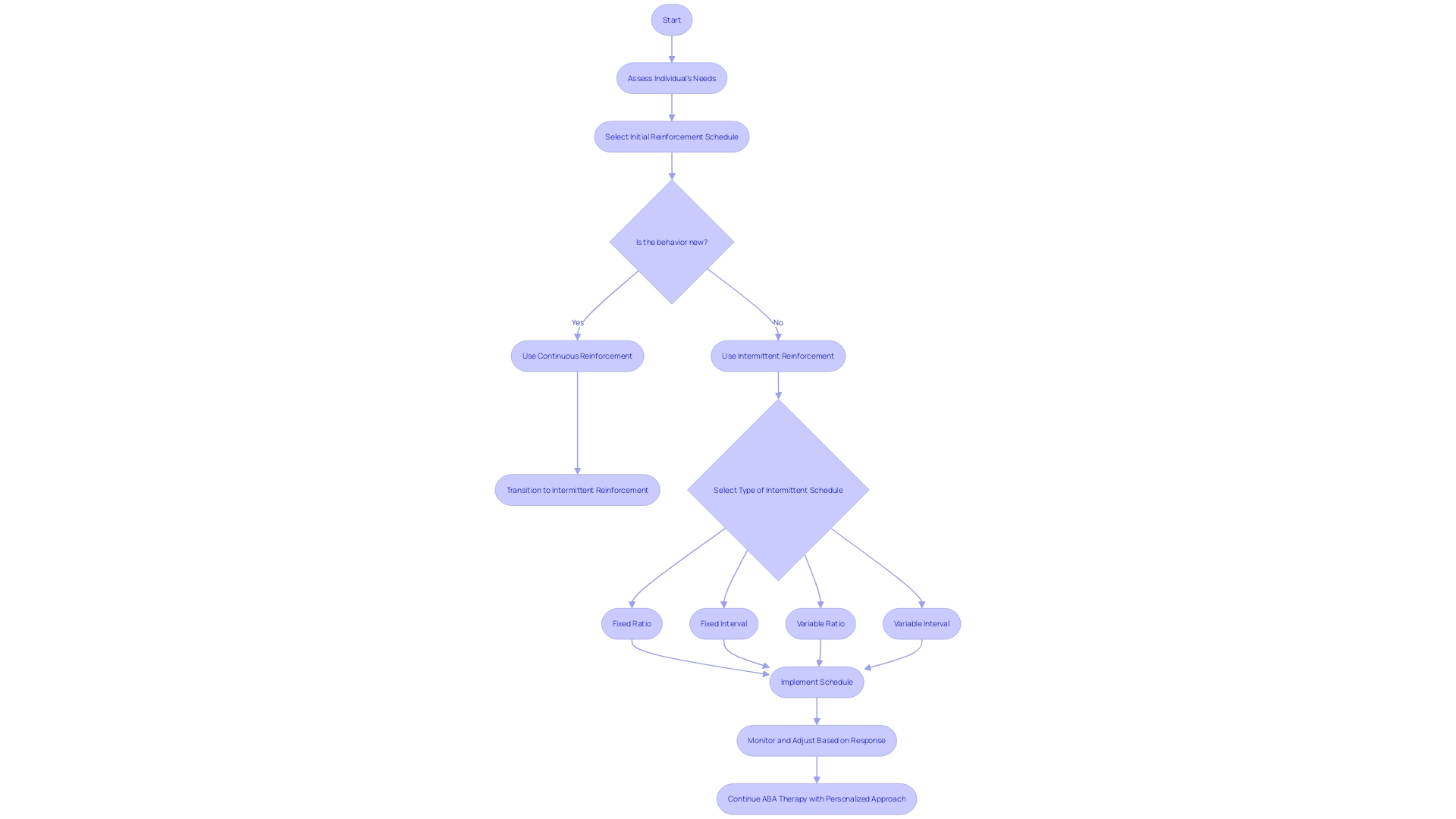
Selecting the appropriate is vital in ABA therapy, as it significantly influences . Continuous reinforcement, where every instance of the targeted behavior is rewarded, is highly effective during the initial stages of learning. This method establishes a strong connection between the behavior and its positive outcome.
For example, consistently offering a child their favorite dessert for eating broccoli can quickly instill the habit of finishing their vegetables. Similarly, giving a dog a treat each time it sits helps the pet associate sitting with receiving a reward.
As individuals progress, varying the type of reinforcement can lead to more robust behavior maintenance. A New York state-licensed and Board-Certified Behavior Analyst emphasizes the importance of for coordinated care. This expertise underlines the need for in therapy, ensuring that reinforcement schedules are not only effective but also optimized for each child's unique needs.
The overarching goal of ABA therapy is to encourage helpful behaviors that facilitate learning. To achieve this, it's essential to recognize that the of children with autism might differ rather than lack. This understanding allows for creating with the child's innate communication style, ultimately supporting their path to autonomy and integration into mainstream environments.
Understanding and their strategic application can empower parents and therapists to deliver therapy that is both effective and empathetic. This approach aligns with the principles of applied behavioral science, which seeks to apply behavioral knowledge to solve real-world challenges, ensuring that each child's therapeutic journey is as successful as possible.
To effectively implement (DRO) as part of (ABA) therapy for children with autism, it's crucial to have all materials well-prepared and team members fully apprised of their responsibilities. The success of DRO relies on the ability to create a learning environment that is both structured and adaptable to each child's unique needs. A with extensive clinical knowledge emphasizes the significance of for streamlined processes.
These solutions not only facilitate the smooth operation of DRO but also ensure that the reward system is responsive and efficient.
In practice, this means having a selection of preferred rewards ready, which have been identified through careful observation and understanding of the child's personal interests. It is also essential to have , allowing for precise monitoring of behavior and the efficacy of the reinforcement strategy. The team must understand their roles, from the direct provision of care to the management of the intervention.
This clear role delineation is underscored by research highlighting the for positive outcomes.
Moreover, the recent challenges highlighted by the pandemic have shown that behavior problems in individuals with autism can escalate under stress, underscoring the importance of a well-coordinated approach to behavior management. With the right preparation and team synergy, the can be a powerful tool in reinforcing desirable behaviors and minimizing challenging ones, contributing to the child's overall success in therapy and beyond.

Enhancing the effectiveness of meetings with learners who have autism is crucial for delivering reinforcers and reinforcing appropriate behaviors. To do this, integrating consistency and is paramount. Drawing from a New York state-licensed and Board-Certified Behavior Analyst's expertise, the key is to create that support best practices and .
These solutions offer structured yet flexible approaches to . For example, the implementation of an Interview Informed Synthesized Functional Analysis (IISCA) provides a of behavior, which can inform the tailored delivery of reinforcers. Studies, such as those by Hanley et al., demonstrate the IISCA's ability to identify multiple reinforcers within a single session, making the process more efficient and relevant to the individual's needs.
Additionally, a parent survey by Colizzi et al. highlighted that over one-third of individuals with autism experienced exacerbated behavior problems during challenging times, underscoring the importance of . Emphasizing observability and actionability, as suggested in the 'See It, Start It, Show It' framework, can guide practitioners in setting clear goals, initiating change, and showcasing progress over time.
Furthermore, incorporating insights from related fields, such as dog training and its emphasis on consistency and life skills development, can provide analogies to enhance understanding and implementation strategies in the context of ABA therapy.

Ensuring that the positive behaviors and skills learned through are maintained and generalized across various settings is essential for the enduring success of children with autism. To achieve this, therapists and parents can . These include , across different environments, and teaching to the children so they can monitor their own behavior.
A New York state-licensed and Board-Certified Behavior Analyst emphasizes the role of technology in enhancing these strategies. By creating and utilizing , therapists and parents can ensure best practices and high-quality, coordinated care, which streamlines the process of .
Incorporating the latest findings from the OECD Directorate for Education, these strategies are supported by evidence that highlights the teachability and significant impact of social and emotional skills (SES) on life outcomes. This reinforces the importance of a structured approach in generalizing and maintaining skills in children with autism, preparing them for a more independent and fulfilling life.

(DRO) is an ABA therapy technique that has shown remarkable success in helping . By understanding the transformative power of within this framework, we can appreciate the progress made by many children.
For instance, a pediatric occupational therapist named Kara from Florida has reported substantial successes with autistic children through the use of . This approach encourages children to engage in activities autonomously, fostering self-reliance and skill development. Notably, Kara's work has included a focus on children who lack the experiences that contribute to independence, which is particularly beneficial for those on the autism spectrum.
Moreover, have enabled the creation of enhanced solutions that support high quality, coordinated care. These innovations are particularly useful for providers and health plans that aim to streamline review processes and ensure the application of best practices in treatment settings.
In addition, the evolving understanding of autism has led to more . Dr. Jan Blacher, a research professor of education and psychology, has highlighted the growing recognition of the diversity within the autism spectrum, necessitating tailored approaches to therapy.
These real-world examples underscore the effectiveness of DRO and other ABA techniques in promoting positive outcomes for children with autism. Through the dedication of professionals like Kara and the insights of experts like Dr. Blacher, there is a that cater to the unique needs of each child.

Navigating the intricacies of (DRO) can be challenging, but understanding its nuances is key to fostering a successful therapeutic environment. DRO is an ABA technique that rewards an individual only when a specific undesired behavior is not exhibited during a set period, which can enhance . However, it's important to recognize that this strategy may not be a one-size-fits-all solution and that to meet the diverse needs of this population.
A continuously reinforced behavior is easier to establish, as seen in instances where a child is rewarded every time they perform a desired action, like receiving dessert after eating their vegetables. This clear and consistent association between behavior and reward is fundamental in teaching new behaviors. However, the application of , as it operates on a different principle — reinforcing the absence of a specific behavior.
In the field of autism therapy, professionals are leveraging over a decade of clinical knowledge to create and refine technology solutions that help ensure best practices and high-quality care. These advancements are particularly relevant for the implementation of DRO, as they can provide streamlined processes that support the individualized needs of each child.
The dynamic nature of autism, with recent statistics indicating a prevalence of 1 in 36 individuals, underscores the necessity for . The evolving understanding of autism demands that , be flexible and responsive to the varying abilities and challenges faced by children on the spectrum.
Strategically applying DRO within can be transformative, as it promotes independence and supports the acquisition of desirable behaviors. By addressing the unique considerations and challenges associated with DRO, therapists and parents can enhance the effectiveness of reward systems and contribute to the progress and development of children with autism.
In conclusion, Differential Reinforcement of Other Behavior (DRO) is a strategic approach within Applied Behavior Analysis (ABA) that promotes positive behavior in children with autism. By rewarding the absence of challenging behavior, DRO creates an equitable and supportive environment, fostering engagement and peaceful participation in various life domains.
With its evidence-based effectiveness and ability to be tailored to individual needs, DRO serves as a cornerstone for promoting the well-being of children with autism. By thoughtfully implementing DRO, caregivers and clinicians can create nurturing spaces where these children can thrive and meaningfully participate in their communities.
DRO operates on the principles of reinforcement and extinction, reinforcing desired behavior while withholding reinforcement for unwanted behavior. This approach not only reduces challenging behaviors but also teaches valuable life skills, responsibility, empathy, and better decision-making.
In addition to DRO, other differential reinforcement techniques like Differential Reinforcement of Alternative Behavior (DRA) and Differential Reinforcement of Incompatible Behavior (DRI) play significant roles in ABA therapy for individuals with autism.
Identifying and selecting appropriate reinforcers is crucial in ABA therapy. Through functional behavior assessments and the Interview Informed Synthesized Functional Analysis (IISCA), interventions can be tailored to meet each child's unique needs and preferences.
Selecting the appropriate reinforcement schedule is vital, with continuous reinforcement being effective in the initial stages of learning. As individuals progress, varying the type and frequency of reinforcement can lead to more robust behavior maintenance.
Effective implementation of DRO requires well-prepared materials and a coordinated team that understands their roles. Technology solutions can enhance the implementation of DRO and support coordinated care among providers and health plans.
Ensuring the maintenance and generalization of positive behaviors learned through DRO is essential. Consistency, gradual changes in reinforcement schedules, and teaching self-management skills contribute to long-term success.
Real-world case examples and success stories highlight the effectiveness of DRO and other ABA techniques in promoting positive outcomes for children with autism.
While implementing DRO may present challenges, understanding its nuances and personalizing the approach is crucial. By addressing these considerations and challenges, therapists and parents can enhance the effectiveness of reward systems and contribute to the progress and development of children with autism.
What is Differential Reinforcement of Other Behavior (DRO)?
DRO is a behavioral strategy used in Applied Behavior Analysis (ABA) to increase positive behavior by rewarding the absence of a challenging behavior within a specific time period.
How does DRO work?
DRO works by combining reinforcement and extinction principles. It involves delivering a reward immediately after the desired behavior (the absence of a target behavior) is exhibited, and withholding reinforcement for the unwanted behavior, thereby reducing its frequency.
What are the key principles behind DRO?
The key principles include reinforcing the absence of a target behavior, using a continuous schedule of reinforcement initially to establish behavior-reward association, and tailoring the approach to fit the unique needs of the individual.
Who can benefit from DRO?
DRO is especially beneficial for children with autism and those with co-occurring emotional and behavioral challenges. It can be personalized for individuals who are at an increased risk of social exclusion.
What are other types of Differential Reinforcement strategies?
Aside from DRO, there are Differential Reinforcement of Alternative Behavior (DRA) and Differential Reinforcement of Incompatible Behavior (DRI). These strategies reinforce desired behaviors while extinguishing unwanted ones by providing positive reinforcement for alternative or incompatible behaviors.
How is DRO implemented in ABA therapy?
To implement DRO, you must clearly define the target behavior, establish a manageable and consistent reinforcement schedule, select meaningful reinforcers, and monitor progress closely, making adjustments as needed.
How do you identify and select reinforcers in ABA therapy?
Reinforcers are chosen based on a comprehensive assessment of the child's preferences and motivators. They should be motivating and meaningful, align with the child's goals, and be flexible to the child's changing preferences.
What is the importance of the reinforcement schedule in DRO?
The reinforcement schedule is crucial as it influences behavior shaping and maintenance. It should start with continuous reinforcement and then be adjusted as the individual progresses to ensure the behavior is maintained and generalized to different settings.
What preparations are needed for implementing DRO?
Effective implementation requires preparing preferred rewards, setting up data collection tools, and ensuring team members understand their roles. Coordinated care that incorporates technology solutions for streamlined processes is also important.
How do you ensure the generalization and maintenance of positive behaviors learned through DRO?
To ensure generalization and maintenance, apply consistent reinforcement across different settings, introduce gradual changes in reinforcement schedules, and teach self-management skills to help children monitor and regulate their own behavior.
Can you provide examples of success with DRO?
Success stories include cases where children with autism have developed independence and self-reliance through personalized reward systems and ABA therapy. Professionals have reported substantial progress in various settings by employing techniques like DRO.
What are some challenges in implementing DRO?
Challenges include ensuring the strategy is personalized for each individual's needs, maintaining consistency and timing in reinforcement, and staying responsive to the dynamic nature of autism. Tailored and adaptive intervention strategies are essential for success.