Talking with kids on the autism spectrum can feel like a puzzle, right? Visual supports, like pictorial schedules and choice boards, can really help kids understand and engage better! So, how can we use these visual aids to help our kids communicate and grow more independent? When we look at how these visual supports can change the game, we see not just their immediate benefits but also how important it is to adapt and work together for lasting success.
Navigating communication with children who have autism can feel like a daunting task for many parents. Parents trying to help their kids with autism communicate better can benefit from using visual supports for effective communication in ABA therapy. These tools, like graphical schedules, choice boards, and social narratives, are designed to make understanding easier and more engaging.
For example, take pictorial schedules. They break down daily routines into bite-sized steps, helping kids know what’s coming next. This predictability can really ease anxiety and create a more relaxed learning environment. Studies show that using visual supports for effective communication in ABA therapy not only boosts communication but also encourages kids to participate more actively in therapy sessions. Plus, they can help make transitions smoother and promote independence.
To make these visual aids even better, it’s important to adapt them as your child grows and changes. Involving parents and caregivers in the planning process can also make a big difference, giving everyone a sense of ownership and empowerment in reaching behavioral goals.
And here’s a fun tip: many useful graphic aids can be made at home with just some printed images and a laminator! Parents can create customized choice boards that reflect their child's interests, making these resources even more engaging. However, as kids move up in grades, the use of visual aids might drop off, which can lead to misunderstandings about their memory skills. That’s why it’s crucial to keep adapting and providing support as they grow.
By embracing these visual tools, you’re not just helping your child; you’re also building a bridge to a brighter, more confident future together.
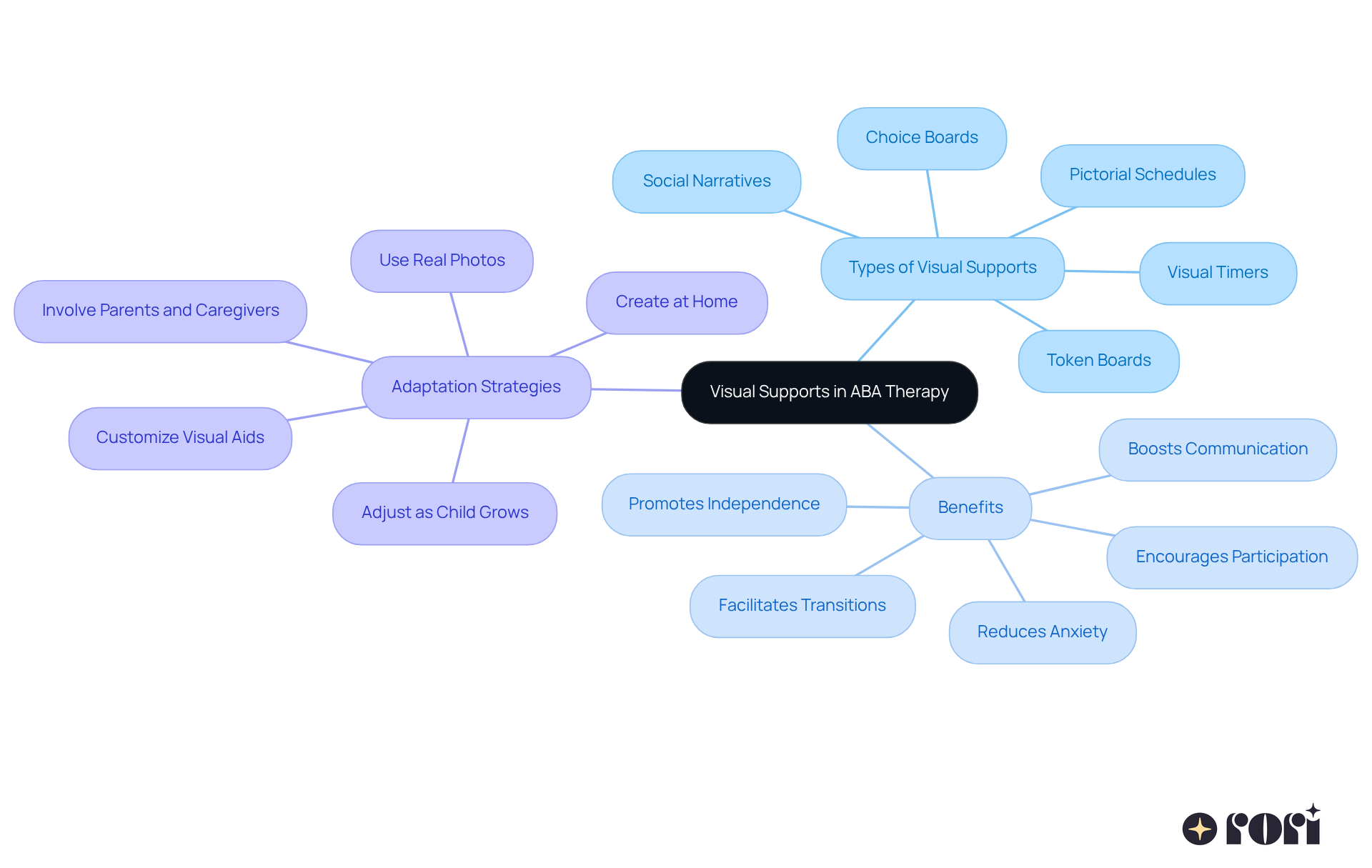
Navigating the world of ABA therapy can feel overwhelming, especially when it comes to finding the right tools to support your child. Visual aids are vital, especially when using visual supports for effective communication in ABA therapy, as they provide various tools designed to improve communication and learning for individuals with autism. Let’s explore some key types of visual supports commonly utilized:
Each type of visual aid can be adjusted to fit your child’s unique needs and developmental stage. Keeping an eye on progress and updating these aids regularly is key to keeping things fresh and engaging for your child. When you weave these aids into your daily routines, you’re creating a supportive space that helps your child thrive. Plus, working together with caregivers, educators, and therapists enhances the benefits of visual aids, ensuring they meet your child’s individual needs. We’re here to help you every step of the way!

Navigating the world of ABA therapy can feel overwhelming, especially when it comes to using visual supports for effective communication in ABA therapy for your child. Here are some friendly steps to help you along the way:
Research shows that using visual supports for effective communication in ABA therapy can lead to significant improvements in communication and independence, with studies indicating a 34% increase in task completion rates among kids using these tools. Since supporting a child with autism can cost around $60,000 a year, ensuring effective and consistent use of visual aids is crucial for optimizing treatment outcomes. By embracing these strategies, you’re not just helping your child; you’re also creating a supportive environment that fosters growth and understanding for everyone involved.
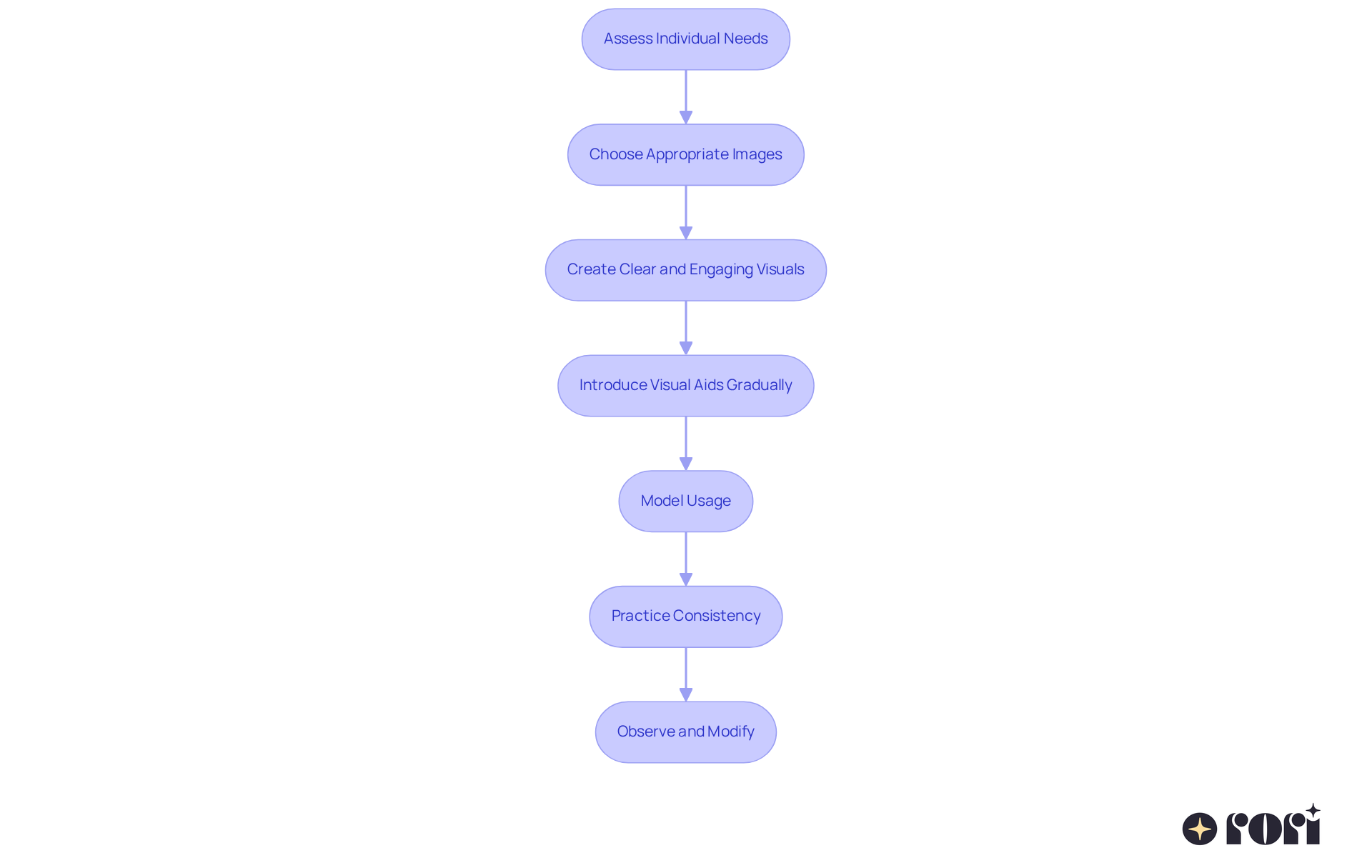
Navigating the world of ABA therapy can feel overwhelming, particularly regarding using visual supports for effective communication in ABA therapy. To make the most of these tools, it’s all about teamwork and consistency!
By coming together and using visual supports for effective communication in ABA therapy, we can really make a difference for kids with autism. At Rori Care, we believe that supporting caregivers is key to achieving positive outcomes. Research shows that kids who stick with therapy often see amazing improvements in communication and social skills - around 90% make significant gains after intensive interventions! Remember, a united front not only benefits your child but also creates a supportive community for you as a parent.

Using visual supports in ABA therapy can feel like a game-changer for many families navigating the challenges of autism. By integrating tools like visual schedules, choice boards, and social stories, caregivers and therapists can create an environment that not only fosters understanding but also promotes independence and engagement. These tools can grow with your child, making them a vital part of their therapy journey.
As we’ve explored together, there are some key aspects of visual supports that really stand out. It’s crucial to select the right tools tailored to your child's unique needs, and to implement them gradually and consistently across different settings. Collaboration among parents, educators, and therapists is key to maximizing the benefits of these visual aids. This teamwork not only strengthens the therapeutic process but also creates a unified approach to supporting your child's development.
Ultimately, using visual supports isn’t just about better communication; it’s about creating a supportive environment that empowers both kids and their families. By actively engaging in the use of these tools and fostering collaboration, we can all contribute to a brighter future for our children. The journey can be tough, but with the right resources and teamwork, you can help your child make amazing progress in their communication and social skills!
What are visual supports in ABA therapy?
Visual supports are tools designed to aid communication for children with autism, including graphical schedules, choice boards, and social narratives, which make understanding easier and more engaging.
Why are visual supports important for children with autism?
They help children with autism communicate better, ease anxiety by providing predictability, encourage active participation in therapy, promote independence, and facilitate smoother transitions.
How do pictorial schedules work?
Pictorial schedules break down daily routines into manageable steps, helping children understand what comes next, which can reduce anxiety and create a more relaxed learning environment.
How can visual aids be adapted as a child grows?
It's important to modify visual aids to reflect the child's changing needs and capabilities, ensuring they remain effective as the child develops.
How can parents and caregivers contribute to the use of visual supports?
Involving parents and caregivers in the planning process can enhance the effectiveness of visual supports, providing a sense of ownership and empowerment in achieving behavioral goals.
Can visual supports be created at home?
Yes, many graphic aids can be made at home using printed images and a laminator, allowing parents to create customized choice boards that reflect their child's interests.
What should be considered as children progress in their education regarding visual aids?
As children advance in grades, the use of visual aids may decrease, which can lead to misunderstandings about their memory skills. Therefore, it's crucial to continue adapting and providing support as they grow.
What is the overall benefit of using visual tools in communication?
Embracing visual tools not only aids the child in communication but also helps build confidence and contributes to a brighter future for both the child and their family.