Originating from the field of operant conditioning, the Premack Principle is a psychological concept that leverages more enjoyable activities to reinforce the completion of less desirable ones. Introduced by David Premack in the 1960s, this principle, also known as 'Grandma's Rule,' has practical applications in everyday life and therapeutic settings, such as applied behavior analysis therapy for children with autism. By offering engaging activities as rewards for completing challenging tasks, the Premack Principle helps shape positive behavior and promotes well-being.
This article explores the definition, key concepts, and components of the Premack Principle, as well as its practical applications, benefits, and challenges. By understanding and utilizing this principle, individuals can foster a balance between duty and pleasure, enriching their daily experiences and overall well-being.
Originating from the field of operant conditioning, the Premack Principle is a psychological concept that leverages more enjoyable activities to reinforce the completion of less desirable ones. Introduced by David Premack in the 1960s, this principle is also fondly termed as 'Grandma's Rule,' reflecting the intuitive wisdom that a less preferred task, such as eating vegetables, can be followed by a preferred one, like dessert, as a reward.
This principle not only finds its use in everyday life but has also been instrumental in applied behavior analysis (ABA) therapy. In therapeutic settings, especially those involving children with autism, the Premack Principle helps in shaping positive behavior by offering engaging activities as rewards for completing challenging tasks. However, the application of this behavioral strategy is nuanced.
It recognizes that the behaviors being modified may range from harmful, such as head-banging, to those that are more benign yet divergent from perceived norms, such as unusual play with food.
The efficacy of the Premack Principle was highlighted in a study by Colizzi et al., where behavior problems in individuals with autism worsened during the pandemic. Addressing these behaviors effectively is crucial, not only for the individuals themselves but also for easing the responsibilities of caregivers. The study underscores the importance of evidence-based interventions, like the Interview Informed Synthesized Functional Analysis (IISCA), in identifying the underlying causes of behaviors and implementing successful strategies derived from the Premack Principle.
In the broader context of psychology, treating oneself after completing an arduous task is rooted in the Premack Principle. This concept has gained popularity on social media platforms and in the media at large, as it aligns with the natural human inclination towards enjoyable experiences. It serves as an effective form of positive reinforcement, encouraging the maintenance of beneficial habits and enhancing mental well-being.
The practical implications of this principle are supported by quotes from seasoned professionals in the field of behavior analysis. They emphasize the importance of integrating such psychological theories into interventions to promote best practices, coordinated care, and high-quality outcomes for individuals undergoing therapy.
While the Premack Principle is a cornerstone of , its applications extend beyond clinical settings, influencing everyday productivity and mental health management. By understanding and utilizing this principle, individuals can foster a balance between duty and pleasure, thereby enriching their daily experiences and well-being.
Grasping the essence of the Premack Principle unveils a potent tool in behavioral psychology, which asserts that a high-probability behavior can act as a reinforcer for a low-probability behavior. In simpler terms, engaging in a favored activity can serve as a reward for completing a less desired one. This concept is particularly powerful when applied to children with disabilities, including autism, aiming to foster their participation in educational and social activities, which is crucial for their mental health and development.
As Dr. David (Dan) R. Offord, a revered child psychiatrist, eloquently put it, we must ensure that "the race is fair" for children, especially those with disabilities who may fall behind. This involves recognizing the unique strengths these children bring to the table and addressing the chronic stressors they face.
Empirical evidence, such as a study published in Nature Human Behaviour, emphasizes the role of the ventromedial prefrontal cortex in 'prosocial' behaviors, which are pivotal for societal challenges. By leveraging the Premack Principle, caregivers and educators can encourage such prosocial behaviors in children with autism, guiding them toward more engaged and peaceful participation in life's various domains.
Moreover, this principle is backed by substantial research emphasizing the significance of loss aversion. Coined by psychologists Daniel Kahneman and Amos Tversky, loss aversion indicates our innate tendency to prioritize avoiding losses over acquiring equivalent gains. This can be strategically used in conjunction with the Premack Principle to encourage behaviors that children with autism might typically avoid due to the discomfort of 'loss' associated with effort.
Statistics further support the effectiveness of behavioral reinforcement, with studies showing significant improvements in work performance following the application of motivational strategies. This is mirrored in the context of , where the Premack Principle can be instrumental in enhancing daily functioning and overall well-being for autistic individuals.
In sum, the Premack Principle is not just a theory but a practical approach that can be applied to make meaningful changes in the lives of children with autism, promoting their autonomy and the pursuit of happiness, a goal deeply rooted in human nature as suggested by contemporary psychological research.

Harnessing the power of natural behavioral tendencies, the Premack Principle provides a strategic approach to enhancing motivation and encouraging less desirable tasks by promising more enjoyable activities as a reward. This concept capitalizes on our innate preferences, employing a more favored behavior as a powerful motivator to complete a less favored one. For instance, a child might be incentivized to finish homework (a less preferred activity) with the reward of playtime (a preferred activity), thereby increasing the likelihood and frequency of homework completion.
The effectiveness of the Premack Principle is underpinned by a broader understanding of behavioral science, particularly the concept of loss aversion. As identified by renowned psychologists Daniel Kahneman and Amos Tversky, individuals typically prioritize the avoidance of losses over the pursuit of equivalent gains. This aversion to loss plays a significant role in decision-making, often more than we might consciously realize.
When applied to the Premack Principle, this means that the becomes a compelling incentive to engage in a less preferred one.
The principle's impact extends beyond individual habits to influence organizational behavior and climate change initiatives. For example, behavioral interventions that reduce psychological distance to climate change have successfully increased concern and proactive behaviors, such as energy conservation. This is akin to the Premack Principle, where the 'reward' of a healthier planet encourages the 'task' of sustainable living.
Moreover, the field of positive psychology, spearheaded by Martin Seligman, reinforces the value of positive reinforcement in shaping behavior. The PERMA model, which stands for Positive Emotion, Engagement, Relationships, Meaning, and Achievement, illustrates how cultivating positive experiences, like those offered as rewards in the Premack Principle, can enhance well-being and motivate actions toward personal and collective goals.
As we continue to explore and apply behavioral science principles within various contexts, the Premack Principle remains a testament to the power of structured positive reinforcement and its role in driving desirable behaviors.

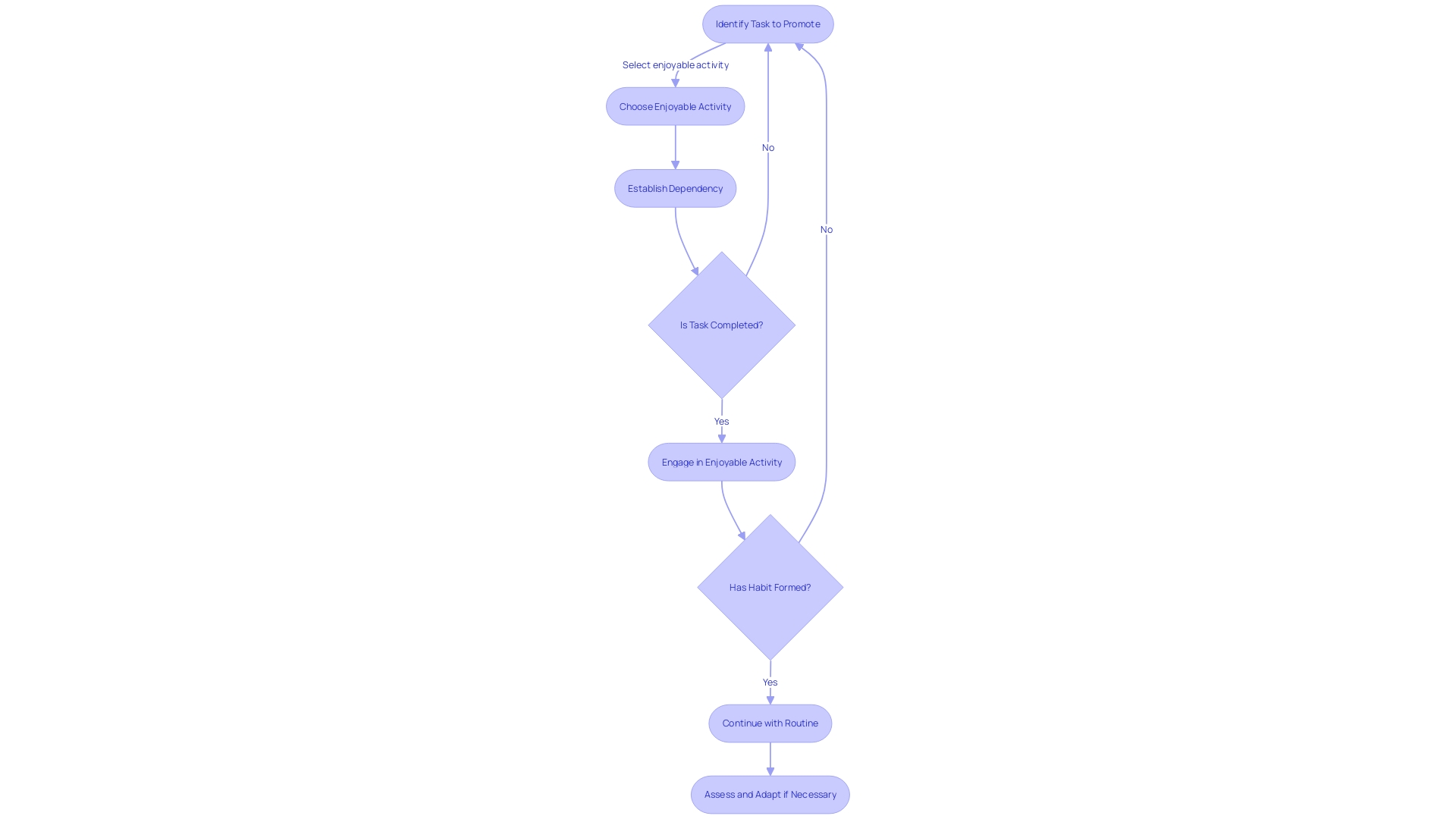
To apply the Premack Principle effectively, start by pinpointing the specific task or action you aim to promote, be it a household chore or any other positive behavior. Next, discern an activity or pastime that the person genuinely enjoys and feels driven by, which could range from a hobby to a beloved plaything. The crux of the principle is to make the opportunity to engage in the enjoyable activity dependent on the successful completion of the less preferred task.
By doing so, you harness the individual's intrinsic motivation, leveraging their preference for fun to facilitate the completion of less appealing tasks, thus fostering good habits and a better quality of life.
This concept, rooted in the work of American psychologist David Premack, is more than a passing fad; it's a psychological tool with the potential to enhance daily routines. Premack's principle is grounded in the idea of positive reinforcement, leveraging our innate inclination toward enjoyable activities to overcome reluctance toward less appealing ones. For example, allowing oneself to watch a favorite TV show after completing an unwelcome task like cleaning is a practical application of this principle.
In the context of children, particularly those with autism or other disabilities, this principle can be a powerful means of supporting their inclusion and participation in various aspects of life, thus contributing to their mental health and overall well-being. It is imperative to also acknowledge the dual nature of their circumstances, recognizing both the challenges they face and the contributions they make to their communities. By reducing stress and providing caregivers with necessary resources, we create a fairer 'race' for all children, as advocated by the esteemed child psychiatrist Dr. David (Dan) R. Offord.
Moreover, the principle's effectiveness resonates with the efforts of experts who are dedicated to improving the care and lives of autistic individuals. As adults, autistic individuals continue to require access to quality medical care, a point emphasized by Christopher McDougle, MD of Harvard Medical School, highlighting the need for ongoing support beyond childhood. The commitment to a fair and supportive environment for alike aligns with the broader goal of fostering equitable and engaged participation in society.
The Premack Principle can be particularly beneficial for children who have autism, as it capitalizes on their unique interests to encourage the completion of less preferred tasks. For instance, if a child with autism finds joy in drawing but shows resistance to tidying up their room, parents can implement the Premack Principle by allowing drawing time only after the room is cleaned. This strategy not only facilitates the completion of necessary tasks but also supports the child's mental health by incorporating activities they enjoy, which can act as natural stress relievers.
Moreover, the approach aligns with Dr. David (Dan) R. Offord's vision of equitable engagement for all children, including those with disabilities, in various aspects of life. By employing the Premack Principle, caregivers can reduce chronic stress and fulfill the unmet needs of children with autism, thereby promoting fair participation in school, home, and leisure activities.
Furthermore, emphasizing positive reinforcement and capturing moments when children do things right can foster a compassionate and optimistic mindset. As stated by B.F. Skinner, positive reinforcements, such as praise or the opportunity to engage in preferred activities, shape and recondition behavior effectively. This aligns with the broader initiative to and support autistic individuals throughout their lifespan, as highlighted by Christopher McDougle, MD, who underscores the need for continued access to quality medical care and support services for autistic adults.
In the context of education, the Abecedarian Project's findings underscore the long-term benefits of providing stimulating and emotionally supportive learning experiences from an early age. Similarly, applying the Premack Principle in childhood can establish a foundation for lifelong positive habits and mental well-being. The principle itself is a manifestation of positive psychology, aiming to help individuals flourish by integrating rewarding experiences into daily routines, as suggested by contemporary psychological research on happiness.
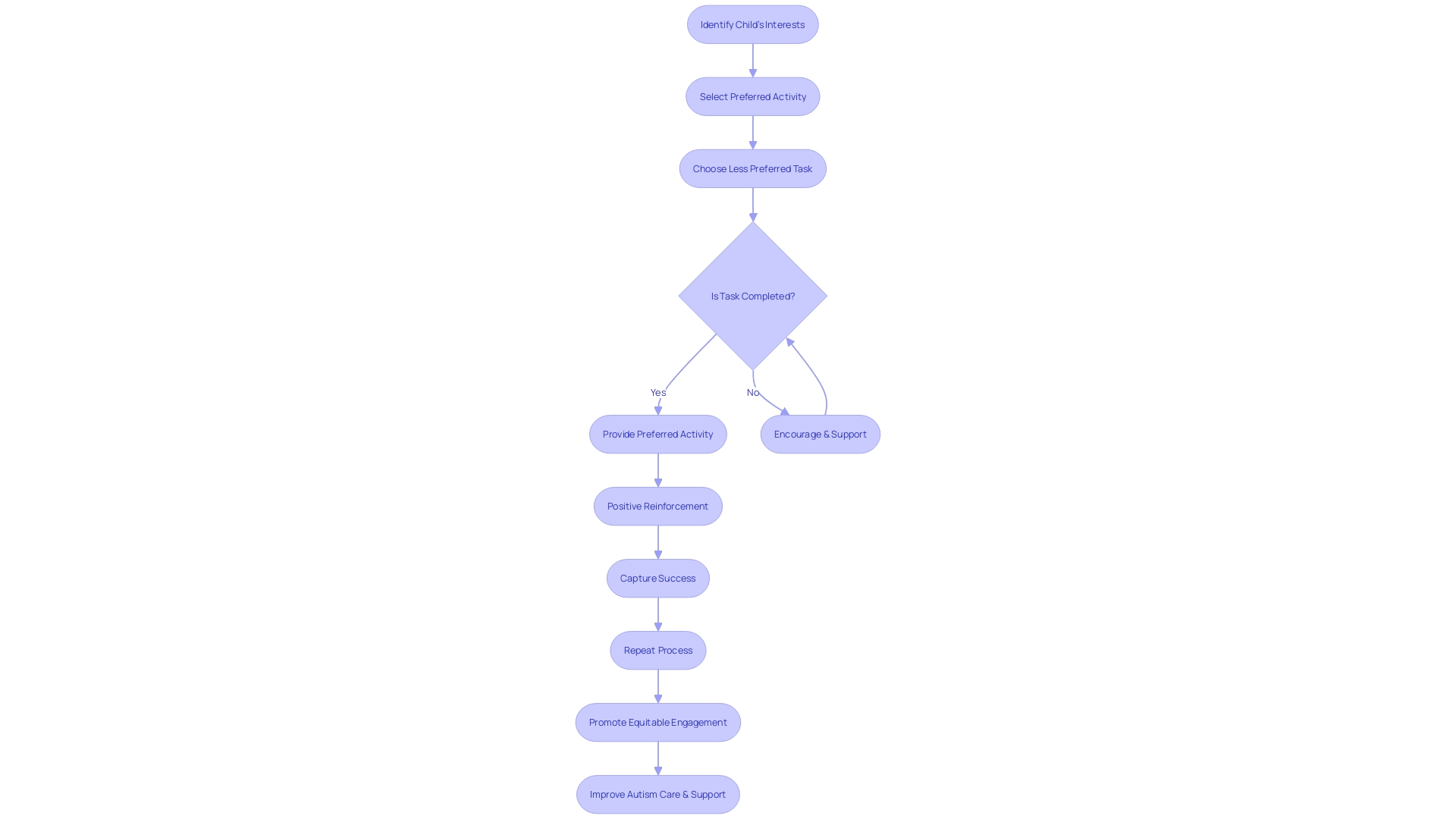
The Premack Principle, formulated by psychologist David Premack in the 1960s, is a powerful tool for reinforcing less preferred activities with more desirable ones. This principle has found its place not only in therapeutic settings and educational environments but also in the intricate dance of . By recognizing a child's preferred pastimes, parents can encourage the completion of necessary but less appealing tasks, such as homework or household chores, by offering these favored activities as a reward.
For instance, educators at the Evelyn Scott School have adopted a teaching approach that aligns with the Premack Principle, integrating students' interests into a structured inquiry model. This method ensures engagement by incorporating what students enjoy into the learning process, thus enhancing their academic performance. Similarly, the surge in homeschooling, as reported by The Washington Post, reflects a shift towards learning environments that can be tailored to the Premack Principle, providing personalized educational experiences that leverage children's preferences as motivational tools.
In the digital realm, concerns about screen time and its impact on 'deeper reading' and literacy have emerged. However, the Premack Principle can offer a measured approach by rewarding time spent reading on paper—a method associated with better comprehension—with time on digital devices for more leisurely activities. This balanced strategy can improve both learning outcomes and mental well-being, as reinforced by the notion that small rewards are not merely indulgences but essential for psychological health.
By utilizing the insights of the Premack Principle, parents and educators can create a supportive and effective framework for children to thrive in both educational and home settings. The key lies in the strategic pairing of tasks with appropriate rewarding activities, fostering a positive cycle of motivation and achievement.
Harnessing the power of the Premack Principle, individuals can turn their natural inclinations into a dynamic force for positive change. This principle capitalizes on preferred activities as a compelling incentive for performing less desired tasks, effectively boosting responsibility, enhancing self-regulation, and amplifying productivity. Unlike methods that rely on punitive measures, the Premack Principle is grounded in positivity, emphasizing the reinforcement of favorable behaviors to foster an uplifting and nurturing environment.
In the realm of behavioral science, the Premack Principle aligns with the broader understanding that motivation is not a static trait but a dynamic interpersonal process. It dovetails with theories that emphasize personal responsibility and the internal drive for change. For example, motivational interviewing, which relies on principles such as attribution and cognitive dissonance, also supports the Premack Principle's ethos by fostering an environment where individuals feel empowered to change behaviors through positive reinforcement.
University of Missouri's Kennon Sheldon, a luminary in the study of human motivation, underscores the efficacy of intrinsic motivation—that which is derived from personal enjoyment—over extrinsic motivation, which is spurred by external rewards. This distinction points to the deeper psychological underpinnings of the Premack Principle, which leverages intrinsic motivation for a more lasting and self-fulfilling behavioral change.
In practice, the application of reinforcement theories, as articulated by B.F. Skinner, further supports the effectiveness of the Premack Principle. By introducing positive stimuli or removing negative ones, an individual's behavior can be molded and guided towards desired outcomes. This method of positive reinforcement can manifest in various forms, from verbal praise to tangible rewards, underpinning the principle's potential to create a transformative impact.
The real-world implications of this approach are vast, as evidenced by a case study where the application of led to improved self-regulation and healthy eating habits in toddlers. By fostering curiosity and responsiveness to children's food preferences, the study demonstrated how positive reinforcement can significantly enhance developmental outcomes, aligning with the core tenets of the Premack Principle.
In summary, the Premack Principle's emphasis on using preferred activities as rewards to reinforce less preferred ones is not only an effective strategy for behavior modification but also a testament to the broader psychological theories that encourage intrinsic motivation and positive reinforcement as catalysts for personal growth and productivity.
The Premack Principle, often misunderstood as being limited to the realm of child behavior, is in fact a universal tool that can be applied across the lifespan. This principle's flexibility is illustrated by a , echoing Bas Van Hooren's insight that understanding aging requires looking at those who remain vigorous well into their later years. These examples reveal that with the right motivators, individuals can remain engaged and active, countering the declines typically associated with aging.
Identifying these motivators, or preferred activities, is a critical step in putting the Premack Principle into practice. These should be personally rewarding activities that can effectively encourage less preferred behaviors. For instance, Dave Conway, a craft distiller, found his physically demanding job a challenge until he associated the hard work with the rewarding outcome of producing high-quality bourbon.
Consistency in applying these principles is just as important as the selection of the activities themselves. Consistent application, combined with clear communication of expectations, can help ensure the effectiveness of the Premack Principle. This approach aligns with findings in behavioral science that highlight our tendency to value avoiding losses over acquiring equivalent gains.
The consistent application of rewards reinforces positive behavior by leveraging this loss aversion.
In summary, the Premack Principle's success hinges on understanding individual motivations, selecting appropriate reinforcers, and applying them consistently. These steps, backed by a deep understanding of human behavior, can lead to positive, long-term behavioral change.
The Premack Principle, originating from operant conditioning, leverages enjoyable activities to reinforce less desirable ones. It promotes positive behavior and well-being in everyday life and therapeutic settings. By understanding and utilizing this principle, individuals can foster a balance between duty and pleasure, enriching their daily experiences and overall well-being.
The Premack Principle is a powerful tool in behavioral psychology, particularly for children with disabilities like autism. It encourages their participation in educational and social activities, crucial for their mental health and development.
By harnessing natural behavioral tendencies, the Premack Principle enhances motivation by offering enjoyable activities as rewards for completing less preferred tasks. It capitalizes on our innate preferences, making the completion of less favored tasks more likely.
To apply the Premack Principle effectively, identify the task or behavior you want to promote and pair it with an enjoyable activity. By making engagement in the enjoyable activity dependent on completing the less preferred task, you tap into intrinsic motivation and foster good habits.
For children with autism, the Premack Principle can be particularly beneficial. It not only facilitates task completion but also supports their mental health by incorporating activities they enjoy as natural stress relievers.
The Premack Principle is a valuable tool for parents, educators, and therapists. By recognizing preferred activities and using them as rewards, parents can encourage the completion of necessary tasks and create a supportive environment.
By leveraging the power of the Premack Principle, individuals can enhance responsibility, self-regulation, and productivity. This principle aligns with theories of human motivation and positive reinforcement, leading to lasting behavioral change.
In conclusion, the Premack Principle offers a strategic approach to reinforce positive behavior. By understanding and utilizing this principle, individuals can create a balance between duty and pleasure, leading to enriched experiences and overall well-being.
What is the Premack Principle?
The Premack Principle is a psychological concept from operant conditioning that suggests a more preferred activity can be used as a reward to reinforce the completion of a less preferred one. It's often known as 'Grandma's Rule'—first eat your vegetables (less preferred), then you can have dessert (more preferred).
Who introduced the Premack Principle and when?
David Premack introduced the Premack Principle in the 1960s.
How is the Premack Principle used in therapy?
In therapeutic settings, such as applied behavior analysis (ABA) therapy for children with autism, the Premack Principle is used to shape positive behavior by offering engaging activities as rewards for completing challenging tasks.
Can the Premack Principle be applied to everyday life?
Yes, the Premack Principle can be applied to everyday productivity and mental health management, such as treating oneself after completing a difficult task to maintain beneficial habits.
What does the Premack Principle state in simple terms?
In simple terms, the Premack Principle states that doing a favored activity can serve as a reward for completing a less desired one.
How does the Premack Principle relate to loss aversion?
The Premack Principle can be used alongside our natural tendency towards loss aversion—which is the preference to avoid losses over acquiring equivalent gains—by making the potential 'loss' of a preferred activity a strong incentive to perform a less preferred task.
Is the Premack Principle effective in improving behavior?
Yes, research and studies show that the Premack Principle can significantly improve work performance, educational engagement, and daily functioning, particularly for individuals with autism.
How do you apply the Premack Principle?
To apply the Premack Principle, identify a less preferred task you want to promote and a highly preferred activity. Make the opportunity to do the preferred activity contingent on completing the less preferred task, using the individual's intrinsic motivation.
Are there any real-world examples of the Premack Principle in action?
Yes, parents might use the Premack Principle by allowing a child to play a favorite game only after they have finished their homework. Educators might integrate students' interests into learning to encourage engagement in less preferred academic tasks.
What are the benefits of the Premack Principle?
The Premack Principle can increase responsibility, improve self-regulation, boost productivity, and enhance overall well-being by using positive reinforcement rather than punitive measures.
Can the Premack Principle be applied to adults as well as children?
Absolutely. The Premack Principle is a universal tool applicable across all ages, helping motivate individuals by leveraging preferred activities to reinforce less preferred behaviors.
What are some challenges in applying the Premack Principle?
Challenges include identifying truly motivating preferred activities for the individual, consistently applying the principle, and effectively communicating expectations to ensure its success.