Autism Spectrum Disorder (ASD) is a complex condition that requires early and accurate diagnosis to ensure timely intervention and support. The importance of this process cannot be overstated, as it significantly impacts a child's development and future outcomes. In this article, we explore the significance of early and accurate diagnosis, the professionals qualified to diagnose ASD, and the various diagnostic criteria and tools used in the process.
We also delve into the role of parents and caregivers in the diagnostic journey and highlight the support and resources available post-diagnosis. By understanding the intricacies of ASD and the diagnostic process, parents can empower themselves with valuable insights and expert advice, enabling them to make informed decisions and provide the best possible care for their child. Technological advancements and ongoing research are revolutionizing the diagnostic landscape, offering hope for improved healthcare tools and interventions.
Join us as we delve into this informative and empowering exploration of ASD diagnosis.
Understanding and pinpointing autism spectrum disorder (ASD) early on carries immense benefits. Timely identification sets the stage for , which studies have shown to significantly improve a youngster's growth. This can include honing crucial skills such as communication, social interaction, and adaptive behavior. Moreover, ensures that the services and support provided align perfectly with the individual's , encompassing therapies and educational strategies. Lastly, knowing the specific challenges and strengths of their child equips families to navigate decisions more effectively and tap into vital resources.
are revolutionizing the diagnostic landscape. For example, artificial intelligence (AI) is demonstrating potential in detecting indications of a developmental disorder earlier, which is especially important as the brain demonstrates a significant level of malleability in early childhood. Eye-tracking technology, a notable example, offers objective data on the early emergence of autism. Traditional screening tools, such as the M-CHAT-R/F, though beneficial in research environments, have limitations in primary care settings, especially for certain demographics. A research involving more than 25,000 kids unveiled that while the M-CHAT-R/F's specificity was high, its sensitivity and positive predictive value were less remarkable, emphasizing the necessity for more accurate screening methods.
The gravity of is echoed by organizations like The Autism Community in Action (TACA) and NeuroQure, which aim to shorten the path to diagnosis. With , families could receive assistance soon after birth, sidestepping a typically long diagnostic journey. The insights from a study using the SPARK database, which led to the development of the AutMedAI model, reinforce this. The model, with an 80% accuracy rate for individuals under two years old, highlights the potential for improved healthcare tools.
The transition from ASD risk to symptom onset is a dynamic process influenced by both genetic and environmental factors. Understanding this interplay is key to developing . Milestones in an individual's social, emotional, cognitive, and physical development serve as indicators for typical growth. Deviations in these areas can signal ASD, making crucial for implementing interventions that can lead to optimal outcomes. Fresh investigations methods, like randomized-controlled experiments, are enhancing our comprehension of which measures are most efficient, molding the support given to individuals with ASD and their families.
Experienced healthcare professionals, including developmental pediatricians, child neurologists, and clinical psychologists, play a crucial role in identifying individuals with ASD. These experts are trained to recognize the diverse manifestations of ASD and conduct , which may include reviewing a person's developmental history and observing their behavior and thought patterns. Despite the ability to self-diagnose within the autistic and neurodivergent community, a from a professional can provide validation and . Based on the CDC's findings, the occurrence of ASD is as high as 1 in 36 people, emphasizing the . This recognition is crucial for individuals across the spectrum, as autism presents uniquely in each person and can significantly impact their life's trajectory and the choices available to them. For some, like Heather Florio, who was diagnosed at 41, the clarity of being diagnosed can be life-changing, fostering . The diagnostic process is comprehensive, often involving self-report questionnaires and assessments by clinicians well-versed in the nuances of neurodiversity. While some may not be identified as autistic until later in life, can equip individuals with the strategies and support necessary to navigate the world effectively.
are physicians with a specific focus on identifying and managing developmental and behavioral issues in individuals during their early years, particularly adept at recognizing (ASD). Their evaluations are comprehensive, involving observation of children's behavior, review of medical history, and the use of standardized diagnostic instruments. These specialists consider both that contribute to ASD, acknowledging the complex interplay that leads to the manifestation of ASD symptoms. Importantly, their work is guided by the American Psychiatric Association's DSM-5 criteria and involves a combination of parental insights and clinical observations to reach a conclusion. Referrals to neuro, , child neurologists, and geneticists are sometimes necessary for . is a crucial gateway to , which can significantly impact the trajectory of ASD, potentially enhancing the ability for independent living in adulthood.
Child and adolescent psychiatrists are trained to evaluate and identify mental health issues in younger populations, with a particular focus on disorders within the (ASD). Their method of assessment usually involves comprehensive clinical interviews, meticulous , and the utilization of . This is vital because the condition presents in various forms and degrees, making it essential to understand each individual's unique challenges and strengths.
When considering autism, it's important to acknowledge that the spectrum is broad, and symptoms can present differently from one person to another. This variability sometimes leads to later-in-life identifications for some individuals. Experts such as neurodevelopmental pediatricians, developmental-behavioral pediatricians, neurologists specializing in children, and geneticists may work together in the diagnostic process, especially in intricate cases.
The importance of is underscored by the American Psychiatric Association's Diagnostic and Statistical Manual, Fifth Edition (DSM-5), which sets forth standardized criteria for ASD. While parents and caregivers' insights into a young one's development are crucial, is equally important to form a holistic view of the individual's behavior. In instances where more specialized evaluation is necessary, may refer families to experts who have the resources and knowledge to conduct a more in-depth assessment.
Psychologists, with their specialized training in mental health, are integral to the process of . Through comprehensive, standardized assessments and psychological testing, these professionals can discern behaviors and patterns indicative of ASD. The collaboration between , such as , enriches the evaluation, ensuring a multifaceted approach to assessment.
Recent advancements, such as the SenseToKnow application, demonstrate the innovative methods being employed to identify ASD. This app leverages AI and tablet sensors to analyze children's eye movements, facial expressions, and motor skills during interactive tasks, thereby aiding in early and accurate diagnoses.
is paramount for psychologists. As noted, many autistic adults face similar therapeutic needs to the general population, such as managing anxiety or depression. However, they often encounter , with many practitioners hesitant to take on autistic patients due to a lack of specialized training. With proper education and an openness to adapt, mental health professionals can effectively support autistic clients by recognizing their strengths and establishing trust.
In the broader context, the concept of is gaining traction, challenging traditional views and acknowledging the spectrum of neurological differences. Conditions such as ADHD, dyslexia, and dyspraxia often coexist, emphasizing the significance of . This shift in perspective advocates for the validation and acceptance of neurodivergent individuals, reshaping practices in science and medicine.
The experiences shared by individuals like Heather Florio, who was diagnosed with autism later in life, highlight the profound impact that understanding and acceptance can have. Her story, among others, underscores the significance of diagnosis and the ongoing discussions about the 'autism epidemic' and societal perceptions.
Psychologists, equipped with both traditional and emerging diagnostic tools, are essential in addressing the complex needs of autistic individuals, advocating for , and contributing to a more inclusive society.
Specialists in pediatric neurology have a strong emphasis on the neurological health of young individuals. Their expertise extends to the intricate workings of the nervous system, and they are equipped with a range of diagnostic tools to assess , including . These professionals are pivotal in identifying the underlying neurological conditions that may be present alongside or contribute to the symptoms of ASD. Through careful examination of a young individual's neurodevelopmental profile, contribute to a deeper comprehension of each young person's distinct difficulties and capacities.
In a field where is crucial, advancements in research and a greater emphasis on randomized-controlled trials have enhanced the interventions available to individuals with ASD. Clinicians now have more refined methods to determine the most effective treatments, ensuring that each individual receives the they need. This shift towards evidence-based practice reflects the dynamic nature of pediatric neurology and its commitment to ongoing improvement in patient outcomes.
The demand for has grown significantly, driven by advancements in treatments for various neurological disorders. The American Medical Association has reported a concerning trend: the number of neurologists has increased by only 598 in the past decade, which is far from sufficient to meet the growing needs. This scarcity presents a significant danger to patient care, as it could result in limited availability and potentially inferior results for individuals with neurological conditions, such as ASD.
Understanding the is part of the complex puzzle navigate. Each gene acts as a recipe for proteins, the building blocks of cells, and understanding these genetic blueprints is key to diagnosing and treating disorders like ASD. With over 10,000 yearly visits at institutions such as Childrenâs National Hospital, there's a pressing need for highly skilled geneticists and neurologists who can unravel the distinctive genetic profiles of young individuals with uncommon disorders.
Pediatric neurology's role goes beyond identifying conditions, as these specialists also offer invaluable support and follow-up care for families. Their commitment to the welfare of individuals with ASD is demonstrated by accounts of families finding comfort in finally receiving a diagnosis after years of uncertainty. As research continues to evolve, pediatric neurologists remain at the forefront, adapting to new knowledge and techniques to better serve their patients and their families.
Professionals (ASD) employ a variety of tools to assess the development and behavior of individuals. The (DSM-5), issued by the American Psychiatric Association, is the primary guide used to identify ASD, offering a compendium of standardized criteria. However, the process extends beyond the manual. It entails a thorough assessment of the individual, which incorporates perspectives from parents or caregivers regarding the individual's developmental background and a professional's firsthand observation of the individual's behavior.
To capture the breadth of ASD's characteristics, specialists, such as , developmental-behavioral pediatricians, child neurologists, and geneticists, may be consulted for a thorough assessment. These experts may utilize tools like Sense to know that assess a range of behaviors including facial expressions, gaze patterns, and motor skillsâa reflection of the complexity inherent in autism evaluation. Such tools are enhanced by like AI, which assesses data from multiple sensors to aid in forecasting the probability of an ASD determination.
The importance of accurate and is emphasized by organizations such as The Autism Community in Action (TACA), emphasizing that earlier intervention can result in significantly improved outcomes. Innovations in the field are continuous, with companies like NeuroQure working towards developing tools that could shorten the timeline of determining medical conditions, which typically spans several years. This is critical, especially for families with a higher ASD risk, where can make a profound difference.
The diagnosis of ASD is not just a medical challenge but a societal one, prompting bodies like the Interagency Autism Coordinating Committee (IACC) to foster dialogue and improve diagnostic precision. The complexity of the condition has led to debates on the clinical utility of different diagnostic models, pushing for a balance between observable behaviors and the subjective aspects of the disorder. With ongoing research and development, the goal remains to , ensuring they are as nuanced and sensitive as the spectrum itself.

The for individuals on the autism spectrum, Second Edition (ADOS-2), is a pivotal resource for healthcare professionals in assessing and understanding the complexities of . This interactive assessment provides a nuanced picture of an individual's through a series of structured activities. Such a comprehensive tool is indispensable in the identification of a condition, which is characterized by persistent differences in communication, interpersonal relationships, and social interaction across various settings, along with .
According to the CDC, the condition is now seen in as many as 1 in 36 individuals, highlighting the urgency for accurate like the ADOS-2. This instrument is skilled at assessing the subtle nuances of behavior that are indicative of a certain developmental condition, ranging from echolalia, or repeating sounds and phrases, to an intense preference for sameness and challenges with transitions or routines.
The ADOS-2's structured approach is critical in a landscape where psychiatric diagnoses and medication use may not always align, as noted by Roxanne Bartel, M.D., and colleagues. Their work emphasizes the importance of a careful assessment process, particularly in crisis situations involving individuals with . With the increasing occurrence of a certain developmental disorder and , tools like the ADOS-2 play a crucial role in enabling prompt and suitable interventions, which can greatly enhance the overall well-being.
Furthermore, the ADOS-2 plays a role in addressing the diverse needs of the community affected by this condition, as recognized by federal advisory committees like the IACC, which includes a range of stakeholders from individuals on the autism spectrum to researchers and public advocates. As we continue to improve our comprehension and support of individuals with , assessments like the ADOS-2 are essential in delivering customized resources and fostering a society that values neurodiversity and inclusion.

The plays a crucial role in identifying autism spectrum disorder (ASD). This thorough, is administered to parents or caregivers when there is suspicion of ASD in an individual. It delves into various developmental sectors including language abilities, social interactions, and repetitive behaviors. By collecting comprehensive information from a person's developmental history, the ADI-R supports professionals in making an informed assessment of ASD.
ASD is characterized by a diverse array of behaviors and is recognized as a 'spectrum' condition, meaning it manifests differently among individuals. According to the American Psychiatric Association's DSM-5, ASD is diagnosed based on persistent differences in communication, social interaction across different environments, and restricted, repetitive behaviors and interests. These can range from repeating words or phrases to difficulties with changes in routine or hypersensitivities to sensory input.
The importance of a precise and cannot be overstated. The Centers for Disease Control and Prevention (CDC) estimates that autism may occur in as many as 1 in 36 individuals, highlighting the need for effective diagnostic tools. paves the way for timely interventions, which can substantially improve the quality of life for those with ASD and their families.
Advancements in technology, specifically , are driving the progress of capabilities for early and precise determinations. 's ability to process vast datasets and identify patterns offers promising solutions for diagnosing ASD at an early age. This is critical for initiating behavioral therapies and other treatments that have been shown to significantly improve outcomes. NeuroQure, for example, has made significant progress by obtaining exclusive rights to a patent portfolio, with the goal of developing tools for identification that can detect ASD shortly after birth, thus shortening the lengthy process that families often go through to obtain a diagnosis.
The ongoing conversation about ASD emphasizes the diverse presentations of ASD and the challenges of neatly categorizing it within a medical or social model. It highlights the importance of understanding neurodiversity and recognizing that neurological differences are to be respected as any other human variation. A diagnosis of ASD is not only about identifying challenges but also about acknowledging and valuing the unique perspectives and skills of individuals on the autism spectrum.
Professionals assigned with use a multifaceted approach to assess the of individuals. While the ADOS-2 and ADI-R are central to this process, they are part of a broader array of instruments that may include . These additional tools provide valuable insights into the developmental trajectory and day-to-day functioning of an individual, capturing subtleties that might otherwise go unnoticed.
For a thorough evaluation, a specialist's keen observation is combined with detailed discussions with parents or caregivers about the individual's developmental milestones and current behaviors. This dual-source information gathering is critical, as outlined by the DSM-5, which serves as a guide for .
Innovative research has contributed new methods to the diagnostic toolkit, such as the Sense to know system, which leverages technology to analyze an individual's eye movements, facial expressions, and motor skills through interactive tasks like a bubble-popping game. This reflects a growing understanding that ASD is characterized by a diverse array of behaviors, and not every child will exhibit the same signs.
The importance of is emphasized by organizations like The Autism Community in Action (TACA), which highlights that early intervention, such as , greatly enhances outcomes. Novel diagnostic tools like NeuroQure aim to expedite the diagnostic process, potentially offering insights within weeks after birth, a stark contrast to the years it often takes to obtain a diagnosis.
The integration of AI into diagnostic practices is also on the rise. AutMedAI, a machine-learning model, was able to identify approximately 80% of individuals with a developmental disorder by analyzing a combination of 28 parameters accessible before 24 months of age, according to a study using a large US database.
These emerging technologies and methodologies are reinforcing the importance of a nuanced and responsive diagnostic process for ASD. By utilizing a combination of traditional and next-generation tools, professionals are better equipped to understand the unique presentation of autism in each individual, paving the way for timely and tailored interventions.

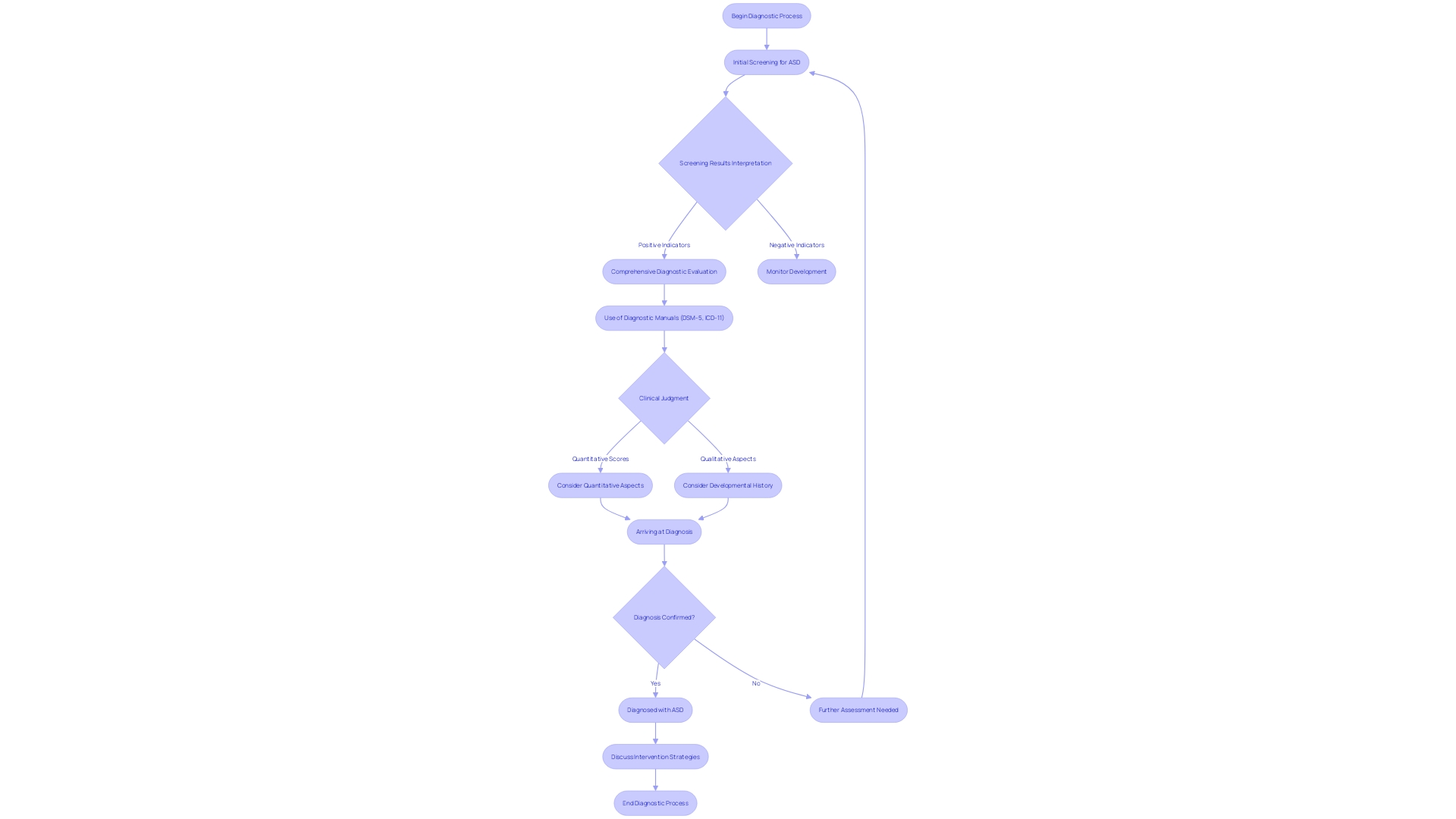
Identifying Autism Spectrum Disorder (ASD) is a systematic process that often starts with early observations by caregivers or educators noticing developmental differences. If concerns arise, a preliminary screening, usually performed by pediatricians or similar professionals, can suggest the possibility of ASD. When initial screenings indicate a risk, a more is undertaken, involving a detailed look at the individual's , behavioral observations, and the application of standardized .
The significance of cannot be emphasized enough, as it allows for , which can greatly enhance outcomes. Research suggests that early treatment, such as , can lead to better long-term results for individuals with ASD. The importance of timely identification is evident in the efforts of organizations like The Autism Community in Action (TACA), which supports thousands of families, emphasizing the requirement for that can detect ASD as soon as possible.
Advancements in technology have led to the development of promising diagnostic models, such as AutMedAI, which boasts an accuracy rate of nearly 80% for children under two. This model analyzes various parameters to identify patterns indicative of ASD, offering hope for earlier intervention.
Despite the progress in diagnostic approaches, the neurodivergent community acknowledges the validity of self-diagnosis, given the challenges and limitations of medical testing. For many, an official assessment may not be pivotal for accessing support or understanding oneself. However, for certain individuals, a formal assessment can validate their experiences and assist others in comprehending their viewpoint.
In the context of growing awareness and acceptance, it's crucial to remember that ASD encompasses a broad spectrum of conditions. The World Health Organization describes ASD as involving challenges with social interaction, communication, and atypical behavioral patterns. With growing consciousness, more individuals now acknowledge the variety within the ASD community, moving beyond stereotypes and embracing the distinctive attributes of individuals with ASD.
The is a pivotal moment that hinges on the . Parents are endowed with a unique and intimate understanding of their offspring's development and behavior, which becomes an invaluable asset during the diagnostic journey. Their observations and input offer a of professionals, painting a more complete picture of the individual's abilities and challenges.
Parents' communication with professionals should be candid and thorough—a true partnership where concerns and insights are freely exchanged. It is equally important for parents to remain inquisitive, seeking out explanations and understanding regarding the evaluation's results. This ensures that both parents and professionals can work in tandem toward the best possible outcome for the individual.
Recent research underscores the importance of this partnership. Studies, such as those conducted by the Baby Siblings Research Consortium, uncover new understandings into the complexities of ASD, emphasizing the importance of . These advancements in the domain are strengthened by the statements of Dr. David (Dan) R. Offord, who advocated for a just and supportive environment for individuals with disabilities, emphasizing the role of caregivers in promoting equal opportunities for development and engagement.
The dynamic interplay between genetics, environment, and the individual's distinct behavioral patterns dictate the pathway to diagnosis, as outlined in the DSM-5. The manual provides a structured approach to diagnosing ASD, focusing on persistent differences in communication and social interaction along with restricted, repetitive patterns of behavior. This framework, coupled with the lived experiences shared by parents, equips specialistsâa range of professionals including neurodevelopmental pediatricians, neurologists specialized in children, and geneticistsâto make informed diagnostic decisions.
Statistics indicate that ASD affects as many as 1 in 36 individuals, pointing to the necessity of a nuanced and comprehensive diagnostic process. By establishing a solid connection founded on , parents and professionals can , striving for early intervention and optimal results.
Navigating the journey following an is an intricate process, but it's bolstered by an array of . These services range from interventions and therapies to educational programs, all tailored to suit the individual's specific needs. The Autism @ Work Playbook, for instance, emphasizes not just the hiring but also the ongoing career development of neurodivergent individuals, highlighting the importance of beyond entry-level positions.
Furthermore, for neurodiverse individuals have been shown to benefit businesses economically. Companies employing people with disabilities often see improved revenues, net income, and profit margins, according to a study that also suggests a potential $25 billion boost to the U.S. GDP if more individuals with disabilities joined the workforce.
For caregivers, staying informed about the is vital. , a disability community-based nonprofit organization, provides resources and services that empower families dealing with disability issues. Their approach integrates expertise from personal disability experiences.
Participation in is essential for the mental well-being of youngsters and adolescents with disabilities. The well-supported participation of these individuals in school, home, and leisure activities contributes to a fair and equitable society, as noted by the late Dr. David (Dan) R. Offord, a young person psychiatrist.
It's also important for caregivers to be knowledgeable about their child's prescribed medications and to discern between credible information and misleading online narratives. This careful research and validation of information can safeguard against harmful treatments while exploring potentially beneficial options. As quoted by one parent, 'Life is 10% what happens to us and 90% how we react to it.'—a perspective that underscores the resilience and adaptability of families navigating autism.
In conclusion, early and accurate diagnosis of Autism Spectrum Disorder (ASD) is essential for optimal outcomes. Collaboration between parents and healthcare professionals, such as developmental pediatricians, child neurologists, and psychologists, is crucial in identifying and understanding ASD. Technological advancements, including artificial intelligence and eye-tracking technology, are revolutionizing the diagnostic landscape, offering hope for improved healthcare tools and interventions.
The diagnostic process involves a systematic approach, starting with early observations by caregivers or educators. Early detection enables timely interventions, significantly improving a child's development. Following a diagnosis, families have access to a range of support services and resources tailored to their child's needs.
These include interventions, therapies, and educational programs that empower families and promote the growth of individuals with ASD.
It is important for parents to stay informed about the latest findings, treatments, and therapeutic approaches. By understanding the intricacies of ASD and the diagnostic process, parents can make informed decisions and provide the best possible care for their child. The ongoing research and advancements in technology continue to shape the diagnostic landscape, offering hope for improved healthcare tools and interventions.
In summary, early and accurate diagnosis, collaboration between parents and healthcare professionals, and access to support services are crucial in providing the best possible care for individuals with ASD. By empowering parents with valuable insights and expert advice, we can ensure that individuals with ASD receive the necessary interventions and support for their unique needs, enabling them to thrive and reach their full potential.
Explore our range of support services and resources tailored to your child's needs.
What is Autism Spectrum Disorder (ASD)?
Autism Spectrum Disorder (ASD) is a developmental disorder characterized by challenges with social interaction, communication, and by restricted and repetitive behavior. Individuals with ASD display a range of symptoms and abilities, hence the term 'spectrum.'
Why is early diagnosis of ASD important?
Early diagnosis of ASD is crucial as it allows for the commencement of early intervention, which can significantly improve a child's development in areas such as communication, social interaction, and adaptive behavior. Early intervention can lead to better outcomes and enhanced independent living skills in adulthood.
What are the benefits of accurate diagnosis of ASD?
An accurate diagnosis ensures that the individual receives tailored services and support that align with their unique needs. It helps in choosing the right therapies and educational strategies and empowers families to make informed decisions and access necessary resources.
What role does technology play in diagnosing ASD?
Technological advancements, such as artificial intelligence (AI) and eye-tracking technology, are improving the ability to detect early signs of developmental disorders, including ASD. These technologies provide objective data and can potentially lead to earlier detection and intervention.
Who is qualified to diagnose ASD?
Qualified healthcare professionals such as developmental pediatricians, child neurologists, clinical psychologists, child and adolescent psychiatrists, and pediatric neurologists are trained to diagnose ASD. They use a combination of developmental history reviews, behavioral observations, and standardized diagnostic instruments.
What are the DSM-5 criteria for ASD?
The DSM-5, published by the American Psychiatric Association, provides standardized criteria for diagnosing ASD. It includes persistent differences in communication and social interaction across multiple contexts, and restricted, repetitive patterns of behavior, interests, or activities.
What tools are used to diagnose ASD?
Tools such as the Autism Diagnostic Observation Schedule (ADOS-2) and the Autism Diagnostic Interview-Revised (ADI-R) are commonly used. These instruments, along with additional questionnaires, checklists, and rating scales, help in assessing social communication and interaction skills, as well as other behaviors associated with ASD.
Can ASD be diagnosed solely by observation?
While observation is a key component, ASD diagnosis also involves gathering detailed information on the individual's developmental history and current behavior, often from parents or caregivers. A combination of professional observations and parental insights is used to make an informed diagnosis.
What should parents do if they suspect their child has ASD?
Parents should share their concerns with a healthcare professional, who may perform preliminary screenings and, if necessary, refer for a more comprehensive evaluation. Parents should provide detailed observations of their child's development and behaviors to aid in the diagnostic process.
What support and resources are available post-diagnosis?
Post-diagnosis, families can access a range of interventions and therapies, educational programs, and community support services tailored to the individual's needs. Resources include information on the latest treatments, therapeutic approaches, and inclusive employment practices. Organizations like The Autism Community in Action (TACA) and Through the Looking Glass (TLG) offer additional support for families dealing with ASD.
How has the approach to autism diagnosis evolved?
The approach to autism diagnosis has become more nuanced and technology-driven, with tools like AI and machine learning models aiding in early and accurate identification. There is also a growing emphasis on the concept of neurodiversity and personalized care for individuals with ASD.
What is the role of parents in the diagnostic process?
Parents play a crucial role by providing detailed and accurate information about their child's developmental milestones and behaviors. Their insights, combined with clinical expertise, contribute to a more comprehensive assessment and diagnosis.
How is the diagnostic process for ASD initiated?
The diagnostic process often begins with observations by parents or educators, followed by preliminary screenings by healthcare professionals. If ASD is suspected, a thorough evaluation is conducted, which includes developmental history, behavioral observations, and standardized assessments.
Can adults be diagnosed with ASD?
Yes, adults can be diagnosed with ASD. Some individuals may not receive a diagnosis until later in life, and for some, such as Heather Florio, who was diagnosed at 41, the clarity of a diagnosis can lead to self-acceptance and better understanding.