Introduction
Navigating the world of autistic behaviors can be quite a journey, especially when it comes to understanding why some individuals feel the need to run away. For many autistic adults, the urge to run can come from various triggers, like sensory overload, communication barriers, or just a desire to explore. Let’s explore the key factors that can lead to this behavior and why recognizing these triggers is so important for keeping autistic individuals safe and sound.
So, what can caregivers do to help reduce the risks of elopement and create a more supportive environment? Let’s dive into some practical strategies together!
Identify Key Factors Contributing to Elopement in Autistic Adults
Have you ever felt overwhelmed in a noisy place? For many autistic adults, that feeling can lead to an understanding of why do autistic adults run away. Elopement, or why do autistic adults run away from a secure setting without permission, can be a significant concern, and understanding this behavior is crucial for parents and caregivers.
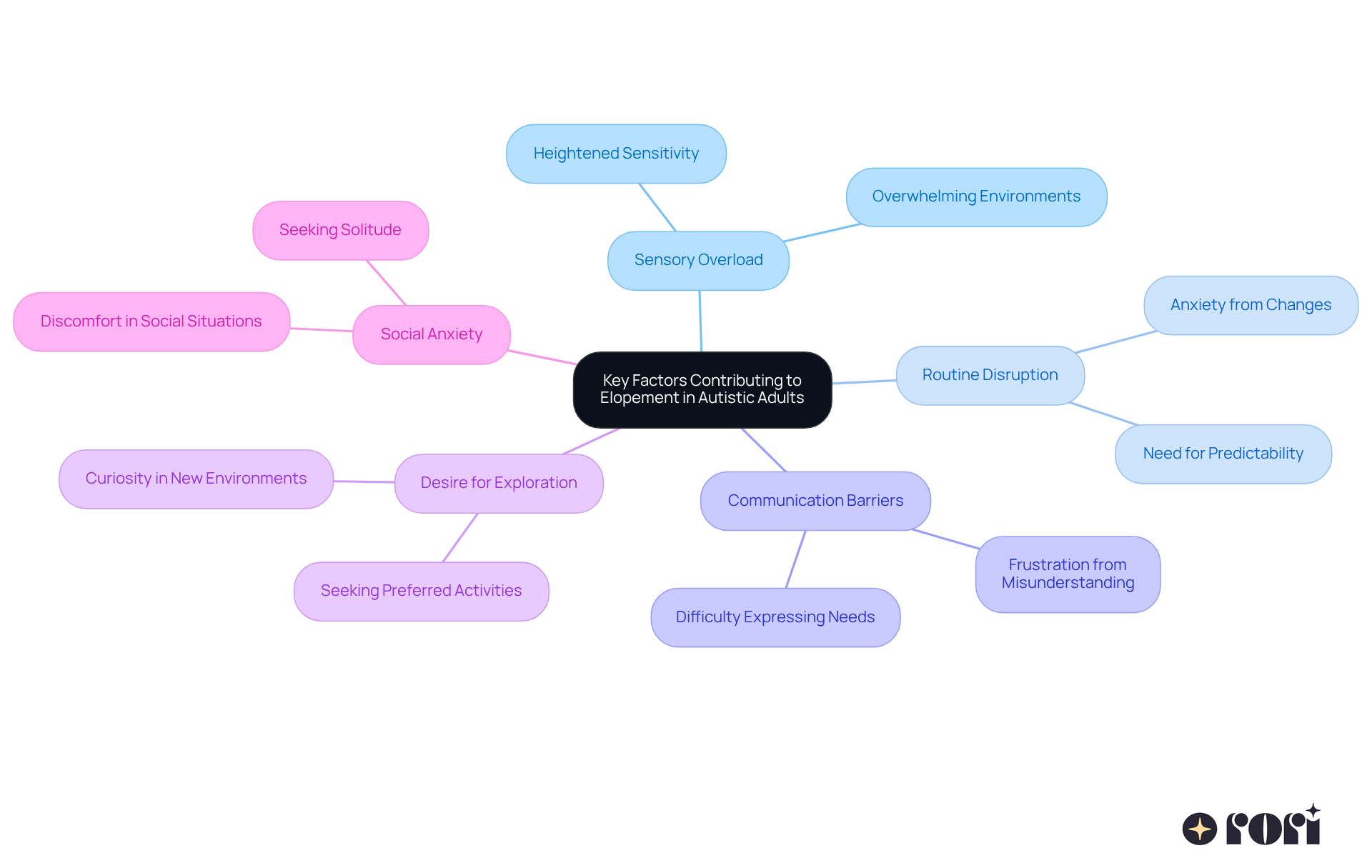
- Sensory Overload: Imagine being in a crowded mall, where every sound feels amplified, and every light is blinding. Autistic individuals often have heightened sensitivity to sensory stimuli, making excessively loud or chaotic environments overwhelming. It’s no wonder they might seek out a quieter space.
- Routine Disruption: Many individuals on the autism spectrum thrive on routine and predictability. When their daily schedules change unexpectedly, it can trigger anxiety. This might lead them to elope as a way to cope with the stress related to why do autistic adults run away.
- Communication Barriers: Sometimes, expressing needs or emotions can be tough. When an autistic adult feels misunderstood or struggles to communicate, it can lead to frustration. They might elope to find relief or a more comfortable environment, which raises the question of why do autistic adults run away. Collaborating with professionals, like behavioral analysts, can help create safety plans and teach skills to reduce running away.
- Desire for Exploration: Curiosity is a natural part of life! Some people elope simply because they want to explore their surroundings. This urge can be especially strong in unfamiliar settings, where everything feels new and exciting.
- Social Anxiety: Social situations can be daunting for individuals on the spectrum. If they feel anxious or uncomfortable, they might leave in search of solitude or safety.
By understanding why do autistic adults run away, we can collaborate to ensure the safety and well-being of our loved ones. Collaborating with professionals and implementing tailored safety plans can significantly reduce the risks associated with wandering. With the right support and understanding, we can help our loved ones feel safe and secure in their environments.
Examine Triggers: Sensory Overload and Communication Barriers
Have you ever felt overwhelmed in a crowded place? Imagine how your child might feel in those moments. Understanding why do autistic adults run away is crucial for keeping our kids safe. Two big triggers are sensory overload and communication barriers.
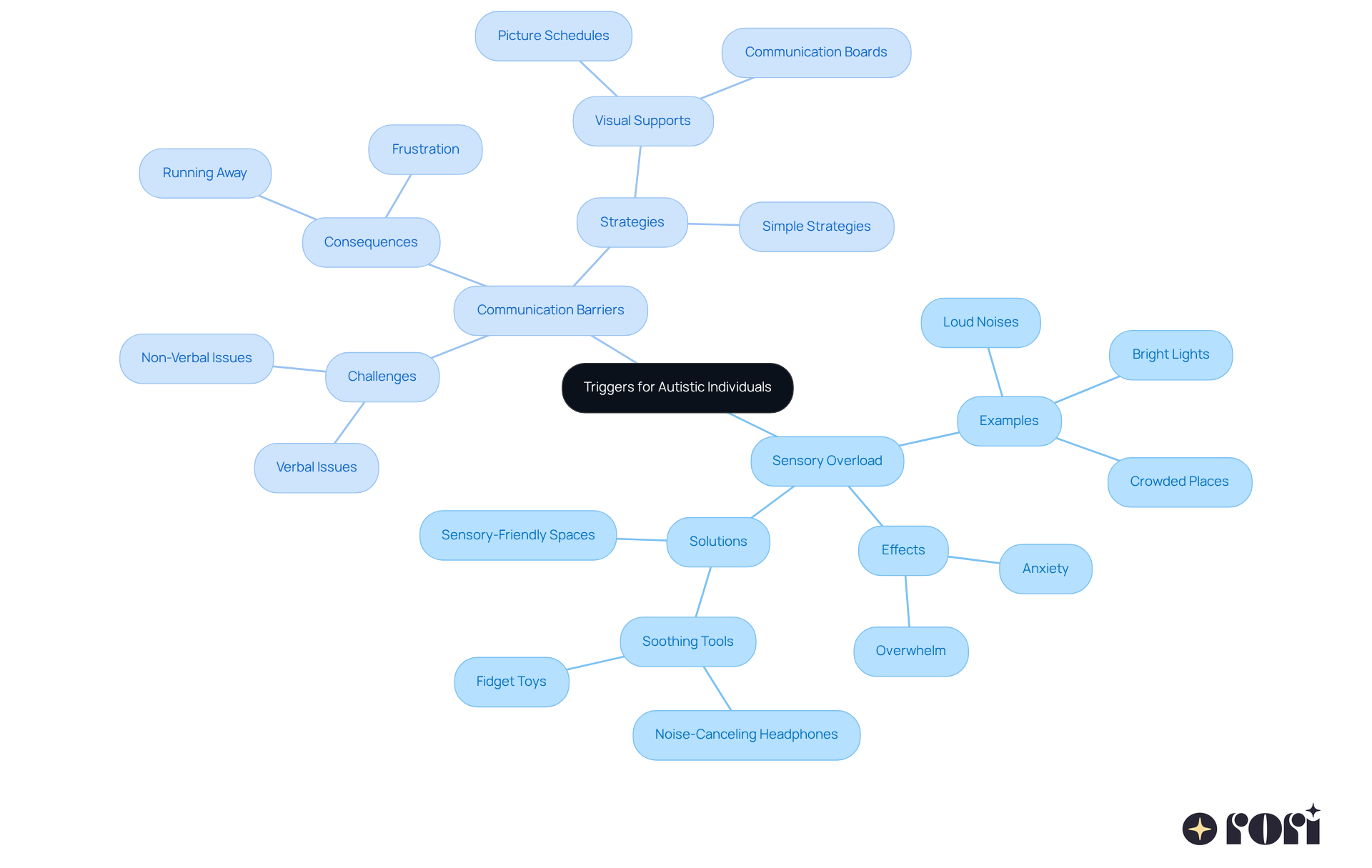
- Sensory Overload: For many autistic individuals, sensory processing differences can make busy environments feel like a whirlwind. Think about a crowded shopping mall, with loud noises and bright lights - it can be too much! When things get too loud or bright, it’s like a storm in their minds, and they just want to find a quiet spot to breathe. Caregivers can help by creating sensory-friendly spaces and providing soothing tools, like noise-canceling headphones or fidget toys, to make things a little easier.
- Communication Barriers: Many autistic adults face challenges with both verbal and non-verbal communication. When they struggle to express their feelings or needs, frustration can build up. For instance, if someone feels anxious but can’t share that with their caregiver, they might choose to run away, prompting the question of why do autistic adults run away instead of facing the situation. This inability to communicate effectively can lead to misunderstandings and heightened anxiety. Let’s work together to spot these triggers and use simple strategies to help our kids feel more at ease and connected. Visual supports, like picture schedules or communication boards, can make a world of difference.
It’s crucial to recognize that running away can pose serious risks, like wandering into dangerous areas. The emotional toll of elopement on families is significant, with many parents feeling overwhelmed. By understanding these challenges, we can empower ourselves to create safer spaces for our children, ensuring they feel understood and supported. We’re here to help you every step of the way!
Discuss Implications: Risks and Consequences of Elopement
The stakes are incredibly high for autistic individuals and their families when considering why do autistic adults run away.
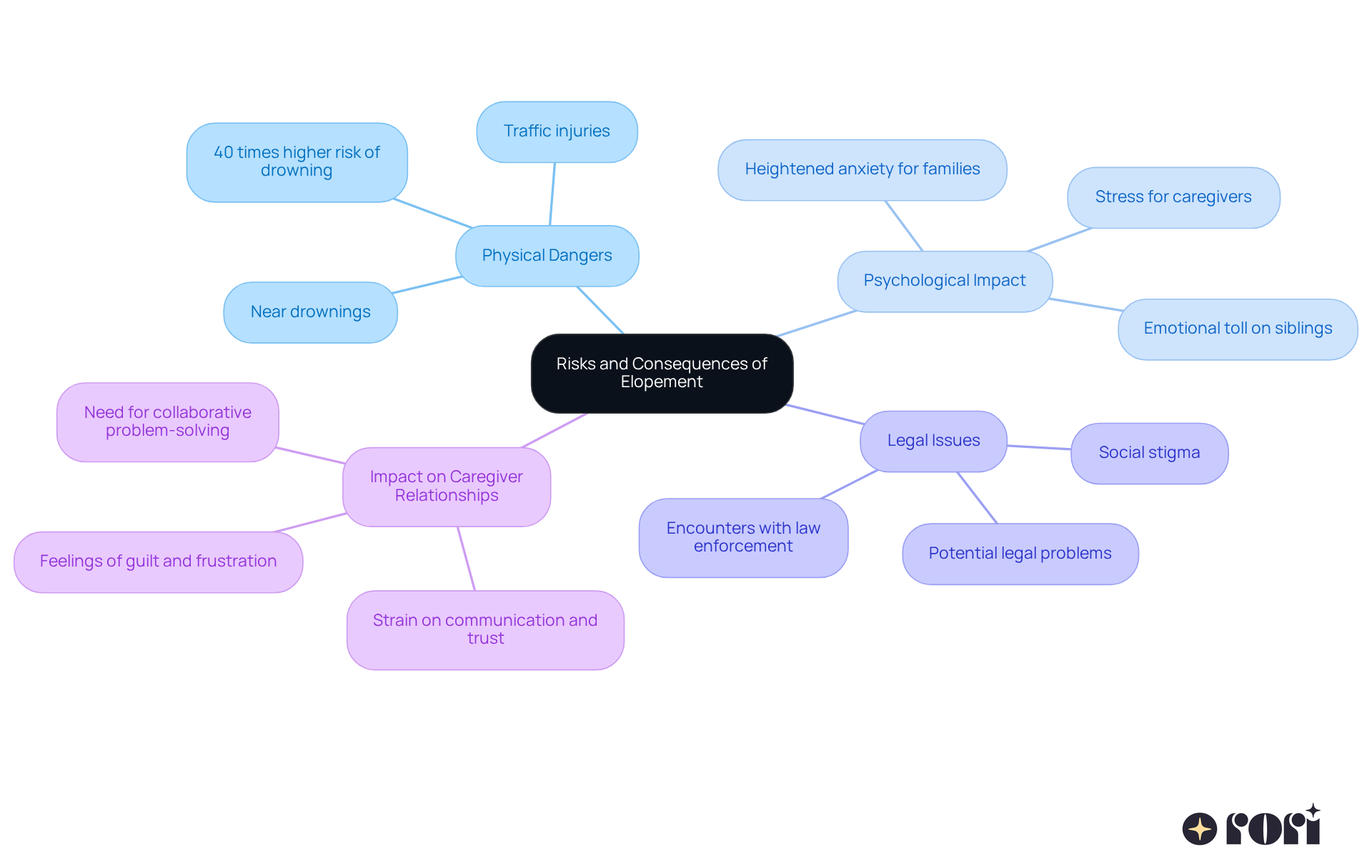
- Physical Dangers: Did you know that autistic individuals face a staggering 40 times higher risk of drowning than their neurotypical peers? This is especially concerning when they wander near water. It’s heartbreaking to think that 24% of elopement cases involve children at risk of drowning. This really highlights the urgent need for preventive measures.
- The psychological impact of eloping raises questions about why do autistic adults run away, leading to heightened anxiety and stress for both the person and their families. And it’s not just the parents; siblings and extended family often feel that weight too, adding to the anxiety all around. Caregivers often find themselves in a constant state of worry, which can take a toll on their mental health. But there’s hope! By learning about ABA principles and strategies, like positive reinforcement and structured routines, caregivers can make informed decisions that help reduce stress and improve family dynamics.
- One of the concerns regarding elopement is understanding why do autistic adults run away, as it can lead to legal problems, especially if the person is found in unsafe situations. This can result in encounters with law enforcement, which may not always be prepared to address the unique needs of those on the autism spectrum. Plus, social stigma can emerge, impacting relationships and community status, making it even harder for individuals to seek help.
- Impact on Caregiver Relationships: The stress related to elopement can strain relationships between caregivers and the person with autism. Caregivers may grapple with feelings of guilt or frustration, which can lead to a breakdown in communication and trust. But when caregivers actively engage and align with therapeutic strategies, like consistent communication and collaborative problem-solving, it often leads to more effective and lasting behavioral improvements.
By understanding these challenges, we can work together to create safer spaces for our loved ones.
Propose Strategies for Prevention and Intervention
As a caregiver, it’s natural to feel anxious about the safety of your loved one, especially when you think about why do autistic adults run away. Let’s talk about how we can create a safe space for your loved one.
- Environmental Modifications: Creating a safe environment is key! Think about installing locks on doors, using alarms, and making sure outdoor areas are secure. Visual signals, like signs indicating safe areas, can also help guide them and reduce the chance of wandering.
- Behavioral Interventions: You might find that using some ABA techniques can really help with those wandering behaviors. Teaching coping strategies for anxiety and sensory overload can empower your loved one to handle overwhelming situations without feeling the need to flee.
- Communication Support: Helping your loved one communicate better can make a world of difference. Using visual aids or simple language can help them express their needs and feelings more effectively. Practicing in safe settings boosts their confidence and reduces frustration.
- Routine and Predictability: Having a daily routine can really help ease anxiety and keep your loved one feeling secure. Predictable schedules offer a sense of stability, making them less likely to seek escape. Visual schedules can also be a great tool!
- Collaboration with Professionals: Working with specialists can give you the tailored support you need to feel confident in your approach. Regular training for caregivers on identifying triggers and applying preventive measures is essential for creating a secure environment.
With these strategies in place, you can breathe a little easier, knowing you’re creating a safer space for your loved one.

Conclusion
Understanding why autistic adults might wander off is key to keeping them safe and happy! Sometimes, they might feel overwhelmed by too much noise or struggle to express what they need, which can lead to wandering off. When we understand these triggers, we can make our homes more comforting and safe for them.
It’s important to remember that wandering can lead to serious dangers, like getting lost or even hurt, which can be really scary for families. Simple changes, like creating a safe space at home or using visual cues, can really help keep them safe. Working with experts can give families the tools they need to handle these situations better.
When we understand elopement better, we can create safe spaces where our loved ones feel secure and at home. Together, we can make sure our loved ones feel understood and supported, leading to happier lives for everyone!
Frequently Asked Questions
What is elopement in the context of autistic adults?
Elopement refers to when autistic adults run away from a secure setting without permission, which can be a significant concern for parents and caregivers.
What are some key factors that contribute to elopement in autistic adults?
Key factors include sensory overload, routine disruption, communication barriers, desire for exploration, and social anxiety.
How does sensory overload affect autistic individuals?
Autistic individuals often have heightened sensitivity to sensory stimuli, making excessively loud or chaotic environments overwhelming, prompting them to seek quieter spaces.
Why does routine disruption lead to elopement?
Many autistic individuals thrive on routine and predictability, and unexpected changes to their daily schedules can trigger anxiety, leading them to elope as a coping mechanism.
How can communication barriers contribute to elopement?
When autistic adults struggle to express their needs or emotions, it can lead to frustration. They may elope to find relief or a more comfortable environment.
What role does the desire for exploration play in elopement?
Some autistic individuals elope simply out of curiosity, wanting to explore their surroundings, especially in unfamiliar settings that feel new and exciting.
How does social anxiety affect the behavior of autistic adults?
Social situations can be daunting for autistic individuals. If they feel anxious or uncomfortable, they might leave in search of solitude or safety.
What can be done to reduce the risks associated with wandering?
Collaborating with professionals, such as behavioral analysts, to create tailored safety plans and teach skills can significantly help reduce the risks associated with elopement.
List of Sources
- Identify Key Factors Contributing to Elopement in Autistic Adults
- 10 inspiring quotes from people with autism | Autism Speaks (https://autismspeaks.org/life-spectrum/autism-quotes)
- How Many Individuals With Autism Display Elopement Behavior? - A Comprehensive Analysis - Alert Me Bands (https://alertmebands.com/how-many-individuals-with-autism-display-elopement-behavior-a-comprehensive-analysis)
- Key Autism Elopement Statistics & Prevention - Bluebell ABA (https://bluebellaba.com/blog/autism-elopement-statistics)
- Preventing Elopement in Autistic Adults - Little Champs ABA (https://littlechampsaba.com/blog/preventing-elopement-in-autistic-adults)
- Elopement in Autistic Adults – How It Differs from Children (https://abcachieve.com/elopement-in-autistic-adults)
- Examine Triggers: Sensory Overload and Communication Barriers
- 24 quotes from autistic individuals - Living Autism (https://livingautism.com/24-quotes-autistic-individuals)
- Understanding Elopement in Autism | Advanced Autism Services (https://advancedautism.com/post/elopement-and-autism)
- Elopement and Autism: Causes, Risks, and Solutions - Big Dreamers ABA (https://bigdreamersaba.com/blog/elopement-and-autism)
- 12 Quotes Describing What It’s Really Like to Live with Autism (https://senseationalyou.com/blogs/resources/what-it-s-really-like-to-live-with-autism-12-quotes-from-the-autistic-community)
- Discuss Implications: Risks and Consequences of Elopement
- Autism and Elopement - Understanding the Causes and Reducing the Risks - Autism Awareness (https://autismawarenesscentre.com/autism-and-elopement-understanding-the-causes-and-reducing-the-risks)
- Elopement and Autism: Causes, Risks, and Solutions - Big Dreamers ABA (https://bigdreamersaba.com/blog/elopement-and-autism)
- Elopement Patterns and Caregiver Strategies - PMC (https://pmc.ncbi.nlm.nih.gov/articles/PMC6728233)
- Autism Elopement: Causes, Risks, and Prevention (https://autismparentingmagazine.com/autism-elopement?srsltid=AfmBOooZ12p3Yq8cpgPpfE5bEHlAQnWKd80l4PMQlXBCof5z1t9BRZQt)
- New Study Highlights Mortality & Risk In Autism Wandering/Elopement - National Autism Association (https://nationalautismassociation.org/new-study-highlights-lethal-risks-of-missing-persons-with-autism)
- Propose Strategies for Prevention and Intervention
- Elopement Patterns and Caregiver Strategies - PMC (https://pmc.ncbi.nlm.nih.gov/articles/PMC6728233)
- Autism and Elopement - Understanding the Causes and Reducing the Risks - Autism Awareness (https://autismawarenesscentre.com/autism-and-elopement-understanding-the-causes-and-reducing-the-risks)
- Preventing Elopement in Autistic Adults - Little Champs ABA (https://littlechampsaba.com/blog/preventing-elopement-in-autistic-adults)
- Autism and Elopement: 5 Strategies and Tools for Safety (https://abacentersde.com/blog/safety-in-elopement-and-autism)