

Navigating the emotional landscape can feel overwhelming for parents of children with autism, can’t it? This guide is here to help! Let’s dive into some practical tips that can help enhance emotional understanding in our kids on the spectrum!
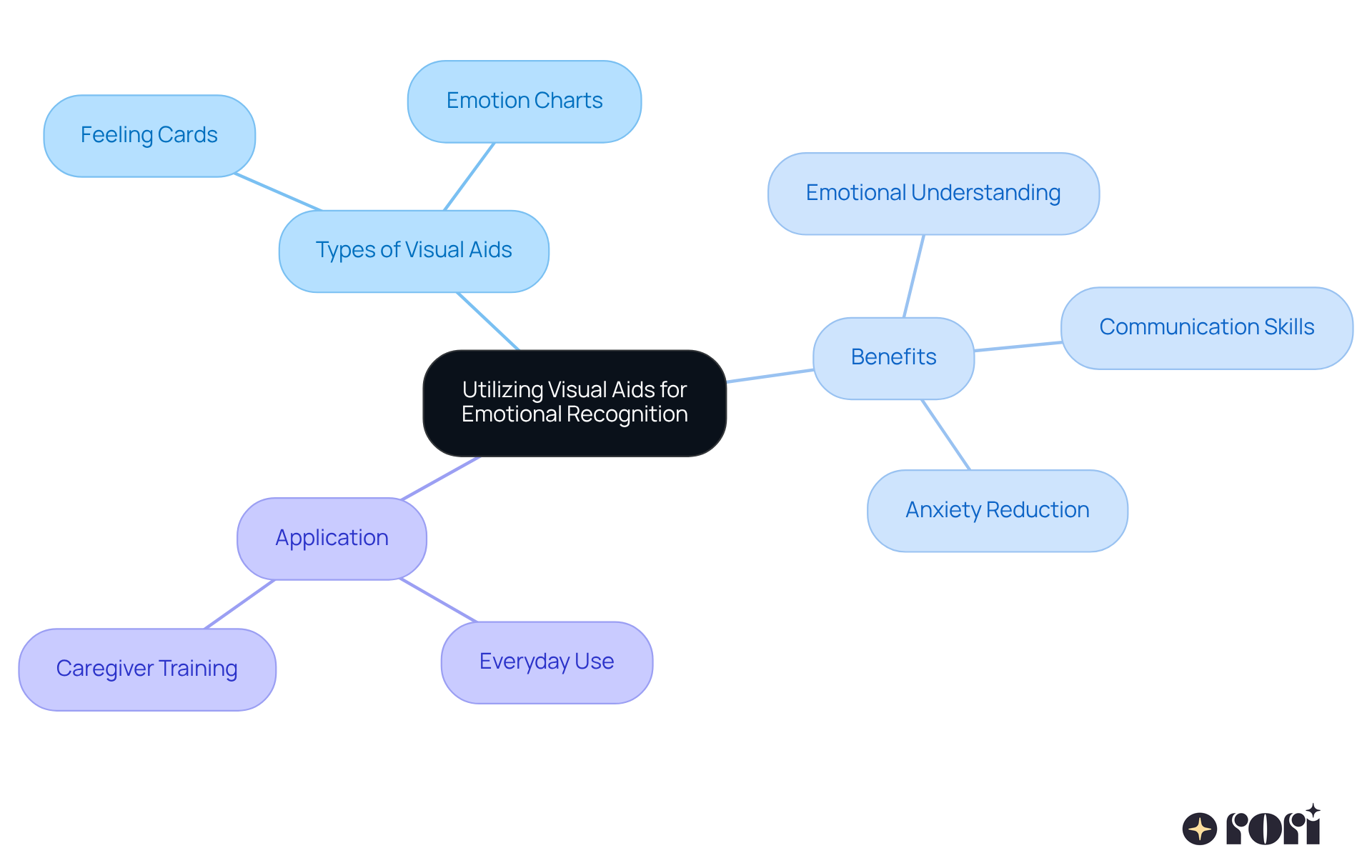
Have you ever struggled to help your child express their feelings? You're not alone! Using visual aids, like feeling cards and charts, provides valuable tips for helping children with autism develop emotional understanding. For example, a chart showing different facial expressions alongside their related feelings can help children recognize what they’re feeling and what others might be feeling too.
Studies show that these tools can really help kids recognize their feelings and even boost their communication skills, making them feel less anxious. By using emotion cards in everyday life, you can reinforce learning and create a handy way to talk about feelings together. This approach aligns with findings that highlight how effective visual techniques can be in autism treatment, and it serves as one of the tips for helping children with autism develop emotional understanding by showing that personalized visual aids lead to real improvements in understanding emotions and social engagement.
As kids interact with these visual tools, they develop a clearer grasp of their feelings, providing valuable tips for helping children with autism develop emotional understanding and build better connections with others. Plus, when caregivers learn about ABA principles, they can use these visual tools better, helping their kids grow emotionally and make smarter choices. Remember, as autism educator Danita M. Luzadder points out, using visual strategies is key for effective learning and organization. By embracing these visual tools, you’re not just helping your child; you’re building a bridge to better communication and understanding.
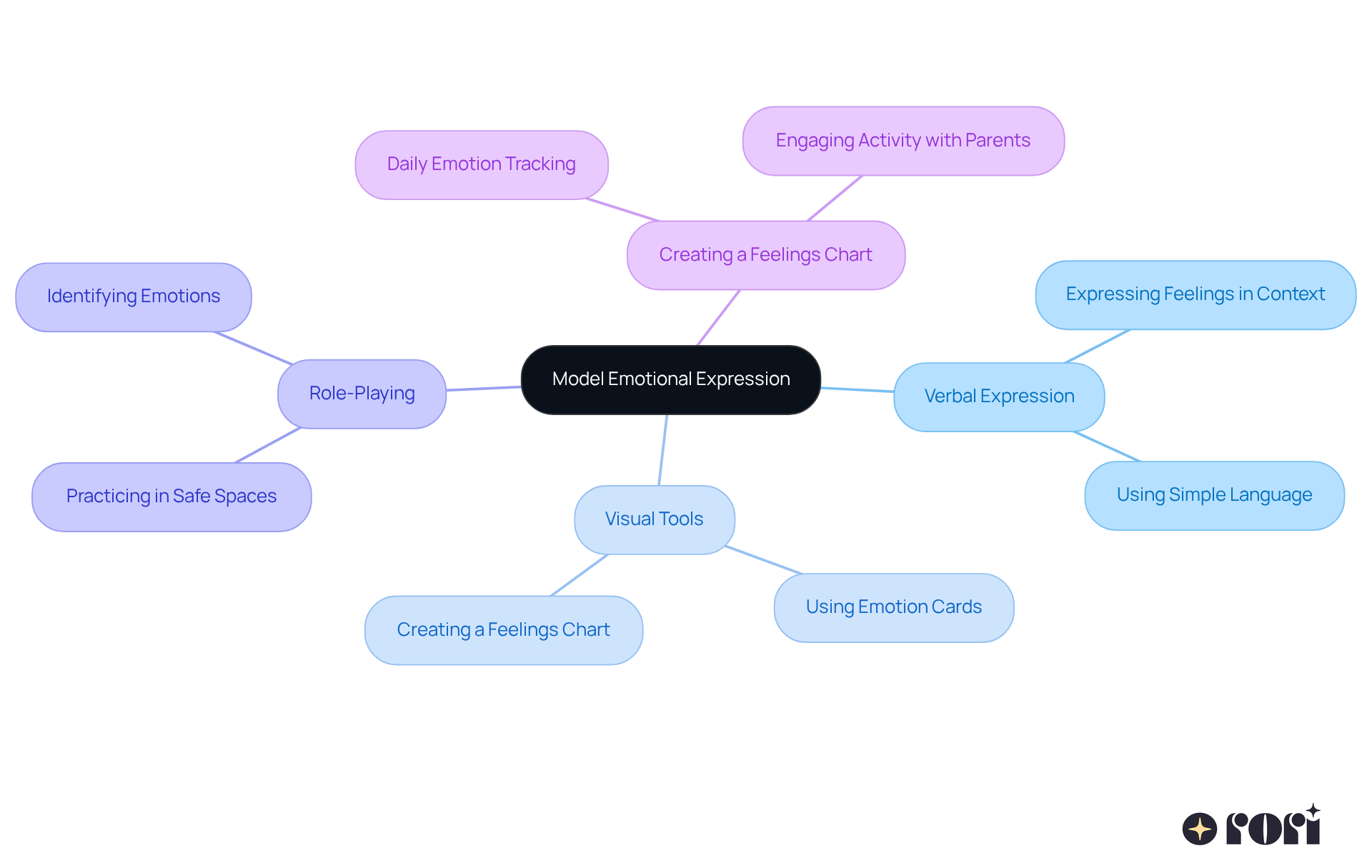
Have you ever wondered how to help your child understand their feelings better? Representing expressions of emotion is essential for educating youngsters about sentiments in a meaningful way. Parents can openly express their feelings in suitable situations, like saying, 'I feel happy because we had a fun day!' This way, kids can start to connect what we say with how they feel. It’s all about using our words and body language together to reinforce the message.
You know, when we show our feelings, kids really start to pick up on their own emotions. For example, when we talk about feelings in the moment, it helps them understand the context. This makes it easier for them to recognize and express their own sentiments. Plus, integrating both verbal and non-verbal signals is one of the tips for helping children with autism develop emotional understanding.
Using visual tools, like emotion cards, can be a fun way to help kids learn about different feelings. Role-playing different scenarios also gives them a chance to practice recognizing and expressing emotions in a safe space, boosting their confidence in social situations.
By showing our emotions and creating a safe space for kids to explore theirs, we are offering tips for helping children with autism develop emotional understanding and navigate their inner worlds more effectively. This not only enhances their understanding but also strengthens the bond between parent and child. To make it even more engaging, why not create a feelings chart together? It’s a simple activity where kids can identify and express their emotions throughout the day. By taking these small steps, you’re not just teaching your child about emotions; you’re building a stronger bond that will last a lifetime.
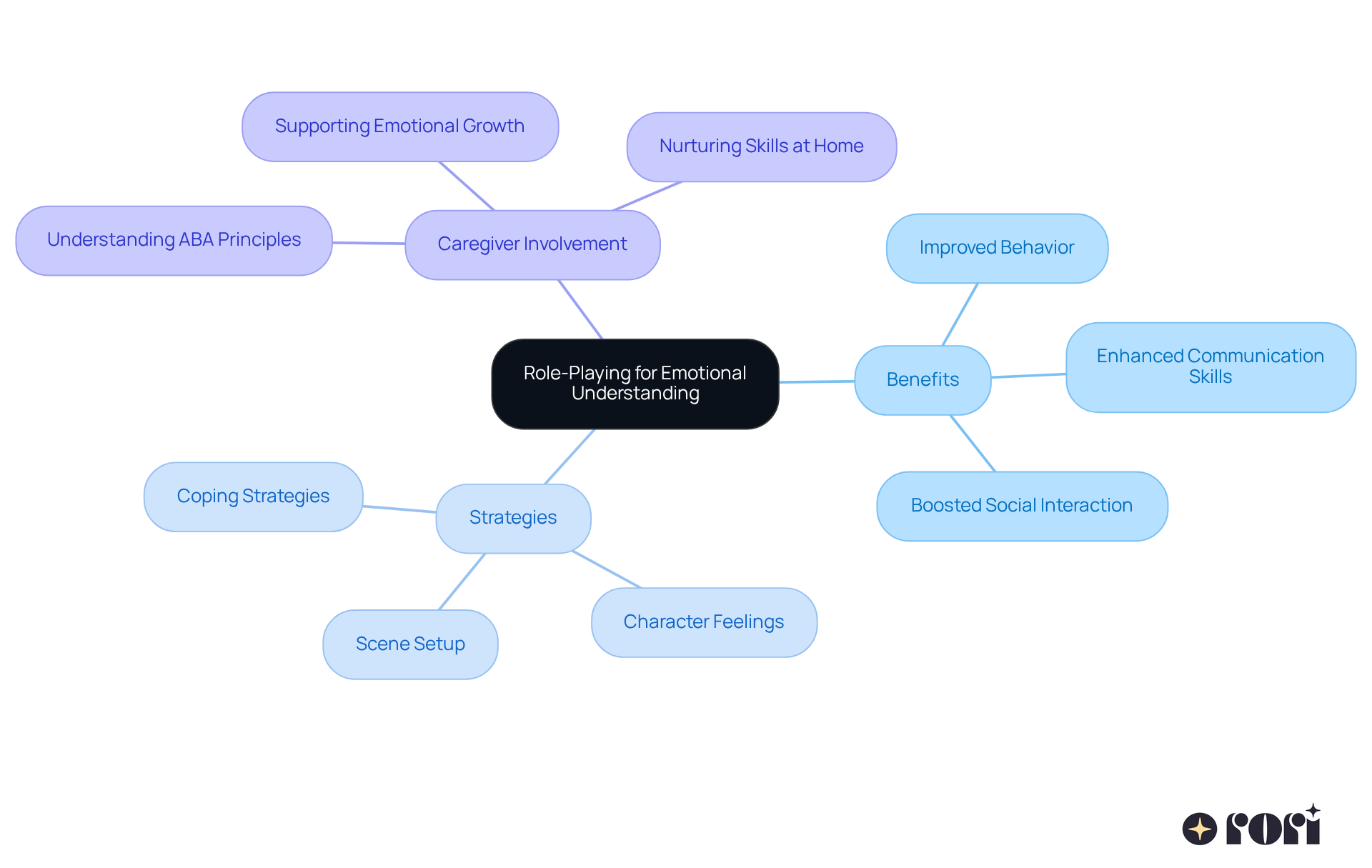
Have you ever felt unsure about how to help your child express their emotions? Role-playing can be a fantastic way to implement tips for helping children with autism develop emotional understanding while navigating emotional scenarios. For instance, you might set up a scene where a character feels sad after losing a toy. Encourage your child to share how that character might feel and brainstorm some coping strategies together. This interactive approach not only fosters empathy but also offers tips for helping children with autism develop emotional understanding and practical skills for handling similar situations in their own lives.
Did you know that kids who regularly role-play can see a boost in their behavior and communication skills? It’s true! Research shows that about 70% of youths engaged in consistent role-playing activities demonstrate improvements. Plus, role-playing can enhance social interaction abilities in youngsters with autism by 40%. When kids join in on these activities, they really start to grow emotionally and socially, helping them manage their interactions with confidence and empathy.
And let’s not forget about the role of caregivers in this process. When you learn about ABA principles, you gain valuable tips for helping children with autism develop emotional understanding, which equips you to better support your child’s journey. This knowledge helps you make informed decisions that positively impact your child’s progress, provide better support at home, and promote consistency in therapeutic approaches. As Fred Rogers wisely said, 'Play is often talked about as if it were a relief from serious learning. But for young ones, play is serious learning. Play is really the work of childhood.' So, think about including role-playing activities in your daily routine. By doing so, you’re not just helping your child; you’re also nurturing your own understanding and skills as a caregiver.
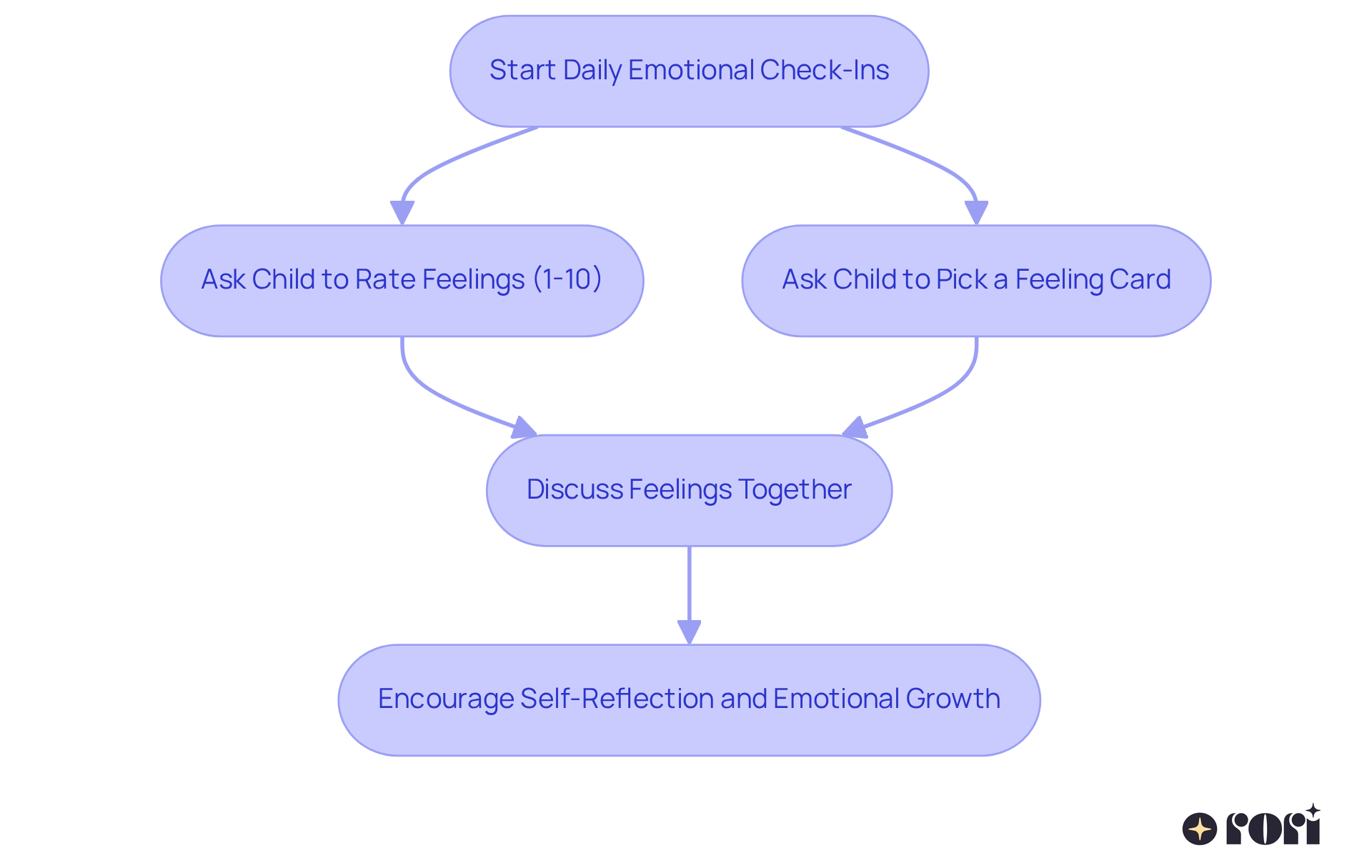
Have you ever wondered how to better connect with your child about their feelings? Incorporating daily emotional check-ins into your routine can provide tips for helping children with autism develop emotional understanding. Ask your child to rate their feelings on a scale from 1 to 10 or to pick a card that represents how they feel. It’s a great way for you and your child to chat about feelings together!
This practice not only encourages self-reflection but also offers tips for helping children with autism develop emotional understanding through meaningful conversations. By learning more about ABA, you can discover tips for helping children with autism develop emotional understanding and support your child’s emotional growth. Getting involved like this not only helps your child but also makes you feel more confident as a parent.
So, let’s explore this together! Taking these small steps can lead to big changes in your family’s emotional health.
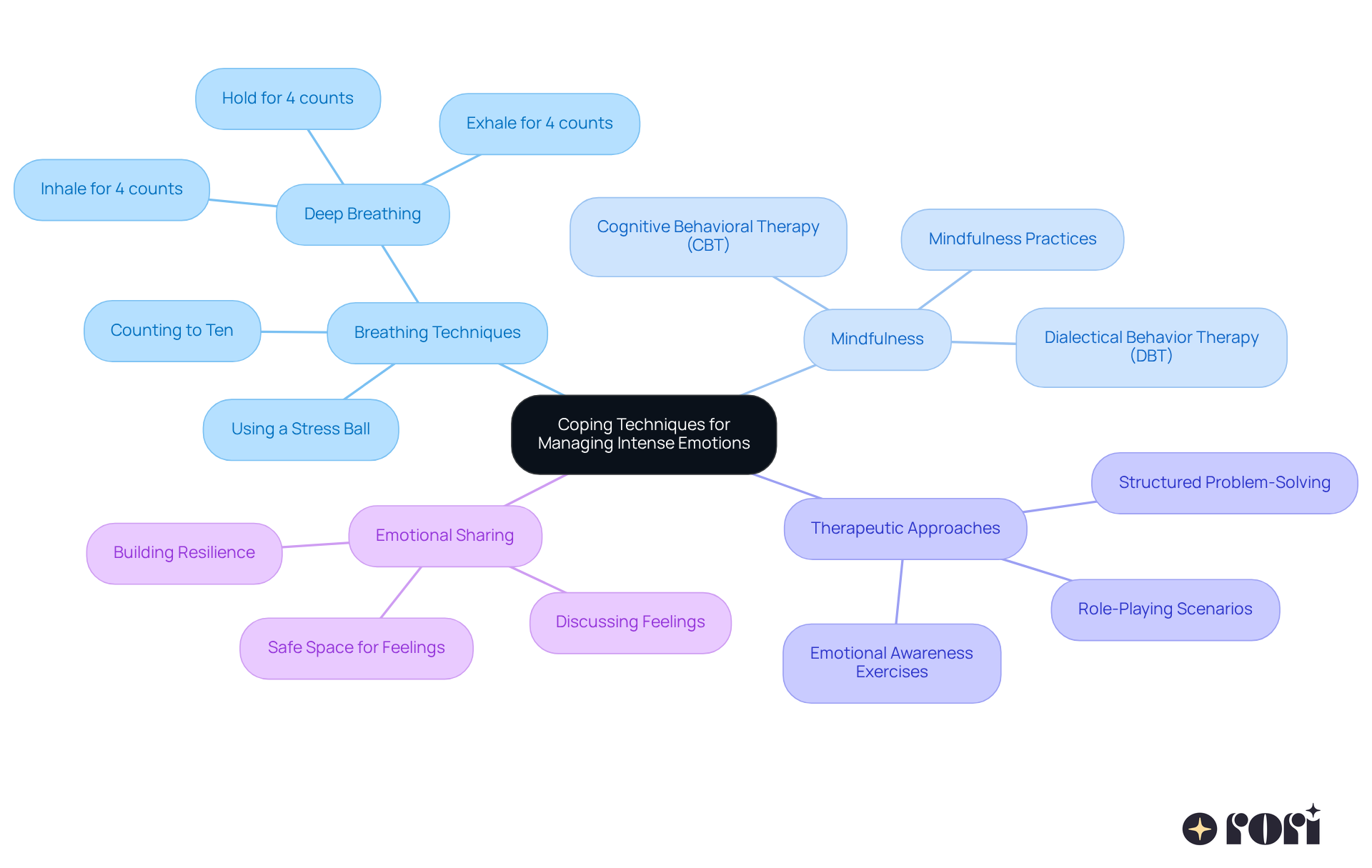
Managing emotions can be a real challenge for kids, can’t it? Introducing coping techniques like deep breathing, counting to ten, or using a stress ball can really help when emotions run high. For example, you can guide your child to take deep breaths by inhaling for four counts, holding for four counts, and exhaling for four counts. Practicing these techniques when things are calm helps them use these strategies when they’re feeling overwhelmed.
You know, studies show that mindfulness techniques can really help kids manage their moods better. Techniques like Cognitive Behavioral Therapy (CBT) and Dialectical Behavior Therapy (DBT) are great tools for helping kids manage their anger. They offer structured methods that assist young ones in handling their feelings. Plus, role-playing scenarios where they might feel anxious can reinforce these skills, making them more accessible in real-life situations.
Encouraging kids to share their feelings in a safe space helps them build resilience and feel more stable, which is crucial for their overall well-being. As psychologist Elizabeth Kenny wisely said, 'He who angers you conquers you.' This highlights how important it is to teach our kids to handle their feelings effectively. Providing tips for helping children with autism develop emotional understanding can make a world of difference in their emotional journey.
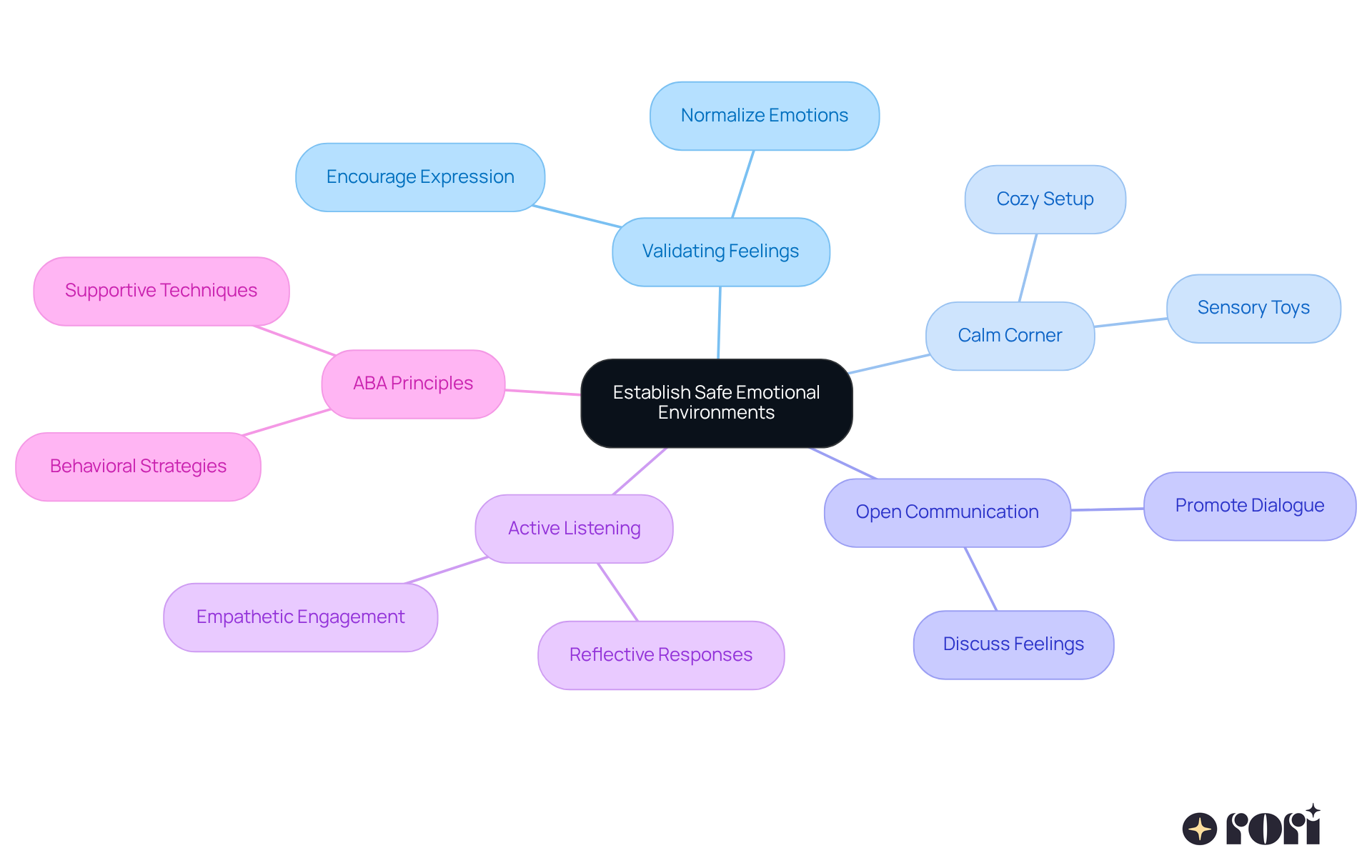
Have you ever noticed how hard it can be for kids to open up about their feelings? Establishing a secure emotional atmosphere is essential, as it provides tips for helping children with autism develop emotional understanding and feel comfortable sharing. Start by letting your child know that all feelings are valid and it’s perfectly okay to express them.
How about setting up a cozy 'calm corner' where they can go when things feel too much? Fill it with soft blankets, stuffed animals, and maybe some sensory toys to create a comforting retreat. This little haven can be a great spot for them to unwind when they’re feeling overwhelmed.
Let’s chat about feelings openly, making it clear that sharing is a healthy part of growing up. Did you know that nearly 1 in 5 kids between 3 and 17 face mental health challenges? That’s why creating a safe space is so important! By validating their feelings, you’re offering tips for helping children with autism develop emotional understanding, which is crucial for their overall well-being.
Using active listening and keeping a routine can really help make these safe spaces work even better! Plus, learning about ABA principles can give you the tools to support your child’s emotional development effectively. This knowledge not only empowers you as a parent but also leads to better outcomes for your little ones. We’re here to help you every step of the way!
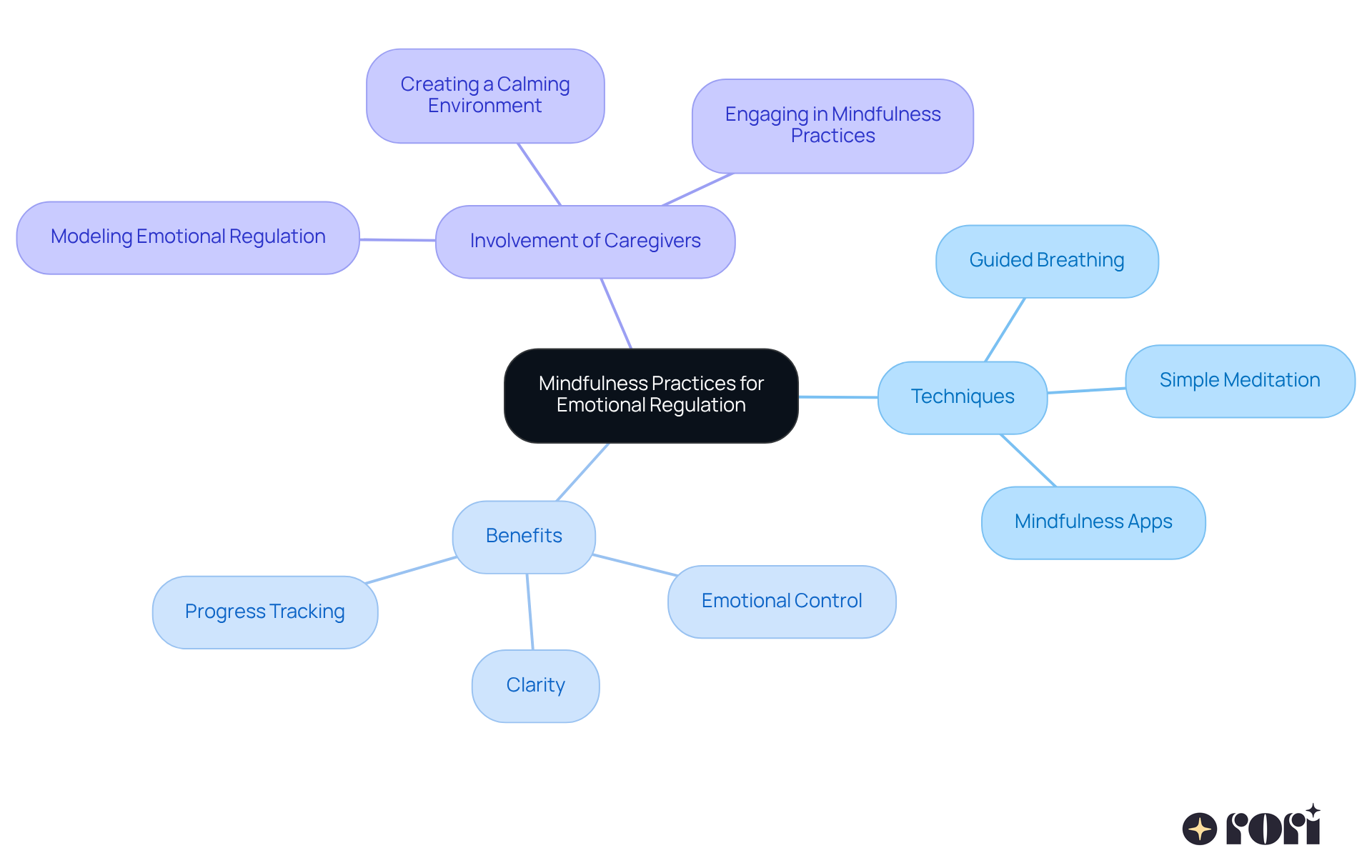
Have you ever noticed how hard it can be for kids to manage their feelings? Introducing mindfulness techniques like guided breathing exercises and simple meditation can really help. For example, you might invite your child to sit quietly and take a few deep breaths, helping them find their calm. Mindfulness apps designed for kids can also be a fun way to engage them, offering activities that boost their awareness and understanding of emotions.
Regular practice of these techniques can help kids take a moment to think before reacting to their feelings, fostering a sense of control and clarity. You can keep track of their progress by noting how they feel before and after mindfulness sessions, adjusting your approach as needed. By prioritizing calmness and actively involving caregivers in these practices, you’re not just helping your child; you’re implementing tips for helping children with autism develop emotional understanding and building a foundation for their emotional well-being.
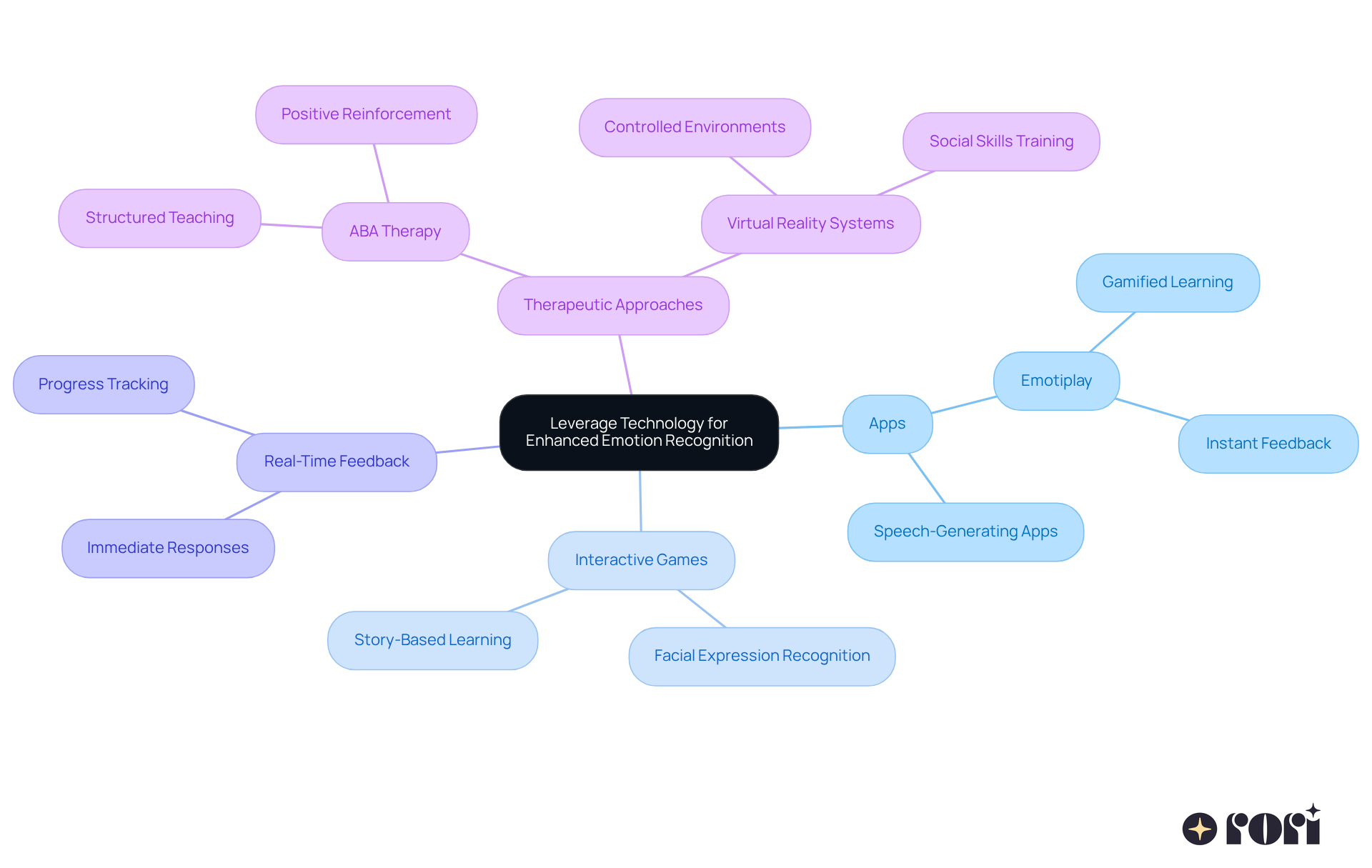
Many parents seek tips for helping children with autism develop emotional understanding to effectively help their children understand their feelings. Using apps designed to help kids recognize their feelings can offer tips for helping children with autism develop emotional understanding and make a real difference for parents and their children.
Interactive games that challenge children to recognize feelings through facial expressions offer tips for helping children with autism develop emotional understanding while making learning enjoyable and effective. For instance, gamified applications like Emotiplay use captivating stories and instant feedback to enhance understanding of feelings.
Studies show that these emotion recognition apps can really help kids understand their feelings better. Plus, tools that offer real-time feedback provide valuable tips for helping children with autism develop emotional understanding and help young individuals grasp emotional signals, boosting their social-emotional skills.
It’s clear that using technology in therapy can really help kids learn in a way that suits them. At Rori Care, our clinical leadership team is dedicated to neurodiversity and youth success. We empower caregivers with ABA principles and strategies to support their children’s behavioral goals through active involvement and data collection.
With the right tools and tips for helping children with autism develop emotional understanding, you can watch your child flourish in understanding their emotions and connecting with others.
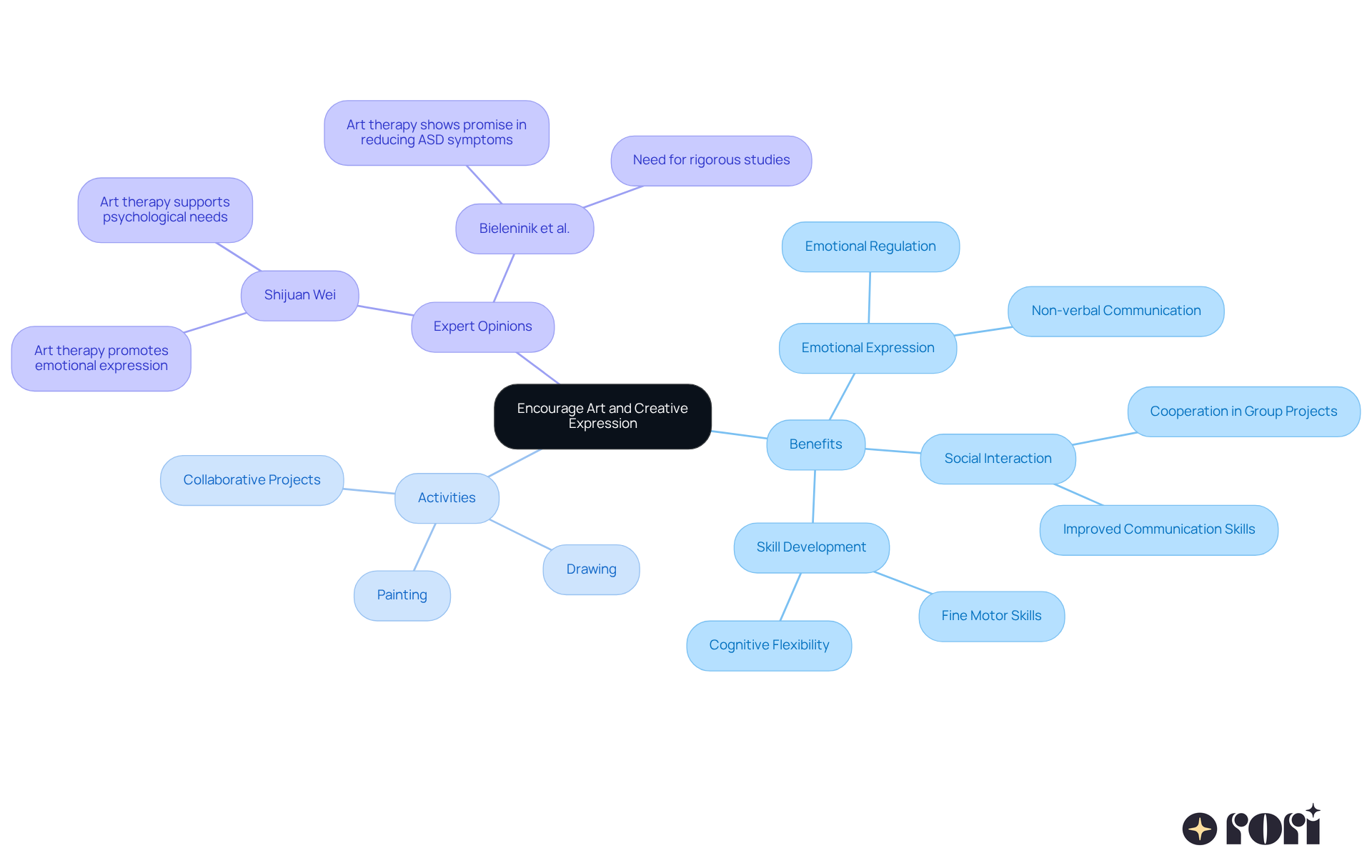
Have you ever noticed how hard it can be for kids to share their feelings? Encouraging your little ones to dive into artistic activities like drawing, painting, or crafting can really help them express emotions that might be tough to put into words. For instance, you could invite your child to create a piece of art that represents how they felt on a particular day. This not only sparks their creativity but also opens the door for meaningful conversations about their emotions.
You know, many studies show that getting creative can offer tips for helping children with autism develop emotional understanding when talking about their feelings. When they engage in creative expression, it allows them to share their emotions in a non-verbal way, which is super helpful for those who find communication challenging. Activities like painting or drawing provide familiar materials that can help kids manage sensory stimuli while exploring their inner experiences.
Think about collaborative projects where kids can share their artwork with friends. This not only encourages social interaction but also fosters cooperation. Individual sessions focused on personal expression can boost mood regulation and self-awareness. Kids who participate in art therapy often benefit from tips for helping children with autism develop emotional understanding, which makes it easier for them to grasp their feelings and connect with others, ultimately enhancing their overall well-being. Plus, art therapy has been shown to improve fine motor skills, mood regulation, sensory processing, and social interaction.
Many experts agree that art can be a wonderful way for kids to express tough emotions in a safe and nurturing environment. As Shijuan Wei puts it, "art therapy can effectively promote feelings expression by externalizing inner experiences in a safe and symbolic form." By weaving artistic activities into your child's routine, you can help them develop a deeper understanding of themselves and improve their ability to express their feelings effectively. Imagine the relief of seeing your child express themselves more freely through art!
Finding the right support for your child can feel overwhelming, especially when every child is unique. At Rori Care, we believe in personalized ABA therapy that really connects with each child's unique journey. We take the time to understand what makes your child special, creating tailored plans that include tips for helping children with autism develop emotional understanding and manage their feelings.
Studies show that when we personalize our approach, kids often feel happier and connect better with others. By focusing on what your child does well, we can offer tips for helping children with autism develop emotional understanding and handle everyday feelings with confidence. And let’s not forget, when families get involved, it creates a warm space that aligns with tips for helping children with autism develop emotional understanding!
We’re here to equip you with the tools you need to support your child’s journey every step of the way! When you take the time to understand your child's needs, you're not just helping them; you're creating a brighter future for your family.
Helping children with autism understand their emotions can feel like a daunting task for many parents, but it’s a journey worth taking together! By using a mix of strategies - like visual aids, role-playing, emotional check-ins, and mindfulness practices - you can create a space where emotional expression is not just encouraged but celebrated. Every little technique you try can help your child feel more supported as they learn to navigate their feelings.
Throughout this article, we’ve shared some key insights on how tools like visual aids can boost emotional recognition, how modeling emotional expression can make a difference, and how role-playing can help practice emotional scenarios. Plus, creating safe emotional environments and incorporating mindfulness practices are essential for teaching coping techniques and managing those intense emotions. These strategies not only empower your child to express themselves but also strengthen the bond between you, creating a nurturing atmosphere for emotional growth.
At the end of the day, helping our kids understand their emotions takes a lot of heart, patience, and a sprinkle of creativity! By diving into these practices and looking for personalized support, like ABA therapy, you’re setting your child up for a brighter future. Remember, you’re not just teaching emotions; you’re paving the way for a lifetime of emotional intelligence and resilience for your child.
How can visual aids help children with autism understand their emotions?
Visual aids, such as feeling cards and charts, can help children with autism recognize their feelings and those of others. They enhance emotional understanding and communication skills, reducing anxiety and reinforcing learning in everyday life.
What role do parents play in helping children recognize emotions?
Parents can model emotional expression by openly sharing their feelings in appropriate situations. This helps children connect words to emotions and understand context, making it easier for them to recognize and express their own feelings.
How can role-playing assist children in developing emotional understanding?
Role-playing allows children to practice recognizing and expressing emotions in a safe environment. By acting out scenarios, children can develop empathy and coping strategies, which enhance their emotional and social skills.
What are some benefits of using visual tools and role-playing together?
Combining visual tools with role-playing provides a comprehensive approach to emotional learning. Visual aids help children identify emotions, while role-playing allows them to apply this knowledge in interactive scenarios, boosting their confidence and communication skills.
How does caregiver knowledge of ABA principles contribute to helping children with autism?
Understanding ABA principles equips caregivers with effective strategies for supporting their child's emotional development. This knowledge helps caregivers make informed decisions, provide consistent support, and enhance their child's progress in emotional understanding.
What is the significance of creating a feelings chart with children?
Creating a feelings chart together engages children in identifying and expressing their emotions throughout the day. It fosters communication and strengthens the bond between parent and child while teaching emotional awareness.
What impact does regular role-playing have on children's behavior and communication skills?
Research indicates that children who engage in consistent role-playing activities show improvements in behavior and communication skills, with some studies reporting a 40% enhancement in social interaction abilities among children with autism.


