For many families, watching their child with Autism Spectrum Disorder (ASD) struggle with social interactions can feel like an uphill battle. Role-playing can be a game-changer! It creates a fun space for kids to practice important social skills in a way that feels safe and engaging.
So, how can we, as caregivers and therapists, use these techniques to boost communication and help our kids grow emotionally? Let’s dive into how role-playing can open doors to a brighter, more connected future for our kids with ASD!
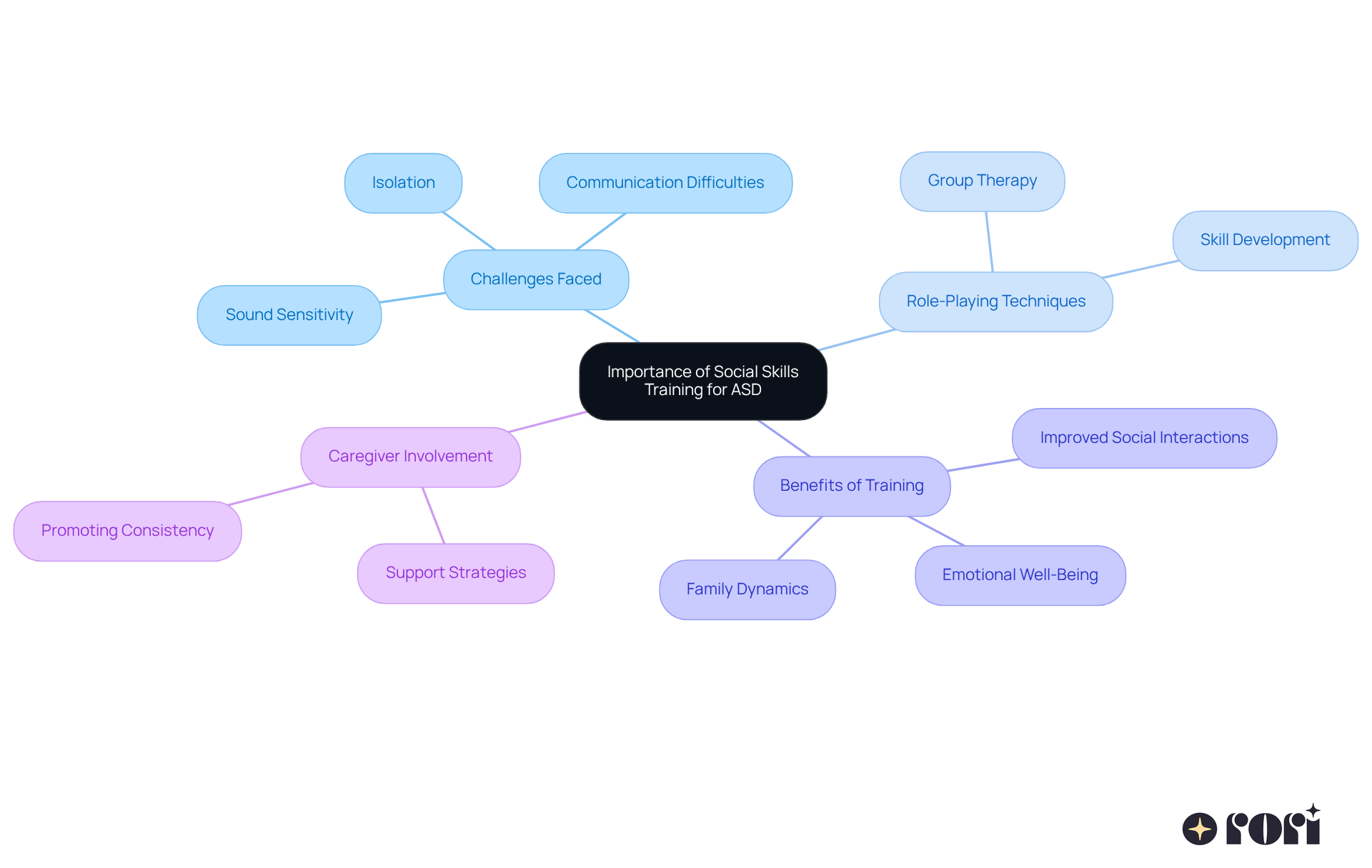
Have you ever felt your child struggling to make friends, leaving you both feeling a bit lost? Therapy for children with Autism Spectrum Disorder (ASD) involves social abilities training, particularly using role-playing to address social challenges in individuals with ASD. Kids with ASD often face tough challenges when it comes to interacting with others, which can lead to feelings of isolation and make forming friendships really hard. Many parents feel helpless watching their children struggle to connect with peers, often leading to feelings of isolation for both the child and the family. Research shows that when kids have trouble with social skills, it can get in the way of their ability to communicate, understand cues, and engage in back-and-forth conversations. Plus, did you know that up to 70% of individuals with autism experience sound sensitivity? This can make social interactions even trickier!
Group therapy led by skilled therapists helps kids learn how to connect with others and understand different perspectives by using role-playing to address social challenges in individuals with ASD. As Chrissy Barosky, Ph.D., points out, 'Social abilities training is an evidence-based practice for toddlers through young adults.' By focusing on these areas, therapists can enhance the social skills of kids with ASD using role-playing to address social challenges in individuals with ASD, which leads to better emotional well-being and helps them fit in more comfortably in their communities.
For instance, kids who join social skills programs often find it easier to start conversations and make eye contact, just like many of us had to learn as kids! Caregiver education is also super important in this journey. It equips parents with strategies that help them support their child's goals. This active involvement not only promotes consistency in therapeutic approaches but also leads to improved behavioral outcomes for the young individual, informed decision-making, and overall family dynamics.
But remember, not every skill, like keeping eye contact, needs to be the main focus in training. This understanding lays the groundwork for using role-playing to address social challenges in individuals with ASD, which, as Barosky mentions, can help youth develop interpersonal skills and feel more comfortable and confident when interacting with others. Imagine the joy of seeing your child thrive in social situations, building friendships that last a lifetime!
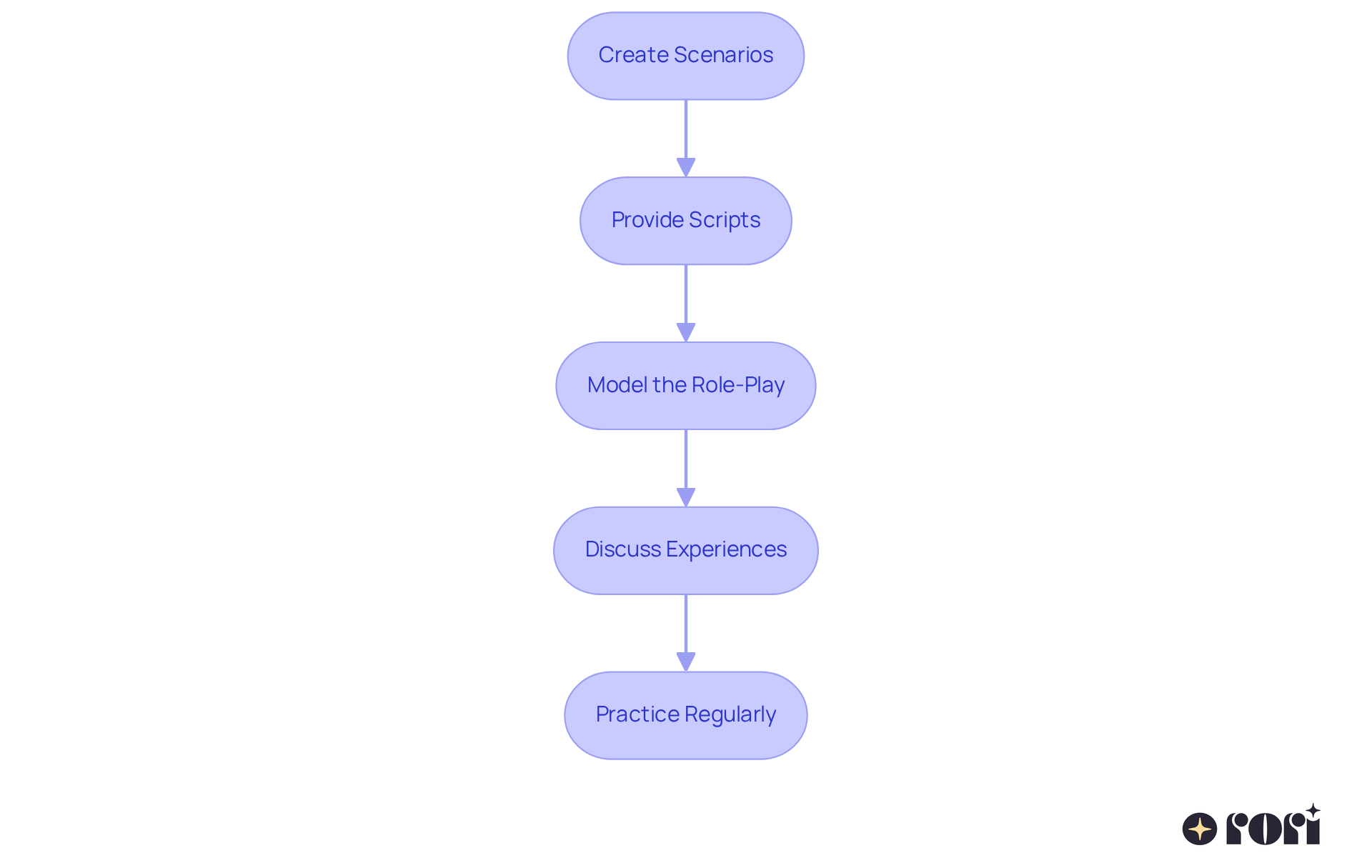
Have you ever noticed how tricky social interactions can be for kids? To help them navigate these moments, let’s start by creating some fun scenarios that kids might face, like greeting a peer or asking to join a game. By outlining the context and objectives, we can give them a focused framework for practice.
How about giving them some scripts to follow? This way, they’ll know what to say and do, which can ease any anxiety about improvisation. It makes the learning process smoother and more enjoyable!
Show them how it’s done first! By modeling the role-play scenario, you provide a clear example for them to imitate. This helps improve their understanding of appropriate social behaviors.
Let’s chat about what went well and what we can improve! After the role-play, discussing their experiences can strengthen their learning and encourage self-reflection, helping them internalize what they’ve practiced.
Keep practicing together to build their confidence! Regular role-playing sessions are beneficial for using role-playing to address social challenges in individuals with asd, helping kids strengthen their skills and feel more comfortable in real-life situations.
By utilizing these methods, we can create a nurturing atmosphere where kids can engage and improve their interpersonal skills in a safe and organized way. Using role-playing to address social challenges in individuals with asd not only helps in skill development but also fosters emotional growth, making it a valuable tool in therapeutic environments.
Have you ever wondered about the impact of using role-playing to address social challenges in individuals with ASD for kids with Autism Spectrum Disorder? These activities offer some fantastic benefits that can really help in developing essential skills.
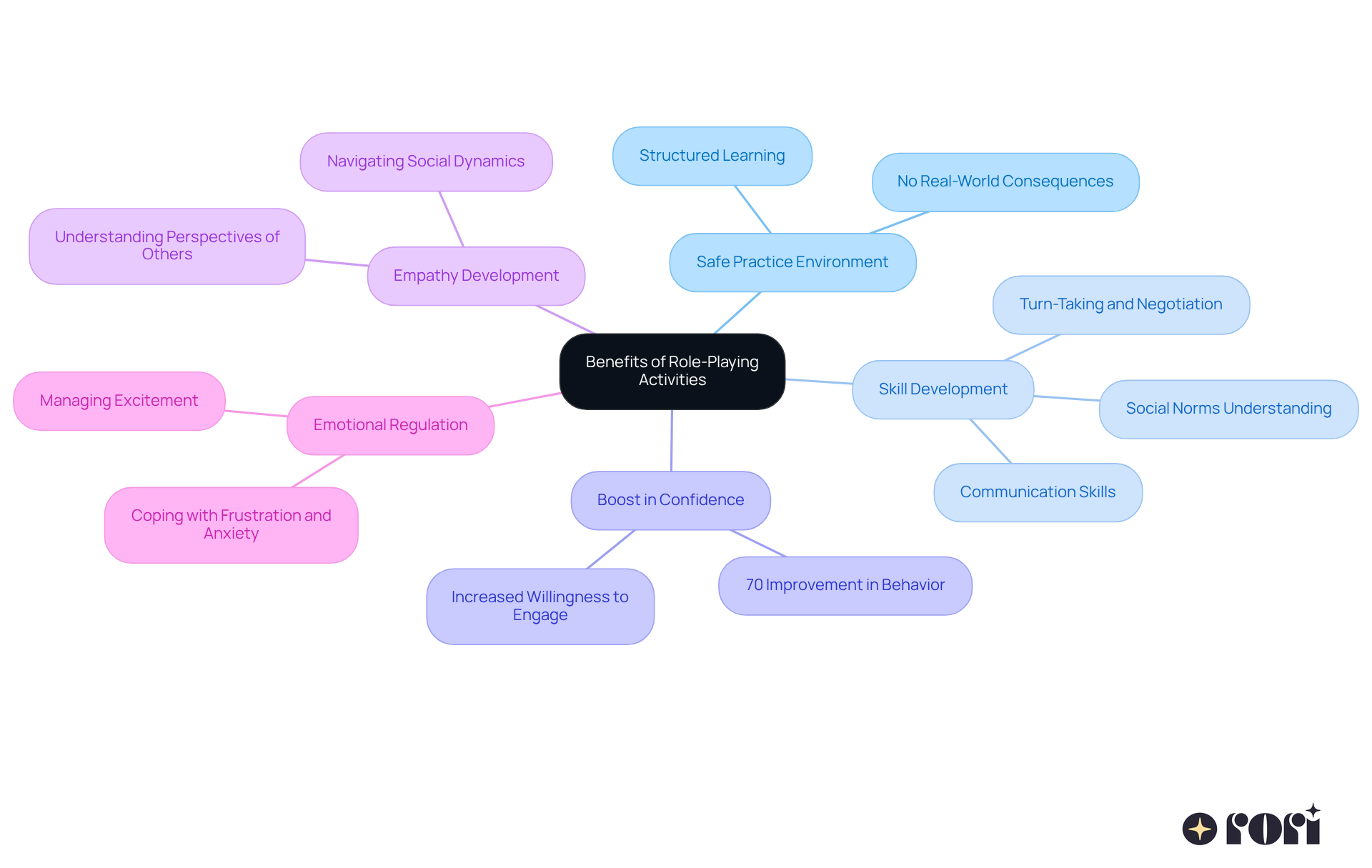
First off, role-playing creates a safe space for kids to practice social interactions without the pressure of real-world consequences. It’s a chance for them to explore and try out different responses in a supportive environment.
Through these interactive scenarios, kids gain hands-on experience in starting conversations, answering questions, and picking up on non-verbal cues - skills that are crucial for effective communication. Participating in these activities helps them understand social norms and expectations.
As they practice their social skills through repeated role-playing, many kids experience a boost in confidence. In fact, studies show that about 70% of kids who engage in regular role-playing activities see improvements in their behavior and communication, making them more ready to interact with peers in real-life situations.
Role-playing also encourages kids to think about the feelings and perspectives of others. By stepping into different roles, they learn to navigate social dynamics and develop empathy, which is so important for building meaningful relationships. This practice can significantly enhance their ability to recognize emotions in others, fostering deeper connections.
Additionally, role-playing allows kids to rehearse managing their emotions in social situations. This structured practice helps them cope with feelings like frustration, anxiety, or excitement, leading to better emotional regulation in real life. Research indicates that using role-playing to address social challenges in individuals with ASD can enhance social skills in kids with autism by as much as 40%, thereby supporting their overall emotional development.
Here at Rori Care, our dedicated team is passionate about supporting neurodiversity and helping kids thrive. We apply these role-playing strategies to ensure families get the support they need. Our expertise in behavioral analysis and youth development enhances the effectiveness of these interactive activities, making them a powerful resource for social skills training.
By embracing these role-playing strategies, you’re not just helping your child; you’re paving the way for a brighter, more connected future.
Navigating the world of Autism Spectrum Disorder (ASD) can be challenging for parents, especially when it comes to finding effective ways to support their child's growth. Integrating technology into imaginative activities can greatly improve the learning experience for kids with ASD at Rori Care - ABA Therapy. Here are several effective ways to leverage technology:
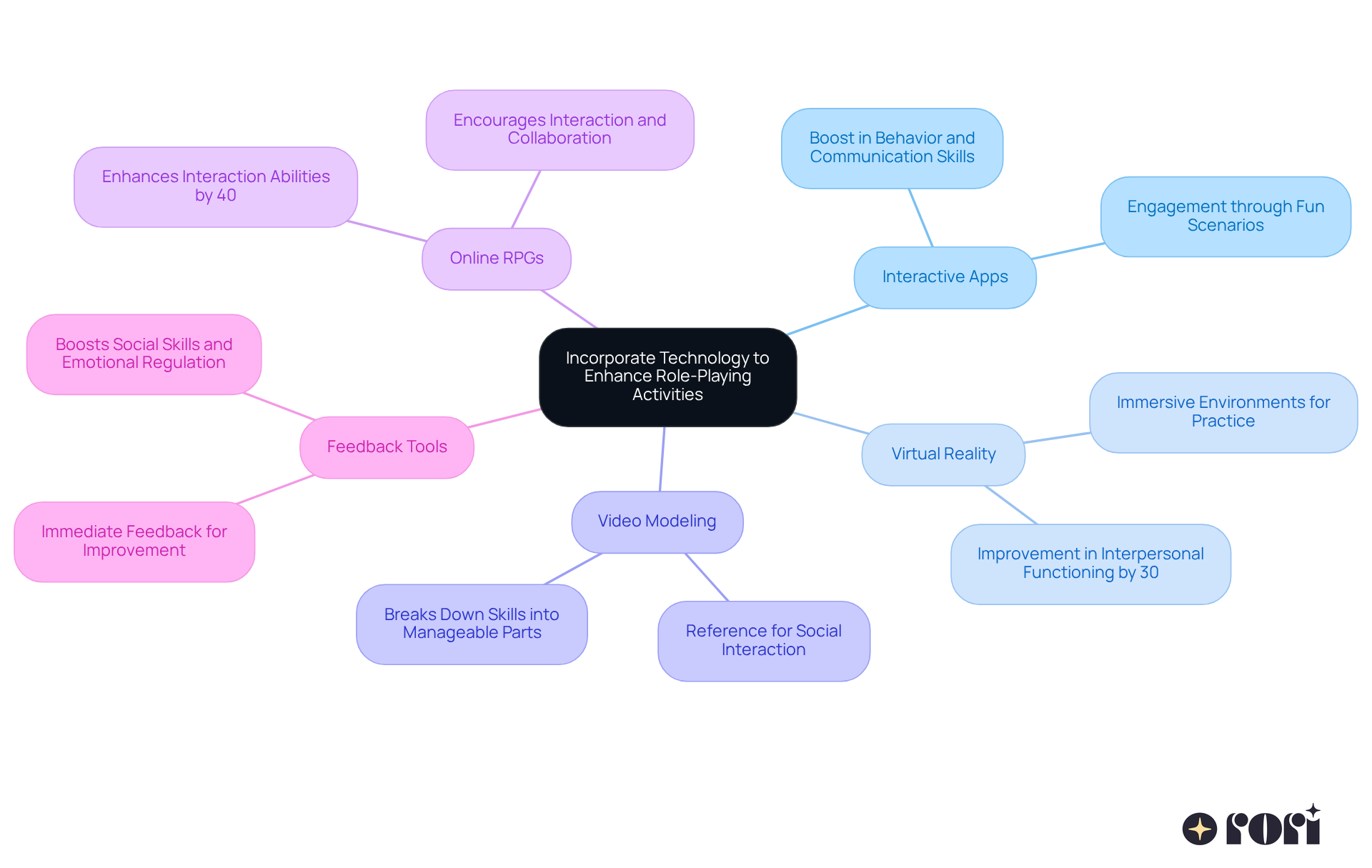
Interactive Apps: Have you tried using mobile apps designed for social skills training? They often include fun scenarios that really engage kids. Research shows that kids can see a boost in their behavior and communication skills by using role-playing to address social challenges in individuals with ASD. It’s true!
Virtual Reality (VR): VR technology creates immersive environments where kids can practice social interactions in realistic settings. With VR, kids can safely explore different social situations, helping them build confidence and learn how to interact better with others. Studies indicate that VR training can improve interpersonal functioning by as much as 30%!
Video Modeling: Video modeling is another great tool. Kids can watch videos of peers or adults interacting, which gives them a reference for their own practice. This method breaks down social skills into manageable parts, making it easier for kids to understand and practice. Plus, it’s super helpful for caregiver training too!
Online RPGs: Online role-playing games (RPGs) can be a fun way for kids to practice social skills. These games encourage interaction and collaboration, allowing kids to engage with peers in a virtual setting. Studies show that pretend play can enhance interaction abilities in kids with autism by an impressive 40%!
Feedback Tools: Immediate feedback is crucial during role-playing activities. Using apps that monitor interactions can help kids recognize their strengths and areas for improvement in real-time. This quick feedback is vital for boosting their social skills and emotional regulation, especially in a therapeutic setting.
Therapists and parents at Rori Care can create dynamic and engaging learning experiences using technology, specifically using role-playing to address social challenges in individuals with ASD. Imagine the joy of watching your child flourish socially, all thanks to the right tools and support!
Navigating social situations can be tough for kids with Autism Spectrum Disorder, but role-playing offers a fun way to build those essential skills! By creating safe and structured environments for practice, children with ASD can learn to navigate social interactions more effectively, leading to improved emotional well-being and stronger connections with their peers.
We’ve seen how important social skills training is, how role-playing can make a difference, and how tech can spice things up! Through consistent practice and caregiver involvement, children can develop confidence, empathy, and a better understanding of social norms. Interactive apps, virtual reality, and video modeling make this learning process engaging and accessible for young learners.
By embracing these role-playing strategies, you’re not just helping your child learn; you’re opening doors to friendships and a brighter future! The journey toward improved social interactions is about nurturing connections that enrich their lives and the lives of those around them. Let’s explore this together!
Why is social skills training important for children with Autism Spectrum Disorder (ASD)?
Social skills training is crucial for children with ASD as it helps them overcome challenges in interacting with others, which can lead to feelings of isolation and difficulties in forming friendships.
What methods are used in social skills training for children with ASD?
Role-playing is a primary method used in social skills training to address social challenges faced by individuals with ASD.
How can social skills training impact a child's emotional well-being?
By enhancing social skills, children with ASD can improve their emotional well-being and fit in more comfortably within their communities, leading to better social interactions.
What percentage of individuals with autism experience sound sensitivity, and how does it affect social interactions?
Up to 70% of individuals with autism experience sound sensitivity, which can complicate social interactions and make it more challenging for them to engage with peers.
How does group therapy contribute to the development of social skills in children with ASD?
Group therapy, led by skilled therapists, helps children learn to connect with others and understand different perspectives through role-playing, which addresses their social challenges.
What role do caregivers play in the social skills training process for children with ASD?
Caregiver education is important as it equips parents with strategies to support their child's goals, promoting consistency in therapeutic approaches and improving behavioral outcomes.
Are all social skills equally emphasized in training for children with ASD?
No, not every skill, such as maintaining eye contact, needs to be the main focus. The training aims to develop interpersonal skills and increase comfort and confidence in social interactions.
What is the ultimate goal of social skills training for children with ASD?
The ultimate goal is to help children thrive in social situations and build lasting friendships, enhancing their overall quality of life.