

Understanding and promoting positive behavior in autistic children is quite the journey! It starts with recognizing the unique traits of autism spectrum disorder (ASD). As caregivers, you play a crucial role in this process, armed with strategies that not only improve behavioral outcomes but also create a nurturing environment for growth.
But here’s the thing: tailoring these approaches to fit each child’s individual needs can be a bit tricky. How can you navigate this complex landscape to ensure your child’s success? Let’s explore this together!
By sharing experiences and insights, we can build a supportive community that understands the ups and downs of this journey. Remember, you’re not alone in this - there are resources and people ready to help you every step of the way!
To effectively encourage promoting positive behavior in autistic children, it’s important to understand autism spectrum disorder (ASD) and its unique traits. Autism can affect how kids communicate, behave, and process sensory information. For instance, children with autism might find social interactions challenging, show repetitive behaviors, or have specific sensory sensitivities. By recognizing these characteristics, caregivers can tailor their approaches to meet each child’s needs. For example, a child who is sensitive to noise might thrive in a quieter setting, while another may feel more secure with clear, structured routines. Understanding these elements is the first step in promoting positive behavior in autistic children as part of a successful behavior management plan.
Now, let’s talk about empowering caregivers with ABA concepts and techniques. When caregivers are educated, they gain valuable support and , which can significantly impact their child’s progress. Being actively involved in the therapeutic process leads to better behavioral outcomes, as caregivers align their strategies with professional interventions. This personalized approach, which adapts to each child’s unique needs, has shown great success, with significant improvements seen in 90% of individuals when recommended hours are fully utilized. By fostering caregiver empowerment, Rori Care ensures families are well-equipped to navigate the challenges of autism, ultimately enhancing family dynamics. Let’s explore this together!

Creating individualized behavior plans can feel like a big task, but breaking it down into steps makes it manageable! Let’s explore this together:
Remember, you’re not alone in this journey! We’re here to help you every step of the way!

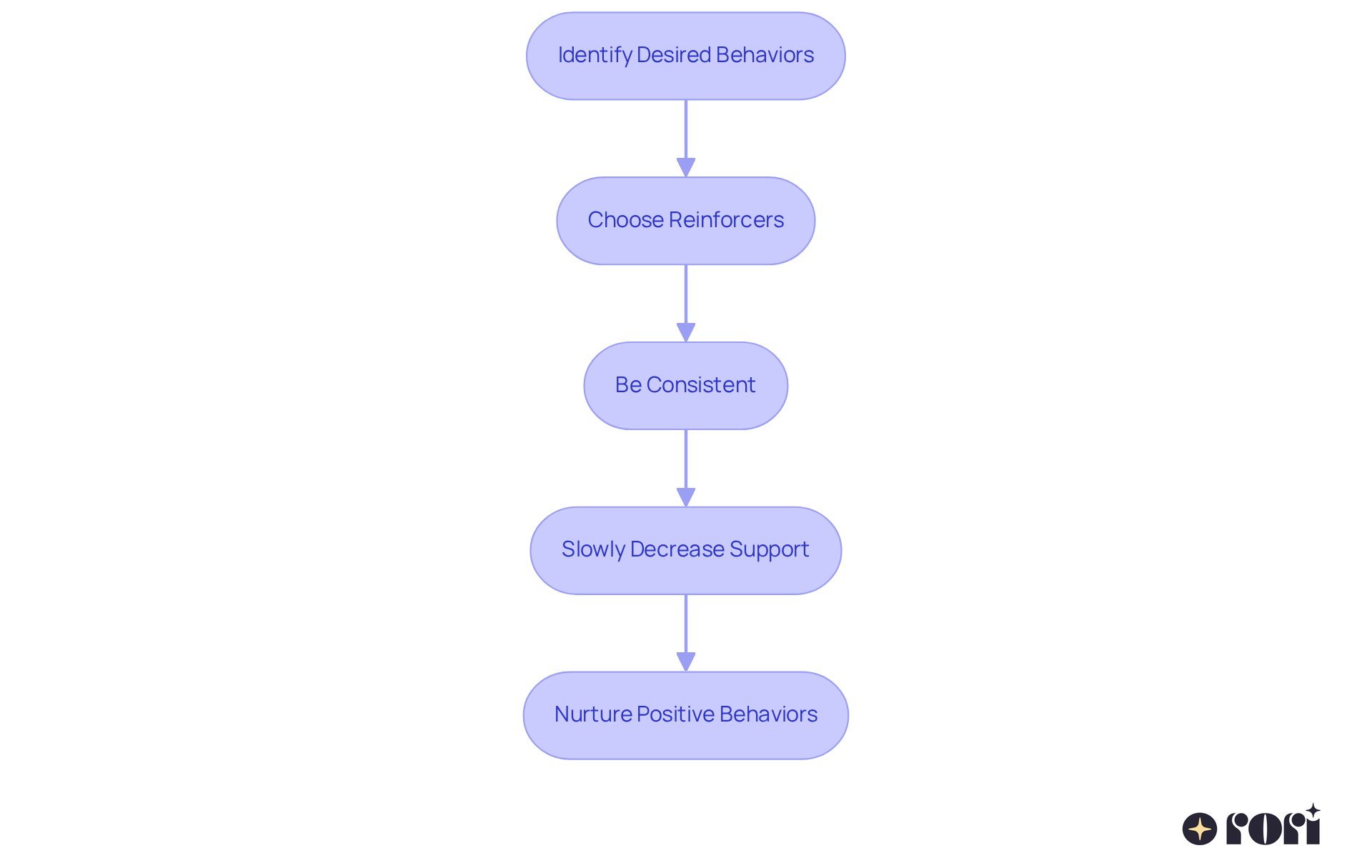
Positive reinforcement is a fantastic method for promoting positive behavior in autistic children by encouraging their preferred actions. Let’s dive into some effective steps to make this approach work for you:
By using these strategies, you can nurture positive behaviors and communication skills in your child, which is essential for promoting positive behavior in autistic children and supporting their growth and self-sufficiency. ABA therapy, especially through early intensive behavioral intervention (EIBI), can significantly enhance learning, verbal, and social skills in individuals with autism. It equips caregivers with effective methods and data collection for ongoing support. Rori Care offers services tailored for individuals of all ages, adapting to each person’s unique needs.
Let’s explore this together! We’re here to !
Creating a supportive learning environment can greatly improve the effectiveness of behavior management strategies aimed at promoting positive behavior in autistic children. Let’s dive into some key elements that can make a difference:
By weaving these elements together, educators and caregivers can create a structured and supportive learning environment that not only improves behavior management but also emphasizes promoting positive behavior in autistic children, allowing them to truly thrive. Let’s explore this together!

Supporting interpersonal skills development in children with autism takes some intentional practice and reinforcement. Here are some effective strategies to consider:
By implementing these strategies, parents can create a nurturing environment that focuses on promoting positive behavior in autistic children and empowers them to thrive in social settings. Let’s explore this together!

Understanding and promoting positive behavior in autistic children is all about compassion and knowledge. By recognizing the unique traits of autism spectrum disorder (ASD), caregivers can craft strategies that nurture an environment ripe for growth and development. It’s not just about techniques; it’s about celebrating the individuality of each child.
Let’s break down some essential steps for promoting positive behavior:
Each of these plays a vital role in ensuring that children with autism receive the support that truly resonates with their unique needs and strengths. When caregivers are equipped with knowledge and practical tools, they can see significant improvements in behavior and communication.
Ultimately, promoting positive behavior in autistic children is a team effort that requires patience, understanding, and commitment. It’s so important for caregivers, educators, and communities to unite in creating inclusive environments that celebrate diversity and support every child’s growth. By embracing these strategies, we not only enhance individual outcomes but also cultivate a more compassionate society that values the unique contributions of all its members.
So, let’s explore this journey together! Remember, you’re not alone in this. We’re here to help you every step of the way!
What is autism spectrum disorder (ASD)?
Autism spectrum disorder (ASD) is a developmental disorder that affects how children communicate, behave, and process sensory information. It can lead to challenges in social interactions, repetitive behaviors, and specific sensory sensitivities.
How can understanding autism help in promoting positive behavior in autistic children?
By recognizing the unique traits of autism, caregivers can tailor their approaches to meet each child's needs, such as providing quieter environments for noise-sensitive children or structured routines for those who thrive on predictability.
What role do caregivers play in the therapeutic process for autistic children?
Caregivers who are educated in ABA concepts and techniques can support their child's progress and align their strategies with professional interventions, leading to better behavioral outcomes.
What is the significance of individualized behavior plans for autistic children?
Individualized behavior plans help address each child's specific strengths, challenges, and triggers, making it easier to promote positive behavior through tailored strategies.
What are the steps involved in creating an individualized behavior plan?
The steps include: 1. Evaluation: Assess the child's strengths, challenges, and triggers. 2. Goal Setting: Establish SMART goals that are specific, measurable, achievable, relevant, and time-bound. 3. Intervention Strategies: Choose evidence-based strategies that align with the goals. 4. Monitoring Progress: Regularly check the child's progress and adjust the plan as needed.
How can caregivers monitor the progress of their child's behavior plan?
Caregivers should regularly check in on their child's progress toward the established goals and be prepared to make adjustments to the plan to ensure its effectiveness and relevance.
What kind of support can caregivers expect while creating behavior plans?
Caregivers can expect guidance and support throughout the process, ensuring they are not alone in their journey to promote positive behavior in their children.


