Introduction
Creating a welcoming environment for Applied Behavior Analysis (ABA) therapy at home can truly make a difference, especially for children with autism and other learning challenges. By thoughtfully arranging spaces and materials, caregivers can create a setting that minimizes distractions and boosts engagement and learning. But how can you ensure that these structured environments meet your child’s unique needs?
Let’s explore some key components and strategies for setting up such an environment. You might be surprised at the profound impact it can have on therapy outcomes! This focus is essential for families looking to support their children’s development. We’re here to help you every step of the way!
Define Environmental Arrangement in ABA Therapy
In ABA therapy, learning how to establish a structured environment for ABA therapy can make a world of difference! 🌍 It’s all about intentionally organizing spaces, materials, and social contexts to encourage positive actions and enhance learning experiences. Think about it: choosing the right spot for activities, making sure materials are easy to grab, and setting clear boundaries can really help.
Research shows that these thoughtful changes can boost engagement and cut down on challenging behaviors, especially for kids with autism, ADHD, and other learning disabilities. For example, creating sensory-friendly areas and sticking to predictable routines can really help kids manage their emotions and participate more fully. Plus, using visual aids like pictorial schedules and timers can make transitions smoother and ease anxiety.
By using these strategies, caregivers can understand how to establish a structured environment for ABA therapy that minimizes distractions and boosts involvement during sessions. This not only helps kids reach their developmental goals but also makes the whole process more enjoyable! Did you know that about 90% of kids show significant progress when they follow the recommended hours with active caregiver involvement? That’s pretty encouraging!
And here’s something important: ABA intervention is the only scientifically proven treatment for autism that insurance covers. This , rooted in the principles of Applied Behavior Analysis, allows caregivers to align their strategies and gather data, ensuring effective support for their children. Let’s explore this together and see how we can make a positive impact!

Understand the Importance of a Structured Environment
It is essential to understand how to establish a structured environment for ABA therapy for young individuals undergoing this treatment. It really helps foster predictability and security, which can significantly reduce anxiety. When kids know what to expect, they’re more likely to engage positively in their therapy sessions. Plus, having that structure makes transitions between activities smoother, which can really boost the efficiency of each session.
Experts agree that predictability is a key part of effective ABA treatment. It helps kids feel secure and supported, leading to better outcomes in their behavioral and social development. And here’s something to consider: ABA intervention is the only scientifically validated treatment for autism that’s covered by insurance, making it more accessible for families.
At Rori Care, we’re all about a patient-focused approach. We ensure that therapy is flexible to meet each individual’s unique needs, using the science of learning and behavior to guide us. It’s encouraging to know that 90% of youngsters show notable progress when they fully engage with the recommended hours and have active caregiver involvement. This really highlights how crucial caregivers are in this journey.
As Dr. Temple Grandin beautifully puts it, "Different, not less." This reminds us of the unique strengths that individuals with autism possess. With , knowing how to establish a structured environment for ABA therapy is vital for their development and well-being. Let’s explore this together and see how we can support our kids in the best way possible!

Identify Key Components of Effective Environments
Learning how to establish a structured environment for ABA therapy can make a world of difference! Here are some key components to consider:
- Quiet Spaces: It’s so important to find areas that are free from distractions and noise. This helps kids focus and allows caregivers to implement ABA strategies effectively.
- Organized Materials: Keeping therapy materials organized and easily accessible can really minimize disruptions during sessions. This supports informed decision-making and consistency in interventions.
- Comfortable Seating: Make sure the seating is comfy and suitable for the activities at hand. A cozy spot can really foster an environment that’s conducive to learning.
- Visual Supports: Think about incorporating visual aids like schedules and charts. These can enhance understanding and predictability, empowering caregivers to reinforce behavioral goals.
By focusing on these elements, caregivers can learn how to establish a structured environment for ABA therapy that not only promotes learning and positive behavior but also aligns with ABA principles. This ultimately leads to for their little ones. Let’s explore this together!

Structure an ABA Session Effectively
To structure an ABA session effectively, let’s consider a few friendly steps:
- Set Clear Objectives: Start each session with specific goals that align with the individual’s personalized treatment plan, crafted by a qualified behavior analyst. This clarity helps keep everyone focused on measurable outcomes, making the session feel purposeful.
- Use Visual Schedules: can be a game-changer! They outline the session’s activities, enhancing understanding and predictability. This way, transitions become smoother, and anxiety about what’s next can be reduced.
- Incorporate Breaks: Don’t forget to schedule regular breaks! They’re essential for preventing fatigue and keeping engagement high. Breaks allow everyone to recharge, significantly boosting a young person’s ability to focus during the session.
- Provide Reinforcement: Positive reinforcement is key! Use it throughout the session to encourage desired behaviors and motivate the young one. Celebrating those small victories creates a positive learning environment and reinforces progress.
- Review Progress: Wrap up each session with a quick review of what was accomplished. This reflection not only strengthens learning but also prepares for the next session, ensuring continuity in the young learner’s development. It’s worth noting that when suggested hours are fully carried out with active caregiver participation, about 90% of young individuals show progress!
Effective ABA sessions illustrate how to establish a structured environment for ABA therapy, where every moment is an opportunity for growth. By following these steps, parents and therapists can understand how to establish a structured environment for ABA therapy that maximizes the potential for success. Let’s explore this together and adapt treatment plans based on ongoing evaluation and progress report data!

Create Individualized Treatment Plans
Creating individualized treatment plans is so important for effective ABA therapy! Let’s walk through some key steps together:
- Conduct Comprehensive Assessments: Start by gathering detailed information through interviews, observations, and standardized assessments. This helps you recognize your child’s strengths and challenges, laying a solid foundation for the treatment plan.
- Set SMART Goals: It’s all about developing goals that are Specific, Measurable, Achievable, Relevant, and Time-bound. These SMART goals should directly address your child’s unique needs, ensuring clarity and focus in the therapeutic process.
- Involve Parents and Caregivers: Collaboration with families is crucial! Engaging parents and caregivers allows you to incorporate their insights and priorities, making the treatment plan more relevant and effective.
- Monitor Progress: Regularly check in on your child’s progress to see how well the treatment plan is working. Don’t hesitate to make adjustments as needed to ensure it continues to meet their evolving needs.
By following these steps, you will understand how to establish a structured environment for ABA therapy that enhances the effectiveness of its practices. Together, we can and development! 🌱 Let’s explore this journey together!

Implement Positive Reinforcement Strategies
To effectively implement positive reinforcement strategies in ABA therapy, let’s explore some helpful techniques together:
- Identify Target Actions: Start by clearly defining the specific actions you want to encourage. This aligns perfectly with the individualized planning that’s central to Rori Care’s approach.
- Choose Meaningful Reinforcers: It’s important to select rewards that truly resonate with your child. Think about verbal praise, tokens, or even access to their favorite activities. When reinforcers are , it really boosts motivation and engagement!
- Reinforce Promptly: Timing is everything! Providing reinforcement right after the desired action occurs strengthens the connection between the action and the reward. This way, the chances of that behavior happening again go way up!
- Use Consistent Reinforcement: Consistency is key. Make sure you’re clear about how and when reinforcement is delivered. Establishing clear expectations is crucial for how to establish a structured environment for ABA therapy, as it helps your little one understand what behaviors are being rewarded.
- Incorporate Evidence-Based Strategies: Lean on strategies that are backed by research to ensure your reinforcement techniques are effective. Don’t hesitate to adapt them based on your child’s progress and responsiveness.
- Continuous Assessment and Modification: Regularly check in on how well your reinforcement strategies are working. If something isn’t quite right, don’t be afraid to make changes. This ensures that your approach stays aligned with your child’s evolving needs.
By applying these techniques, you can create a supportive atmosphere that encourages positive behavior changes and skill acquisition in individuals with autism. Remember, we’re here to help you every step of the way!

Utilize Visual Supports for Clarity
Visual aids are such , making things clearer and easier to understand for kids with autism. Let’s dive into some effective ways to use them:
- Visual Schedules: Think about creating schedules that outline daily activities with pictures or symbols. This helps young ones know what to expect, easing anxiety and making transitions smoother. Research shows that visual schedules can boost compliance and social skills, which is why they’re so valuable in therapy settings. At Rori Care, our certified behavior analysts craft personalized plans to ensure these visual supports meet each child’s unique needs, encouraging positive behavior changes while allowing for ongoing assessment and adjustments.
- Choice Boards: How about using choice boards? They let young learners pick activities or reinforcers, promoting independence and decision-making skills. This way, kids can take an active role in their learning journey! Plus, choice boards can be tailored to fit individual preferences, making them effective in different situations. By adding measurable goals to these choices, caregivers can track progress and tweak strategies as needed.
- Social Stories: Creating social stories is another great option. These narratives illustrate appropriate behaviors in various situations, helping kids navigate social interactions more effectively. Research backs up the use of social stories for enhancing social skills and reducing anxiety in individuals with autism. At Rori Care, we focus on a patient-centered approach, ensuring these stories are tailored to meet each child’s specific needs, supporting their overall development.
By incorporating these visual supports, caregivers can improve how to establish a structured environment for ABA therapy, which leads to better engagement and behavioral outcomes during sessions. The flexibility of these tools to meet individual needs highlights their effectiveness in promoting independence and reducing stress in daily routines. This aligns perfectly with how to establish a structured environment for ABA therapy, which are the principles of early intensive behavioral intervention (EIBI) that we advocate at Rori Care. If you’re curious to learn more, we offer a free consultation to discuss how these strategies can be effectively implemented. Let’s explore this together!

Establish Consistent Daily Routines
To establish consistent daily routines that support effective ABA therapy, let’s consider a few friendly steps:
- Create a Visual Schedule: How about designing a visual schedule that outlines daily activities with pictures or icons? This can really help kids predict what’s coming next, easing their anxiety and boosting compliance with routines. Understanding how to establish a structured environment for ABA therapy is essential for young individuals with autism, as it provides the stability and predictability needed to reduce anxiety and support their overall well-being.
- Set Regular Times for Activities: Consistency is key, right? Establishing fixed times for meals, therapy sessions, and bedtime can create a predictable environment that supports emotional well-being and stability. This aligns perfectly with ABA principles, which emphasize how to establish a structured environment for ABA therapy to promote learning and achieve behavioral goals.
- Incorporate Transitions: Using visual cues or timers to signal transitions between activities can be a game-changer. Transition warnings prepare youngsters for changes, making them feel more secure and less anxious during shifts in their routine-so crucial for their development!
- Reinforce Routines: Positive reinforcement is essential! Recognizing and rewarding young ones when they successfully follow routines can really promote their involvement and adherence, ultimately enhancing their learning experience. By actively engaging caregivers in this process, they can make informed decisions that positively influence their child’s progress, leading to better behavioral outcomes.
Let’s explore this together! We’re here to !

Manage Transitions Effectively
Managing transitions in ABA therapy can feel daunting, but with a few friendly strategies, you can make it smoother for your child. Let’s explore this together!
- Prepare in Advance: It’s super helpful to give your child a heads-up about upcoming transitions. When they know what’s coming, it helps them mentally prepare and feel more secure. Teaching them some coping skills can really make a difference in how they handle these changes.
- Use Visual Supports: or countdown timers can be game-changers! They show when transitions will happen, using symbols or images to represent each activity. This way, your child can grasp the concept of time and the order of events, making transitions feel less overwhelming.
- Practice Transitions: Why not practice during calm moments? Role-playing can help your child know what to expect, easing their anxiety and boosting their confidence. It’s like a little rehearsal for real-life situations!
- Provide Reinforcement: Celebrate those successful transitions! Positive reinforcement can motivate your child to embrace changes, making them feel proud of their progress. And remember, your involvement is key in helping them understand how to establish a structured environment for ABA therapy during these transitions.
These strategies not only support smoother transitions but also empower your child to manage their behavior and emotions during changes. This can lead to greater independence and less anxiety. By sharing ABA principles and strategies, Rori Care is here to help families learn how to establish a structured environment for ABA therapy that enhances treatment effectiveness. We’re here to help you every step of the way!

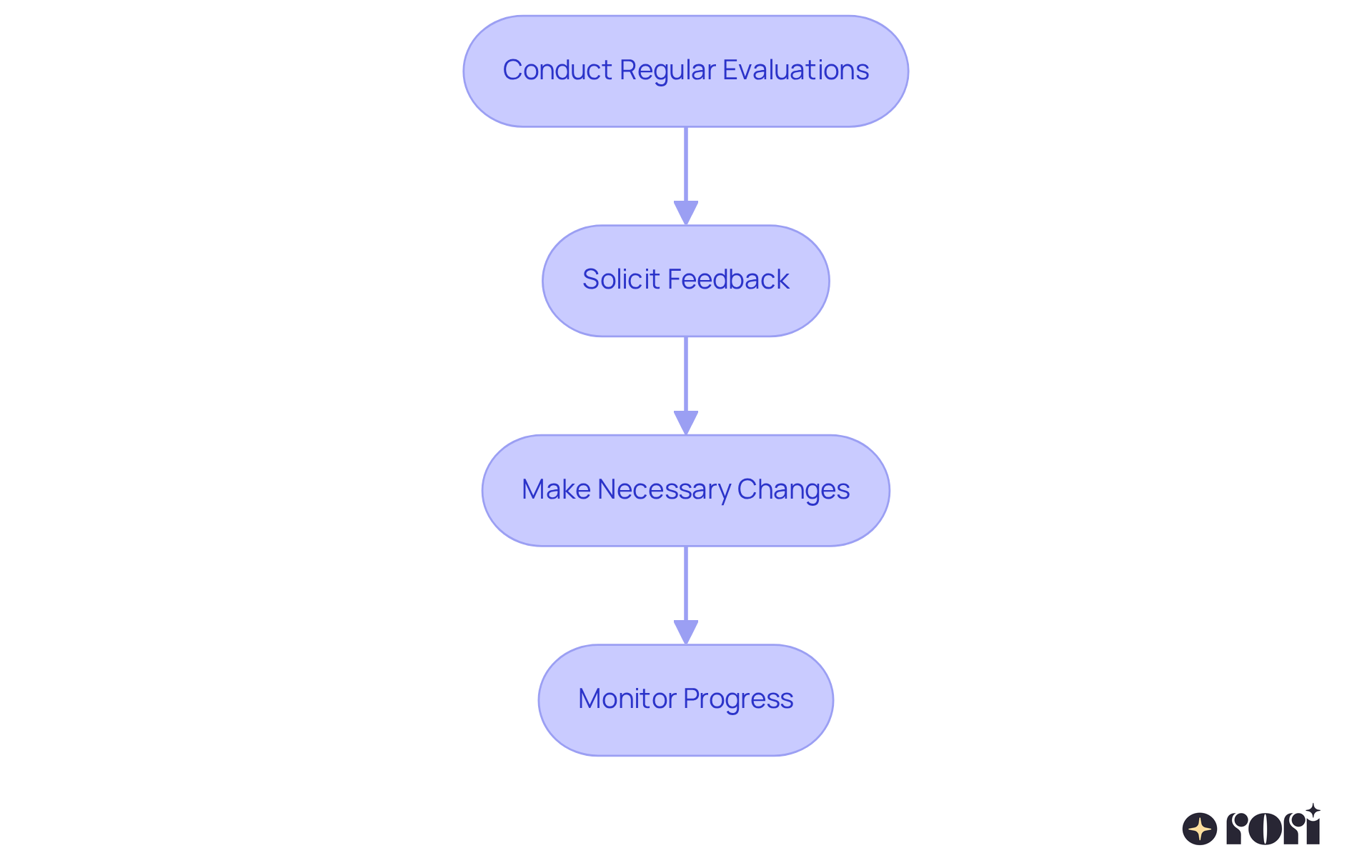
Assess and Adapt the Environment Regularly
To effectively assess and adapt the therapy environment, let’s consider a few friendly steps together:
- Conduct Regular Evaluations: It’s important to periodically check in on how things are going. Observe how your little one engages during therapy sessions. This can really help you see what parts of the environment are working well and which ones might be holding them back. For instance, Rori Care’s behavior care engine updates intervention and skill plans after each session based on progress, making sure that treatment stays flexible and responsive to your child’s needs.
- Solicit Feedback: Don’t hesitate to gather insights from therapists and caregivers about how the current setup is working. Their perspectives can be super valuable! You might find that when caregivers are actively involved, significant progress is seen in 90% of youngsters. That’s a big deal!
- Make Necessary Changes: Be open to tweaking the environment based on what you observe and the feedback you receive. This could mean rearranging furniture, changing materials, or adjusting schedules to better fit your child’s needs. Flexibility is key in ABA therapy, which is crucial for understanding how to establish a structured environment for ABA therapy that enhances learning and actions.
- Monitor Progress: Keep an eye on how your child is doing. Tracking their progress ensures that any changes you make are positively impacting their learning and behavior. Plus, empowering caregivers with ABA principles and strategies helps everyone make informed decisions that support your child’s goals, leading to better outcomes.
Let’s explore this together! Your involvement makes a !
Conclusion
Creating a structured environment for ABA therapy at home is so important for helping children with autism and other learning disabilities thrive. By thoughtfully organizing spaces, materials, and routines, you can really boost engagement and ease anxiety, leading to better developmental outcomes. This approach not only supports your child during therapy sessions but also helps them flourish in their everyday lives.
In this guide, we’ve shared some key strategies, like:
- Setting up quiet spaces
- Using visual supports
- Sticking to consistent routines
- Incorporating positive reinforcement
Each of these elements plays a crucial role in building an environment that nurtures learning and encourages positive behavior. Plus, let’s not forget how vital individualized treatment plans and regular assessments are - they ensure that therapy stays responsive to your child’s unique needs.
The impact of a well-structured environment on ABA therapy outcomes is truly significant. By getting involved in setting up your child’s therapy space and routines, you can make a real difference in their developmental journey. Embracing these practices not only boosts the effectiveness of ABA therapy but also creates a sense of security and predictability for your child. Let’s explore these strategies together, because every small step you take can lead to meaningful progress and a brighter future for the young ones in our care!
Frequently Asked Questions
What is the purpose of establishing a structured environment in ABA therapy?
The purpose is to intentionally organize spaces, materials, and social contexts to encourage positive actions and enhance learning experiences, which can significantly reduce anxiety and boost engagement.
How can a structured environment benefit children undergoing ABA therapy?
A structured environment fosters predictability and security, helps children know what to expect, and makes transitions between activities smoother, leading to better engagement and outcomes in behavioral and social development.
What are some key components of an effective environment for ABA therapy?
Key components include quiet spaces free from distractions, organized materials that are easily accessible, comfortable seating, and visual supports like schedules and charts to enhance understanding and predictability.
How does predictability play a role in ABA therapy?
Predictability helps children feel secure and supported, which can lead to better engagement in therapy sessions and improved outcomes in their development.
What impact does active caregiver involvement have on the effectiveness of ABA therapy?
Active caregiver involvement is crucial, as research shows that about 90% of children show significant progress when they engage fully with the recommended therapy hours under the guidance of caregivers.
Is ABA therapy covered by insurance?
Yes, ABA intervention is the only scientifically proven treatment for autism that is covered by insurance, making it more accessible to families seeking support.
What strategies can caregivers use to create a structured environment for ABA therapy?
Caregivers can create sensory-friendly areas, maintain predictable routines, utilize visual aids like pictorial schedules and timers, and organize materials to minimize distractions and enhance involvement during sessions.