Role-playing has become a fantastic tool in Applied Behavior Analysis (ABA) therapy, giving children on the autism spectrum a special chance to practice important communication skills in a safe space. This fun approach not only helps kids engage socially but also boosts their confidence and eases anxiety. But how can caregivers bring these role-playing techniques into their homes to help their child shine?
Let’s dive into the world of role-playing and see how it can make a real difference in developing social skills, leading to more meaningful connections in everyday life. We’re here to help you every step of the way!
Role-playing in Applied Behavior Analysis (ABA) therapy is such a dynamic way to help kids practice real-life interactions! By simulating situations like being a cashier or a customer, children get to rehearse important in a safe space. This fun method not only helps them pick up on but also allows them to practice both verbal and non-verbal communication, while building those all-important .
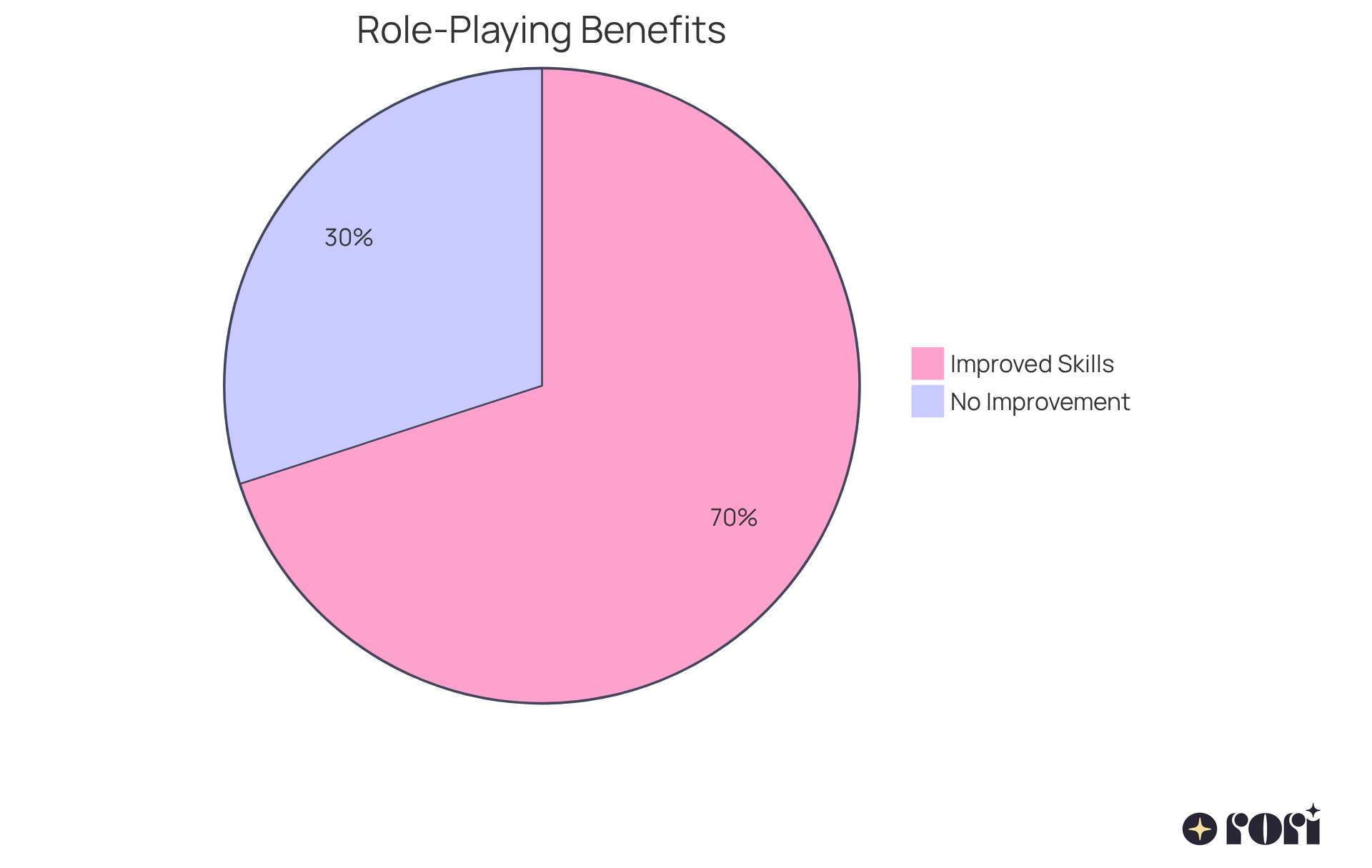
At Rori Care, we focus on that hones these , all under the guidance of our caring therapists. This approach really boosts interactions, helping kids connect better with their peers. Research shows that can significantly enhance interaction skills in children with autism, with improvements noted in up to 70% of participants who regularly engage in these simulation activities. Plus, studies suggest that is especially effective for kids aged 2 to 7, making it a key part of .
Effective acting techniques often involve structured scenarios that reflect everyday situations, giving kids the chance to build confidence and skill in their social interactions. For example, case studies reveal that young people who frequently engage in role-playing for communication in autism spectrum disorder show noticeable improvements in their communication and peer engagement. This ultimately leads to greater independence and social integration! As Dr. O. Ivar Lovaas wisely said, 'If they can’t learn the way we teach, we teach the way they learn.' This really emphasizes how .
At Rori Care, our clinical leadership team is committed to supporting neurodiversity and enhancing the therapy process. We ensure that caregivers have access to effective strategies and principles for maximizing behavioral support and intervention. Let’s explore this together! We’re here to !

is a fantastic way to enhance ! It creates a safe space where they can practice interacting without worrying about real-world consequences. This not only helps reduce anxiety but also builds their confidence in communicating. Through fun role-play activities, children learn essential skills like turn-taking, , and empathy - key ingredients for with others.
Imagine your child stepping into different scenarios and discovering new ways to express themselves! Acting out various situations can really enhance their vocabulary and language skills. Research shows that kids who regularly engage in these interactive activities see significant improvements in their , leading to better relationships with peers and adults. In fact, studies indicate that about 70% of children involved in consistent role-playing show enhanced interaction skills. This highlights just how important role-playing for communication in autism spectrum disorder is within .
By incorporating role-playing for communication in autism spectrum disorder into therapeutic practices, kids not only gain practical communication skills but also the effectively. At Rori Care, we’re all about empowering caregivers with the tools and knowledge to support these activities. Together, we can create a consistent and nurturing environment that maximizes the impact of these interventions. Let’s explore this journey together!
To successfully carry out , start by recognizing typical situations your kid might face, like greeting a friend or ordering food at a restaurant. You can develop or prompts that are age-appropriate and relatable, guiding the . Incorporating props or visual aids can really enhance engagement! For instance, using toy cash registers for shopping scenarios or puppets for storytelling can make it even more fun.
Encourage your child to take turns in different roles. This allows them to experience various perspectives and . As Joel Shaul, LCSW, points out, is a crucial interpersonal training method for assisting young individuals. Make these sessions enjoyable and interactive, and don’t forget to provide to celebrate their efforts!
Consistent engagement in these activities, including role-playing for communication in autism spectrum disorder, not only strengthens learning but also boosts their confidence in communication. This can lead to and emotional regulation. Studies show that youngsters whose guardians used 80% or more of designated hours exhibited remarkable improvements in communication and emotional regulation abilities. This highlights the effectiveness of organized practice.
This aligns perfectly with the , which focuses on the individual needs of each child. It shows that active caregiver participation can lead to . So, let’s explore this together and see how you can make role-playing a fun and beneficial part of your child’s learning journey!

Tracking progress in interactive activities is so important for boosting your child’s ! Start by observing how engaged they are during sessions and jot down their responses in a journal. This way, you can and spot areas that might need a little extra attention.
Regularly checking in on how comfortable they feel with different scenarios can really help you . For instance, if your child is nailing simple greetings, why not gradually introduce more complex interactions? Think about adding in multiple steps or even some to keep things interesting!
Don’t forget, your child’s input is invaluable! Ask them what they enjoy or find challenging in the acting exercises. This feedback will help you and learning styles, making sure the activities are effective and fun.
Research shows that for communication in autism spectrum disorder can enhance in children by up to 40%! That’s a . Let’s explore this together and make the most of these opportunities!

Mastering role-playing techniques in Applied Behavior Analysis (ABA) therapy can truly change the game for enhancing communication skills in children with autism spectrum disorder. By creating a safe and engaging space for kids to practice real-life interactions, role-playing not only boosts their confidence but also helps them develop essential social skills for building meaningful connections with peers and adults.
Throughout this article, we’ve seen how effective role-playing can be in improving communication abilities. Research shows that up to 70% of participants experience significant enhancements in their interaction skills! These structured scenarios allow children to practice vital skills like turn-taking and empathy, which are key for fostering independence and social integration. Plus, let’s not forget the crucial role caregivers play in these activities. Consistent engagement can lead to remarkable improvements in communication and emotional regulation.
Ultimately, embracing role-playing as a core part of autism therapy is essential for nurturing the social capabilities of our children. By implementing these strategies at home and keeping an eye on progress, caregivers can create a supportive environment that maximizes the benefits of role-playing. This commitment not only empowers children with the skills they need to thrive but also highlights the importance of neurodiversity and tailored therapeutic approaches in fostering effective communication.
So, let’s explore this together! Your involvement can make all the difference, and we’re here to help you every step of the way!
What is role-playing in ABA therapy?
Role-playing in Applied Behavior Analysis (ABA) therapy is a method that helps children practice real-life interactions by simulating situations, such as being a cashier or a customer, allowing them to rehearse important communication skills in a safe environment.
How does role-playing benefit children in therapy?
Role-playing helps children pick up on social cues, practice both verbal and non-verbal communication, and develop problem-solving skills, all of which enhance their interpersonal abilities.
What is the focus of group therapy at Rori Care?
At Rori Care, group therapy focuses on honing interpersonal abilities under the guidance of caring therapists, which boosts interactions and helps children connect better with their peers.
What does research say about role-playing for children with autism?
Research indicates that role-playing for communication can significantly enhance interaction skills in children with autism, with improvements noted in up to 70% of participants who regularly engage in these activities.
What age group benefits most from early intervention through role-playing?
Studies suggest that early intervention through role-playing is particularly effective for children aged 2 to 7.
How do structured scenarios in role-playing contribute to therapy?
Structured scenarios that reflect everyday situations give children the opportunity to build confidence and skill in their social interactions, leading to noticeable improvements in communication and peer engagement.
What is the ultimate goal of role-playing in ABA therapy?
The ultimate goal of role-playing in ABA therapy is to promote greater independence and social integration for children.
How does Rori Care support neurodiversity in therapy?
Rori Care's clinical leadership team is committed to supporting neurodiversity by providing caregivers with effective strategies and principles to maximize behavioral support and intervention.