

Introduction
Navigating behavior management can feel overwhelming for parents, especially when it comes to understanding Applied Behavior Analysis (ABA). One technique that really shines is the Differential Reinforcement of Alternative Behavior (DRA). This approach helps families encourage positive behaviors while gently reducing the less desirable ones.
As parents look for effective ways to support their children’s growth, a common question pops up: how can they implement DRA to boost communication and social skills? Let’s explore this together! In this guide, we’ll break down the essential steps, tackle some challenges, and offer solutions related to the DRA process. Our goal is to provide valuable insights that help you create a nurturing environment for your little ones.
Define Differential Reinforcement of Alternative Behavior (DRA)
The is a key technique in Applied Behavior Analysis (ABA) that focuses on reinforcing a while not rewarding the undesired one. For instance, if a child tends to yell for attention, a parent can encourage them to ask politely instead. This approach not only helps kids learn more but also gradually reduces those challenging behaviors over time.
Recent studies show just how effective DRA can be in treating autism, particularly in boosting among young ones. By emphasizing positive interactions, DRA creates a where children can thrive socially and emotionally. The benefits of using DRA are clear: , increased engagement in appropriate activities, and a reduction in troublesome behaviors. It’s a win-win for both parents and clinicians!
Did you know that around 80% of autistic individuals can navigate social interactions successfully when given the right support? This really highlights how the can play a vital role in developing those . Families who have implemented the DRA procedure aba in autism care often report better interactions and a more peaceful home life. It’s truly a powerful tool in , helping kids communicate effectively and engage positively with their world.
To make the most of the DRA procedure aba, it’s super important for caregivers to get involved and learn about ABA principles and strategies. This not only boosts their ability to support their children but also helps in and adapting strategies as needed. When caregivers align their actions with the DRA procedure aba, the effectiveness of therapeutic strategies really shines, leading to for kids.
Let’s explore this together! If you’re a parent looking for ways to support your child, remember that you’re not alone. We’re here to help you every step of the way!

Outline Steps for Implementing the DRA Procedure
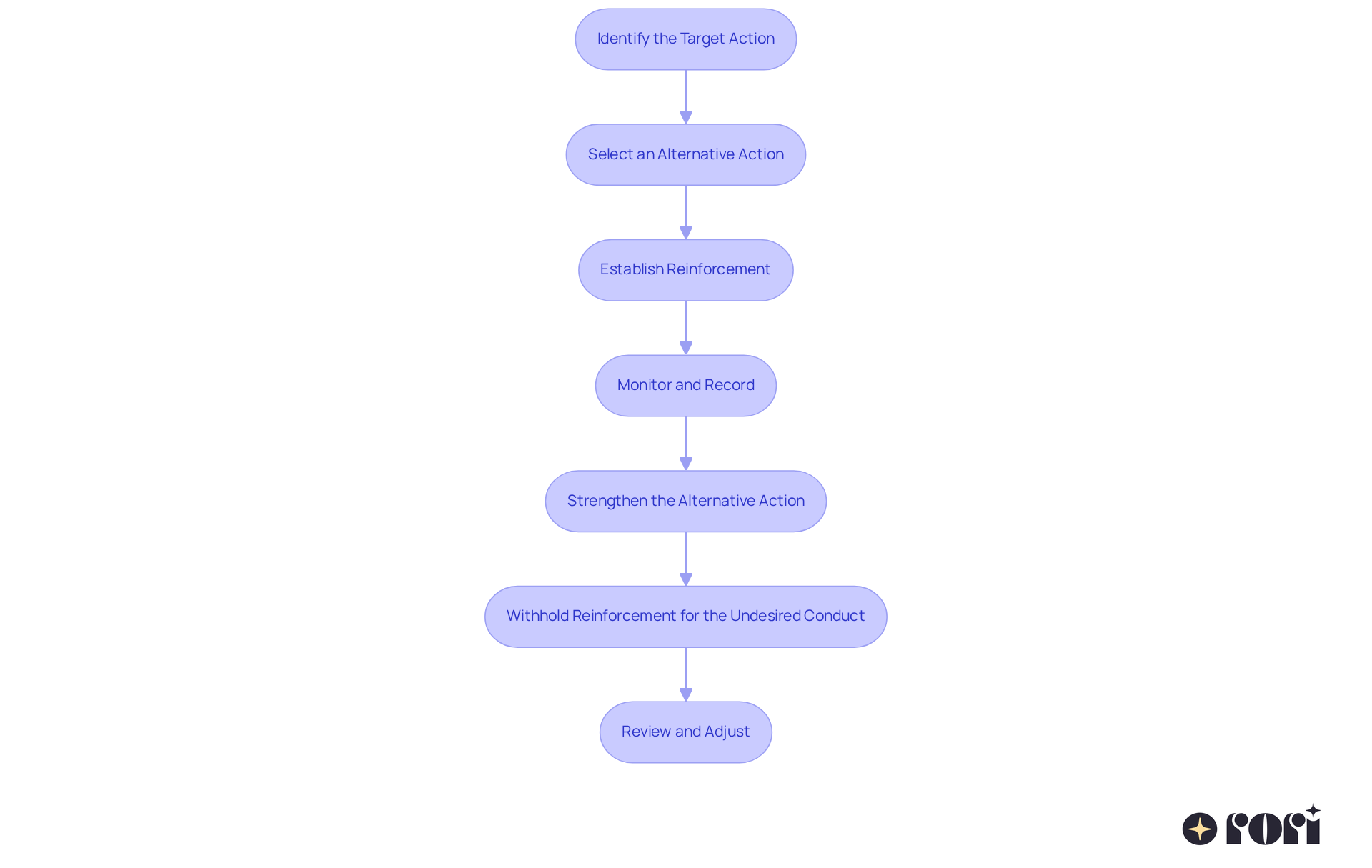
To implement the effectively, let’s walk through these steps together:
- Identify the Target Action: Start by clearly defining the specific behavior you want to reduce, like yelling or throwing things. Understanding why these actions happen is key to making DRA work for you and your child.
- Select an : Next, pick a positive behavior that can fulfill the same need as the undesired action. For example, if your little one yells for attention, how about encouraging them to raise their hand or use a polite phrase instead?
- Establish Reinforcement: Now, think about what will motivate your child to try the . This could be praise, a favorite toy, or extra playtime. Just make sure your are ethical and culturally sensitive.
- : Keep an eye on how often both the occur. Use , which can help analyze behaviors and generate progress reports for you. This data is super helpful for tracking progress and making adjustments. Remember, the highlights that flexibility is key! Be ready to adapt your strategies based on your child’s unique needs, and involve caregivers in the process.
- Strengthen the Alternative Action: When your child shows the , offer immediate rewards. This support should be tied to the positive behavior you want to encourage.
- Withhold Reinforcement for the Undesired Conduct: If the undesired behavior pops up, hold back on providing reinforcement. This might mean ignoring the behavior or gently redirecting your child to the alternative action.
- Review and Adjust: Finally, regularly check the data you’ve collected to see how well the ABA is functioning. Getting insights from can really help tailor your approach to fit your child’s needs. Don’t hesitate to adjust your strategies to keep motivation and progress going strong.
Let’s explore this together! Remember, you’re not alone in this journey.
Identify Challenges and Solutions in DRA Implementation
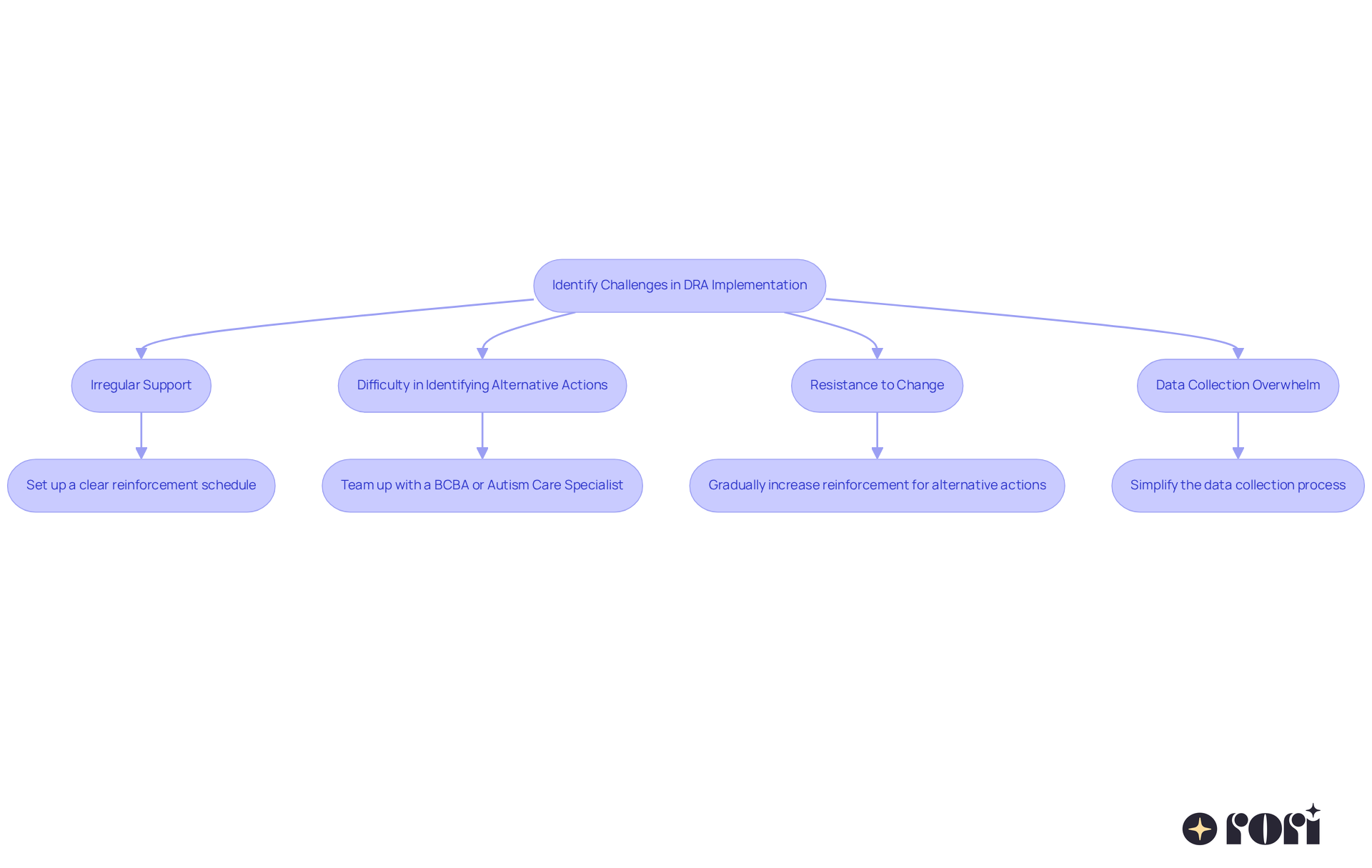
Implementing can come with its own set of challenges. Let’s take a look at some common issues and how we can tackle them together:
-
Irregular Support: When rewards aren’t given consistently, it can leave kids confused about which actions are being recognized. Research shows that regular encouragement is key to making lasting changes in behavior.
- Solution: Set up a and make sure everyone involved—like caregivers and teachers—are on the same page about how to reinforce .
-
Difficulty in Identifying Alternative Actions: Sometimes, parents find it tough to pinpoint that can replace the undesired behavior. This can really slow down the ABA.
- Solution: Team up with a or an Autism Care Specialist. They can help brainstorm and identify practical alternative actions that are both functional and achievable for your child.
-
Resistance to Change: It’s not uncommon for kids to resist changing their behavior, especially if they’ve been rewarded for the undesired actions in the past. This pushback can be a big hurdle in successfully implementing the DRA procedure ABA.
- Solution: Patience is key! Gradually increase reinforcement for the alternative action while giving less attention to the unwanted behavior. Using can also help your child understand the changes and ease their resistance.
-
Overwhelm: can feel overwhelming for parents, but it’s crucial for assessing progress.
- Solution: Simplify the process by using a chart or an app that allows for quick entries. Focus on the most important behaviors instead of trying to track everything at once, making it much more manageable.
Remember, you’re not alone in this journey! Let’s explore these challenges together and find the best solutions for your family.
Evaluate the Effectiveness of DRA Strategies
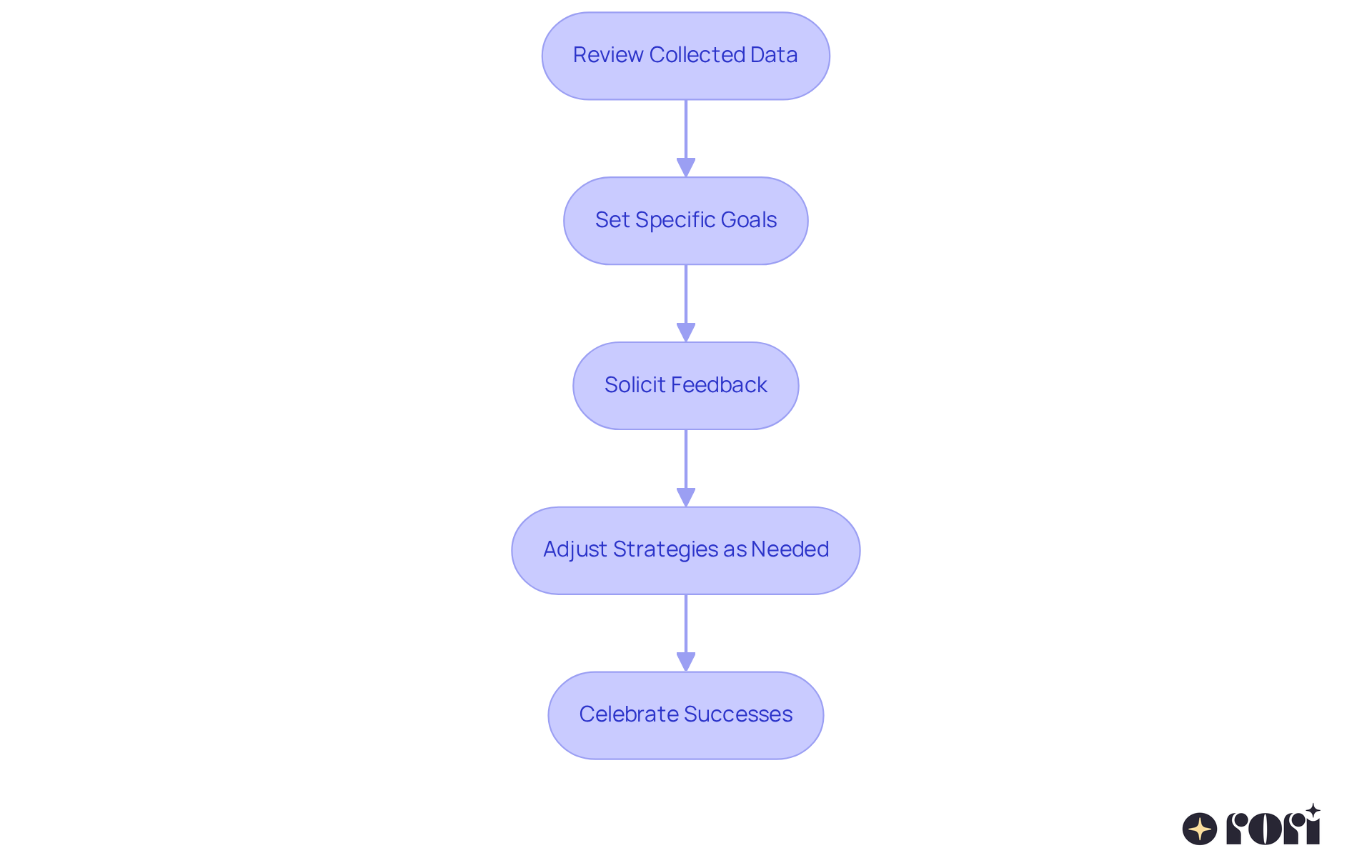
To effectively evaluate the success of , let’s walk through some essential steps together:
- : Start by taking a good look at the information you’ve gathered on both target and alternative actions. Notice any trends over time? You might see a drop in unwanted actions and a rise in the .
- : It’s super helpful to define clear, for success. For example, how about aiming for a 50% reduction in unwanted behavior within a set timeframe? That gives you something concrete to work towards!
- Solicit Feedback: Don’t hesitate to team up with your child’s therapists or educators. Their insights on your child’s actions in different settings can be invaluable. It’s all about !
- : If you find that progress is slow, it might be time to tweak your support strategies or the chosen alternative action. Sometimes, reassessing the initial target behavior is necessary to keep things relevant.
- : Remember to recognize and celebrate improvements, no matter how small! Positive reinforcement for both your child and yourself can really boost motivation and commitment to the DRA process. 🎉
Let’s explore this journey together! Your efforts are making a difference!
Conclusion
Implementing the Differential Reinforcement of Alternative Behavior (DRA) procedure in Applied Behavior Analysis (ABA) can truly change the game for parents looking to encourage positive behavior in their kids. By focusing on reinforcing the good stuff while giving less attention to the not-so-great actions, this approach not only boosts communication skills but also creates a nurturing environment where children can thrive socially and emotionally.
Throughout this article, we’ve explored some key steps for effectively putting DRA into practice. We talked about:
- Identifying target behaviors
- Picking suitable alternatives
- Setting up consistent reinforcement strategies
We also touched on challenges like:
- Inconsistent support
- The struggle to find the right alternative actions
Along with some practical solutions to tackle these issues. Plus, we highlighted how important it is to collect data and regularly evaluate progress, keeping caregivers engaged and flexible in their approach.
Ultimately, the DRA procedure is a powerful tool for behavior modification, bringing significant benefits for both children and their families. By committing to this structured approach, parents can improve their child’s behavior and create a more harmonious home life. Sure, the journey might have its bumps, but with the right support and strategies, lasting positive change is totally achievable. So, let’s embrace the DRA process together and witness the incredible growth it can bring to your child’s life! 🌟
Frequently Asked Questions
What is Differential Reinforcement of Alternative Behavior (DRA)?
DRA is a technique in Applied Behavior Analysis (ABA) that focuses on reinforcing a positive alternative behavior while not rewarding the undesired one. For example, encouraging a child to ask politely for attention instead of yelling.
How does DRA help children with challenging behaviors?
DRA helps children learn more appropriate behaviors and gradually reduces challenging behaviors over time by emphasizing positive interactions.
What are the benefits of using DRA in autism treatment?
The benefits of using DRA include improved communication, increased engagement in appropriate activities, and a reduction in troublesome behaviors, creating a nurturing environment for children.
How effective is DRA in supporting social interactions for autistic individuals?
Recent studies indicate that around 80% of autistic individuals can navigate social interactions successfully when given the right support, highlighting the importance of DRA in developing essential skills.
What role do caregivers play in the DRA procedure?
Caregivers are encouraged to get involved and learn about ABA principles and strategies, which boosts their ability to support their children and helps track progress and adapt strategies as needed.
What outcomes can families expect when implementing DRA in autism care?
Families who implement DRA often report better interactions and a more peaceful home life, as it is a powerful tool in behavior modification that helps children communicate effectively and engage positively with their world.
List of Sources
- Define Differential Reinforcement of Alternative Behavior (DRA)
- theautisticadvocate.com (https://theautisticadvocate.com/regarding-the-use-of-dehumanising-rhetoric)
- practicalfunctionalassessment.com (https://practicalfunctionalassessment.com/2021/09/09/a-perspective-on-todays-aba-by-dr-greg-hanley)
- Outline Steps for Implementing the DRA Procedure
- pmc.ncbi.nlm.nih.gov (https://pmc.ncbi.nlm.nih.gov/articles/PMC4883454)
- DRA: Differential Reinforcement of Alternative Behavior (https://iloveaba.com/2012/11/dra-differential-reinforcement-of.html)
- Uh oh! Looks like you’re lost! (https://masteraba.com/differential-reinforcement)
- Identify Challenges and Solutions in DRA Implementation
- rori.care (https://rori.care/post/10-positive-proud-autism-quotes-to-inspire-and-empower-parents)
- kidsclubaba.com (https://kidsclubaba.com/autism-quotes)
- Best Autism Quotes to Raise Awareness and Understanding (https://yellowbusaba.com/post/autism-quotes)
- Evaluate the Effectiveness of DRA Strategies
- Reporting Results from Studies Evaluating Diagnostic Tests – Guidance (https://fda.gov/regulatory-information/search-fda-guidance-documents/statistical-guidance-reporting-results-studies-evaluating-diagnostic-tests-guidance-industry-and-fda)