Have you ever wondered how visual supports can make a difference in the lives of children with autism? These tools offer clarity and structure, helping kids navigate their daily routines with more ease. By using images and symbols, we can enhance communication and significantly reduce anxiety, creating a sense of security and independence for our little ones.
But here’s the thing: how can we, as caregivers and educators, weave these visual supports into our daily routines to really make a difference? Let’s dive into this together and discover some amazing strategies that can truly reshape our children’s experiences! By embracing these strategies, we can truly transform the daily experiences of our children, helping them thrive in their own unique ways.
Visual aids can make a world of difference for kids with autism, helping them feel more at ease and connected. These aids use graphic elements - like images, symbols, and written language - to improve communication and understanding. They serve various purposes, such as enhancing task completion, facilitating social interactions, and easing anxiety by providing clear expectations.
When it comes to behavior management, visual supports for behavior management in autism help kids understand what’s expected of them, making it easier for them to find their way in different settings. For example, a graphic schedule can outline daily activities, helping children anticipate transitions and reduce anxiety about the unknown. Imagine a child feeling lost and anxious without clear guidance on what to expect each day. Studies reveal that kids using graphic aids often finish tasks more easily and feel more involved in their learning.
By integrating visual supports for behavior management in autism into ABA therapy, clinicians can create a structured and predictable environment that fosters independence and encourages positive actions. When these tools are in place, children can thrive, feeling more secure and engaged in their learning. In fact, 87% of individuals using scheduling tools experience enhanced task completion and fewer problem behaviors within the first month of implementation. These tools really show how powerful visuals can be in helping our kids communicate better and behave in ways that make them feel good.
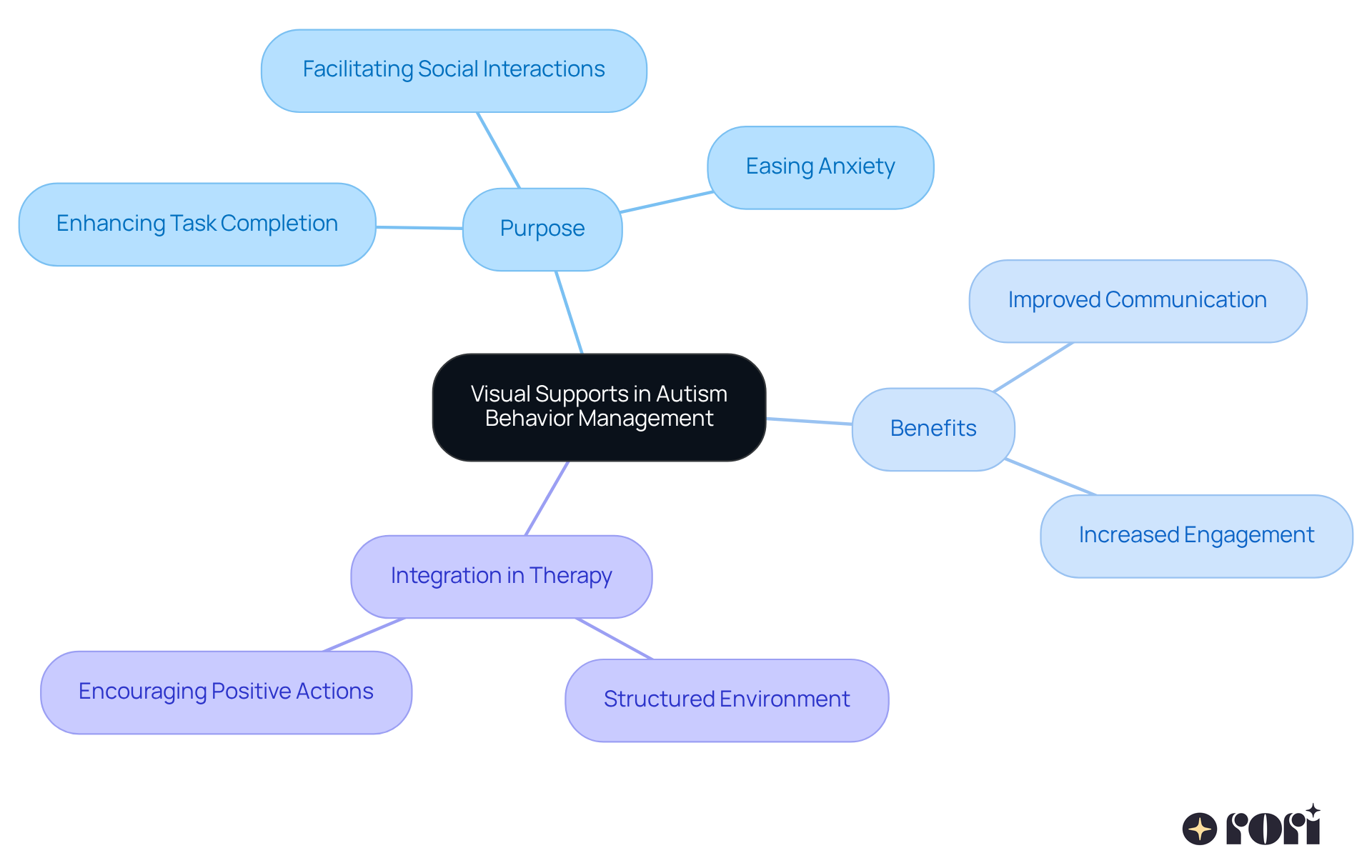
Navigating daily routines can be a challenge for our little ones, especially when transitions feel overwhelming. Visual supports for behavior management in autism can significantly enhance autism interventions, making daily life a bit easier for everyone involved.
Visual Schedules: These handy tools can help kids see what their day looks like! They visually depict daily activities, so youngsters can anticipate what’s coming next. For example, a picture schedule can show morning routines, school activities, and evening tasks, leading to improved understanding and less anxiety during transitions.
Choice Boards: Imagine giving your child the power to choose! By using images or symbols, choice boards encourage autonomy and decision-making. For instance, a choice board can help a young person pick a snack or activity, fostering independence and engagement.
Social Stories: These fun narratives use visuals to explain social situations and appropriate responses. A social story about sharing can illustrate different scenarios and expected actions, making social interactions clearer for youngsters.
First-Then Boards: These simple visuals outline a sequence of tasks, helping young learners understand what comes next. For example, 'First brush teeth, then read a book' clarifies expectations during bedtime routines, enhancing compliance and understanding.
Token Boards: These colorful tools track progress and reinforce positive actions. Kids can earn tokens for completing tasks, which they can exchange for rewards. This approach has been shown to inspire young individuals and boost their involvement in activities.
Studies show that using visual schedules can really cut down on problem behaviors - by as much as 76%! How cool is that? By incorporating visual supports for behavior management in autism, caregivers and educators can create a more engaging and nurturing learning atmosphere for individuals with autism. Imagine how much easier their day could be with just a little visual support!

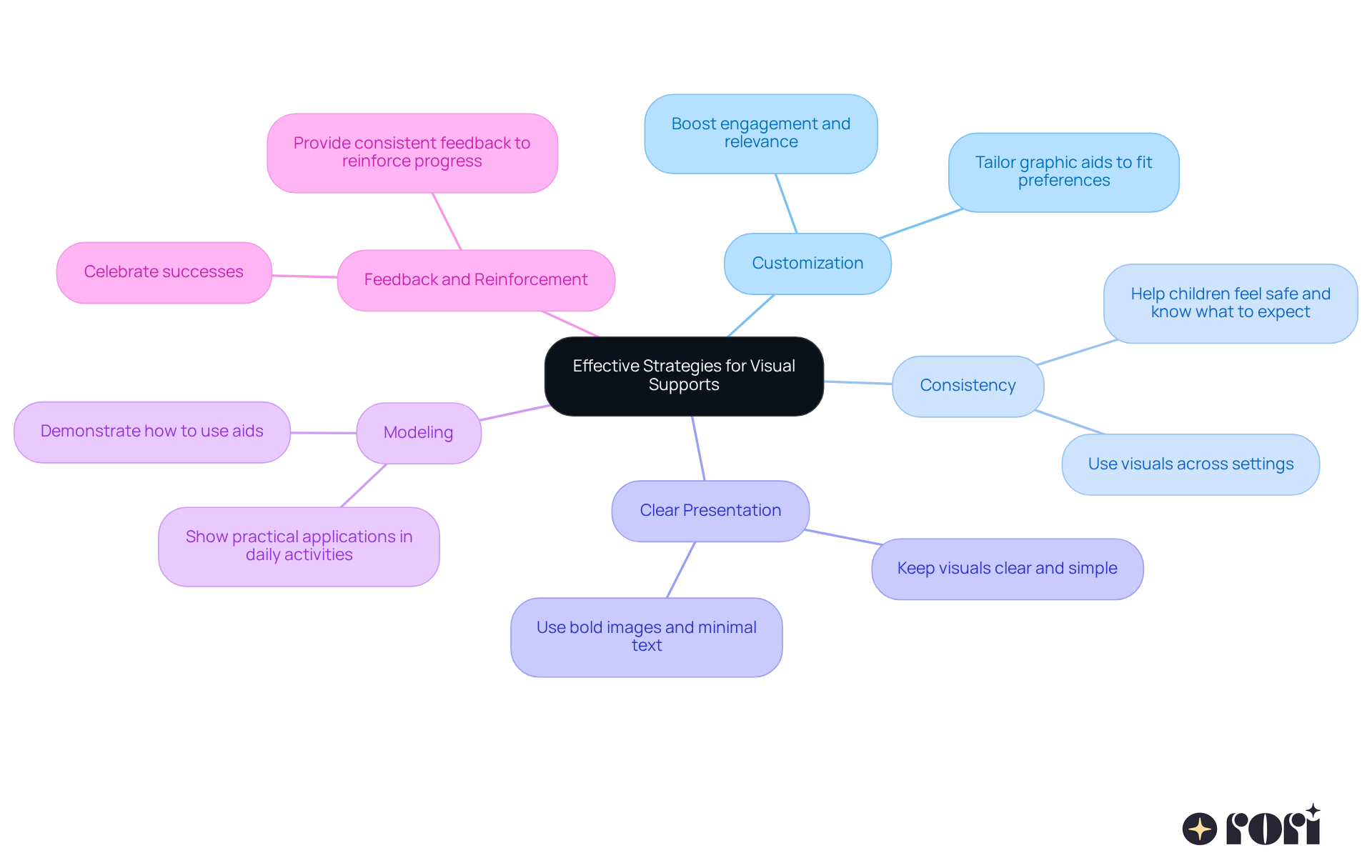
Navigating the world of visual supports for behavior management in autism can feel overwhelming, but it doesn’t have to be. Here are some friendly strategies to help you maximize their effectiveness:
Customization: Tailor graphic aids to fit your child's unique preferences and needs. Personalizing these tools not only boosts engagement but also makes them more relevant, helping your child understand and communicate better.
Consistency: Use the same visuals at home, school, and therapy. When kids see visual supports for behavior management in autism consistently, it helps them feel safe and know what to expect. Many kids find it tough to stay focused and calm during transitions, but using visual supports for behavior management in autism can really help.
Clear Presentation: Keep visuals clear and simple. Use bold images and minimal text to avoid overwhelming your child. For instance, a pictorial timetable should have clear images for each task, making it easier for your little one to keep up.
Modeling: Show your child how to use these aids effectively. For example, demonstrate how to consult visual supports for behavior management in autism, like a choice board when making decisions or how to follow a pictorial schedule. This way, they can see how these resources fit into their daily activities.
Feedback and Reinforcement: Celebrate your child's successes when they use these aids! Positive encouragement builds their confidence and encourages them to keep using these tools. Remember, consistent feedback is key to reinforcing their progress.
When you use these strategies, you’re not just helping with communication; you’re making a real difference in your child’s life. Imagine the difference it could make in your child’s daily life when they feel understood and supported!
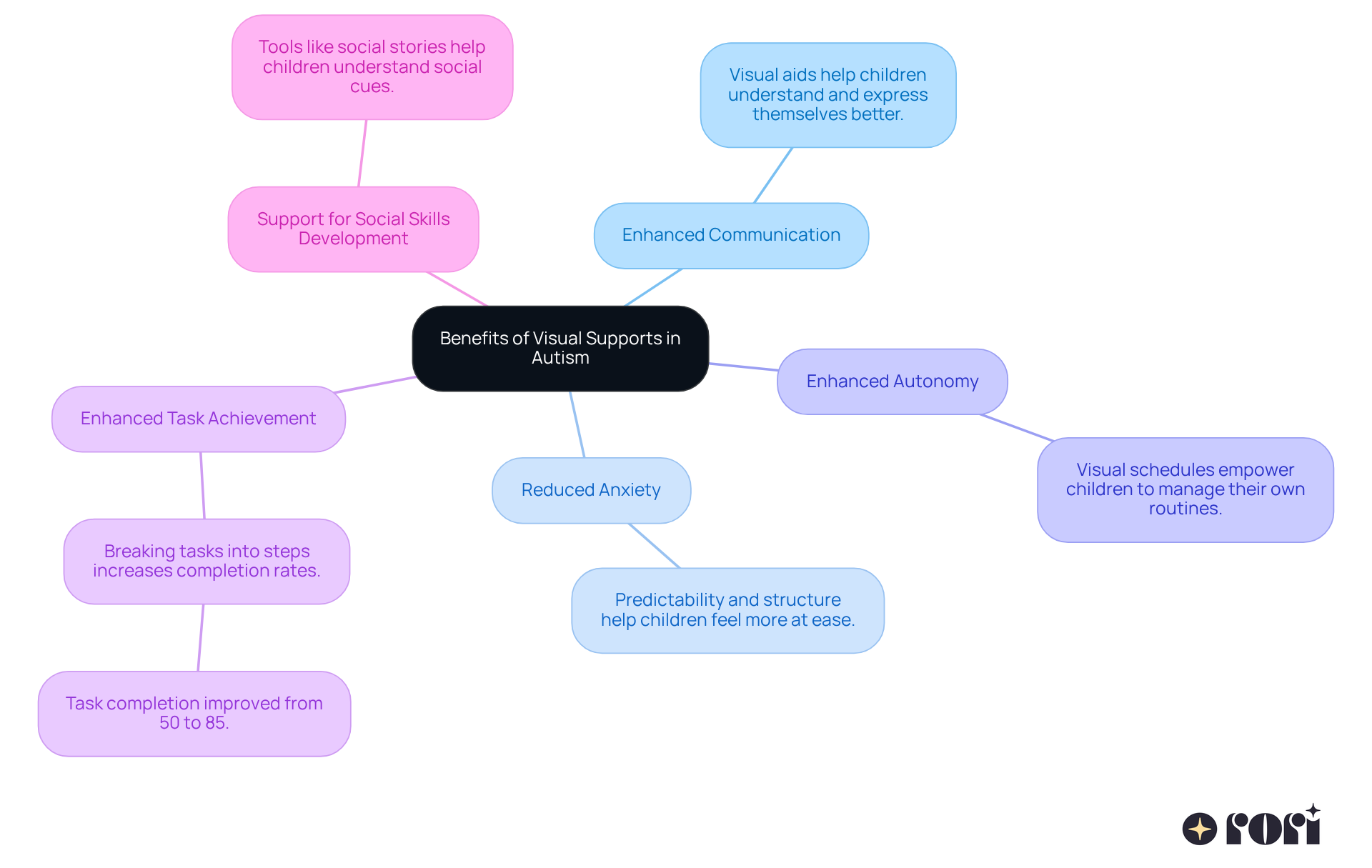
Have you ever felt like your child is trying to say something important, but the words just won’t come out? Visual supports for behavior management in autism offer numerous advantages for children, particularly in enhancing communication and reducing anxiety.
Enhanced Communication: Visual aids can really help kids understand what’s going on, making it easier for them to communicate with others! When verbal expression is tough, these visuals can bridge the gap, leading to better interactions with peers and caregivers.
Reduced Anxiety: When kids know what to expect, it can really help them feel more at ease and less anxious! Visual aids create structure and predictability, which is so important for their emotional well-being.
Enhanced Autonomy: With visual aids, kids can take charge of their own routines and make choices on their own! For instance, a pictorial schedule lets them manage their time and tasks, fostering a sense of control and independence.
Enhanced Task Achievement: By breaking down complex tasks into manageable steps, visual aids simplify daily activities. This approach has shown a significant increase in task completion rates, with research suggesting improvements from 50% to 85% after using these aids.
Support for Social Skills Development: Tools like social stories help kids grasp social cues and appropriate behaviors in different situations, boosting their ability to engage in social interactions effectively.
When families see these benefits, they can truly appreciate how visual supports for behavior management in autism can significantly impact their child's life! Embracing visual supports for behavior management in autism can truly transform your child's experience, making everyday interactions smoother and more enjoyable for everyone involved.
Navigating the daily challenges of autism can feel overwhelming for many parents, but there’s hope! Using visual supports can really change the game for kids with autism, making their daily lives so much easier. These tools not only provide clarity and structure but also empower children to navigate their environments with greater confidence and independence.
Throughout this article, we’ve explored various types of visual supports, like visual schedules, choice boards, social stories, and token boards. Each of these tools plays a vital role in simplifying complex tasks and enhancing communication. They promote autonomy among children with autism, making it easier for them to express themselves and engage with the world around them.
The evidence shows that these supports can lead to improved task completion rates and reduced problem behaviors. This highlights just how effective they can be in creating a nurturing environment for our kids.
When we use visual supports, we’re not just following a strategy; we’re truly committing to understanding our kids better. By embracing these practices, we can really make a difference in our kids’ lives, helping them feel more secure and engaged every day. As we continue this journey, let’s stay open to new strategies and insights, ensuring that every child has the opportunity to thrive in their daily lives. By taking these steps, you’re not just helping your child; you’re creating a brighter future for your family.
What are visual supports in the context of autism behavior management?
Visual supports are graphic elements such as images, symbols, and written language that help children with autism improve communication and understanding, making them feel more at ease and connected.
How do visual supports benefit children with autism?
Visual supports enhance task completion, facilitate social interactions, and reduce anxiety by providing clear expectations, helping children understand what is expected of them in various settings.
Can you provide an example of how visual supports are used?
A graphic schedule is an example of a visual support that outlines daily activities, helping children anticipate transitions and reduce anxiety about the unknown.
What impact do visual supports have on task completion and behavior?
Studies show that children using graphic aids often finish tasks more easily and feel more involved in their learning. In fact, 87% of individuals using scheduling tools experience enhanced task completion and fewer problem behaviors within the first month of implementation.
How do visual supports integrate into ABA therapy?
Visual supports are integrated into ABA therapy to create a structured and predictable environment that fosters independence and encourages positive behaviors in children with autism.
Why are clear expectations important for children with autism?
Clear expectations help children with autism navigate their daily activities more effectively, reducing feelings of anxiety and promoting a sense of security and engagement in their learning.