Introduction
Promoting independence in children with autism isn’t just beneficial; it’s essential for their growth and future success. By encouraging independent decision-making, caregivers can help these kids navigate their world with confidence, ultimately boosting their quality of life. But let’s be real - the journey to independence can be tough. Many parents find themselves asking: what practical strategies can we use to support our children with autism in making their own choices?
Let’s explore this together! It’s all about finding ways to empower our kids while understanding the unique challenges they face. With the right tools and support, we can make a real difference in their lives.
It is vital for their overall development and well-being to focus on promoting . When kids learn to be independent, it boosts their self-confidence and helps them make better decisions, which is crucial for in children on the autism spectrum and setting them up for adult life. Research shows that those who develop enjoy a much and have more . For instance, a study featured in Teaching Exceptional Children highlights how structured work systems can really help engage students with autism spectrum disorders, thereby in children on the autism spectrum. By promoting , we encourage our young ones to take initiative and make choices, empowering them to navigate their environments more effectively and paving the way for a more fulfilling life.
And let’s not forget the crucial role caregivers play in this journey! Through , they gain a deeper understanding of , which helps them provide better support at home. This knowledge allows them to make informed choices that positively impact their child’s progress, leading to . Did you know that around 20% of autistic young adults have lived on their own at some point since high school? This shows that self-sufficiency is possible when they get the right support. However, it’s worth noting that only about 5% of autistic adults , which highlights the challenges many face. Economic factors also come into play; around 40% of young adults from families earning over $75,000 have experienced independent living. This empowerment not only benefits the individual but also enhances family dynamics. Parents often feel more confident in their child’s ability to manage daily tasks and make decisions. Ultimately, in children on the autism spectrum is a vital step toward ensuring that youngsters with autism can lead enriched and autonomous lives. Let’s explore this together!

Implement Practical Strategies for Encouraging Independence
To help foster independence in children with autism, let’s explore some friendly strategies that can make a real difference:
- : Break down complex tasks into smaller, manageable steps. This organized approach not only clarifies expectations but also builds confidence as kids successfully complete each step. Research shows that can significantly boost learning outcomes for individuals with Autism Spectrum Disorder (ASD), especially in daily living skills.
- : Think about using and charts to outline daily routines. These handy tools help kids anticipate what’s coming next, which can lower anxiety and improve their ability to follow routines on their own. Studies indicate that visual aids can ease anxiety and enhance adherence for children facing transitions, making them a great resource for .
- : Give kids options in their daily activities. Allowing them to choose between two alternatives fosters a sense of control and is essential for in children on the autism spectrum. This empowerment can lead to greater confidence in their ability to make choices.
- : Celebrate with praise or rewards. Recognizing their efforts encourages kids to keep practicing these skills, paving the way toward independence. Educators have noticed improvements in routine understanding and social interactions among children with autism when is consistently applied.
- Role-Playing: to practice social interactions and decision-making in a safe space. This fun approach prepares kids for real-life situations, boosting their confidence and social skills. For example, a case study showed that role-playing significantly improved social interactions, with conversation engagement levels rising during intervention phases.
It’s also essential to keep evaluating and training caregivers and educators to ensure these strategies are applied effectively. A qualified behavior analyst can create personalized plans with measurable goals and evidence-based strategies, highlighting the importance of . Remarkably, progress is seen in 90% of young individuals when suggested hours are fully executed with active caregiver participation. By being aware of potential challenges and common pitfalls, parents can better support their children in achieving greater independence.
Let’s work together to make this journey smoother for our kids!

Leverage ABA Therapy Techniques to Enhance Decision-Making Skills
ABA therapy offers some fantastic techniques that focus on . Let’s dive into these methods together!
- Choice-Making: One of the key elements in therapy sessions is . When kids get to choose between activities or responses, they not only feel a sense of autonomy but also learn to , which is essential for .
- : This technique breaks down decision-making into smaller, manageable steps. Helping kids understand the outcomes of their choices is essential for , as it nurtures their critical thinking and problem-solving skills.
- By demonstrating decision-making scenarios, we are , providing them with a clear framework to evaluate their options and consider the outcomes. This hands-on approach helps them internalize the decision-making process in a practical way.
- : Creating social narratives that illustrate relevant decision-making situations allows kids to visualize the process and its potential results. These stories play a crucial role in by making abstract concepts feel more relatable and easier to grasp.
- is crucial for . When we recognize and reward their choices, it motivates kids to apply these skills in various situations, boosting their learning and confidence.
- : Engaging parents in the therapy process is so important! Their active participation enhances the effectiveness of these methods and contributes to at home. By equipping caregivers with ABA principles and strategies, they can provide consistent support that complements professional interventions, leading to better behavioral outcomes.
- : It’s also essential to acknowledge the financial challenges families might face when accessing ABA therapy. Understanding available funding options can ease some of the burdens associated with therapy costs.
- : Sharing real-life examples, like a child who improved their decision-making skills through and reinforcement, can effectively highlight the practical application of these techniques in and showcase their positive impact on young lives.
Let’s explore this together! If you have any thoughts or experiences to share, we’d love to hear from you!

Foster Collaboration Between Parents and Therapists
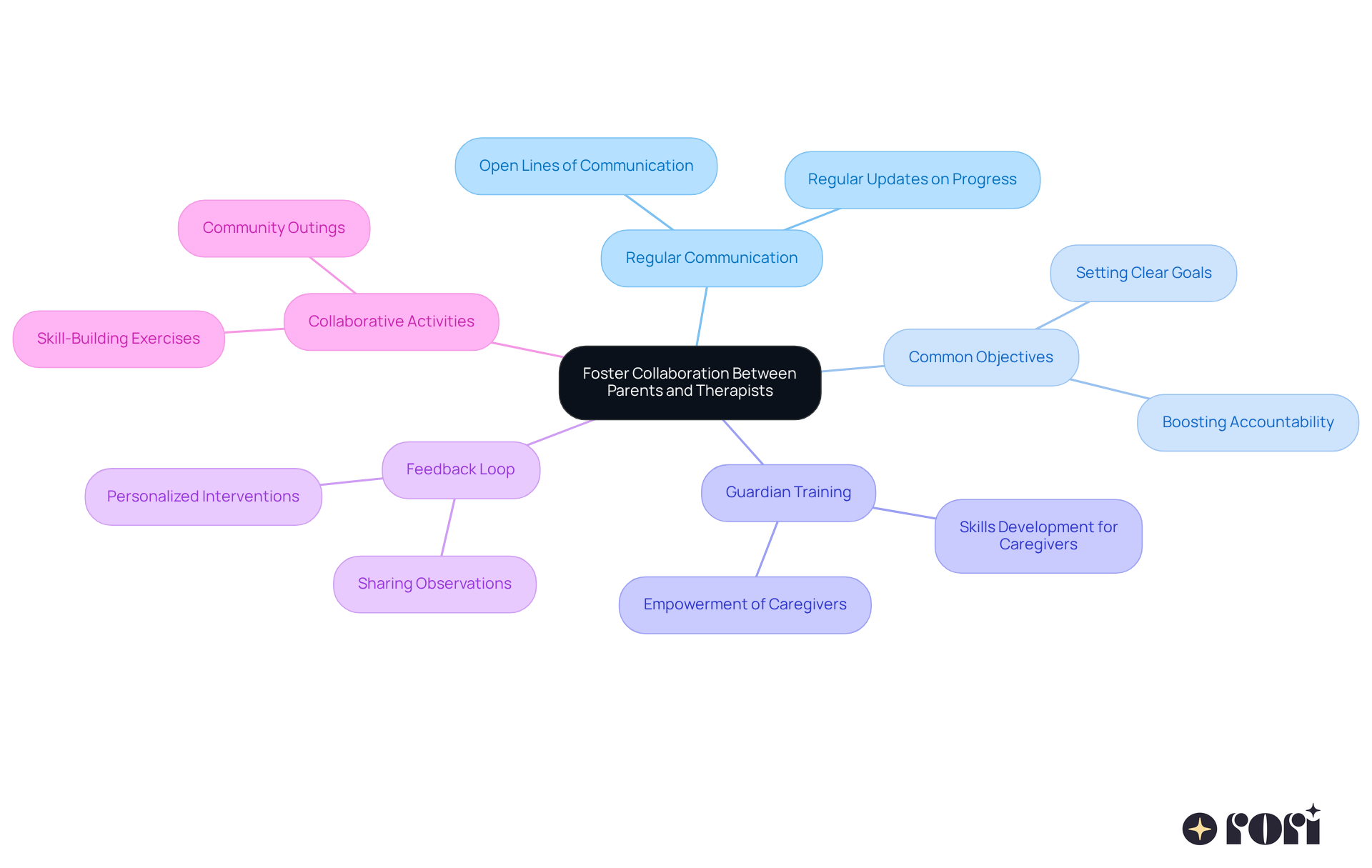
Collaboration between caregivers and therapists is so important for helping individuals with autism gain independence. Let’s dive into some strategies that can really enhance this partnership:
- : Keeping those lines of communication open between guardians and therapists is key! Regular updates on progress and challenges help everyone stay on the same page, leading to better outcomes for the young one.
- : When caregivers and therapists work together to set clear, measurable goals for the young one’s self-sufficiency, it ensures everyone is aiming for the same targets. This teamwork boosts accountability and focus throughout the intervention process.
- : Involving caregivers in training sessions equips them with the skills they need to support independence strategies at home. This empowerment not only helps caregivers but also fosters a sense of agency in both the young one and the caregiver.
- : Establishing a from home and therapists provide insights from sessions can lead to more personalized interventions. This exchange is crucial for adapting strategies to meet the individual’s changing needs.
- : Engaging in activities that promote self-sufficiency, like community outings or skill-building exercises, can really strengthen the parent-therapist relationship. These shared experiences offer valuable learning opportunities for the young learner and enhance the collaborative spirit that’s so vital for effective intervention.
By putting these strategies into practice, parents and therapists can create a nurturing environment that encourages independence and self-reliance in children with autism. Rori Care is here to with services like individual and group therapy. Let’s explore this together!
Conclusion
Promoting independent decision-making in children with autism isn’t just a nice-to-have; it’s truly essential for their growth and future success. When we foster independence, these kids are more likely to build self-confidence and learn how to navigate their environments effectively, leading to a more fulfilling life. It’s a journey that requires teamwork-caregivers and therapists working hand in hand to empower these children to take charge of their choices.
Throughout this article, we’ve highlighted some practical strategies, like:
- Task analysis
- Visual supports
- Positive reinforcement
Each of these techniques helps break down barriers and equips children with the tools they need to make informed decisions. And let’s not forget the importance of collaboration between parents and therapists! Regular communication and shared goals create a supportive environment that truly fosters autonomy.
In closing, promoting independence for children with autism goes beyond just individual growth; it enriches family dynamics and enhances everyone’s quality of life. By embracing these strategies and fostering collaboration, we can all contribute to a brighter future for these children. So, let’s prioritize independence, engage in meaningful partnerships, and support one another on this vital journey toward self-sufficiency. We’re here to help you every step of the way!
Frequently Asked Questions
Why is promoting independence important for children on the autism spectrum?
Promoting independence is vital for the overall development and well-being of children on the autism spectrum. It boosts their self-confidence, helps them make better decisions, and prepares them for adult life, ultimately leading to a better quality of life and more success in social situations.
How can structured work systems help children with autism?
Structured work systems can engage students with autism spectrum disorders, thereby promoting independent decision-making and helping them learn to take initiative and make choices.
What role do caregivers play in promoting independence for children with autism?
Caregivers play a crucial role by participating in education programs that teach them ABA principles and strategies. This knowledge enables them to provide better support at home, make informed choices, and positively impact their child's progress and behavioral outcomes.
What percentage of autistic young adults have lived independently since high school?
Around 20% of autistic young adults have lived on their own at some point since high school, indicating that self-sufficiency is achievable with the right support.
What challenges do many autistic adults face regarding independent living?
Only about 5% of autistic adults live independently, highlighting the significant challenges they encounter, which can include economic factors and lack of support.
How does economic status affect independent living among autistic young adults?
Economic factors play a role, as around 40% of young adults from families earning over $75,000 have experienced independent living, suggesting that financial stability can influence the ability to live independently.
What are the benefits of promoting independent decision-making for families?
Promoting independent decision-making not only benefits the individual with autism but also enhances family dynamics, as parents often feel more confident in their child's ability to manage daily tasks and make decisions.
List of Sources
- Understand the Importance of Promoting Independence in Autism
- Independence in Activities of Daily Living Among Autistic Toddlers: A Pilot Study Using Ecological Momentary Assessment - PMC (https://pmc.ncbi.nlm.nih.gov/articles/PMC12564179)
- How Many Adults with Autism Live Independently (https://buildingblockstherapy.org/blog/how-many-adults-with-autism-live-independently)
- Achieving Independence and Mastery in School: An Open Trial in the Outpatient Setting - PMC (https://pmc.ncbi.nlm.nih.gov/articles/PMC7889749)
- How Many Adults with Autism Live Independently? | Above and Beyond Therapy (https://abtaba.com/blog/adults-with-autism-live-independently)
- Emerging Adulthood in Autism: Striving for Independence or Interdependence? - PMC (https://pmc.ncbi.nlm.nih.gov/articles/PMC11684337)
- Implement Practical Strategies for Encouraging Independence
- The Role of Visual Supports in ABA Therapy for Autism (https://buildingblockstherapy.org/blog/the-role-of-visual-supports-in-aba-therapy-for-autism)
- 20 Inspiring Quotes About Autism Every Parent Must Read Today (https://circlecareservices.com/20-quotes-about-autism-and-parenting)
- The use of visual schedules to increase academic-related on-task behaviors of individuals with autism: a literature review (https://tandfonline.com/doi/full/10.1080/20473869.2024.2402124)
- The Role of Visual Supports in Enhancing Learning for Autism | Advanced Autism Services (https://advancedautism.com/post/the-role-of-visual-supports-in-enhancing-learning-for-autism)
- The Benefits of Task Analysis in ABA Therapy (https://magnetaba.com/blog/the-benefits-of-task-analysis-in-aba-therapy)
- Leverage ABA Therapy Techniques to Enhance Decision-Making Skills
- Success Rates of ABA Therapy | Advanced Autism Services (https://advancedautism.com/post/success-rates-of-aba-therapy)
- How ABA Therapy Helps Develop Effective Decision-Making Skills (https://aprilaba.com/resources/how-aba-therapy-helps-develop-effective-decision-making-skills)
- The Numbers Don't Lie: Revealing Autism Therapy Statistics | Above and Beyond Therapy (https://abtaba.com/blog/autism-therapy-statistics)
- Applied Behavior Analysis (ABA) Statistics: Data, Effectiveness, and Evidence-Based Practices (https://nexoaba.com/applied-behavior-analysis-statistics)
- How ABA Therapy Helps Children with Autism Develop Decision-Making Skills (https://buildingblockstherapy.org/blog/how-aba-therapy-helps-children-with-autism-develop-decision-making-skills)
- Foster Collaboration Between Parents and Therapists
- 8 Meaningful Autism Quotes for Parents' Support (https://graciousgrowthaba.com/8-meaningful-autism-quotes-for-parents-support)
- The Importance of Collaboration Between Therapists and Parents in Autism Treatment (https://buildingblockstherapy.org/blog/the-importance-of-collaboration-between-therapists-and-parents-in-autism-treatment)
- Study finds autism early intervention highly effective | Autism Speaks (https://autismspeaks.org/science-news/early-intervention-toddlers-autism-highly-effective-study-finds)
- 20 Inspiring Quotes About Autism Every Parent Must Read Today (https://circlecareservices.com/20-quotes-about-autism-and-parenting)
- Study Suggests Parents Benefit When They Lead Care for Autistic Children - Catalight (https://catalight.org/press-release/study-suggests-parents-benefit-when-they-lead-care-for-autistic-children)


