
Introduction
Understanding social cues is so important for effective communication and building relationships. But for children with autism, these signals can sometimes feel out of reach. In this article, we’ll walk through a step-by-step guide on teaching social cues, packed with practical strategies that you, as caregivers, can use to boost your child’s social interactions.
How can you bridge the gap between understanding and applying these crucial interpersonal signals? Let’s explore this together! With the right tools and support, we can help our children thrive in social settings.
Define Social Cues and Their Importance
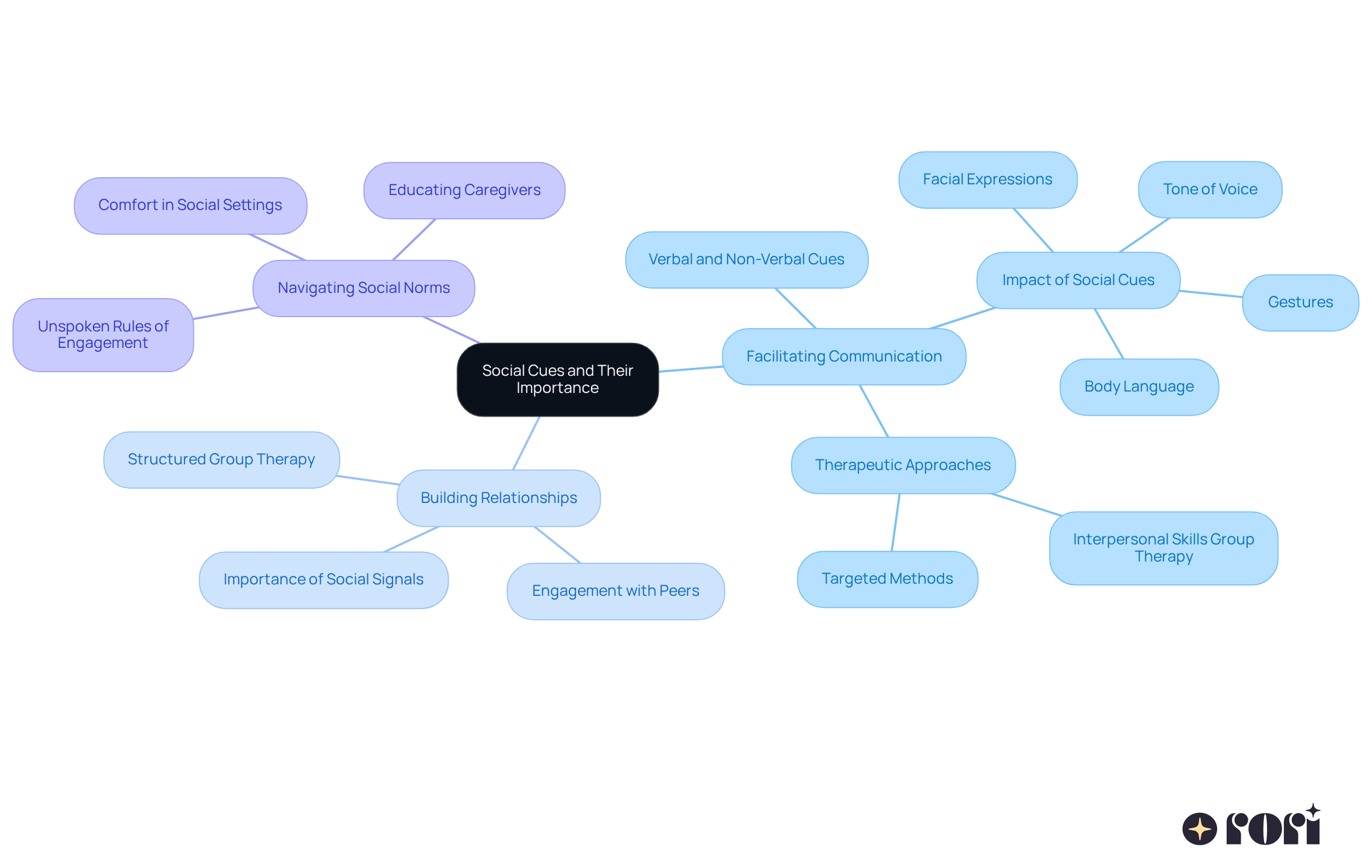
Social signals are those verbal and non-verbal cues we all use to express our emotions, intentions, and reactions. Think about it: facial expressions, body language, tone of voice, and gestures all play a part. For kids with autism, teaching social cues to children with autism can be quite a challenge, but it’s so important for fostering meaningful social interactions.
- Facilitating Communication: Social cues are key in conveying messages that words alone might not capture. A smile can say “I’m friendly,” while crossed arms might scream “I’m defensive.” Recognizing these little nuances can really boost a child’s ability to communicate effectively. At Rori Care, our interpersonal skills group therapy, led by trained therapists, uses targeted methods to help enhance these communication skills in a warm, supportive setting.
- Building Relationships: Being able to spot and respond to social signals is crucial for making friends and keeping connections alive. Kids who can read these signals are often better at engaging with their peers, leading to deeper, more meaningful friendships. Our structured group therapy sessions at Rori Care focus on practical exercises that help young individuals practice these essential skills.
- Navigating Social Norms: Social cues often guide the unspoken rules of engagement, like when to speak or listen. Mastering these norms can help kids feel more comfortable and integrated in social settings, easing anxiety and promoting positive interactions. At Rori Care, we also emphasize educating caregivers, empowering families to support their children’s development effectively.
By defining interpersonal signals and highlighting their importance, we’re laying the groundwork for teaching social cues to children with autism to improve their interaction skills. Let’s explore this together!
Assess the Child’s Understanding of Social Cues
To effectively teach young people about interpersonal signals, it’s important to start by checking in on their current understanding. Here’s how you can do that:
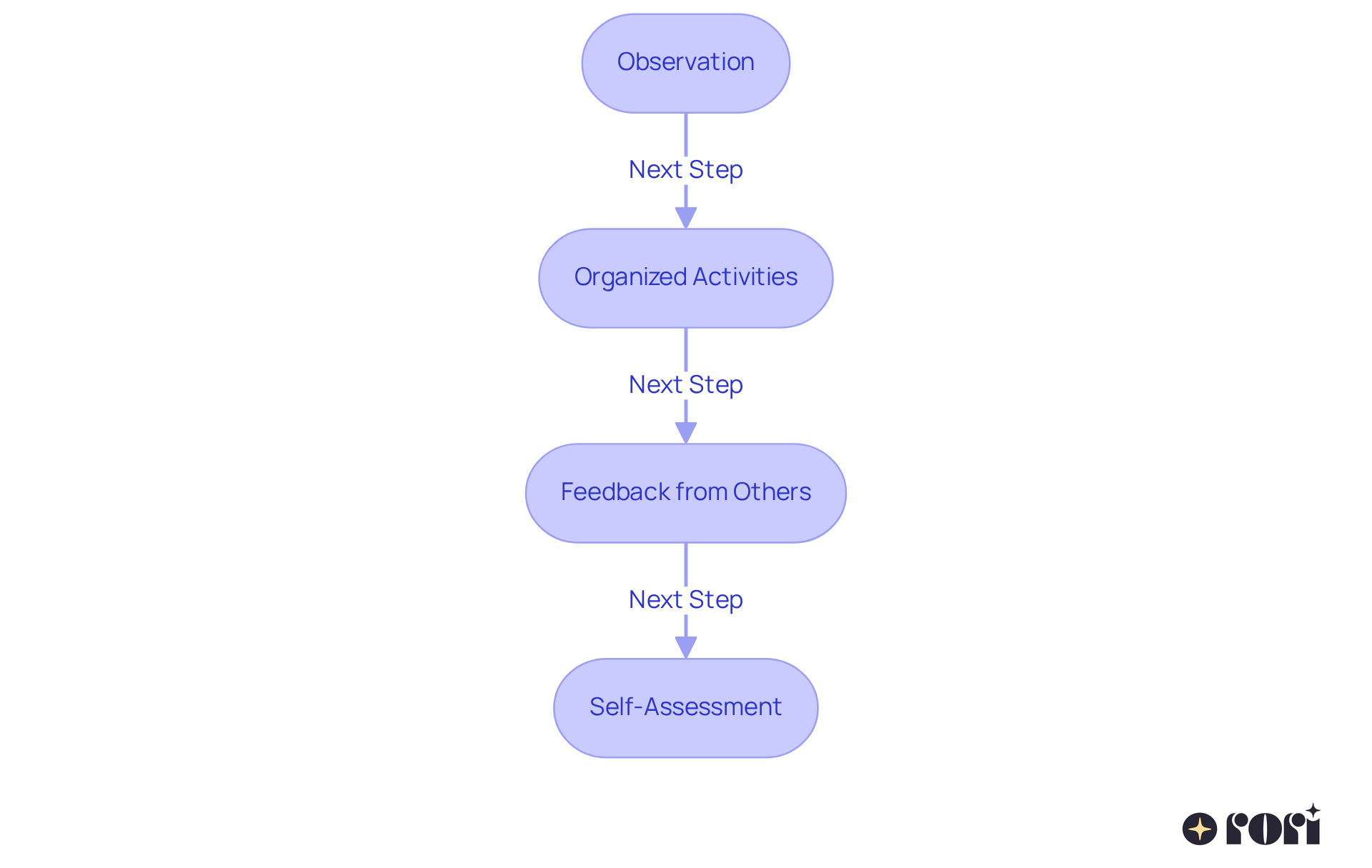
- Observation: Take a moment to watch how the young one interacts with friends and adults. Notice how they pick up on and respond to social cues in different situations. This can give you insight into their natural reactions and highlight areas where they might need a little extra help.
- Organized Activities: Try out some role-playing games! Set up scenarios where the young person can practice reading interpersonal cues. For example, show different emotions through facial expressions and ask them to identify what they see. This not only makes learning fun but also encourages engagement.
- Feedback from Others: Don’t hesitate to reach out to teachers, therapists, and family members for their thoughts on how the young one interacts with peers. Their insights can provide a well-rounded view of the child’s strengths and areas for growth, which is super helpful for tailoring your approach.
- Self-Assessment: Encourage the young one to share their feelings in social situations. Questions like, “How do you know when someone is happy?” can help gauge their understanding of interpersonal signals and boost their self-awareness.
By taking the time to assess how well the young one understands interpersonal signals, you can identify specific areas to focus on while teaching social cues to children with autism. This way, you’ll be helping them enhance their relationship skills and interactions. Let’s explore this together!
Implement Teaching Strategies for Social Cues
Teaching Strategies
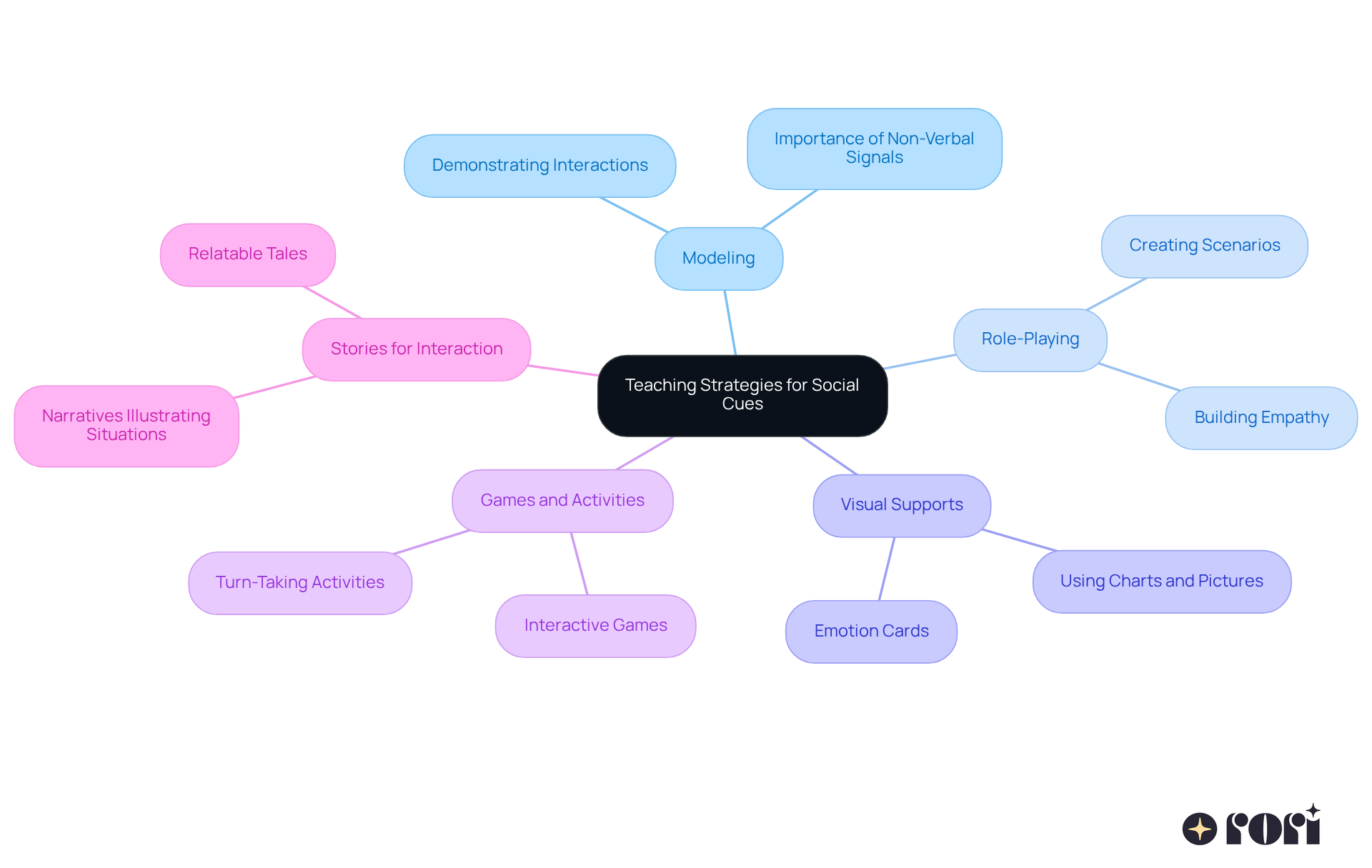
- Modeling: Let’s start by showing how to interact with others! You can model suitable interpersonal interactions by offering clear examples. For instance, when you greet someone, make sure to include eye contact and a smile. These non-verbal signals are super important!
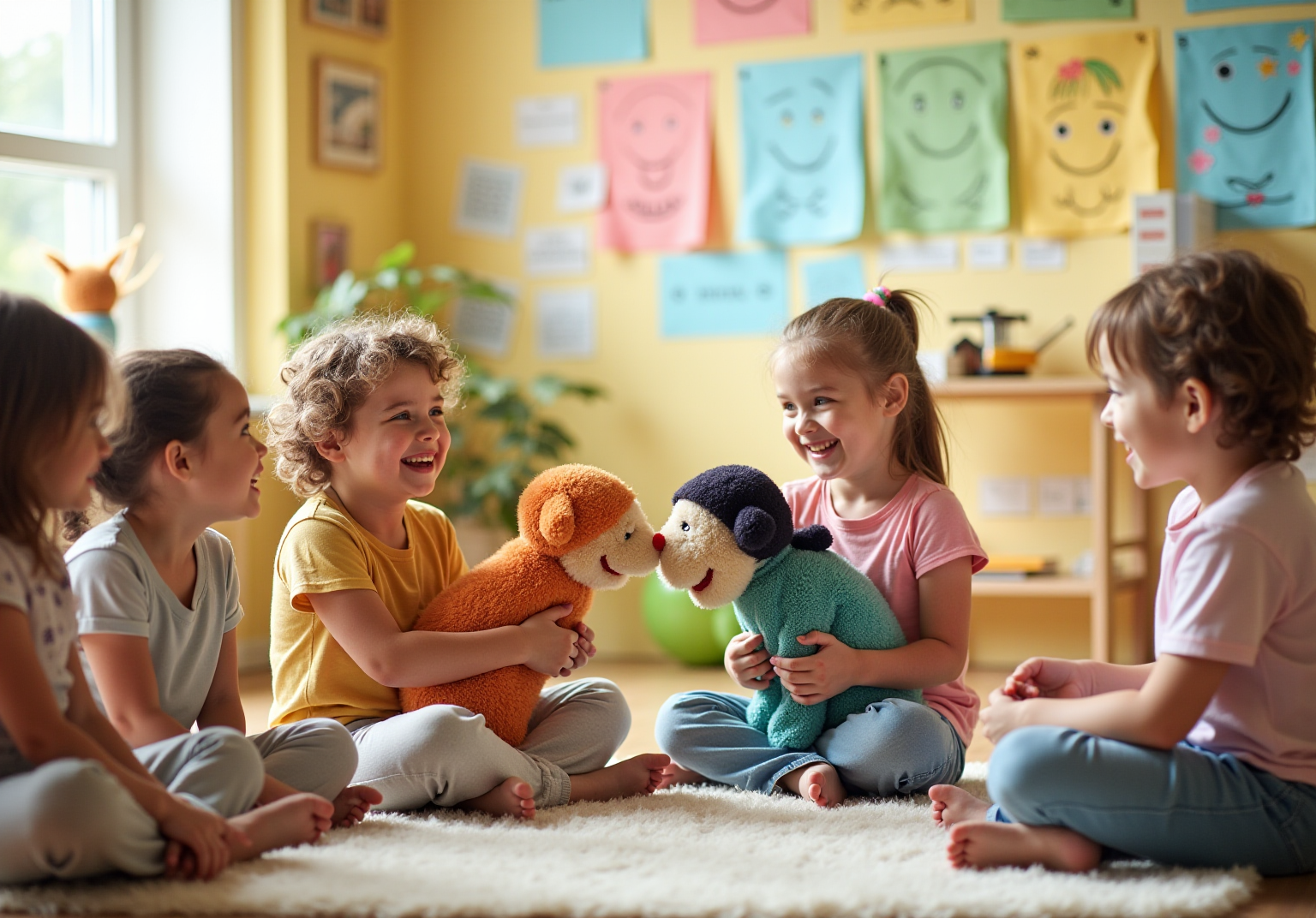
- Role-Playing: How about creating some fun scenarios? Role-playing allows your little one to practice responding to interpersonal cues. Using puppets or dolls to act out different situations helps them take turns in various roles, which builds empathy and understanding of how people interact. Research shows that role-playing can really boost interpersonal skills by providing a safe space for practice.
- Visual Supports: Visual aids can be a game changer! Think about using charts, pictures, and emotion cards to help your child recognize and understand different interpersonal cues. For example, a chart with various facial expressions can make those abstract concepts much more tangible.
- Games and Activities: Let’s make learning fun! Incorporate games that require interpersonal interaction, like charades or board games that encourage turn-taking and communication. These activities not only make learning enjoyable but also promote essential interpersonal skills in a playful way. Studies show that game-based interventions can effectively enhance communication skills.
- Stories for Interaction: Stories can be a great tool! Create narratives that illustrate specific interpersonal situations and appropriate responses. This technique helps your young learner visualize and understand how to navigate real-life scenarios, reinforcing their learning through relatable tales.
By using these strategies, you can create a nurturing learning environment that enhances your child’s understanding of interpersonal signals. This ultimately leads to better interactions and relationships. Plus, Rori Care emphasizes the importance of caregiver education, empowering families with ABA principles and strategies to support their loved one’s behavioral goals. Your active involvement not only promotes informed decision-making but also leads to improved behavioral outcomes, benefiting the whole family dynamic. Let’s explore this together!
Reinforce Learning Through Practice and Feedback
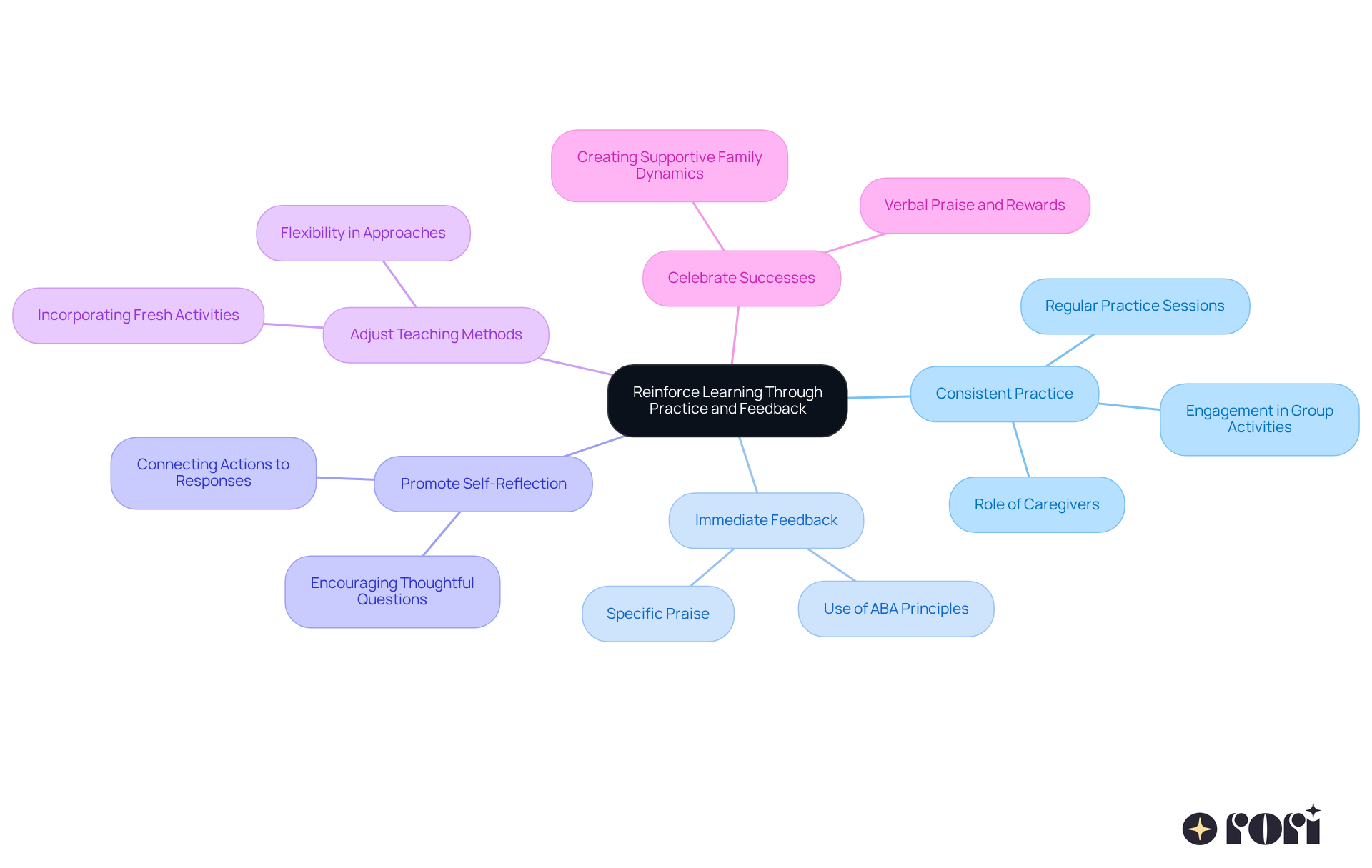
To help young individuals learn and apply interpersonal cues effectively, it’s crucial to reinforce their learning through practice and feedback. Here are some friendly strategies to make this happen:
Reinforcement Strategies
- Consistent Practice: Set up regular practice sessions where your child can engage in interpersonal interactions. Think playdates, group activities, or even organized interaction skills groups. These experiences can really boost their interpersonal abilities through repeated exposure. And don’t forget, as a caregiver, your role is vital! Being informed allows you to create effective practice environments that complement any professional help they might be getting.
- Immediate Feedback: During practice sessions, offer immediate feedback. When your child successfully identifies a behavioral signal, give them specific praise. For example, you might say, “Great job making eye contact when you greeted your friend!” This kind of prompt reinforcement helps solidify their understanding of interpersonal cues. Plus, if you’re familiar with ABA principles, you can make informed decisions that positively influence your child’s progress.
- Promote Self-Reflection: After interactions, encourage your child to think about their experiences. Ask questions like, “How did your friend react when you smiled?” This helps them connect their actions with others’ responses, deepening their learning. As an empowered caregiver, you can guide these reflections, enhancing their understanding of social dynamics.
- Adjust Teaching Methods: Be flexible! If a particular teaching method isn’t working, don’t hesitate to try something new. Explore different approaches or incorporate fresh activities to keep things engaging. This adaptability is one of the great benefits of caregiver education, as it empowers you to respond effectively to your child’s needs.
- Celebrate Successes: Celebrate every milestone, no matter how small! This could be through verbal praise, stickers, or special activities. Positive reinforcement boosts your child’s confidence and motivation, encouraging them to keep learning. Your active involvement in celebrating these successes can lead to better behavioral outcomes and a more supportive family dynamic.
Statistics show that these strategies work! For instance, in a study, the experimental group had a mean score of 32.75 for reciprocity, compared to 27.25 in the control group. This highlights the impact of structured interpersonal skills training. By reinforcing learning through practice and feedback, you can aid in teaching social cues to children with autism, which leads to improved social interactions and relationships. Let’s explore this together!
Conclusion
Teaching social cues to children with autism is such an important journey! It can really boost their ability to communicate and build meaningful relationships. When kids learn to recognize those subtle signals, they’re better prepared to navigate social interactions, which is key for their emotional and social growth.
In this guide, we’ve explored some key strategies. We talked about:
- Assessing where your child is with social cues
- Using fun methods like modeling and role-playing
- Reinforcing what they learn through practice and feedback
Each of these steps is crucial for helping them develop the skills they need for successful social interactions, leading to better communication and stronger relationships.
As caregivers and educators, it’s our job to engage actively with our kids and support their learning journey. By creating a warm environment that focuses on practice, feedback, and celebrating their successes, we can empower children with autism to thrive socially. Embracing these strategies not only enriches their lives but also strengthens family bonds and community ties, paving the way for a more inclusive and understanding society.
Let’s explore this together! Remember, you’re not alone in this journey, and we’re here to help you every step of the way!
Frequently Asked Questions
What are social cues?
Social cues are verbal and non-verbal signals, such as facial expressions, body language, tone of voice, and gestures, that we use to express our emotions, intentions, and reactions.
Why are social cues important for children with autism?
Teaching social cues to children with autism is crucial for fostering meaningful social interactions, as it helps them communicate effectively and build relationships with their peers.
How do social cues facilitate communication?
Social cues convey messages that words alone might not capture, such as a smile indicating friendliness or crossed arms suggesting defensiveness. Recognizing these nuances enhances a child’s ability to communicate.
How can children with autism benefit from group therapy at Rori Care?
Rori Care’s interpersonal skills group therapy, led by trained therapists, uses targeted methods to enhance communication skills in a warm and supportive environment, helping children practice reading and responding to social cues.
How do social cues help in building relationships?
Being able to recognize and respond to social signals is essential for making friends and maintaining connections. Children who can read these signals are often better at engaging with their peers, leading to deeper friendships.
What role do social cues play in navigating social norms?
Social cues guide the unspoken rules of engagement, such as when to speak or listen. Mastering these norms helps children feel more comfortable in social settings, reducing anxiety and promoting positive interactions.
How does Rori Care support families in teaching social cues?
Rori Care emphasizes educating caregivers to empower families in supporting their children’s development of social cues and interaction skills effectively.
List of Sources
- Define Social Cues and Their Importance
- Using Social Cues to Adjust Conversational Behavior May Be Challenging for Autistic Children and Teens (https://chop.edu/news/using-social-cues-adjust-conversational-behavior-may-be-challenging-autistic-children-and-teens)
- Social Skills Training for Autism Spectrum Disorder: a Meta-analysis of In-person and Technological Interventions – PMC (https://pmc.ncbi.nlm.nih.gov/articles/PMC7670840)
- Teaching Connection: The Impact of Social Skills on Children with Autism (https://centralcoastaba.com/blog/teaching-connection-the-impact-of-social-skills-on-children-with-autism)
- 10 inspiring quotes from people with autism | Autism Speaks (https://autismspeaks.org/life-spectrum/autism-quotes)
- Study: Autistic children miss social cues | Yale Daily News (https://yaledailynews.com/articles/study-autistic-children-miss-social-cues)
- Assess the Child’s Understanding of Social Cues
- 59 Inspirational Quotes About Autism – Hidden Talents ABA (https://hiddentalentsaba.com/autism-quotes)
- Self-reported social skills importance ratings, not social skills themselves, predict sociometric status among youth with autism spectrum disorder (https://sciencedirect.com/science/article/abs/pii/S1750946720300428)
- Measuring Social Skills Goals – ASAT Online (https://asatonline.org/research-treatment/clinical-corner/measuring-social-skills-goals)
- Quantifying Social Skill Deficits and Strengths Profiles in Autistic Youth – PMC (https://pmc.ncbi.nlm.nih.gov/articles/PMC10658759)
- 10 inspiring quotes from people with autism | Autism Speaks (https://autismspeaks.org/life-spectrum/autism-quotes)
- Implement Teaching Strategies for Social Cues
- Is there evidence that playing games promotes social skills training for autistic children and youth? – PMC (https://pmc.ncbi.nlm.nih.gov/articles/PMC11816463)
- 59 Inspirational Quotes About Autism – Hidden Talents ABA (https://hiddentalentsaba.com/autism-quotes)
- Effect of social skills training on interpersonal interactions of children with autism: an interventional research – PMC (https://pmc.ncbi.nlm.nih.gov/articles/PMC9788721)
- Social Skills Training for Autism Spectrum Disorder: a Meta-analysis of In-person and Technological Interventions – PMC (https://pmc.ncbi.nlm.nih.gov/articles/PMC7670840)
- 10 inspiring quotes from people with autism | Autism Speaks (https://autismspeaks.org/life-spectrum/autism-quotes)
- Reinforce Learning Through Practice and Feedback
- 26 powerful quotes about feedback (https://netigate.net/articles/quotes-about-feedback)
- The Best Feedback and Learning Quotes – TruQu (https://truqu.com/en/blogs/best-feedback-and-learning-quotes)
- Effect of social skills training on interpersonal interactions of children with autism: an interventional research – PMC (https://pmc.ncbi.nlm.nih.gov/articles/PMC9788721)
- Social Skills Training for Autism Spectrum Disorder: a Meta-analysis of In-person and Technological Interventions – PMC (https://pmc.ncbi.nlm.nih.gov/articles/PMC7670840)
- The Collective Outcomes of School-Based Social Skill Interventions for Children on the Autism Spectrum (https://iidc.indiana.edu/irca/articles/the-collective-outcomes-of-school-based-social-skill-interventions-for-children-on-the-autism-spectrum.html)